Quick Answer
The best place to buy loose leaf tea online is one that clearly explains what you are buying. Look for information about the tea’s origin, processing, harvest, flavor, and brewing method, rather than relying on words such as “premium” or “luxury.” Clear photos of the dry leaves and practical brewing instructions can also help you evaluate a seller.
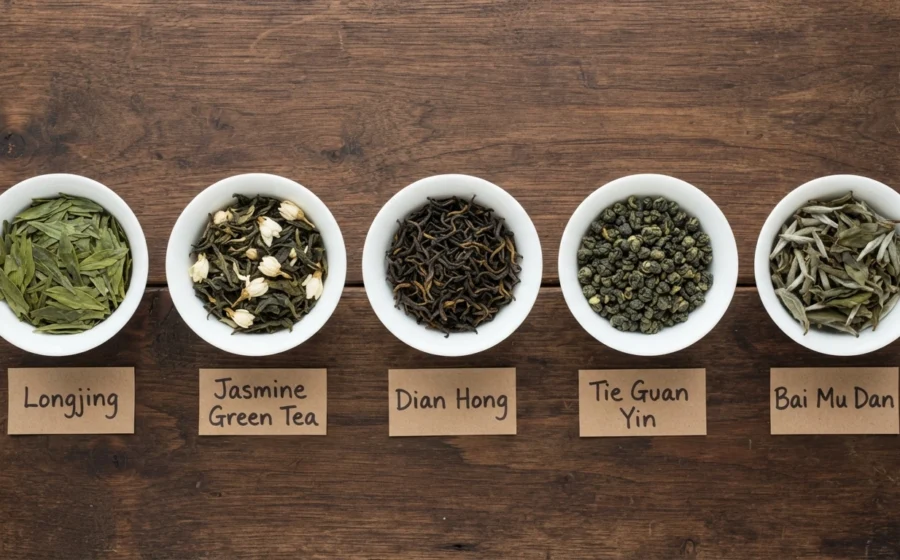
If you are exploring Chinese tea, start with a flavor profile you already enjoy. Jasmine green tea is worth trying if you like floral aromas, Longjing may appeal to you if you prefer fresh, nutty notes, and Dian Hong is a good option for those who enjoy a sweeter, malty black tea. You do not need to buy a large quantity or expensive equipment at first. A small purchase gives you room to explore and discover what you genuinely enjoy.
Buying tea online involves a little uncertainty. You cannot smell the dry leaves, watch them unfurl in hot water, or taste the finish before placing an order. Product photographs may look beautiful, but they do not always tell you how the tea will taste.
Instead of searching for one universally “best” website, learn what to look for. A few practical checks can help you compare sellers and choose tea with greater confidence.
What Makes a Good Loose Leaf Tea?
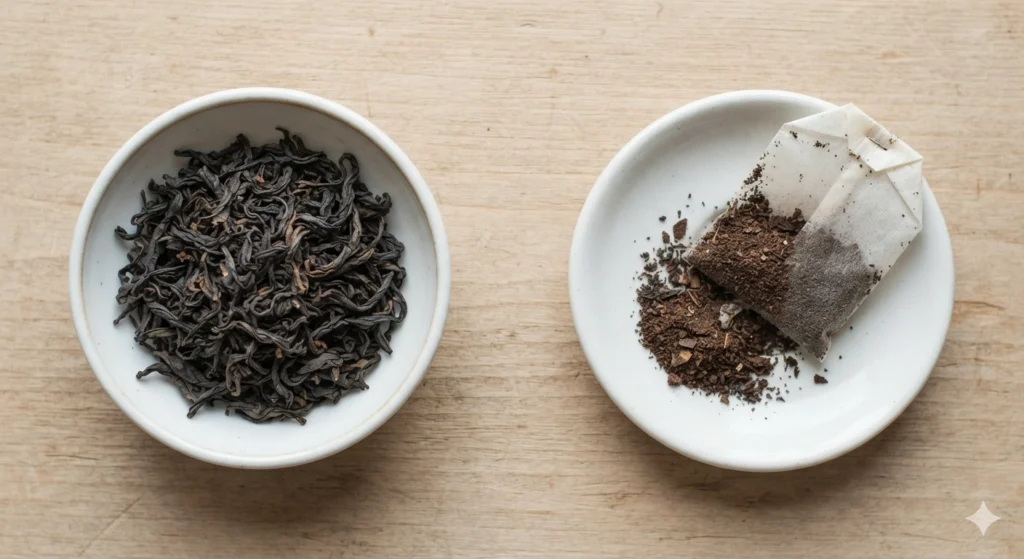
Tea quality depends on several factors, including the raw leaves, processing, storage, and brewing. The words “loose leaf” alone do not guarantee a good cup. A well-made tea bag can be enjoyable, just as poorly stored loose leaf tea can disappoint.
Look at the leaves, not just the packaging
A useful product page shows the tea itself, ideally with clear photographs of the dry leaves. Depending on the style, they might be flat and blade-like, tightly rolled, twisted into long strands, or shaped into small pearls.
There is no single leaf shape that proves quality. Different Chinese teas use different cultivars and processing techniques, so appearance should be judged in the context of the tea type. Consistency can offer clues, but naturally processed leaves do not always look identical.
Particle size also affects how tea extracts in water. Whole leaves often release flavor more gradually, while smaller broken pieces can infuse more quickly. This is one reason loose leaf tea can be appealing to people who enjoy adjusting their brewing method or exploring successive infusions.
However, loose leaf tea is not automatically better than tea bags. Quality depends on the tea material, processing, storage, and preparation. Tufts University’s overview of loose tea and tea bags offers further consumer-oriented context.
Look for specific flavor descriptions
Words such as “premium,” “luxury,” and “high quality” tell you little about the experience you can expect in your cup.
More useful descriptions identify the aroma, taste, and texture. A tea might be described as floral and fresh, toasted and nutty, malty and sweet, or roasted with a lingering finish.
These descriptions are not guarantees. Flavor varies with the cultivar, growing conditions, harvest, processing, storage, and brewing. Still, specific sensory details give you a more useful starting point than vague quality claims.
If possible, look for information about how the tea tastes after brewing, rather than relying entirely on the appearance of the dry leaves. The aroma, mouthfeel, and finish can tell you much more about whether a tea suits your preferences.
Check the seller’s knowledge
A reliable tea seller should be able to explain what makes a particular tea distinctive. Useful information includes its origin, processing style, suggested water temperature, steeping time, and whether the leaves can be brewed more than once.
Brewing guidance is particularly helpful for beginners. It gives you a starting point and helps you avoid assuming that every tea should be prepared in the same way.
Where to Buy Loose Leaf Tea Online
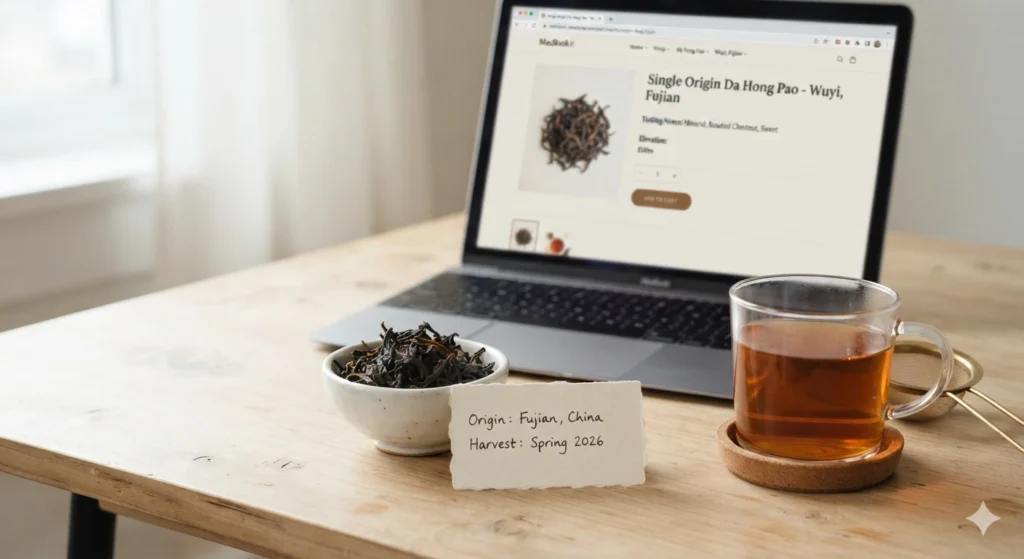
There is no single online tea shop that suits everyone. Some sellers specialize in one region or style, while others offer a broad selection. Rather than choosing based on branding alone, assess how much useful information each seller provides.
Check the tea’s origin
The place where tea is grown can influence its aroma, flavor, and texture. A product page should identify at least the country of origin and, where relevant, the region or more specific source.
The Food and Agriculture Organization’s overview of tea provides context on tea production and the environmental conditions in which tea is cultivated.
For buyers, the practical point is simple: origin information helps you understand what you are buying and compare similar teas. Specific details are useful when they are credible and relevant. A seller does not need elaborate claims about a remote garden to demonstrate knowledge; clear, consistent information is more valuable than impressive wording that cannot be verified.
Look for harvest and storage information
Harvest information can help you assess freshness, particularly when buying green tea or other styles whose aromas may fade during storage. However, there is no universal freshness deadline that applies to every tea. The type of tea, processing, packaging, and storage conditions all make a difference.
A seller who provides harvest details or explains how the tea is stored gives you more information to work with. If a harvest date is unavailable, look for other signs of care, such as sealed packaging, storage guidance, and a clear product description.
Check whether brewing instructions are practical
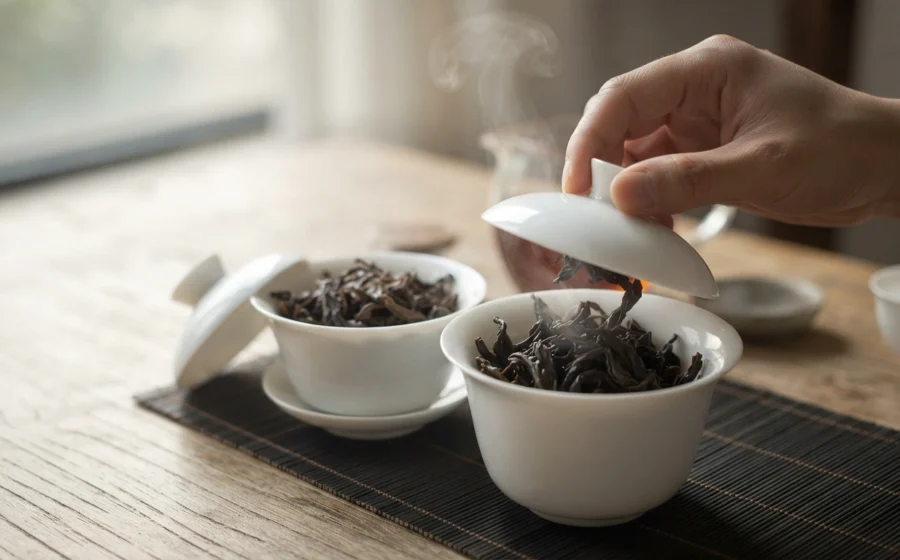
A seller who provides water temperatures, steeping times, and guidance for subsequent infusions makes it easier to prepare the tea well.
Green tea and oolong tea, for example, may benefit from different brewing approaches. Even within the same category, the ideal method can vary depending on the leaves and your preferred strength. Instructions should be treated as a starting point, not a rigid rule.
If you are new to Chinese tea, look for guides that explain how to adjust the amount of leaf, water temperature, and steeping time. Practical guidance can be more useful than a long list of tasting adjectives.
How to Choose Loose Leaf Tea for Your Taste
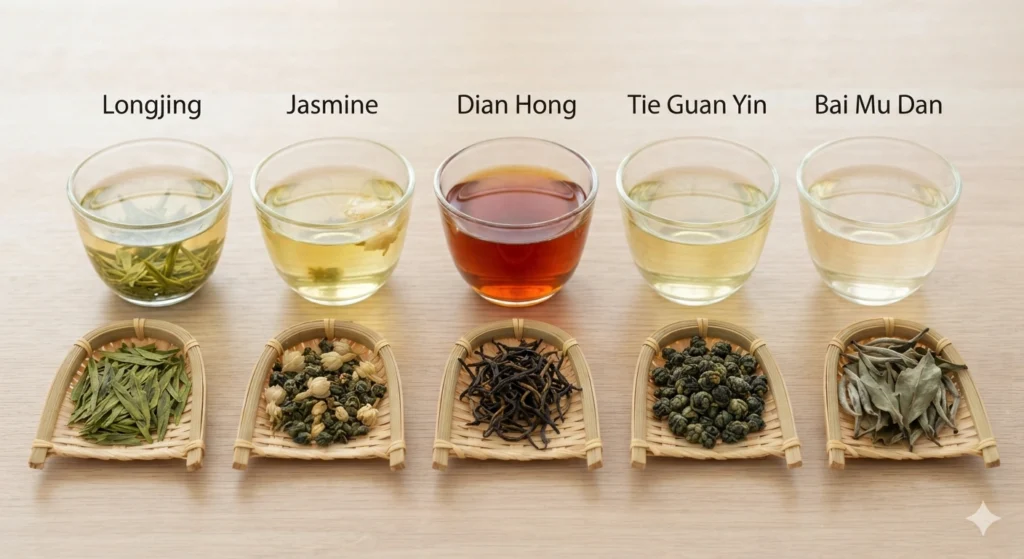
Chinese tea offers a wide range of styles, from fresh and delicate to floral, malty, roasted, and earthy. Learning a little about the main categories can help you narrow down your options.
Chinese tea is commonly grouped into six major categories according to processing: green, white, yellow, oolong, black, and dark tea. The State Administration for Market Regulation’s consumer guidance on tea classification provides an official overview of this classification.
A practical way to begin is to think about the flavors you already enjoy.
| If you enjoy… | Tea styles to explore | Possible flavor notes |
|---|---|---|
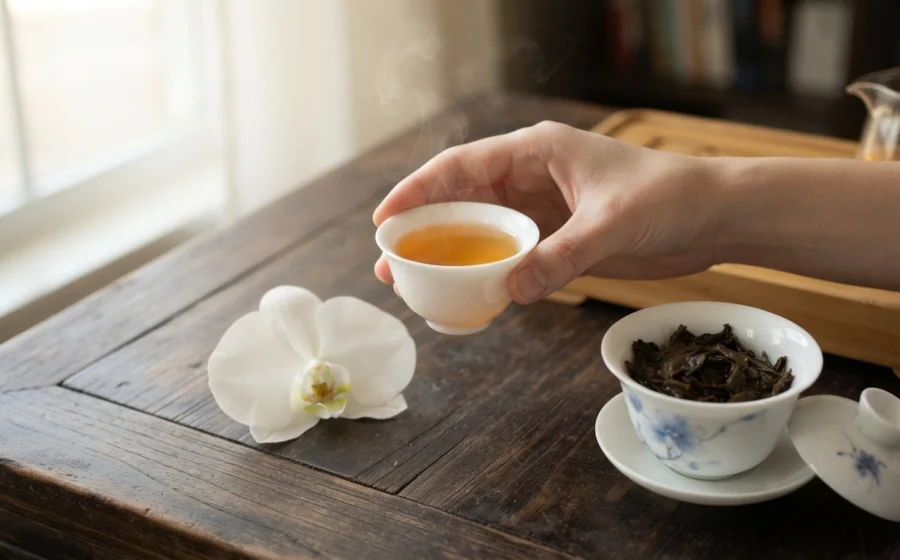
| Floral aromas | Jasmine green tea, light Tie Guan Yin | Jasmine, orchid-like, fresh floral notes |
| Fresh, nutty flavors | Longjing green tea | Toasted, nutty, smooth |
| Sweet, malty flavors | Dian Hong black tea | Malt, honey, dried fruit |
| Soft, delicate flavors | Bai Mu Dan white tea | Light floral notes, hay, gentle sweetness |
| Roasted depth | Wuyi Rock Tea, including Da Hong Pao styles | Roasted aromas, layered flavor, lingering finish |
| Rich, earthy flavors | Ripe pu-erh | Earthy, woody, mellow notes |
These are general tendencies rather than guarantees. Flavor varies with the specific tea, its origin, processing, storage, and brewing method. Oolong, in particular, covers a broad spectrum, from light and floral to dark and roasted.
You do not need to identify your favorite category immediately. Try one or two contrasting styles, notice what you enjoy, and use that experience to guide your next purchase.
A simple way to compare teas
When tasting a new tea, pay attention to three things:
- Aroma: Smell the dry leaves, then smell them again after adding hot water. Notice whether the scent is floral, fresh, sweet, toasted, or earthy.
- Texture: Notice how the tea feels in your mouth. It might seem light and crisp, soft and rounded, or fuller and more structured.
- Finish: Pay attention to what remains after swallowing. Some teas leave a delicate sweetness or floral impression; others develop a deeper, roasted finish.
If you brew the leaves again, see how the flavor changes. The first infusion may emphasize fragrance, while later infusions can reveal more of the tea’s texture and depth. This is one of the pleasures of loose leaf tea: the experience can unfold across several cups rather than ending with the first sip.
Loose Leaf Tea vs. Tea Bags: Which Should You Buy?
The choice between loose leaf tea and tea bags is not simply a question of good versus bad. Both formats can produce an enjoyable cup, and the better choice depends on your priorities.
Loose leaf tea gives you direct control over the amount of leaf and the brewing process. Larger leaves may also unfold more freely, making it easier to observe their shape and follow how the flavor develops over successive infusions.
Tea bags, on the other hand, are convenient. They are easy to carry, quick to prepare, and useful when you want a simple cup without measuring leaves or cleaning a teapot. Some contain smaller broken particles, while others use larger leaf material. Quality varies by product.
Choose loose leaf tea if you enjoy experimenting with brewing, exploring differences between tea styles, or taking a little more time with each cup. Choose tea bags if convenience is your main priority. You can also use both, depending on the occasion.
How Much Loose Leaf Tea Should You Buy?
For a first purchase, a smaller quantity is usually the safer choice. Starting with around 25–50 grams gives you enough tea to brew several sessions and decide whether you enjoy it, without committing to a large bag.
How long that amount lasts depends on your brewing style. If you use 5 grams per session, a 50-gram bag provides about ten sessions. If you brew less frequently or use smaller amounts, it will last longer.
You may also want to buy smaller quantities when exploring unfamiliar styles. Once you know which teas you enjoy, buying a larger amount can make sense. The goal is not to collect as many teas as possible; it is to find a few that you genuinely look forward to drinking.
How to Store Loose Leaf Tea After Buying
Good storage helps preserve a tea’s aroma and flavor. The main things to protect it from are air, light, heat, moisture, and strong odors.
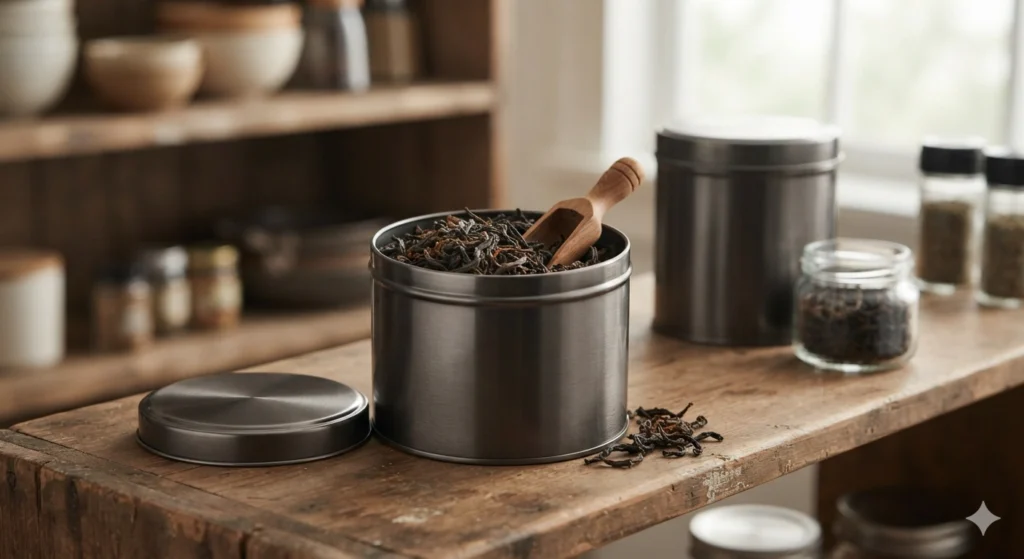
A tightly sealed, opaque container is a practical choice. You can also use a suitable sealed tea pouch. If the container is transparent, keep it in a dark cupboard rather than on a sunny shelf. Avoid storing tea near coffee, spices, or strongly scented products, because tea can absorb surrounding odors.
Storage needs vary by tea type. Green tea is often particularly sensitive to freshness and storage conditions, while other styles may retain their character for longer when kept properly. Some pu-erh teas are deliberately aged under suitable conditions, but aging does not automatically improve every pu-erh tea. The tea’s quality and storage environment matter.
A 2024 study indexed by FAO AGRIS on storage temperature and green tea quality examines how storage conditions can affect tea’s sensory qualities and chemical composition.
For everyday storage, keep the container sealed between uses and use a clean, dry spoon. Avoid exposing the leaves to steam or moisture. These small habits help maintain the character you wanted when you first opened the package.
Frequently Asked Questions
Where is the best place to buy loose leaf tea online?
Look for a seller that provides clear information about the tea’s origin, processing, flavor, and brewing method. Helpful product photos and realistic sensory descriptions make it easier to compare options. The best shop for you will depend on your taste, budget, and the kind of tea you want to explore.
How can I tell if loose leaf tea is good quality?
Start with the information provided by the seller, including the tea’s identity, origin, and processing. The dry leaves can offer additional clues, but appearance alone cannot prove quality. After brewing, notice the aroma, texture, flavor balance, and finish. If appropriate for the tea, try another infusion to see whether the flavor continues to develop.
Is loose leaf tea better than tea bags?
Not always. Loose leaf tea offers more control over brewing and can be enjoyable for exploring aroma and successive infusions. Tea bags are convenient and can also contain good-quality tea. The choice depends on the specific product and whether you prioritize exploration or ease of preparation.
What is the best loose leaf tea for beginners?
Jasmine green tea may suit someone who enjoys floral aromas, while Longjing is worth exploring if you prefer fresh, nutty notes. Bai Mu Dan offers a gentler profile, and Dian Hong can be a good starting point for people who already enjoy black tea. If you are curious about oolong, a light Tie Guan Yin is another option.
How much loose leaf tea should I buy?
For your first purchase, consider around 25–50 grams. This provides several opportunities to brew the tea and decide whether it suits your taste. Choose a smaller amount if you are unsure about the style or want to compare several teas.
How long does loose leaf tea stay fresh?
There is no single shelf life for every loose leaf tea. Freshness depends on the tea type, processing, packaging, and storage conditions. Green tea may lose some of its fresh character sooner than certain other styles, while some pu-erh teas are intended for aging under suitable conditions. Follow the seller’s storage advice and keep tea sealed away from heat, light, moisture, and strong odors.
Find the Loose Leaf Tea That Suits You
The best loose leaf tea online is not necessarily the most expensive one or the seller with the most impressive packaging. It is a tea that matches your taste, offered by a seller who gives you enough information to choose with confidence.
Start with a flavor you already enjoy, buy a manageable quantity, and brew it with care. Notice the aroma of the dry leaves, the texture of the tea, and the way its finish lingers. When you try another infusion, pay attention to what changes. Over time, these small observations will help you understand your preferences far better than a list of “best teas” ever could.
At Tea Passage, we focus on Chinese loose leaf tea and the variety of experiences it offers. You might be drawn to the floral lift of jasmine, the nutty warmth of Longjing, or the roasted depth of Da Hong Pao. Each offers a different way to slow down and appreciate what is in the cup.
Explore our Chinese Tea Collection →
References and Sources
- Loose Leaf Tea vs. Tea Bags — Tufts University — Consumer-oriented background on loose tea, tea bags, and particle size.
- Tea Market Overview — Food and Agriculture Organization — Background on tea production and the environmental conditions in which tea is cultivated.
- Consumer Guidance on Tea Classification — State Administration for Market Regulation — Official guidance on the six major tea categories and their classification.
- Impact of Storage Temperature on Green Tea Quality — FAO AGRIS — Research record concerning storage conditions and green tea quality.