Quick Answer
Phoenix Dancong comes from the Phoenix Mountains in Chaozhou, Guangdong, while Da Hong Pao originates in the Wuyi Mountains of Fujian. Both are Chinese oolong teas, but they often offer different tasting experiences. Dancong is known for its diverse floral, fruity, and honeyed aromas, while Da Hong Pao is often associated with roasted notes, a fuller texture, and the traditional concept of yan yun, or rock rhyme. These are general tendencies rather than strict rules. The cultivar, processing method, roasting level, and brewing technique all influence the flavor of the finished tea.
The difference between these teas goes beyond geography. Each comes from a distinct tea-growing tradition, with its own approach to leaf selection, processing, aroma, and roasting. Understanding these differences can help you choose a tea that fits your preferences.
What Is Phoenix Dancong Tea?
Phoenix Dancong is an oolong tea associated with the Phoenix Mountains in Chaozhou, Guangdong Province, China. It is especially known for its range of aromatic profiles, which can include floral, fruity, honeyed, nutty, and sometimes spicy notes.
The term Dancong is commonly translated as “single bush” and reflects a tradition of selecting tea trees or lineages for distinctive characteristics. However, the term does not guarantee that every commercial tea sold as Phoenix Dancong comes from one individual tree.
The Chaozhou geographic-indication standard describes Fenghuang Dancong as an oolong made from Fenghuang Shuixian cultivars. Its processing includes stages such as withering, oxidation, fixation, rolling, drying, and roasting. The standard also describes natural floral or fruity fragrance as part of the tea’s quality profile and requires production without added fragrance substances.
For tea drinkers, the most noticeable feature is often the aroma. Varieties such as Mi Lan Xiang (Honey Orchid) and Ya Shi Xiang (Duck Shit Aroma) are named for the sensory impressions associated with them, not because honey or flowers are necessarily added to the leaves. Their fragrances can be distinctive, but the exact balance of aroma, sweetness, and texture varies from one tea to another.
What Is Da Hong Pao Tea?
Da Hong Pao, also known as Big Red Robe, comes from the Wuyi Mountains in northern Fujian. It belongs to Wuyi Rock Tea (Wuyi Yancha), a regional family of oolong teas associated with the area’s growing environment and traditional processing methods.
Da Hong Pao is often linked with roasted aromas, toasted nuts, woody notes, and a deep, lingering finish. Depending on the tea, you may also find floral or fruity elements beneath the roast. Its identity is not defined by roasting alone; the balance between aroma, body, sweetness, and aftertaste matters just as much.
Another important term is yan yun, often translated as “rock rhyme.” This traditional tasting concept describes the overall impression of a Wuyi Rock Tea, including its aroma, mouthfeel, depth, and lingering finish. It should not be interpreted as a literal taste of stone.
The name Da Hong Pao also needs some context. The original mother trees are historically significant, but commercial Da Hong Pao is not generally harvested from those original trees. Market products may be made from related cultivars or blends, and a blend is not automatically fake or inferior. To assess quality, look at the tea’s actual characteristics and the seller’s information rather than relying on the name alone.
Dancong vs Dahongpao: Key Differences
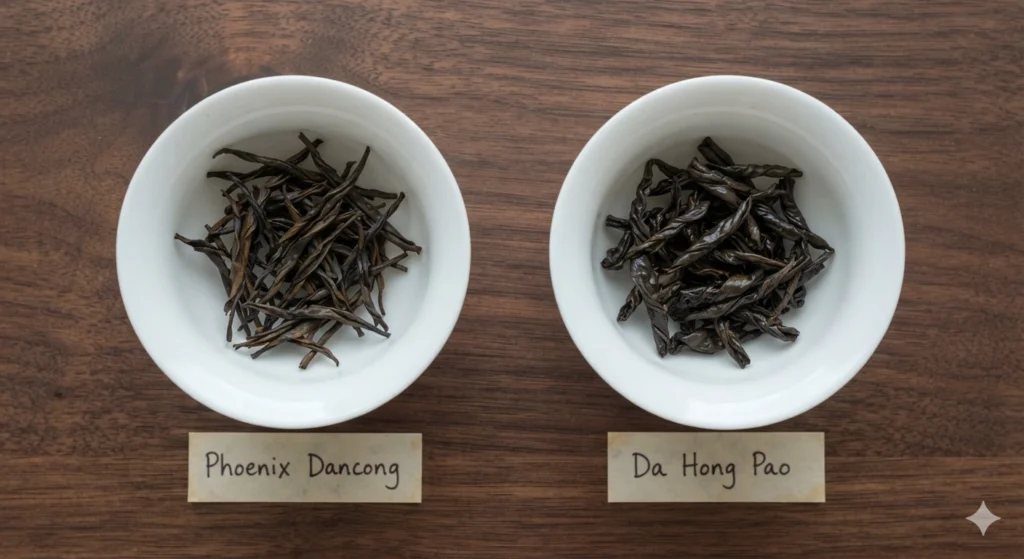
| Comparison | Phoenix Dancong | Da Hong Pao |
|---|---|---|
| Origin | Phoenix Mountains, Chaozhou, Guangdong | Wuyi Mountains, Fujian |
| Tea category | Chinese oolong tea | Wuyi Rock Tea, a type of oolong |
| Typical aroma | Floral, fruity, honeyed, sometimes nutty | Roasted, woody, sometimes floral or fruity |
| Flavor profile | Often expressive and aromatic, with varied sweetness | Often deeper and more structured, with roasted notes |
| Roasting | Varies by producer and style | Varies by producer and style; roasting is often prominent |
| Tasting focus | Aroma, sweetness, mouthfeel, and changes across infusions | Roast integration, texture, depth, and lingering finish |
| Beginner suitability | Mi Lan Xiang is a common starting point for floral, honeyed flavors | A lighter or well-balanced roast may suit beginners who enjoy deeper flavors |
These descriptions summarize common tendencies, not fixed rules. Dancong is not always a light, floral tea, and Da Hong Pao is not always heavily roasted. Both can show a range of aromas and textures depending on the specific tea and how it was made.
How Do Dancong and Dahongpao Taste Different?
The clearest way to compare these teas is to pay attention to the dry leaves, the first sip, and how the flavor changes over several infusions.
Phoenix Dancong: Aroma That Develops Across Infusions
With Phoenix Dancong, the aroma often stands out before the flavor. Warm the dry leaves in a gaiwan, and you may notice floral, honeyed, or fruity notes, depending on the variety. Mi Lan Xiang, for example, is commonly associated with honey-like sweetness and floral fragrance, while other Dancong varieties can have brighter or more pronounced floral profiles.
The first infusion carries these aromas into the cup. However, the tea may taste more delicate than its fragrance initially suggests. As you swallow, look for sweetness, a smooth or lightly coating texture, and a finish that remains after the liquid is gone.
The second and third infusions can reveal another side of the tea. The initial fragrance may soften, allowing the mouthfeel and lingering sweetness to become more noticeable. Part of the pleasure of Dancong is following the way its aroma and flavor evolve, rather than judging the tea by its first impression alone.
Da Hong Pao: Roast, Texture, and Depth
With Da Hong Pao, the roasted character may be more immediately apparent. The dry leaves can suggest toasted grain, nuts, or cocoa, depending on the roast level and the tea itself.
Once brewed, the liquor may feel fuller or more coating in the mouth. In a well-balanced example, the roast supports the tea’s other qualities rather than overwhelming them. Floral or fruity notes may appear beneath it, while the finish can bring together sweetness, a mineral impression, and lingering warmth.
As you move through subsequent infusions, the roasted aroma may become less dominant, allowing other aspects of the tea to emerge. Pay attention to whether the flavor remains balanced and whether the finish continues after you swallow.
Neither experience is inherently better. Dancong often invites you to follow its changing fragrance, while Da Hong Pao often encourages you to notice the relationship between roast, texture, and depth. Individual teas can overlap, so tasting remains more useful than relying on category labels alone.
Which Is More Floral, and Which Is More Roasted?
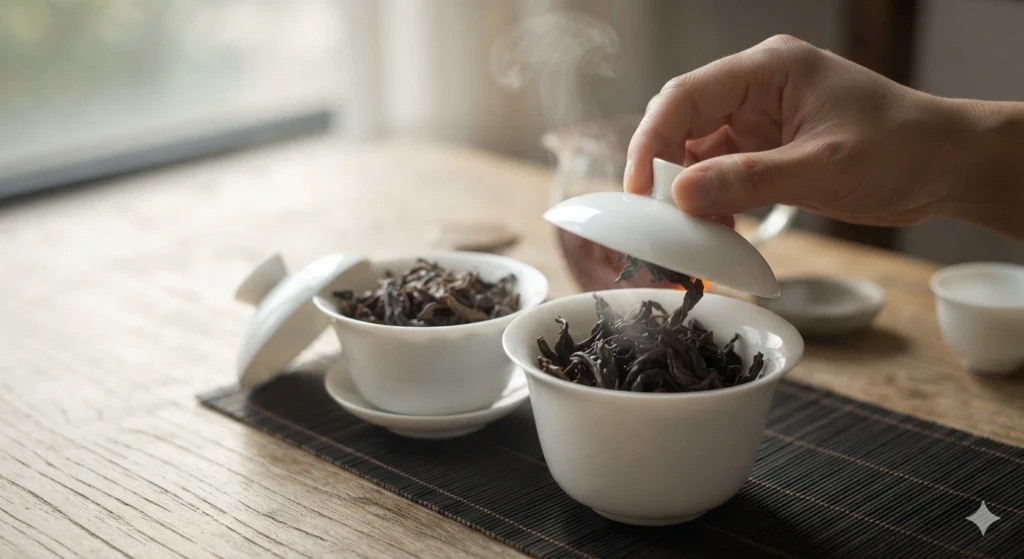
It is tempting to simplify the comparison to “Dancong is floral, Da Hong Pao is roasted.” That distinction can be useful as a starting point, but it does not describe every tea.
Certain Dancong varieties, including Mi Lan Xiang, are known for honeyed and floral aromas. Ya Shi Xiang can offer an especially pronounced floral impression. Other Dancong teas may lean toward nutty, fruity, or warmer notes.
Da Hong Pao is often associated with roasting, but its roast level can vary. A lighter roast may preserve more floral character, while a deeper roast can emphasize toasted nuts, cocoa-like notes, or a warmer profile.
The two categories therefore have some overlap. A floral Dancong and a lightly roasted Da Hong Pao may share similar aromatic qualities. Conversely, a more heavily roasted Dancong may offer warmer, deeper notes. The specific tea, rather than the name alone, determines what you will experience in the cup.
Which Tea Is Better for Beginners?
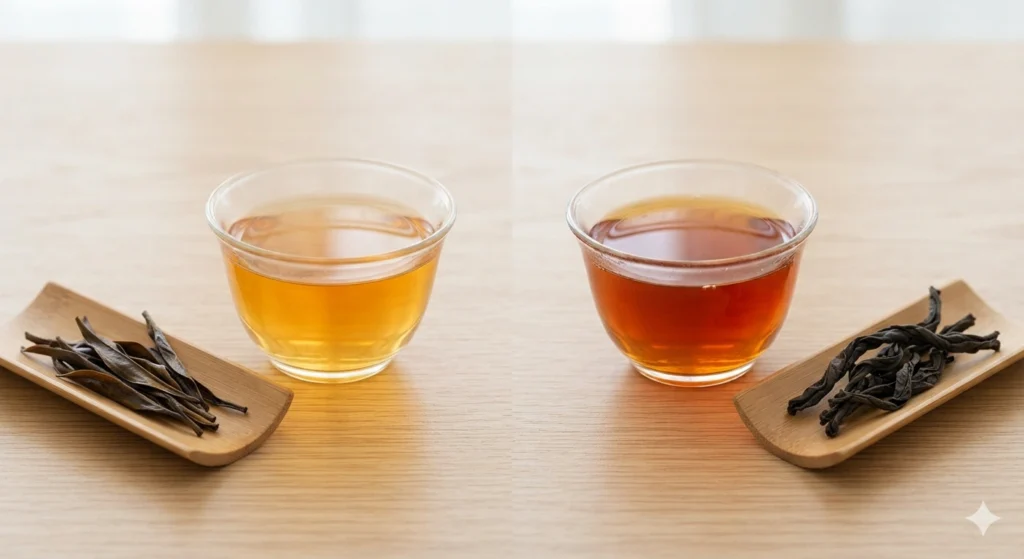
Neither tea is universally better for beginners. Your preferred flavors are a more useful guide than a general ranking.
If you enjoy floral, honeyed, or fruity aromas, start with Mi Lan Xiang, a popular Phoenix Dancong variety. Its combination of sweetness and fragrance can make it an approachable introduction to the category.
If you prefer roasted, nutty, or deeper flavors, Da Hong Pao may be a better fit. Its toasted character can appeal to people who enjoy similar notes in roasted foods or dark chocolate. If you are sensitive to strong roast flavors, ask the seller about the specific tea’s roasting level.
If both sound appealing, try a small amount of each. Brew them using similar conditions where practical, then compare the dry-leaf aroma, the warmed leaves, the first sip, and the finish. This side-by-side approach helps you identify what you actually enjoy instead of choosing based on reputation.
Is Dancong or Dahongpao More Expensive?
Neither category is always more expensive. Prices depend on factors such as origin, raw material, cultivar, harvest, processing, roasting, storage, and the seller’s positioning.
A carefully produced Dancong with distinctive aromatic qualities may command a high price. Premium Wuyi Rock Tea can also be expensive, particularly when its origin and production details are well documented. At the same time, both categories include teas at more accessible price points.
Be cautious about using price as a shortcut for judging quality. A high price does not guarantee a better cup, and a claim about mother-tree origins does not prove authenticity. For your first purchase, consider a smaller quantity from a seller who provides clear information about the tea and its production.
How to Choose Between Dancong and Dahongpao
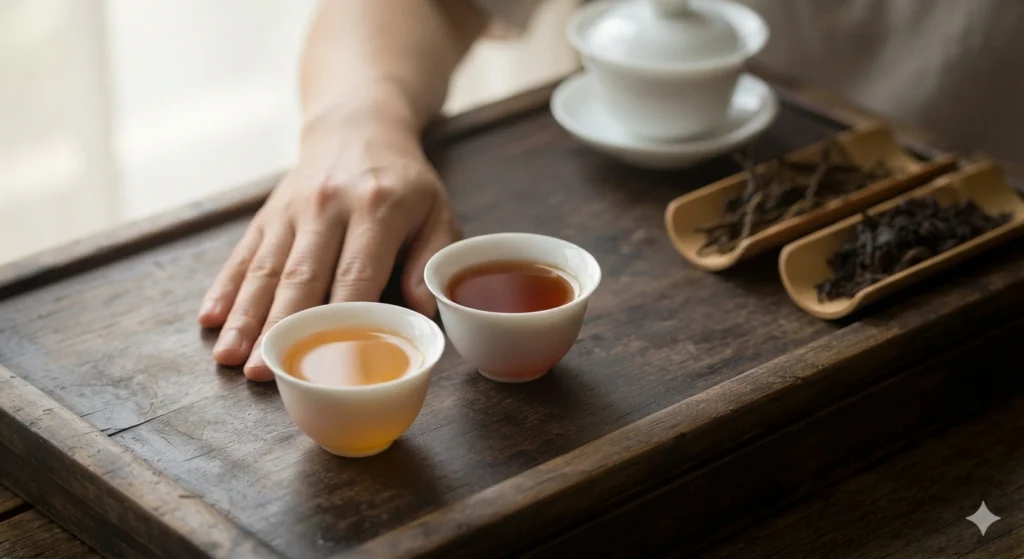
Start by identifying the experience you want from your tea.
- Choose Dancong if you are curious about expressive floral, honeyed, or fruity aromas and enjoy noticing how fragrance changes across infusions.
- Choose Da Hong Pao if you prefer roasted notes, a fuller texture, and a tasting experience that emphasizes depth and the relationship between roast and finish.
- Try both if you are unsure. Two small samples can teach you more about your preferences than choosing from descriptions alone.
When shopping, look for clear information about origin, variety, and roasting style. Ask questions if the product description is vague, and avoid assuming that a famous name guarantees a particular flavor or level of quality.
When tasting, slow down enough to notice the details. Smell the dry leaves, warm them, and take the first sip without rushing. Then brew another infusion and see what changes. The aroma may soften, the texture may become more apparent, or the finish may reveal a sweetness you did not notice at first.
That is where the comparison becomes personal. You are no longer choosing between two names; you are discovering which tea you enjoy returning to.
Frequently Asked Questions
Is Dancong the same as Da Hong Pao?
No. Phoenix Dancong comes from Chaozhou in Guangdong, while Da Hong Pao comes from the Wuyi Mountains in Fujian. Both are oolong teas, but they come from different regional traditions and often have different flavor profiles.
What is the main difference between Dancong and Dahongpao?
Dancong is especially known for its range of floral, fruity, and honeyed aromas. Da Hong Pao is often associated with roasted notes, a fuller texture, and the traditional concept of yan yun, or rock rhyme. These are common tendencies rather than absolute rules.
Is Dancong more floral than Da Hong Pao?
Some Dancong varieties are highly floral, but the category includes many different aroma profiles. Da Hong Pao can also have floral notes, particularly in teas where the roast does not dominate. Neither category is always more floral.
Is Da Hong Pao always heavily roasted?
No. Da Hong Pao is available at different roast levels. Some examples emphasize lighter, more delicate characteristics, while others have deeper roasted notes. Check the specific product description rather than assuming that all Da Hong Pao tastes the same.
Which is better for beginners, Dancong or Dahongpao?
It depends on your preferences. Mi Lan Xiang is a useful starting point if you enjoy honeyed and floral aromas. Da Hong Pao may suit you better if you prefer roasted, nutty flavors. Trying both side by side is a practical way to decide.
Is Da Hong Pao a type of Wuyi Rock Tea?
Yes. Da Hong Pao belongs to the Wuyi Rock Tea family, which also includes varieties such as Rou Gui and Shui Xian. Wuyi Rock Tea is a regional group of oolong teas from the Wuyi Mountains.
Discover the Difference Through Tea
Phoenix Dancong and Da Hong Pao offer two distinctive ways to appreciate Chinese oolong tea. Dancong invites you to explore its changing floral, fruity, and honeyed aromas. Da Hong Pao often draws attention to roasting, texture, depth, and the lasting impression of the finish.
At Tea Passage, we believe that understanding tea involves more than learning names and flavor descriptions. It means taking time with the leaves, noticing the changes from one infusion to the next, and finding the qualities that make a tea worth returning to.
Explore our Phoenix Dancong and Da Hong Pao teas to discover which style suits your palate.
References and Sources
- DB4451/T 1—2021: 地理标志产品 凤凰单丛(枞)茶 — Chaozhou municipal geographic-indication standard for Fenghuang Dancong tea.
- GB/T 18745—2026: 地理标志产品质量要求 武夷岩茶 — Industry source discussing the revised national standard for Wuyi Rock Tea.
- 潮州市人民政府:凤凰单丛茶5项省级地方标准发布,新增“丛韵”“山韵”等核心风味术语 — Chaozhou government report on local Dancong standards and sensory-evaluation terminology.