Quick Answer
Choosing a high-quality oolong tea is not about finding the most expensive tea or the highest grade on a label. Good oolong is defined by the quality of the leaves, the skill of processing, proper storage, and the experience it creates in the cup.
When choosing oolong tea, pay attention to the dry leaves, aroma, tea liquor, mouthfeel, aftertaste, and how the tea changes across multiple infusions. A great oolong should have a clear aroma, balanced flavor, smooth texture, and a lingering finish. It should continue to reveal new layers as you drink it.
The label can tell you where a tea comes from and how it was made. But the cup tells you whether the tea is truly worth drinking.
What Makes an Oolong Tea High Quality?
A good oolong tea is the result of many small decisions coming together: the quality of the raw leaves, the craftsmanship behind the processing, and the care taken after production.
The first thing to understand is that quality does not come from one single factor.
A famous origin does not automatically guarantee an excellent tea. A high price does not always mean better flavor. Even a premium grade does not tell you whether the tea matches your personal taste.
High-quality oolong begins with healthy tea leaves. The leaves should be properly processed, with their natural aroma and character preserved. During production, tea makers carefully control oxidation, shaping, and roasting to create a specific style.
For example:
- A light Tie Guan Yin is valued for floral aroma, freshness, and creamy texture.
- A Da Hong Pao is appreciated for roasted depth, mineral character, and long finish.
- A Taiwanese High Mountain Oolong is known for delicate fragrance, smooth texture, and clean sweetness.
Different oolongs express quality in different ways. The goal is not to find the same characteristics in every tea, but to recognize whether a tea is well-made within its own style.
Look at the Dry Leaves
The dry leaves are the first impression of an oolong tea. While appearance cannot tell you everything, it can reveal whether the tea has been handled with care.
High-quality oolong leaves are usually:
- Whole rather than broken into small pieces
- Clean and free from excessive dust
- Consistent in shape and color
- Appropriate for the style of tea
Different oolong traditions have different appearances.
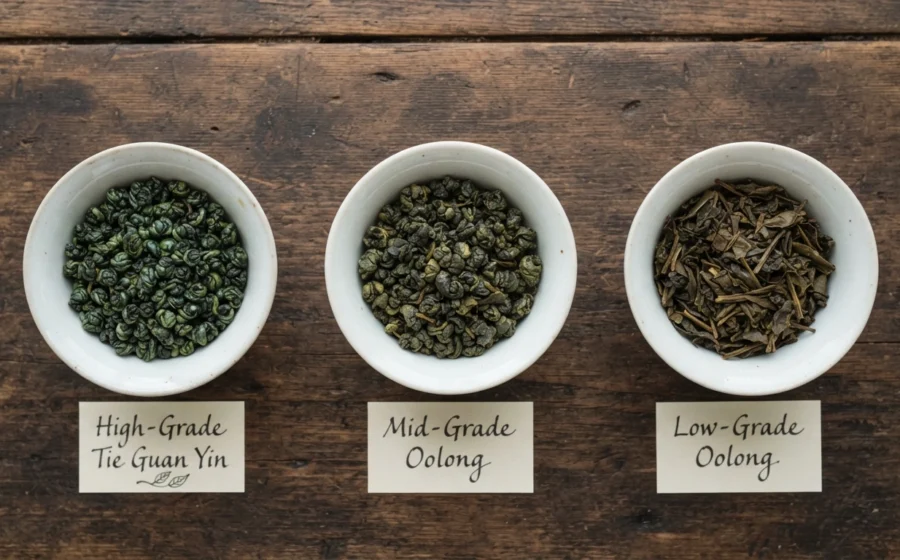
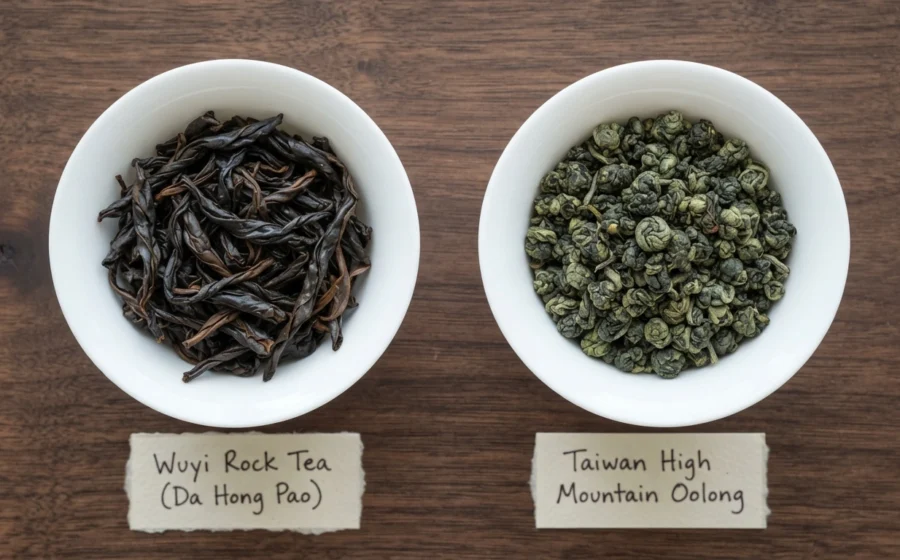
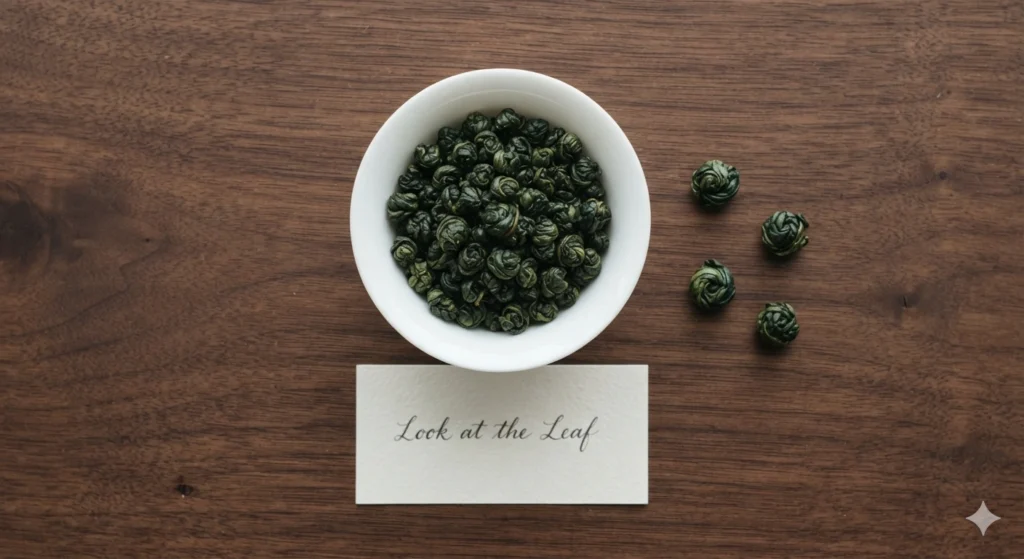
A light-aroma Tie Guan Yin is often tightly rolled into jade-green pearls. A Wuyi Rock Tea such as Da Hong Pao usually appears as dark, twisted strips. Phoenix Dan Cong leaves are long and slender, while Taiwanese High Mountain Oolong is commonly rolled into compact balls.
The important thing is not whether the leaves look a certain way. It is whether they look alive.
Healthy leaves often have a natural sheen and a sense of structure. Poor-quality tea may appear dull, uneven, overly broken, or mixed with too much dust.
The Chinese national standard for Tie Guan Yin (GB/T 19598-2006) includes requirements for appearance, aroma, taste, and infused leaf quality. These standards provide a reference for producers, but for tea drinkers, the final judgment still comes from the complete tasting experience.
Smell the Dry Tea and Warmed Leaves
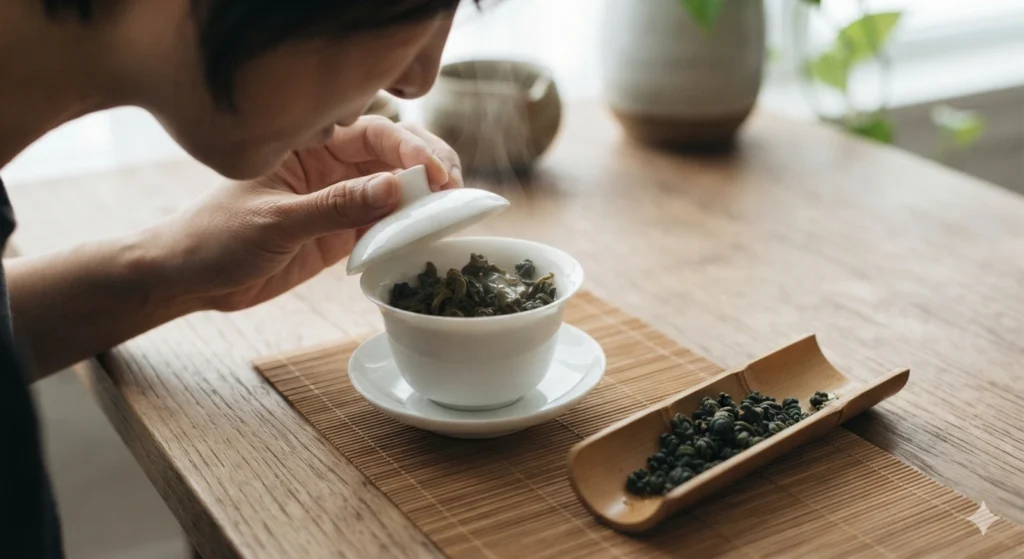
Aroma is one of the most revealing parts of choosing a high-quality oolong tea.
Before brewing, smell the dry leaves.
A good oolong should have a clear and natural fragrance. Depending on the style, you may notice:
- Orchid-like floral notes in Tie Guan Yin
- Toasted nuts and warm wood in Da Hong Pao
- Honey and fruit notes in Oriental Beauty
- Fresh mountain flowers in Taiwanese High Mountain Oolong
The aroma should feel natural and layered. It should not smell flat, stale, dusty, or artificially scented.
One of the best ways to evaluate oolong is to warm the leaves before drinking.
If you use a gaiwan or teapot, rinse the vessel with hot water, add the dry leaves, close the lid, and gently shake for a few seconds. Then open the lid and smell again.
The warmth releases aromatic compounds hidden inside the leaves. Often, this moment reveals more about the tea than the first sip.
A well-made oolong does not simply smell strong. It smells complex.
Pay Attention to the Tea Liquor
After brewing, the appearance of the tea liquor provides another clue about quality.
A good oolong generally produces a clear and bright infusion. The color depends on the style:
- Light oolongs may produce pale gold or golden-green liquor.
- Roasted oolongs may produce amber or deeper orange tones.
- Phoenix Dan Cong often produces golden amber liquor.
- Taiwanese High Mountain Oolong usually produces a clear, delicate golden color.
There is no single “correct” tea color. A darker tea is not automatically stronger or better, and a lighter tea is not automatically more delicate.
What matters is whether the appearance matches the style.
A fresh, well-made tea often has a lively brightness. The liquor feels clean and inviting rather than dull or lifeless.
However, appearance should never be judged alone. A beautiful color cannot replace aroma, texture, and taste.
Taste the Mouthfeel and Finish
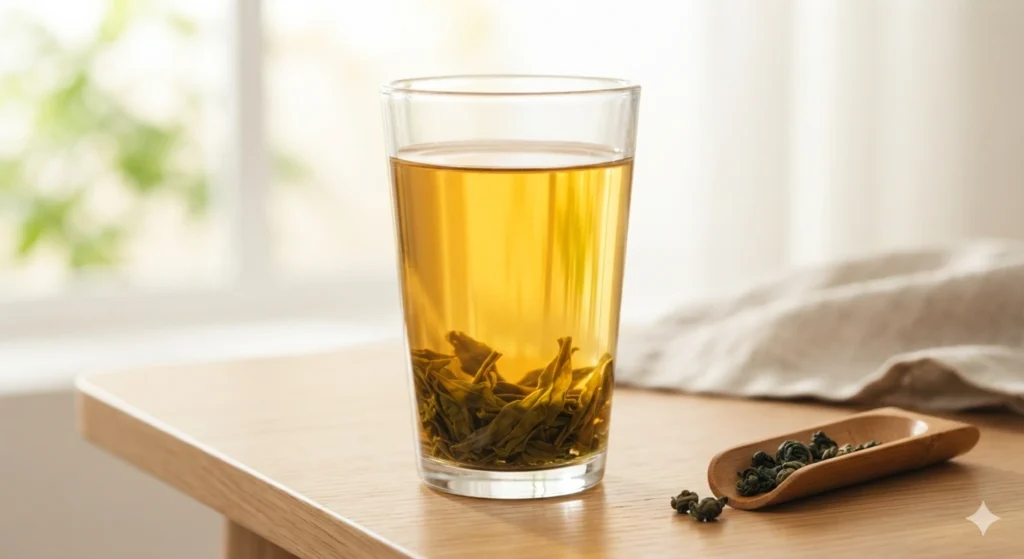
The real quality of an oolong tea appears when you drink it.
Flavor is only one part of the experience. Texture and finish are equally important.
A high-quality oolong often feels smooth and balanced. Some teas feel silky and creamy. Others feel fuller and deeper. Some create a pleasant sensation that stays on the palate after swallowing.
This is called mouthfeel.
For example:
- Tie Guan Yin may feel soft, creamy, and refreshing.
- Da Hong Pao may feel fuller, warmer, and more structured.
- High Mountain Oolong may feel smooth and almost buttery.
A good oolong should have balance.
A little astringency can add structure, but it should not overpower the tea. Harsh bitterness, dryness, or a rough sensation may indicate poor brewing, poor processing, or lower-quality leaves.
The finish is often where experienced tea drinkers pay the most attention.
After swallowing, notice:
- Does sweetness return?
- Does the aroma remain?
- Does the tea leave a clean feeling?
- Does the flavor disappear immediately?
A tea with a long, pleasant finish usually has more depth than one that only tastes strong at the beginning.
See How the Tea Changes Across Infusions
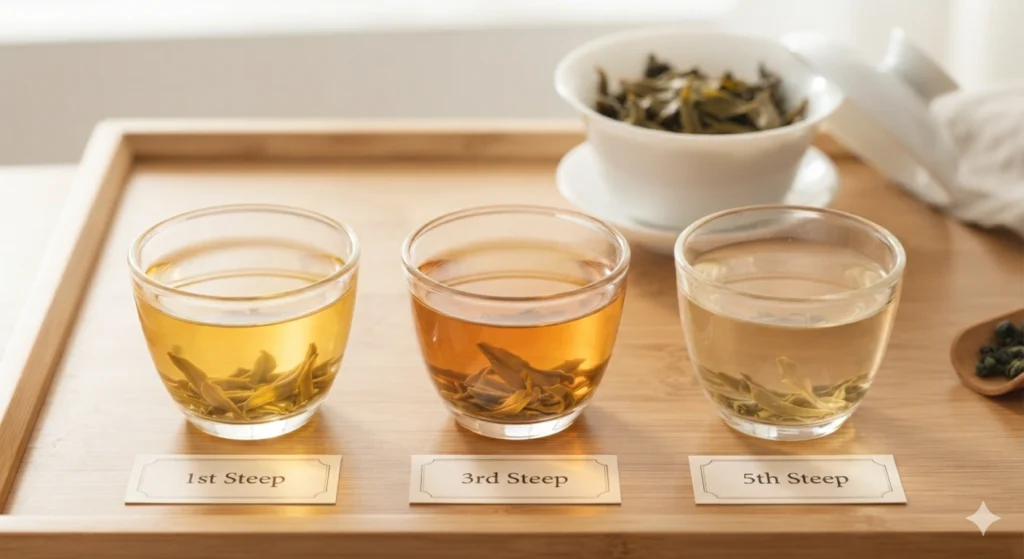
One of the biggest differences between average oolong and truly enjoyable oolong is how the tea develops over multiple infusions.
A good oolong should not give everything away in the first cup.
When you brew loose leaf oolong, the leaves slowly open and release different layers of aroma and flavor. The first infusion may highlight fragrance. The second or third infusion often reveals more sweetness, texture, and balance.
This is especially noticeable with traditional oolongs.
A Da Hong Pao may begin with roasted notes, then gradually reveal mineral depth and dried fruit sweetness. A Tie Guan Yin may become softer and creamier after the leaves fully open. A High Mountain Oolong may develop a smoother texture and a longer floral finish.
A tea that smells impressive when dry but becomes flat after one infusion may not have the depth you expect.
When evaluating an oolong, try brewing it several times. The ability to continue giving flavor is one of the clearest signs of good leaf quality and careful processing.
Does Higher Price Mean Higher Quality?
Price can provide clues, but it should never be the only measure of quality.
Oolong tea prices are influenced by many factors:
- Origin
- Harvest season
- Production difficulty
- Cultivar rarity
- Processing skill
- Availability
- Market reputation
A famous mountain or a traditional name can increase the price of a tea. However, a more expensive tea does not always mean it will be more enjoyable for you.
For example, someone who enjoys floral and fresh flavors may prefer a well-made Taiwanese High Mountain Oolong over a very expensive heavily roasted Wuyi Rock Tea.
Someone who enjoys deeper flavors may appreciate Da Hong Pao more than a delicate premium green-style oolong.
The best tea is not always the most expensive tea. It is the tea that matches your own preference.
When buying oolong, focus less on impressive words like “luxury” or “premium” and pay more attention to:
- Where the tea comes from
- When it was harvested
- How it was processed
- How it tastes after brewing
How Storage Affects Oolong Tea Quality
Even excellent oolong can lose its character if it is stored poorly.
Tea leaves naturally absorb moisture and surrounding aromas. Exposure to heat, light, humidity, and strong smells can slowly damage the qualities that make oolong enjoyable.
Poor storage can cause tea to lose:
- Floral aroma
- Freshness
- Sweetness
- Layered flavor
Good storage helps preserve what the tea maker created.
In general, oolong should be stored:
- In an airtight container
- Away from sunlight
- Away from moisture
- Away from strong odors
- In a cool environment
Different oolong styles also age differently.
Lightly oxidized teas, such as many modern Tie Guan Yin and Taiwanese High Mountain Oolongs, are often best enjoyed relatively fresh because their floral aromas are delicate.
More heavily roasted oolongs, such as traditional Wuyi Rock Tea, can sometimes develop additional depth when stored properly.
Freshness matters, but the ideal age depends on the style of tea.
How To Judge Oolong Tea When Buying Online
Buying oolong tea online is challenging because you cannot smell the leaves or taste the tea before purchasing.
However, there are several things you can check.
Look for Clear Origin Information
A trustworthy tea seller should explain:
- Where the tea was grown
- What type of oolong it is
- Harvest information when available
- Processing style
- Flavor characteristics
A description like “best premium tea” tells you very little.
A better description explains what makes the tea unique:
“Lightly roasted Wuyi Rock Tea with mineral notes and a long finish”
or
“High Mountain Oolong with floral aroma and creamy texture”
Specific information shows confidence in the product.
Buy Smaller Amounts First
Even experienced tea drinkers rarely know exactly what they will think of a tea before tasting it.
When trying a new oolong:
- Start with a smaller package
- Brew it several times
- Compare it with teas you already know
- Decide whether it fits your taste
Tea is personal. A famous tea may not become your favorite tea.
Pay Attention to Packaging and Storage
Good sellers usually care about how tea reaches the customer.
Look for information about:
- Packaging method
- Storage conditions
- Harvest date
- Freshness
The journey after production matters almost as much as production itself.
How Quality Differs Across Oolong Styles
There is no single definition of “high quality oolong.”
Different oolong styles have different standards because each tradition values different characteristics.
Understanding these differences helps you judge each tea fairly.
Tie Guan Yin
Tie Guan Yin from Anxi, Fujian is known for its floral character and elegant texture.
Quality is often judged by:
- Orchid-like aroma
- Smooth mouthfeel
- Freshness
- Sweet aftertaste
- Balance between fragrance and body
The Chinese national standard (GB/T 19598-2006) defines requirements for Anxi Tie Guan Yin, including appearance, aroma, taste, and infused leaf quality.
A good modern Tie Guan Yin often has a bright floral fragrance, creamy texture, and refreshing finish.
Traditional roasted Tie Guan Yin follows a different style, with deeper roast character and a warmer, more developed flavor.
Da Hong Pao / Wuyi Rock Tea
Wuyi Rock Tea is judged differently from lighter oolongs.
Quality factors include:
- Cultivar
- Growing environment
- Roasting skill
- Mineral character
- Body
- Finish
The national standard for Wuyi Rock Tea (GB/T 18745-2006) defines requirements for Wuyi Rock Tea products and varieties.
A good Da Hong Pao should have a balanced roast. The roast should support the tea rather than cover it.
Many tea drinkers look for yan yun, or “rock rhyme,” a traditional concept describing the mineral depth, texture, and lingering character associated with Wuyi Rock Tea.
Phoenix Dan Cong
Phoenix Dan Cong is famous for its powerful aroma and distinctive cultivars.
Unlike some oolongs where general style is easier to recognize, Dan Cong quality is closely connected to the individual tea tree variety.
Good Dan Cong should have:
- Clear natural fragrance
- Smooth texture
- Strong but balanced aroma
- Long-lasting finish
Different cultivars create different profiles, including floral, fruity, honeyed, or nutty characteristics.
The regional standard (DB44/T 820-2010) provides grading and quality references for Phoenix Dan Cong.
Taiwanese Oolong
Taiwanese oolong covers a wide range of styles, so quality depends on the specific tea.
High Mountain Oolong is often valued for:
- Floral fragrance
- Creamy texture
- Clean sweetness
- Smooth finish
Dong Ding is appreciated for its balanced character and gentle roast.
Oriental Beauty is known for honeyed, fruity flavors and a deeper sweetness.
Taiwanese oolong does not follow one universal grading system. Instead, quality is often evaluated through regional competitions and sensory evaluation systems such as the Taiwan Tea Assortment and Grading system (TAGs).
Common Mistakes When Choosing Oolong Tea
Many beginners make the same mistakes when buying oolong.
Judging Only by Appearance
Beautiful leaves can be impressive, but appearance alone cannot tell you how the tea tastes.
A tea must be experienced through aroma, flavor, texture, and finish.
Assuming Higher Grade Means Better Tea
Grade can tell you something about selection and production standards, but it does not tell you whether the tea matches your preference.
Chasing the Most Expensive Tea
Expensive tea can be excellent, but price alone does not guarantee enjoyment.
A moderately priced tea from a skilled producer may become your everyday favorite.
Buying Too Much Before Tasting
Try smaller quantities first.
A tea that sounds perfect on paper may taste completely different once it reaches your cup.
A Simple Oolong Tea Quality Checklist
Before buying an oolong tea, ask yourself:
- Dry leaf: Are the leaves whole, clean, and appropriate for the style?
- Aroma: Does the tea smell natural and expressive?
- Tea liquor: Is the infusion clear and lively?
- Mouthfeel: Is the texture smooth rather than harsh?
- Flavor: Does the tea have layers rather than a flat taste?
- Finish: Does sweetness and aroma remain after swallowing?
- Reinfusion: Does the tea continue developing across multiple steeps?
- Storage: Has the tea been protected from moisture and odors?
- Seller: Is the information about origin and processing clear?
If the answer is yes, you are likely looking at a tea worth exploring.
Frequently Asked Questions
What makes an oolong tea high quality?
High-quality oolong comes from good leaf material, skilled processing, proper storage, and balanced flavor. A good tea should have clear aroma, smooth texture, and a pleasant lingering finish.
How can I judge oolong quality without tasting it?
You cannot fully judge a tea without tasting it, but you can examine the dry leaves, smell the aroma, and check whether the seller provides clear information about origin and processing.
Does expensive oolong tea mean better quality?
Not always. Price reflects many factors, including origin, rarity, and production cost. The best tea is the one that matches your taste.
How many times can good oolong tea be brewed?
Many quality oolongs can be brewed several times. The flavor changes with each infusion, revealing different aromas and textures.
What should I look for when buying oolong online?
Look for clear information about origin, harvest, processing, storage, and flavor characteristics. Start with smaller quantities before buying more.
A label can describe a tea, but the cup tells the real story.
Quality is not only found in a grade or a price tag. It appears when the leaves open, when the aroma rises, and when the finish stays after the last sip.
At Tea Passage, we believe choosing tea is not about chasing the most expensive leaf. It is about learning how to notice the details — the fragrance, the texture, the changing flavors, and the quiet moments that make tea worth drinking.
References and Sources
- GB/T 19598-2006: Geographical Indication Product — Anxi Tie Guan Yin — National standard for Anxi Tie Guan Yin quality requirements.
- GB/T 18745-2006: Geographical Indication Product — Wuyi Rock Tea — National standard for Wuyi Rock Tea products and varieties.
- DB44/T 820-2010: Geographical Indication Product — Phoenix Dan Cong Tea — Regional standard for Phoenix Dan Cong quality requirements.
- Taiwan Tea Assortment & Grading System (TAGs) — Taiwan tea sensory evaluation framework.