Quick Answer
Wuyi Rock Tea and Taiwanese oolong represent two very different oolong traditions. Wuyi Rock Tea comes from the Wuyi Mountains of Fujian and is known for twisted leaves, developed roasting, and flavors that can be roasted, mineral, woody, or nutty. Taiwanese oolong covers a much wider range, from fresh and floral High Mountain Oolong and Baozhong to more developed Dong Ding and highly oxidized Oriental Beauty. The difference is not simply between China and Taiwan. Cultivar, growing conditions, harvest, oxidation, shaping, roasting, and brewing all help shape the final tea.
That distinction makes this comparison more interesting than it may seem at first. Wuyi Rock Tea is a regional family with a recognizable tradition, while Taiwanese oolong includes many different styles from across the island.
As a result, the two sides can produce very different cups. Wuyi often moves toward roast, depth, and mineral character, while Taiwanese teas can range from floral and creamy to fruity and honeyed.
What Is Wuyi Rock Tea?
Wuyi Rock Tea, or yancha, is a family of oolong teas from the Wuyi Mountains in northern Fujian. The region is famous for steep mountains, rocky terrain, narrow valleys, and long-established tea gardens.
The most familiar name is Da Hong Pao, or Big Red Robe. Other important Wuyi teas include Rou Gui and Shui Xian. Although all three belong to the same regional tradition, they can taste quite different depending on cultivar, processing, and roast.
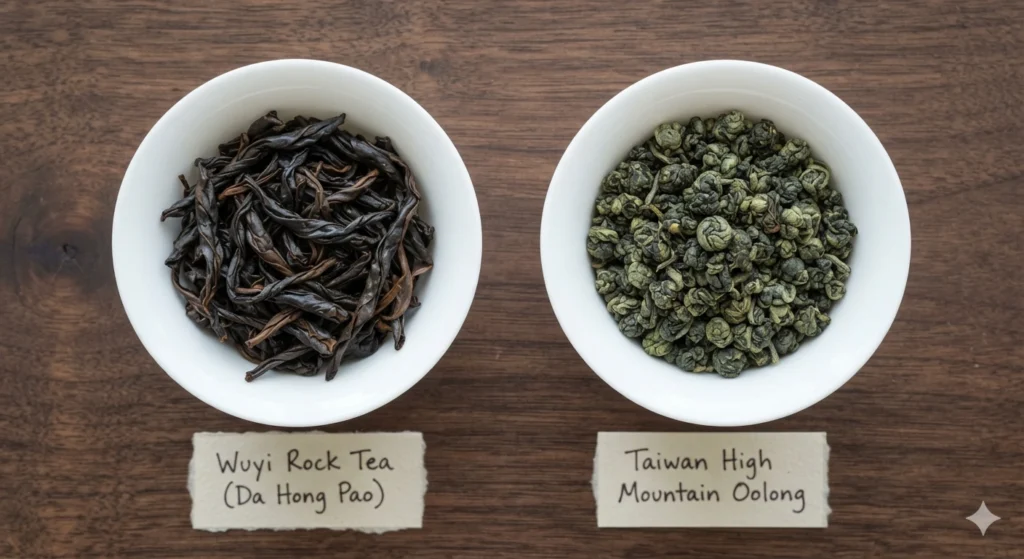
Wuyi Rock Tea usually has twisted rather than tightly rolled leaves. Producers oxidize the leaves to varying degrees before shaping and roasting them. Many teas receive a fairly developed roast, which can bring out toasted nuts, cocoa, dried fruit, woody notes, and mineral depth.
The finished tea often feels fuller and more structured than a lightly processed oolong. A well-made roast should support the tea rather than simply cover it, so the character can continue to change across several infusions.
That is one reason Wuyi tea is enjoyable to taste slowly. The first cup may emphasize roast, while later infusions can reveal more of the tea underneath.
What Is Taiwanese Oolong Tea?
Taiwanese oolong is not a single style. The island has developed a wide range of oolong traditions, with differences in region, cultivar, oxidation, shaping, and roasting.
High Mountain Oolong from areas such as Alishan and Lishan is often lightly oxidized and rolled into tight balls. These teas can show fresh floral aromas, smooth texture, and gentle sweetness.
Dong Ding usually has a more developed character. Depending on the producer, it can combine floral notes with light roasting, sweetness, and a rounder body.
Baozhong sits toward the lighter end of the oolong spectrum. The leaves are less tightly rolled, and the tea often emphasizes fresh floral fragrance and a clean finish.
Oriental Beauty, or Dong Fang Mei Ren, takes a very different path. Higher oxidation gives it a deeper color and often produces honeyed, fruity, and mature flavors. Traditional production also involves leafhopper feeding before harvest, which triggers changes in the plant and contributes to the tea’s distinctive character.
These examples show why “Taiwanese oolong” is such a broad term. One tea may feel very light and floral, while another can be roasted, fruity, or deeply honeyed.
Wuyi Rock Tea vs Taiwanese Oolong at a Glance
| Feature | Wuyi Rock Tea | Taiwanese Oolong |
|---|---|---|
| Main Origin | Wuyi Mountains, Fujian | Taiwan |
| Leaf Style | Twisted strips | Mostly rolled, depending on style |
| Oxidation | Moderate to higher, varies | Wide range |
| Roasting | Often medium to heavy | Varies by style |
| Aroma | Roasted, mineral, woody | Floral, fresh, creamy, fruity |
| Flavor | Toasted, mineral, nutty, fruity | Floral, sweet, creamy, fresh, honeyed |
| Body | Medium to full | Light to medium, depending on style |
| Finish | Deep, warm, mineral | Clean, sweet, floral, or fruity |
The table gives you a general direction rather than a rigid classification. Wuyi teas differ in roast and oxidation, while Taiwanese oolong covers an even wider range of styles.
Wuyi vs Taiwan: How Does Origin Shape Oolong?
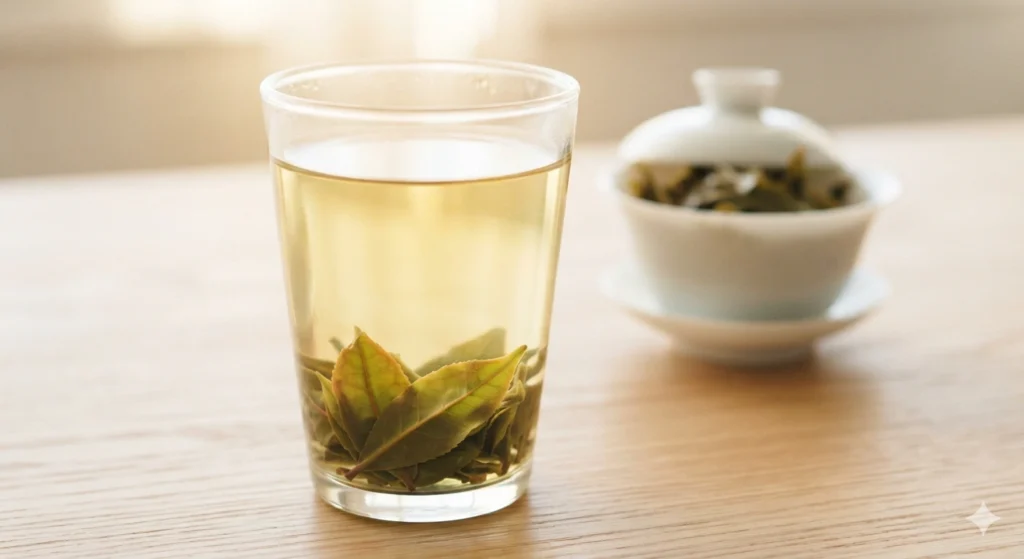
Origin gives each tea tradition its own starting point, but it does not determine the final flavor by itself.
The Wuyi Mountains have a very different landscape from the tea-growing areas of Taiwan. Wuyi’s steep terrain and traditional yancha gardens provide one setting, while Taiwan combines mountain regions, lower-elevation farms, and several distinct tea-producing areas.
Growing conditions affect how the plant develops, but cultivar and processing also matter. A tea grown in a particular place can taste very different when producers use another cultivar or choose a different production style.
Taiwan makes this especially clear. High Mountain Oolong, Dong Ding, Baozhong, and Oriental Beauty all come from the same island, yet they offer very different drinking experiences.
So when you compare origin, think of it as context rather than a flavor guarantee.
How Are Wuyi Rock Tea and Taiwanese Oolong Made?
The production methods help explain much of the difference between the two traditions.
Wuyi Rock Tea usually follows a process that includes withering, controlled oxidation, shaping, drying, and roasting. Producers twist the leaves into strips, then develop the tea through roasting. Depending on the style, the roast may continue through more than one stage.
That roasting creates the deeper character many people associate with Wuyi tea. Toasted grain, nuts, cocoa, dried fruit, and woody notes may become more noticeable as the tea develops.
Taiwanese producers use several different approaches. High Mountain Oolong and many other Taiwanese teas are rolled into compact balls, while Baozhong keeps a more open shape. Oxidation and roasting also vary considerably. A lightly processed High Mountain Oolong and a developed Dong Ding can therefore taste very different despite coming from the same island.
The important difference is not that one production method is better. Each tradition has developed its own way of working with the leaf, and that craft shows up in the final cup.
Oxidation and Roasting: The Key Difference
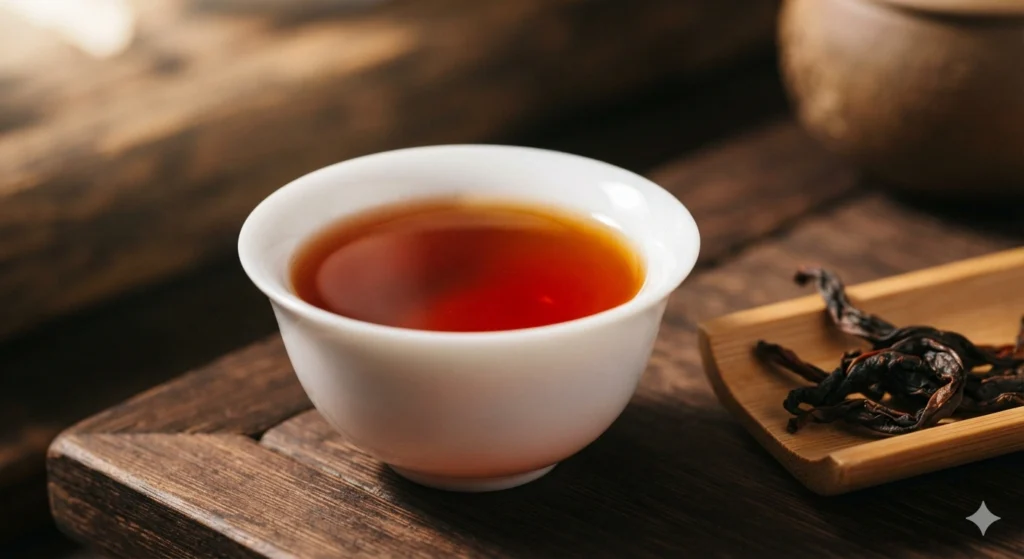
Oxidation and roasting both influence oolong, but they are two different processes.
Oxidation begins after the leaf is picked and damaged during processing. As the leaf reacts with oxygen, its color, aroma, and flavor change. Lower oxidation keeps more of the fresh character, while greater oxidation can bring deeper fruit, body, and complexity.
Roasting adds another layer. Producers use heat to dry and further develop the tea, creating toasted, nutty, caramel, cocoa, or woody notes depending on how they roast it.
The two processes do not have to move together.
A tea can have relatively high oxidation with little roast, creating a deeper and fruitier cup without a strongly toasted character. Another tea may receive a substantial roast while keeping a relatively lighter base underneath.
That distinction matters when comparing these two traditions. Many Wuyi Rock Teas show a noticeable roast, while Taiwanese oolong covers a much broader range.
How Do They Taste Different?
Wuyi Rock Tea often leads with roast, mineral character, and depth. Depending on the tea, you may notice toasted grain, nuts, cocoa, dried fruit, or wood. The body can feel broad and substantial, while the finish may stay warm and mineral for quite a while.
Taiwanese oolong has no single flavor profile, but many styles lean toward floral fragrance, freshness, creamy texture, sweetness, or fruit. High Mountain Oolong can feel soft and fresh, while Dong Ding brings more roast and Oriental Beauty offers a deeper honeyed character.
The difference becomes easier to understand when you taste rather than compare labels.
One side often emphasizes depth and roast. The other offers a wider range, with fragrance and freshness playing a major role in many styles.
Aroma Comparison
Aroma gives you one of the quickest clues.
Wuyi Rock Tea often brings warm, roasted notes. You may smell toasted grain, nuts, cocoa, dried fruit, or mineral-like impressions as the tea opens.
Taiwanese oolong can move in several directions. High Mountain Oolong and Baozhong often show fresh floral aromas. Dong Ding can combine flowers with gentle toastiness, while Oriental Beauty may bring honeyed and fruity fragrance.
A useful habit is to smell the tea more than once. Try the dry leaves first, then warm them in your gaiwan, and finally smell the brewed leaves.
The aroma can change considerably between those stages.
Which Has a Fuller Body?
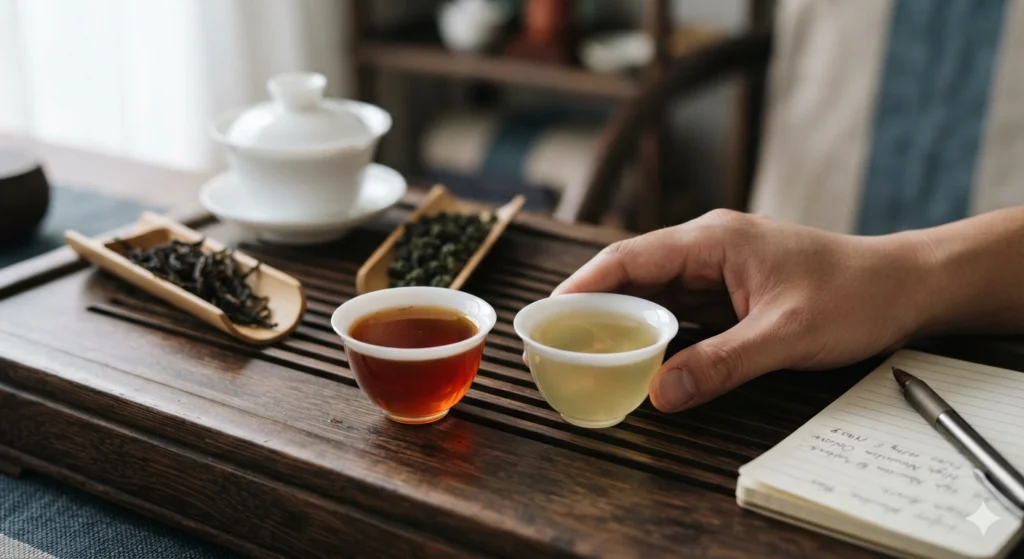
Wuyi Rock Tea often feels fuller than lighter Taiwanese oolongs, but body depends on much more than region.
Leaf material, cultivar, oxidation, roasting, and brewing all affect texture. A heavily roasted Wuyi tea may feel broad and coating, while a lightly oxidized High Mountain Oolong can feel silky and soft.
Taiwan also produces fuller styles. Dong Ding, for example, can have a rounder texture than a very light High Mountain tea. This is why it helps to compare specific teas rather than treating an entire region as one style.
When tasting for body, focus on the middle of the sip. Does the tea spread across your palate? Does the texture feel smooth, thin, creamy, or coating? Those details tell you more than leaf color alone.
What Is Yan Yun in Wuyi Rock Tea?
Yan yun, often translated as “rock rhyme,” is a traditional way of describing the overall character of Wuyi Rock Tea.
It does not simply mean that the tea tastes like rocks.
Instead, the idea brings together several sensations: aroma, mouthfeel, mineral character, depth, and lingering aftertaste. Tea drinkers may notice a cool or stony impression at the back of the palate, but yan yun is broader than one flavor note.
You usually appreciate this quality more clearly across several infusions. A tea can begin with obvious roast, then become smoother and more mineral as the leaves open.
Taiwanese oolong generally does not use the same vocabulary. Drinkers more often describe those teas through fragrance, texture, sweetness, and fruit or floral character.
Which Is More Floral or Roasted?
The answer depends on the specific tea, but the general pattern is fairly clear.
Lighter Taiwanese styles such as High Mountain Oolong and Baozhong often show the strongest floral and fresh character. Their fragrance can feel lifted and delicate. Dong Ding can bring some roast into that profile, while Oriental Beauty leans more toward honeyed and fruity notes.
Wuyi Rock Tea usually places more emphasis on roast, mineral depth, and woody character. Da Hong Pao and Rou Gui are good examples, although the exact balance changes from one tea to another.
So if you want a strongly floral cup, start with a lighter Taiwanese style. When roasted and mineral flavors appeal to you more, Wuyi Rock Tea is the natural direction. For something between those extremes, Dong Ding can be an interesting place to explore.
Which Is Better for Beginners?
Neither tradition is automatically better for a first-time drinker.
A good starting point depends on the flavors you already enjoy. Taiwanese High Mountain Oolong may feel more familiar if you like floral, fresh, or creamy teas. Wuyi Rock Tea, especially Da Hong Pao, may be more appealing if you prefer roasted nuts, cocoa, mineral depth, or a fuller texture.
Dong Ding can also work well for someone who wants a little roast without moving all the way into a darker Wuyi style.
If you are unsure, trying one lighter Taiwanese tea and one Wuyi Rock Tea side by side is more useful than choosing based on a general ranking.
How To Brew Wuyi Rock Tea vs Taiwanese Oolong
Both styles work well with short infusions, especially when you use a gaiwan or small teapot.
For Wuyi Rock Tea, start around 90–100°C (194–212°F). Short infusions of roughly 10–20 seconds give you room to adjust as the roast and deeper flavors develop.
For a lighter Taiwanese oolong, begin around 85–95°C (185–203°F). High Mountain Oolong and Baozhong can benefit from slightly cooler water, while Dong Ding and more developed Taiwanese teas can handle higher temperatures.
These are starting points rather than fixed recipes.
When the tea tastes harsh, reduce the temperature or shorten the infusion. When the cup feels too light, use a little more leaf or give it slightly more time.
The important thing is to adjust one variable at a time so you can understand what changes the tea.
Tasting Wuyi Rock Tea and Taiwanese Oolong Side by Side
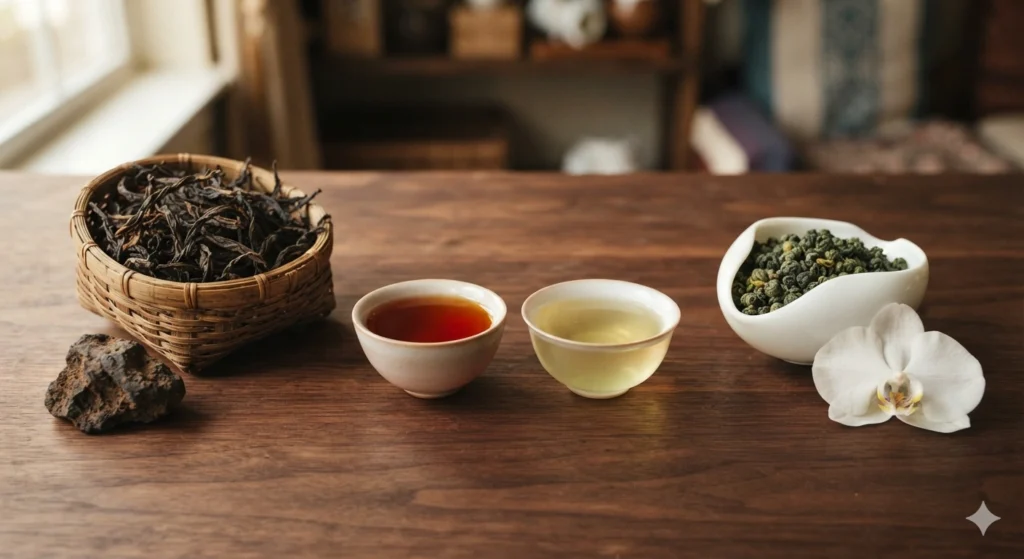
A side-by-side tasting can tell you more than a page of tasting notes. Da Hong Pao and Taiwanese High Mountain Oolong make a useful pair because the contrast is easy to notice.
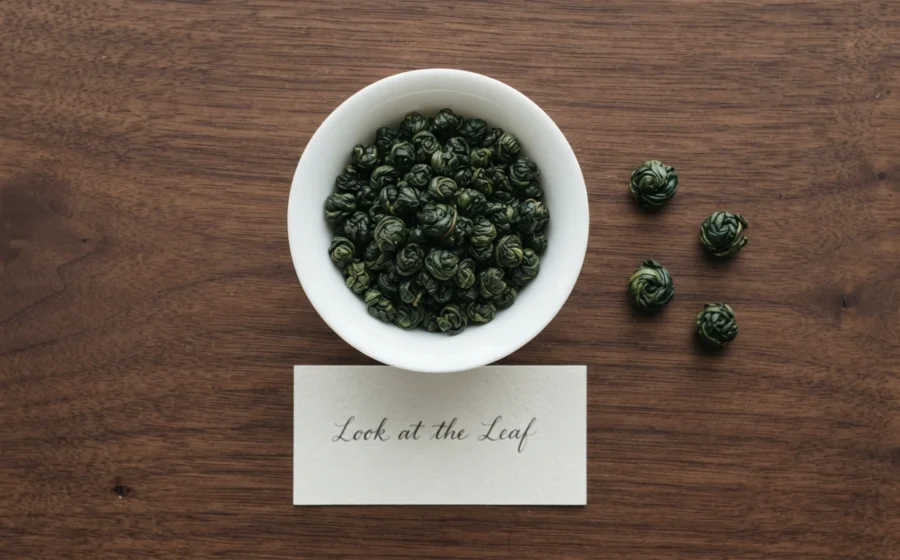
Start with the dry leaves. Da Hong Pao usually appears as dark, twisted strips, while High Mountain Oolong is commonly rolled into compact green balls. The difference in shape already tells you something about how the leaves were processed.
Next, smell the dry leaves.
The Da Hong Pao may bring roast, toasted nuts, or warm wood. The High Mountain Oolong can feel more floral, fresh, and softly sweet.
Now warm the leaves. Pour hot water into the gaiwan, discard it, and close the lid for a few seconds. Open it and smell again.
The warmed leaf often reveals much more than the dry leaf. The roast of the Da Hong Pao may become deeper, while the High Mountain Oolong can release a stronger floral aroma.
Then brew the first infusion.
Taste the Da Hong Pao slowly. Notice the texture first. It may feel broader and fuller, with roasted notes followed by mineral or woody character. Let the tea sit in your mouth for a moment before swallowing, then wait for the finish.
Move to the High Mountain Oolong. Notice how the floral fragrance interacts with the texture. The tea may feel lighter and softer, with a gentle sweetness that becomes clearer after the sip.
Do not rush to decide which one you prefer.
Wait a few seconds and notice what remains. Does the aroma stay? Does sweetness return? Does the tea leave a dry, mineral, creamy, or cooling sensation?
Now brew both teas again.
The second infusion often changes the comparison. Da Hong Pao may lose some of its initial roast and reveal more mineral or woody depth. High Mountain Oolong may become softer, sweeter, or more expressive as the leaves open further.
This is one of the reasons we enjoy tasting at Tea Passage. We are less interested in assigning a winner than in understanding what the leaf is doing from one infusion to the next.
The dry leaf, the first aroma, the texture, the finish, and the second infusion all tell part of the story.
Frequently Asked Questions
What is the difference between Wuyi Rock Tea and Taiwanese oolong?
Wuyi Rock Tea comes from the Wuyi Mountains of Fujian and often emphasizes roasted, mineral, woody, and nutty character. Taiwanese oolong covers a much wider range, from fresh High Mountain Oolong and Baozhong to more developed Dong Ding and Oriental Beauty.
Is Wuyi Rock Tea stronger than Taiwanese oolong?
Not necessarily. Wuyi Rock Tea often has a fuller body and deeper roast, but Taiwanese oolong includes styles with very different levels of body and intensity.
Which is more floral, Wuyi Rock Tea or Taiwanese oolong?
Lighter Taiwanese oolongs such as High Mountain Oolong and Baozhong are often more floral. Wuyi Rock Tea generally emphasizes roast, mineral, and woody character.
What is yan yun?
Yan yun, or rock rhyme, is a traditional concept describing the combined impression of aroma, texture, mineral depth, aftertaste, and persistence in Wuyi Rock Tea.
Does Taiwanese oolong contain caffeine?
Yes. Taiwanese oolong is made from Camellia sinensis and contains caffeine. The amount in a cup depends on the tea and brewing method.
Can I brew Wuyi Rock Tea and Taiwanese oolong the same way?
The general method is similar, especially with Gongfu brewing, but water temperature and infusion time should be adjusted to the individual tea. Roasted Wuyi teas can usually handle hotter water than delicate Taiwanese styles.
Two Different Oolong Traditions
Wuyi Rock Tea and Taiwanese oolong show how many directions oolong can take.
Wuyi brings roast, mineral depth, twisted leaves, and the long tradition of yancha. Taiwan offers a much broader landscape, from floral High Mountain Oolong and Baozhong to developed Dong Ding and honeyed Oriental Beauty.
At Tea Passage, we prefer to understand those differences through the cup. Look at the dry leaf before you brew. Smell it again once it warms. Notice the texture of the first infusion, wait for the finish, and then see what changes in the second.
You do not need to decide which tradition is better.
Taste them carefully, and eventually you will know which one you want to brew again.