Quick Answer
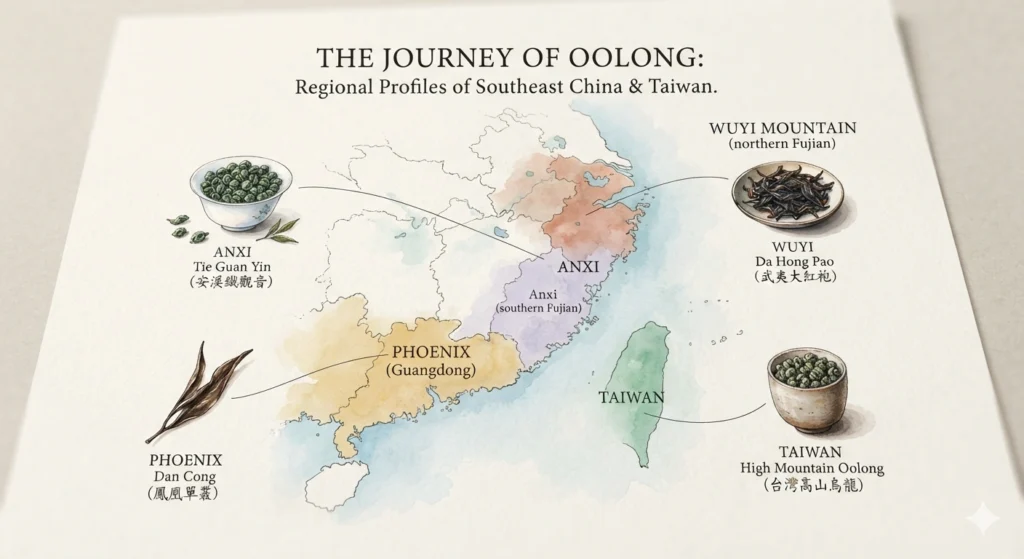
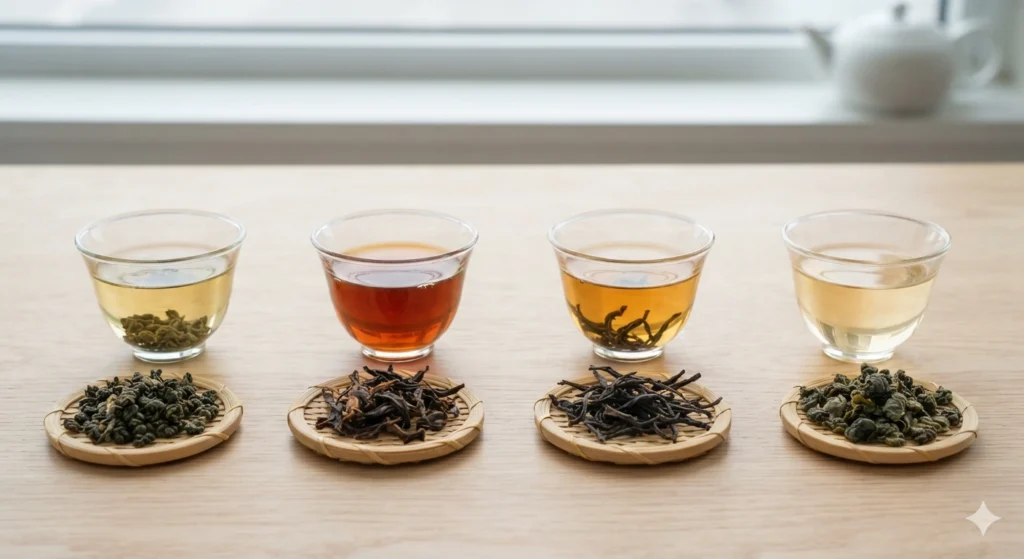
The best-known oolong tea regions are Anxi and Wuyi in Fujian, Phoenix Mountain in Guangdong, and Taiwan. Anxi is closely associated with Tie Guan Yin, which often shows floral, fresh, and creamy qualities. Wuyi produces famous rock oolongs such as Da Hong Pao, with roasted, mineral, and woody notes. Phoenix Mountain is known for highly aromatic Dan Cong teas, while Taiwan produces many styles, from fresh High Mountain Oolong to more developed teas such as Dong Ding and Oriental Beauty. Region gives you useful context, but cultivar, harvest, processing, roasting, and brewing also shape the final cup.
Oolong becomes much easier to understand once you know where its major traditions developed.
A Tie Guan Yin from Anxi can taste very different from a Da Hong Pao from the Wuyi Mountains. Phoenix Dan Cong brings another style, with fragrance often taking center stage. Taiwan adds even more variety through its high-mountain, roasted, and highly oxidized teas.
The region tells you where to begin. The tea itself tells you what happened along the way.
Why Does Region Matter in Oolong Tea?
A tea plant responds to the environment around it. Temperature, rainfall, elevation, and local growing conditions all influence how the leaves develop. Cultivar adds another layer because different varieties naturally produce different aromas and flavors.
Processing then gives those leaves their final form.
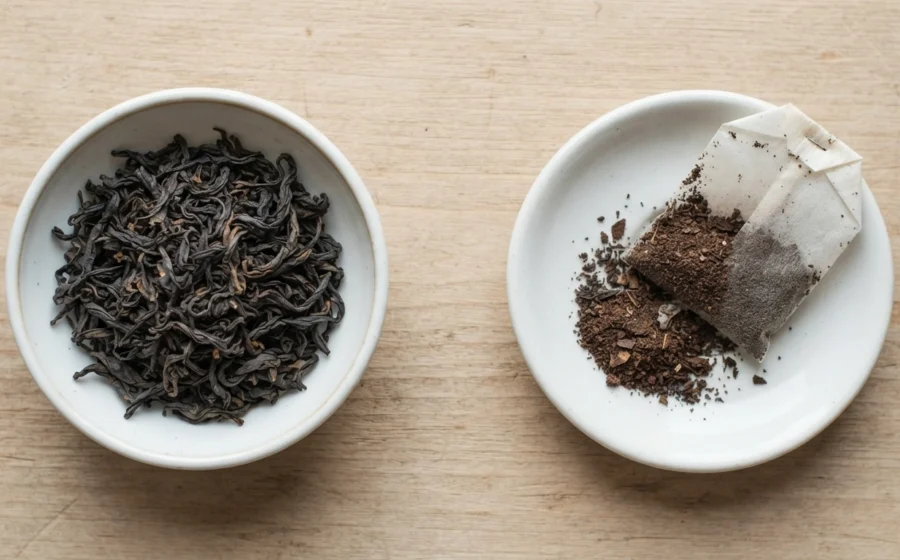
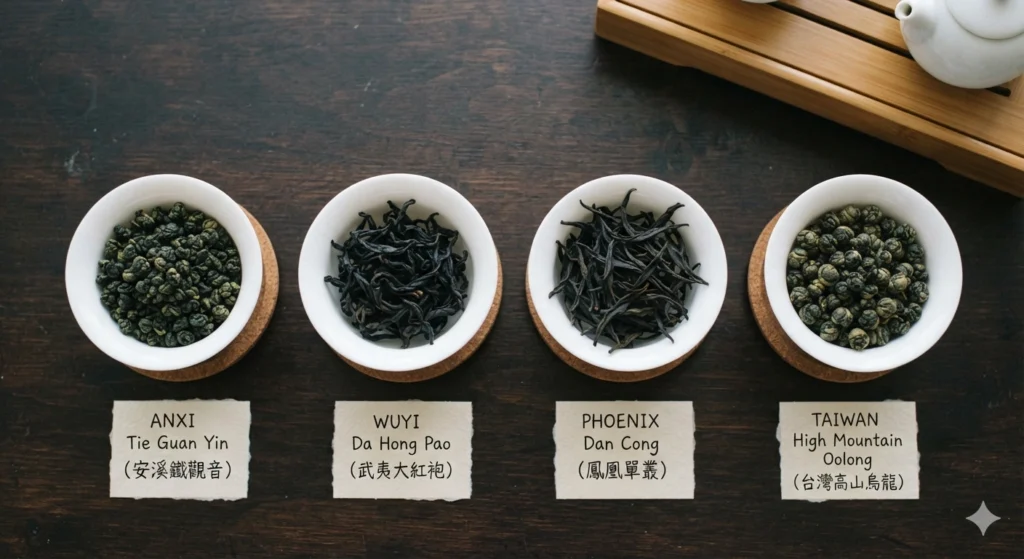
Some producers roll the leaves into tight balls, while others twist them into long strips. A lightly processed tea may keep more floral and fresh character, whereas a deeper roast can bring out toasted, nutty, or woody notes.
Harvest timing matters as well. Spring leaves can create a delicate, aromatic cup, while other harvests may give the tea more body and a different balance of flavor.
For that reason, region works best as context rather than a guarantee. Two teas from the same area can still taste quite different. The producer, cultivar, harvest, processing, and storage all influence the result.
Chinese Oolong Tea Regions at a Glance
| Region | Famous Oolongs | Leaf Style | Typical Flavor | Main Character |
|---|---|---|---|---|
| Anxi, Fujian | Tie Guan Yin | Rolled | Floral, fresh, creamy | Fragrance |
| Wuyi, Fujian | Da Hong Pao, Rou Gui | Twisted | Roasted, mineral, woody | Depth |
| Phoenix, Guangdong | Dan Cong | Twisted | Floral, fruity, aromatic | Aroma |
| Taiwan | High Mountain, Dong Ding, Baozhong, Oriental Beauty | Mostly rolled | Floral, creamy, fruity, honeyed | Variety |
These profiles only provide a starting point. Individual teas can vary because of cultivar, harvest, processing, roasting, storage, and brewing.
Anxi Oolong Tea: Southern Fujian
Tie Guan Yin and the Anxi Style
Anxi County in southern Fujian is one of China’s best-known oolong-producing areas and the traditional home of Tie Guan Yin.
Many modern Tie Guan Yin teas follow a relatively light style. Producers often use limited oxidation and light roasting to keep the tea fresh and highly aromatic. The finished cup may show orchid-like fragrance, fresh green notes, gentle sweetness, and a smooth or creamy texture.
At the same time, Tie Guan Yin does not follow one rigid recipe. Different producers use different processing methods, so one tea may taste very green and floral while another develops more roast and depth.
That variation becomes noticeable when you taste the tea more than once. The first infusion can emphasize bright floral aroma, while the second may reveal more texture and sweetness.
Other Anxi Oolongs
Anxi also produces teas such as Huang Jin Gui, Ben Shan, and Mao Xie. Each has its own identity, but fragrance remains an important part of the region’s oolong tradition.
For a deeper look at the area’s most famous tea, see our Tie Guan Yin Guide.
Wuyi Oolong Tea: Northern Fujian
Rock Oolong and Yancha
The Wuyi Mountains in northern Fujian are home to Wuyi rock tea, known in Chinese as yancha.
The region’s steep mountains and traditional tea gardens create a setting that looks very different from Anxi. More importantly, Wuyi has developed its own tea-making tradition, with twisted leaves and carefully controlled roasting.
Famous examples include Da Hong Pao, Rou Gui, and Shui Xian.
The Character of Da Hong Pao
Da Hong Pao often shows toasted grain, nuts, cocoa, dried fruit, mineral notes, or woody character. The balance depends on the tea and its roast, so two Da Hong Pao teas can offer very different experiences.
A good roast should support the tea rather than simply cover it. As you move through several infusions, the initial roast may soften and allow other flavors to come forward.
Wuyi tea also has a traditional concept called yan yun, often translated as “rock rhyme.” Tea drinkers use the term to describe an overall combination of texture, aroma, depth, and aftertaste rather than one specific flavor.
You usually notice that quality more clearly over several infusions. The first cup may seem dominated by roast, while later cups can feel smoother and show more mineral or woody depth.
For more detail, see our Da Hong Pao Guide.
Phoenix Oolong Tea: Guangdong
Phoenix Dan Cong Is a Family of Teas
Phoenix Mountain in Guangdong is closely associated with Phoenix Dan Cong, a group of highly aromatic oolongs.
Dan Cong does not have one standard flavor profile. Different cultivars can produce very different aromas, and many names refer directly to the fragrance associated with a particular style.
You may come across:
- Mi Lan Xiang — Honey Orchid
- Ya Shi Xiang — Duck Shit Aroma
- Zhi Lan Xiang — Orchid
- Huang Zhi Xiang — Gardenia
The names can point you toward a style, but they cannot replace tasting. A Dan Cong may show floral, fruity, honeyed, herbal, or spicy impressions depending on the cultivar and processing.
Why Dan Cong Rewards Slow Tasting
Fragrance is often the first thing you notice with Dan Cong. However, the tea can change considerably after the first sip.
Warm the leaves before brewing and smell them again. You may find that the aroma becomes more expressive. After the first infusion, the tea can reveal more texture and structure as the initial fragrance settles.
That makes Dan Cong particularly enjoyable when you have time to taste it slowly.
For a deeper look, see our Phoenix Dan Cong Guide.
Taiwanese Oolong Tea Regions and Styles
Taiwan has several distinct oolong traditions, so it makes more sense to think of the island as a collection of tea regions and styles rather than one single profile.
High Mountain Oolong
High Mountain Oolong comes from mountain-growing areas such as Alishan and Lishan. Many of these teas use light oxidation and rolling, which can preserve fresh floral aromas and a smooth, clean texture.
Some teas feel creamy and lightly sweet, while others lean more toward fresh green or floral notes. Elevation plays a role, but it does not determine flavor on its own.
Dong Ding
Dong Ding represents a more developed Taiwanese style. Compared with many modern high-mountain teas, it often receives more oxidation or roasting.
The result can combine floral notes with gentle toastiness, sweetness, and a rounded texture.
Baozhong
Baozhong sits toward the lighter side of the oolong spectrum.
Its leaves remain relatively open rather than forming the tight balls common in many Taiwanese oolongs. The tea often shows fresh floral fragrance and a clean finish.
Oriental Beauty
Oriental Beauty, also called Dong Fang Mei Ren, takes the style in a very different direction.
The tea undergoes relatively high oxidation and often develops honeyed, fruity, mature flavors. Traditional production also involves leafhopper feeding before harvest. This natural interaction changes the leaves and contributes to the tea’s distinctive character.
Taken together, these teas show how much variation Taiwan offers. High Mountain Oolong, Dong Ding, Baozhong, and Oriental Beauty can all provide very different cups.
Why Does Oolong Taste Different by Region?
Oolong flavor comes from several factors working together.
Cultivar
The tea plant variety sets part of the foundation. Different cultivars can naturally produce different aromatic and flavor characteristics, even when producers use similar techniques.
Growing Environment
Temperature, rainfall, elevation, and local growing conditions influence how the plant develops. However, these factors work alongside cultivar and farming practices rather than determining flavor by themselves.
Harvest Timing
The age and condition of the leaves also matter. Early spring harvests often produce a different balance of aroma and texture from later harvests.
Oxidation and Roasting
Oxidation and roasting create two different kinds of change.
Oxidation can move a tea toward deeper fruit, body, and complexity. Roasting can add toasted grain, nuts, caramel, cocoa, or woody notes.
The two processes do not always move together. A tea can have relatively high oxidation with little roast, or lower oxidation with a stronger roast.
Shaping and Brewing
Rolled and twisted oolongs open at different rates, which affects how flavor develops during an infusion. Brewing then adds another variable. Water temperature, tea quantity, and steeping time can make the same tea feel very different.
For that reason, simple statements such as “Anxi tastes floral” or “Wuyi tastes roasted” only provide a general direction.
The individual tea still matters.
How Do Region and Processing Work Together?
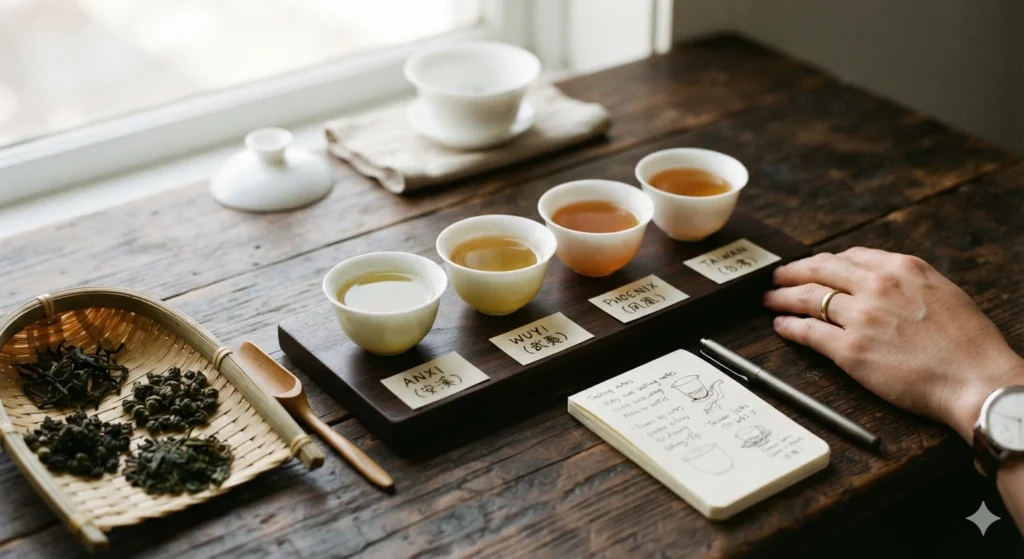
Regional identity becomes easier to understand when you look at origin and production side by side.
Anxi
Many modern Tie Guan Yin teas combine rolled leaves with lighter processing. That approach often keeps floral fragrance and freshness near the front of the cup.
Wuyi
Wuyi rock oolongs usually use twisted leaves and more developed roasting. Those choices often bring out deeper roasted, mineral, woody, and nutty qualities.
Phoenix
Phoenix Dan Cong relies heavily on distinctive cultivars and careful processing. The goal often centers on preserving the tea’s natural fragrance, which explains the intensity and variety found across different Dan Cong styles.
Taiwan
Taiwan brings several approaches together. Baozhong and High Mountain Oolong can feel light and floral, while Dong Ding and Oriental Beauty show how the style can move toward more developed or highly oxidized character.
These examples make one point clear: geography influences tea, but processing brings that geography into the cup.
Which Oolong Tea Region Should You Try?
Your own taste is the most useful place to start.
For Floral and Creamy Tea
Explore Anxi, especially Tie Guan Yin. Many versions emphasize floral fragrance, freshness, and a smooth texture.
For Roasted and Mineral Tea
Look toward Wuyi. Da Hong Pao and Rou Gui can offer deeper roasted, mineral, woody, and nutty character.
For Intense Fragrance
Try Phoenix Dan Cong. Different cultivars can produce surprisingly distinctive aromas, from floral to fruity and honeyed.
For Fresh Mountain Oolong
Explore Taiwanese High Mountain Oolong. These teas often emphasize freshness, soft texture, and floral aroma.
For Honeyed and Fruity Character
Consider Oriental Beauty or selected Phoenix Dan Cong styles. Their more developed character can bring fruit and honey notes to the foreground.
None of these suggestions guarantees a specific flavor. They simply give you a useful direction when you are choosing your next tea.
Taste Oolong Across Regions
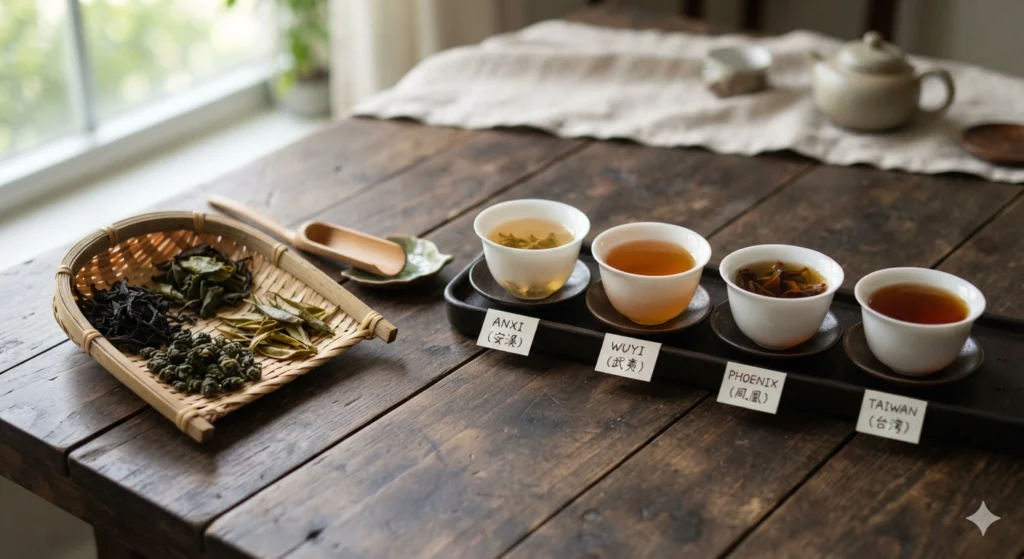
The fastest way to understand the regional differences is to taste several teas together.
Try Tie Guan Yin, Da Hong Pao, Phoenix Dan Cong, and a Taiwanese High Mountain Oolong. You do not need expensive equipment. A gaiwan or several small cups will do.
Start With the Dry Leaf
Look at the leaves before adding water.
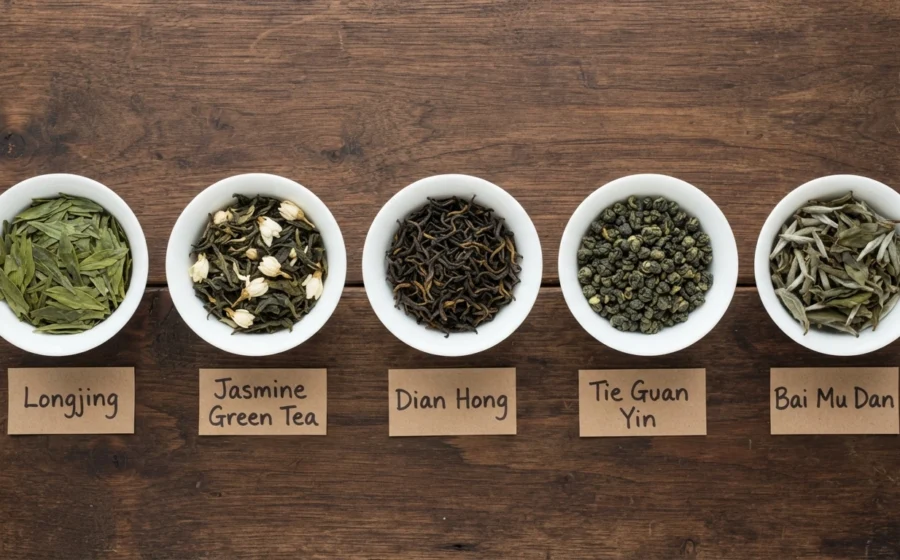
Tie Guan Yin usually forms compact rolls, while Da Hong Pao and Phoenix Dan Cong tend to appear as twisted strips. High Mountain Oolong is commonly rolled as well.
The shapes already tell you something about how the producers handled the leaves.
Smell Before Brewing
Take a moment with the dry aroma.
Tie Guan Yin may suggest flowers and fresh greens. Da Hong Pao can bring toasted grain or nuts. Phoenix Dan Cong often has an immediate fragrance, while High Mountain Oolong may feel softer and greener.
Then warm the leaves.
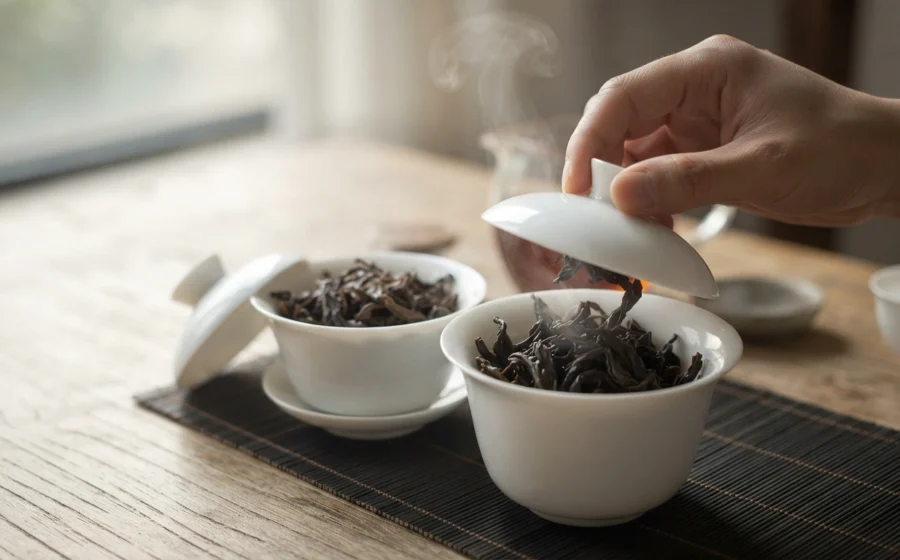
Pour hot water over them briefly, discard the water, and close the gaiwan for a few seconds. Open the lid and smell again. The warmed leaf often reveals details that were difficult to notice before.
Taste the First Infusion
Now taste each tea slowly.
Instead of trying to name every flavor, begin with texture. Does it feel light, creamy, rounded, drying, or full?
The Tie Guan Yin may move from floral aroma into a softer, creamy texture. Da Hong Pao can begin with roast and then show mineral or woody depth. Phoenix Dan Cong may keep its fragrance through the sip, while a High Mountain Oolong can feel smooth, fresh, and gently sweet.
After swallowing, wait for the finish.
Does sweetness remain? Does the aroma return? Does the tea leave a cooling or mineral sensation?
Come Back for the Second Infusion
The second infusion can tell you even more.
The strongest aroma from the first cup may fade, allowing texture and structure to become more noticeable. Some teas grow sweeter, while others reveal deeper mineral or roasted notes.
At Tea Passage, this is how we prefer to explore regional tea. We are not trying to memorize a formula such as “this province tastes like that.” Instead, we look at the leaf, smell it at different stages, and pay attention to what changes once water brings it to life.
That approach turns a regional map into something much more personal.
Frequently Asked Questions
Where does oolong tea come from?
The best-known oolong traditions come from Fujian and Guangdong in China, as well as Taiwan. Anxi, Wuyi, and Phoenix are especially important regional centers.
Where does Tie Guan Yin come from?
Tie Guan Yin is traditionally associated with Anxi County in southern Fujian province.
Where does Da Hong Pao come from?
Da Hong Pao comes from the Wuyi Mountains in northern Fujian and belongs to the Wuyi rock tea tradition.
Where does Phoenix Dan Cong come from?
Phoenix Dan Cong comes from Phoenix Mountain in Guangdong province, in the broader Chaozhou area.
What oolong teas come from Taiwan?
Taiwan produces many styles, including High Mountain Oolong, Dong Ding, Baozhong, and Oriental Beauty.
Why does oolong taste different by region?
Cultivar, growing conditions, harvest timing, oxidation, shaping, roasting, storage, and brewing all influence the final tea. Region provides context, but it does not determine flavor by itself.
Which oolong region is best?
There is no universal answer. Anxi often suits drinkers who enjoy floral and creamy teas, Wuyi those who prefer roasted and mineral styles, Phoenix those who enjoy intense fragrance, and Taiwan those who want a wider range of oolong styles.
What is the difference between Anxi and Wuyi oolong?
Anxi is best known for Tie Guan Yin and other fragrant oolongs, while Wuyi is famous for rock oolongs such as Da Hong Pao. Anxi teas often emphasize floral freshness, whereas Wuyi teas commonly show more developed roasted, mineral, and woody character.
A Map You Can Taste
Oolong becomes much easier to understand when the regions stop being names on a page and become teas in front of you.
Anxi can introduce floral fragrance and creamy texture. Wuyi can lead toward roast, mineral depth, and a long finish. Phoenix opens the door to highly aromatic Dan Cong, while Taiwan brings together several different traditions within one tea culture.
At Tea Passage, we like to learn these differences through tasting rather than memorization. Look at the leaf. Smell it dry, then warm it. Taste the first infusion slowly and return for the second. Notice the texture, the sweetness, and what remains after the sip.
The map tells you where the tea came from.
The cup tells you what happened along the way.