Quick Answer
There is no single universal grading system for all oolong teas. Grade terminology varies by tea style, region, producer, and market. Some oolongs use terms such as premium, special grade, first grade, and second grade, while others are better understood through factors such as cultivar, leaf material, harvest, craftsmanship, oxidation, roasting, aroma, texture, and finish. A higher grade can reflect more selective leaf material or greater production costs, but it does not automatically mean better flavor. When buying oolong, treat the grade as one piece of information rather than a guarantee of quality.
The word “grade” can make tea seem more straightforward than it really is.
When you see a package marked Special Grade or Premium, it is natural to assume that the label follows one standard scale. Oolong does not work that way. Different tea traditions have developed their own systems for classifying and evaluating quality, and those systems do not always line up with one another.
For a buyer, that means understanding the tea behind the label is more useful than simply choosing the highest grade.
Does Oolong Tea Have a Universal Grading System?
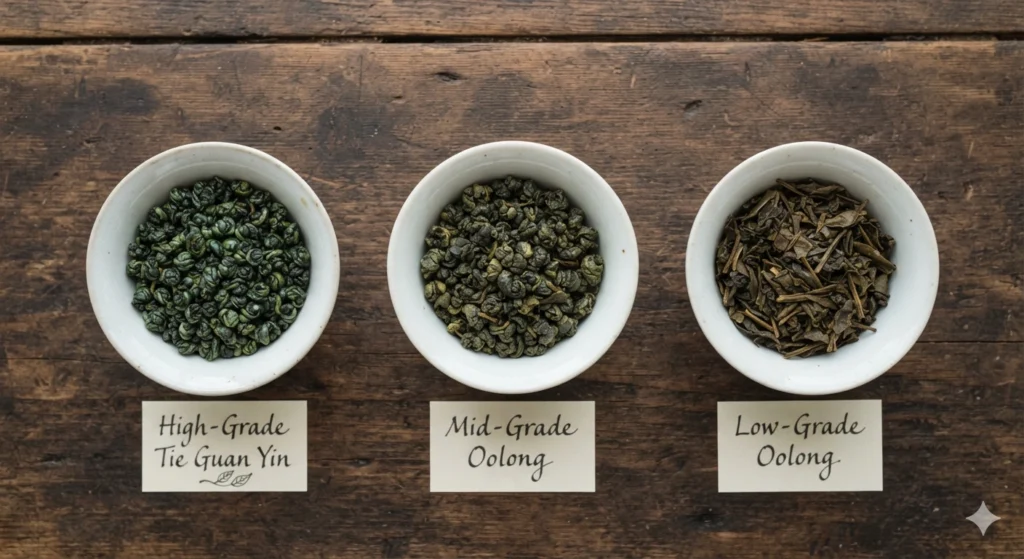
Oolong does not have one worldwide grading standard. Different regions and tea styles use different approaches to classification, and some have formal standards while others rely more heavily on producer terminology or sensory evaluation.
Some oolong categories in China do have national standards. For example, the Chinese national standard for Tie Guan Yin (GB/T 19598-2006) divides the tea into light-aroma and strong-aroma types. The light-aroma type includes special, first, second, and third grades, while the strong-aroma type adds a fourth grade. Wuyi Rock Tea has its own national standard (GB/T 18745-2006), with different grade structures for Da Hong Pao, Rou Gui, and Shui Xian.
Phoenix Dan Cong also follows a regional standard (DB44/T 820-2010), which includes premium, special, first, second, and third levels. Taiwanese oolong follows a different approach. Taiwan uses several evaluation systems, including the Taiwan Tea Assortment and Grading system (TAGs), alongside tea competitions and sensory assessment.
The important point is that the word grade only becomes meaningful when you know which system sits behind it. A “Special Grade” from one tea tradition should not automatically be compared with a “Special Grade” from another. Even within the same style, different producers may work to different standards.
What Do Oolong Tea Grades Actually Measure?
A grade can reflect several qualities of the tea, although the exact criteria depend on the style and standard.
Leaf Material
Leaf selection is one of the most obvious factors.
Some oolong styles place more value on young, tender leaves and a consistent bud-to-leaf ratio. Others use more developed leaves because they can provide greater body and structure.
That distinction matters. A more mature leaf is not automatically lower quality. The ideal leaf depends on the kind of oolong being made.
Appearance
Dry leaf appearance can also influence grading.
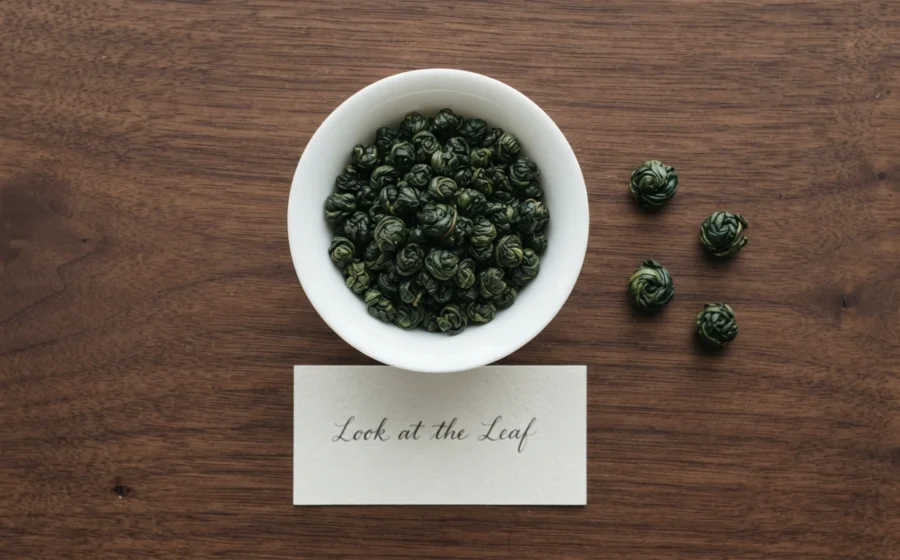
Evaluators may look at the shape, color, size, uniformity, and overall condition of the leaves. With rolled oolong, for example, producers may look for well-formed, consistent leaves. Twisted oolongs have different visual expectations.
Appearance can tell you something about production and consistency, but it cannot tell you everything about the cup.
Harvest
Harvest timing often affects both grade and price.
Early spring tea can command a premium because the available leaf is limited and the young shoots can produce a delicate style. However, oolong does not always aim for the youngest possible leaf material.
Some styles benefit from more developed leaves, particularly when body and structure are important.
Processing
Processing has a major effect on quality, even though it is difficult to summarize with one grade.
Tea makers control oxidation, shaping, drying, and roasting. Their decisions determine how the leaf develops and how the finished tea smells and tastes.
That is why two teas with similar grades can still behave very differently in the cup.
Craftsmanship
Craftsmanship is perhaps the hardest factor to capture on a label.
A skilled tea maker has to respond to the condition of the leaf during production. Heat, timing, moisture, oxidation, rolling, and roasting all require control.
The final result depends on how well those decisions come together. A label can describe the category, but it cannot fully describe the skill behind the tea.
Is Higher Grade Oolong Always Better?
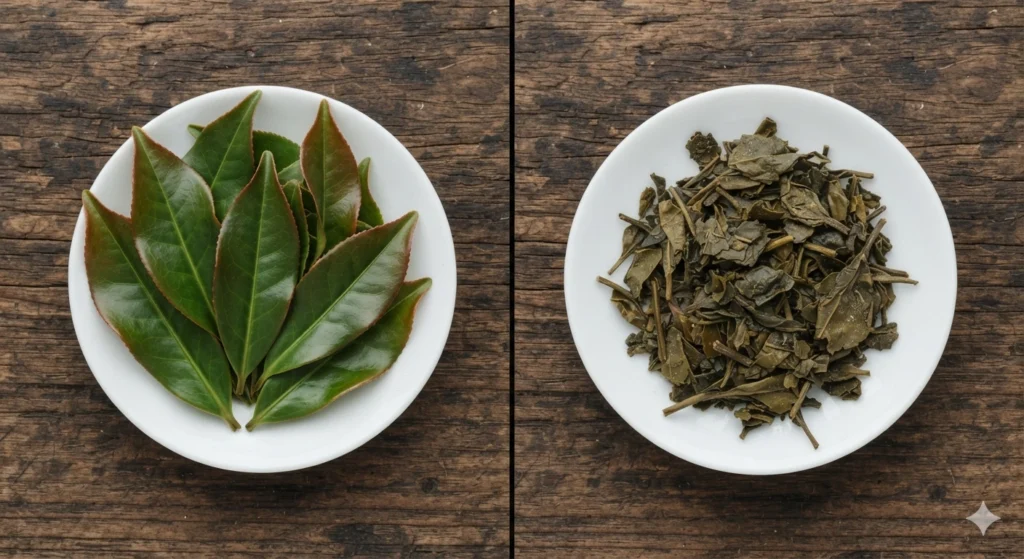
No. A higher grade does not automatically mean a better tea.
A higher grade may reflect more selective picking, lower yield, stricter appearance requirements, more labor, or greater market demand. Those factors can increase the cost of production and the price of the finished tea.
However, price and grade do not determine whether you will enjoy the cup.
A high-grade tea that has lost its aroma through poor storage may be less enjoyable than a more modestly graded tea that remains fresh. Likewise, a delicate high-grade oolong may not suit someone who prefers a fuller body and deeper roast.
Your taste matters too.
Someone who loves floral, light oolong may value qualities that another drinker hardly notices. Another person may prefer the deeper texture and roast of a more developed tea.
For that reason, the highest grade on the label is not necessarily the tea you will enjoy most.
How Grading Differs Across Oolong Styles
Different oolong traditions use different ideas of quality. Looking at a few major styles makes that easier to understand.
Tie Guan Yin
Tie Guan Yin from Anxi in southern Fujian is one of the oolongs with a formal grading structure. The Chinese national standard (GB/T 19598-2006) separates light-aroma and strong-aroma types and assigns different grades within each category.
The style matters just as much as the grade.
A modern light-aroma Tie Guan Yin often emphasizes freshness, floral fragrance, and a smooth texture. A more traditional strong-aroma version can have more developed roast and a deeper flavor.
Both can be well made. They simply offer different expressions of Tie Guan Yin.
When evaluating one, look beyond the grade and consider the leaf, aroma, roasting, texture, and finish. For a deeper look, see our Tie Guan Yin Guide.
Wuyi Rock Tea
Wuyi Rock Tea follows its own grading structure under the national standard (GB/T 18745-2006).
The standard organizes grades according to variety. Da Hong Pao and Rou Gui use special, first, and second grades, while Shui Xian also includes a third grade.
Even so, the grade only gives you part of the picture.
With Wuyi Rock Tea, cultivar, origin, roasting, aroma, body, mineral character, and aftertaste can have a major influence on the drinking experience. The traditional concept of yan yun, or rock rhyme, is a good example. It describes an overall impression involving texture, depth, mineral character, and persistence rather than a single measurable feature.
A lower-grade tea can still produce a very satisfying cup when the leaf and roasting are handled well. For more detail, see our Wuyi Rock Tea Guide.
Phoenix Dan Cong
Phoenix Dan Cong has its own regional standard (DB44/T 820-2010), with categories ranging from premium to third grade.
Dan Cong also shows why a grade cannot tell the whole story.
Different cultivars and aroma types can produce very different teas. One may lean toward honey and orchid, while another may show gardenia, fruit, spice, or other distinctive aromas.
For a drinker, knowing the cultivar and aroma type can therefore be just as useful as knowing the grade. A high-grade tea is not much help if its flavor profile does not match what you enjoy.
For a deeper look, see our Phoenix Dan Cong Guide.
Taiwanese Oolong
Taiwanese oolong does not follow one single official grading scale.
Instead, producers and competitions use different evaluation systems, including the Taiwan Tea Assortment and Grading system (TAGs).
The style of tea remains important. High Mountain Oolong, Dong Ding, Baozhong, and Oriental Beauty have different production methods and different ideas of what makes a good cup.
When evaluating Taiwanese oolong, consider the harvest, leaf material, origin, processing, aroma, texture, and finish alongside any grade or competition classification.
Does Harvest Season Affect Oolong Grade?
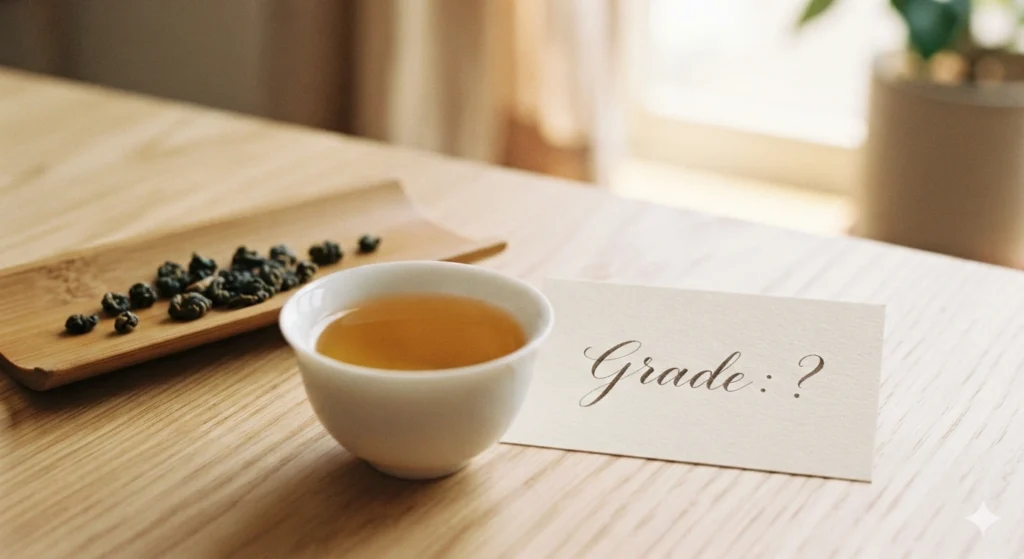
Harvest season can influence grade and price, but it is only one part of the picture.
Early spring harvests are often valued because the amount of young leaf available can be limited. These teas may have a delicate aroma and finer texture, which can make them attractive to drinkers who prefer lighter styles.
However, not every oolong is designed around very young leaves. Some styles benefit from more developed leaf material because it can add body and structure.
Taiwan also offers an interesting example. Winter-harvest oolongs have their own character and are valued by many tea drinkers, even though they do not fit the simple idea that earlier harvest automatically means better tea.
The useful question is therefore not “Which harvest is highest grade?” but rather “What kind of tea does this harvest produce?”
Does Oolong Grade Affect Flavor?
It can, but the relationship is not straightforward.
More selective, tender leaf material may produce a lighter and more delicate cup. More developed leaves can contribute greater body and structure. Processing then changes those qualities further.
For example, a lightly oxidized Tie Guan Yin may emphasize floral aroma and freshness, while a more developed oolong can bring deeper roasted or fruity notes.
Brewing also plays a role. Water temperature, leaf quantity, and steeping time can change the balance of flavor significantly.
As a result, grade may give you some information about the raw material and production standard, but it cannot predict the entire flavor of the tea.
Why Does Higher Grade Oolong Cost More?
Higher-grade oolong may cost more because producers use more selective leaf material, harvest smaller quantities, or spend more time sorting and processing the tea.
Other factors can raise the price too. Origin, scarcity, labor, craftsmanship, roasting, and market positioning all contribute to what a buyer eventually pays.
Still, price should not replace tasting.
A more expensive tea may offer qualities that justify the price for a particular drinker, while another person may prefer a less expensive tea with a different style.
| Factor | What It Can Tell You | What It Cannot Tell You |
|---|---|---|
| Grade | Leaf selection and quality standard | Whether you will enjoy the flavor |
| Harvest | Season and leaf development | Overall quality by itself |
| Origin | Geographic identity | Exact flavor |
| Roast | Processing direction | Quality by itself |
| Appearance | Leaf condition and consistency | Full cup quality |
| Price | Production and market factors | Whether the tea tastes better |
How To Judge Oolong Quality Beyond the Grade
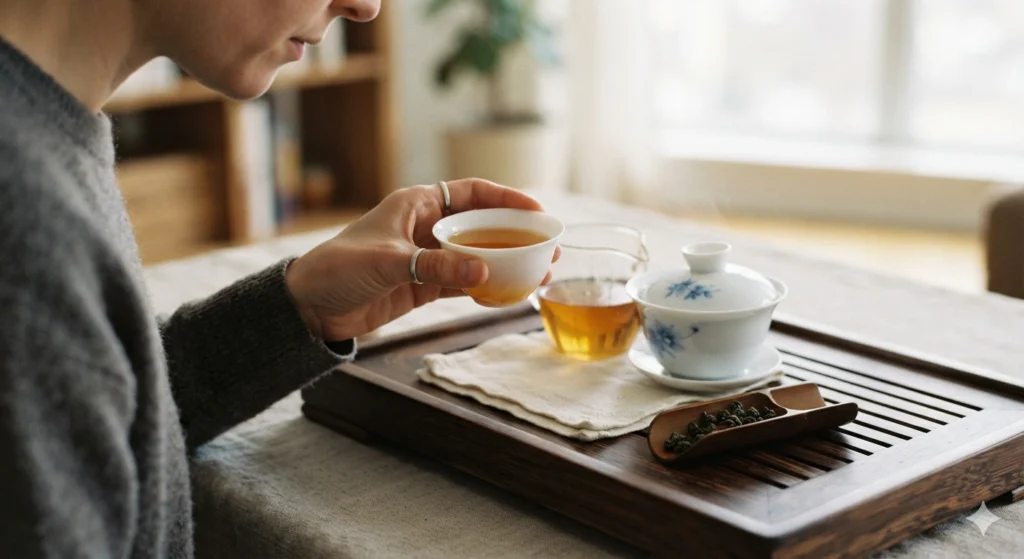
Once you have the tea in front of you, the label becomes much less important.
Start with the dry leaf. Look at the shape, color, and condition. Rolled leaves should look reasonably well formed, while twisted leaves should show a clear and consistent structure. You do not need every leaf to look identical, but the tea should not appear dull, dusty, or damaged.
Next, smell the dry tea.
The aroma should feel clean and characteristic of the style. A floral oolong should smell fresh rather than flat. A roasted tea should smell developed rather than burnt.
Then warm the leaves in your brewing vessel.
This is one of the simplest ways to learn more about an oolong. Heat releases aromas that may be difficult to notice in the dry leaf. With a gaiwan, you can warm the leaves, close the lid for a moment, and then take a slow breath before brewing.
Now taste the first infusion.
Do not look for one spectacular flavor. Pay attention to the balance. Does the aroma stay with you? Does the tea feel smooth or drying? Is there sweetness after you swallow? Does the texture match what you expected from the tea?
The finish matters too.
Some teas disappear quickly. Others leave sweetness, fragrance, mineral character, or a gentle warmth that stays for several seconds.
Then brew the leaves again.
The second infusion often tells you something the first cannot. The initial aroma may soften while the texture, sweetness, or depth becomes easier to notice.
A grade label cannot capture those changes.
What Oolong Grade Should Beginners Buy?
Beginners do not need the highest grade.
In fact, a very expensive or delicate tea may not be the easiest place to start. Without much tasting experience, it can be difficult to understand whether a subtle tea is simply delicate or whether it does not suit your preferences.
A fresh, well-made mid-grade oolong is often a more practical starting point.
Look for a seller who clearly explains the origin, cultivar, harvest, processing, and storage. Start with a small quantity rather than buying a large package before you know what you like.
Once you have tasted several teas, grade becomes much more useful. You can compare teas within a style and start to understand what the different grades mean for that particular tea.
The goal is not to climb a grading ladder.
It is to learn what you enjoy.
How To Taste Oolong Beyond the Label
The easiest way to understand why grade is only part of the story is to taste two very different oolongs side by side.
Try Tie Guan Yin and Da Hong Pao.
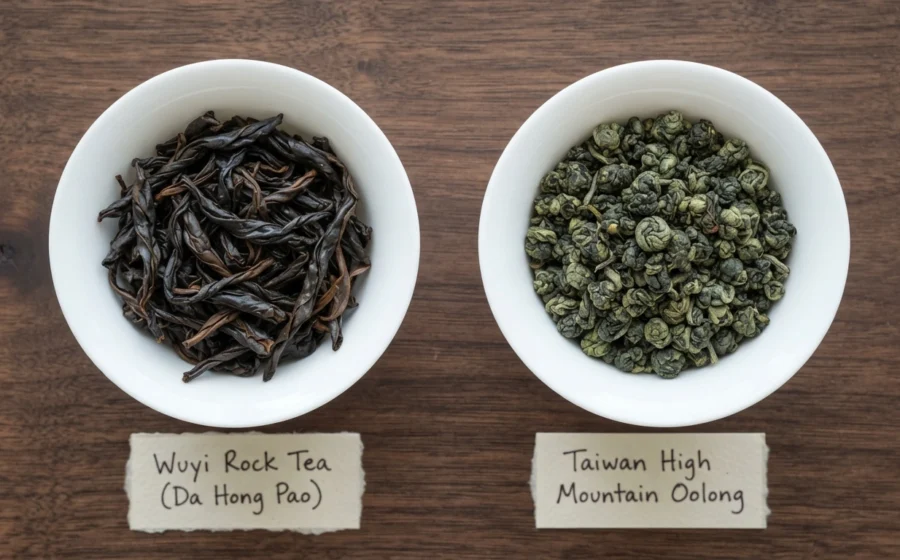
Start with the dry leaves. Tie Guan Yin is usually rolled into compact balls, while Da Hong Pao is generally twisted into strips. The appearance already gives you a clue about their different processing traditions.
Smell both teas before brewing. Tie Guan Yin may bring floral or orchid-like fragrance. Da Hong Pao can suggest roast, toasted nuts, wood, or deeper mineral notes.
Next, warm the leaves.
Pour hot water into your gaiwan, discard it, and close the lid for a few seconds. Open it and smell again. The warmed leaves often reveal much more than the dry tea.
Brew the first infusion and start with Tie Guan Yin.
Notice the relationship between fragrance and texture. The tea may feel rounded and creamy, with sweetness appearing after the sip. Rather than rushing to name every aroma, pay attention to how the tea feels and what remains after swallowing.
Then taste the Da Hong Pao.
The roast may arrive first, followed by mineral or woody character. Compare its texture with the Tie Guan Yin. One may feel lighter and more fragrant, while the other feels broader and deeper.
Now wait for the finish.
Does the sweetness stay? Does the aroma return? Does the tea leave a mineral, floral, creamy, or drying sensation?
Finally, brew both teas again.
The second infusion often gives you a clearer view of the tea’s structure. Tie Guan Yin may become softer and sweeter, while Da Hong Pao may settle into a deeper mineral or woody profile as the roast becomes less dominant.
This is the part of tea tasting we care about at Tea Passage.
A label can tell you how someone classified a tea. It can tell you the harvest, the origin, or the grade. But it cannot tell you how the tea feels in your mouth, how long the finish lasts, or what changes when you return to the leaves for another infusion.
That is something you have to taste for yourself.
Frequently Asked Questions
Does oolong tea have a universal grading system?
No. Oolong grading varies by tea style, region, producer, and market. Some teas follow formal standards, while others use producer-specific terminology or sensory evaluation.
What do oolong tea grades measure?
Grades can reflect leaf selection, tenderness, appearance, uniformity, harvest, and production standards. The exact criteria depend on the tea and grading system.
Is higher-grade oolong always better?
No. A higher grade may reflect more selective leaf material or greater production costs, but freshness, processing, roasting, storage, brewing, and personal taste also affect the experience.
How is Tie Guan Yin graded?
The Chinese national standard (GB/T 19598-2006) separates Tie Guan Yin into light-aroma and strong-aroma types. The light-aroma type uses special, first, second, and third grades, while the strong-aroma type includes a fourth grade.
How is Wuyi Rock Tea graded?
Wuyi Rock Tea follows the national standard (GB/T 18745-2006), which uses different grade structures for each variety. Da Hong Pao and Rou Gui use special, first, and second grades, while Shui Xian also includes a third grade.
How is Phoenix Dan Cong graded?
Phoenix Dan Cong follows a regional standard (DB44/T 820-2010) with premium, special, first, second, and third levels.
Does Taiwanese oolong have grades?
Taiwanese oolong does not use one single grading system. Producers and competitions use several evaluation frameworks, including the Taiwan Tea Assortment and Grading system (TAGs).
Does harvest season affect oolong grade?
It can affect grade and price, but earlier harvest does not automatically mean better tea. Different oolong styles use different leaf standards, and some benefit from more developed leaves.
What oolong grade should beginners buy?
A fresh, well-made mid-grade oolong is a practical starting point. Beginners should focus first on freshness, origin, processing, and flavor rather than paying a premium simply for a higher grade.
How can I tell if an oolong is high quality?
Look at the dry leaf, smell the tea, taste the first infusion, and pay attention to the finish and second infusion. The cup gives you information that a grade label cannot provide.
Beyond the Grade on the Label
Oolong grades can be useful, especially when you understand the system behind them. They can tell you something about leaf selection, production standards, and why one tea may cost more than another.
But they are still only part of the picture.
The tea you actually drink reflects much more: cultivar, origin, harvest, processing, roasting, storage, and brewing all leave their mark.
At Tea Passage, we prefer to begin where the label ends. Look closely at the leaf. Smell it before and after warming. Taste the first infusion slowly, then come back for the second. Notice the texture, the finish, and the small changes that appear from one cup to the next.
A grade can tell you how a tea was classified.
The cup tells you whether you want to drink it again.
References and Sources
- GB/T 19598-2006: Geographical indication product — Anxi Tie Guan Yin — National standard for Tie Guan Yin grading and production.
- GB/T 18745-2006: Geographical indication product — Wuyi Rock Tea — National standard for Wuyi Rock Tea varieties and grades.
- DB44/T 820-2010: Geographical indication product — Phoenix Dan Cong — Regional standard for Phoenix Dan Cong grading.
- Taiwan Tea Assortment and Grading system (TAGs) — Taiwan Tea Research and Extension Station evaluation framework for Taiwanese oolong.