Quick Answer
Phoenix Dancong is famous for its naturally intense aroma, often showing floral, fruity, honey-like, and roasted notes. Unlike flavored teas, these aromas come from the tea cultivar, growing environment, and traditional processing methods.
Produced in the Phoenix Mountains of Guangdong, China, Phoenix Dancong belongs to the oolong tea family. It is known for its unique “xiang” (aroma) culture, where different tea bushes are selected and processed separately to preserve their individual fragrance profiles.
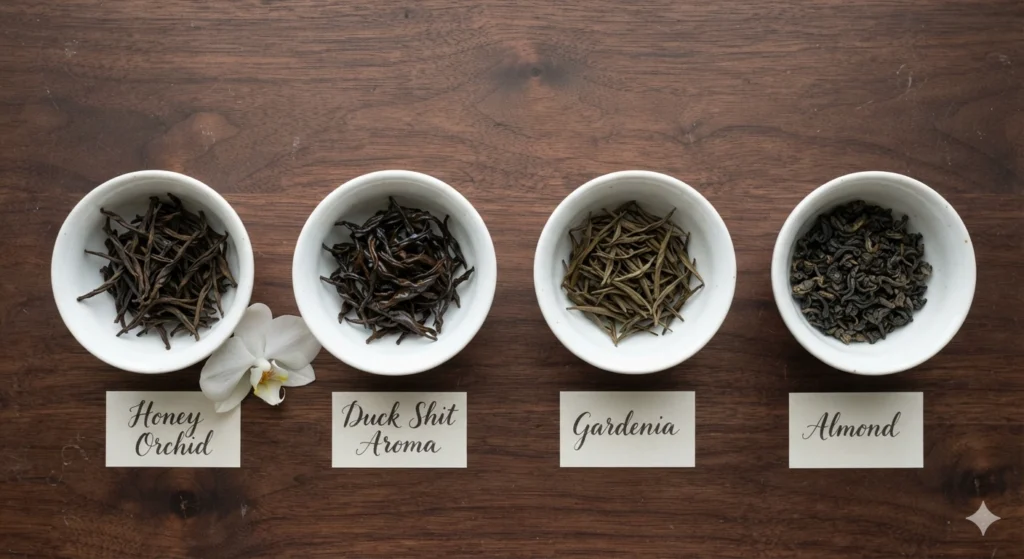
The most famous Phoenix Dancong aromas include Honey Orchid (Mi Lan Xiang), Duck Shit Aroma (Ya Shi Xiang), Gardenia Aroma, and Almond Aroma. These names describe the natural sensory experience of the tea, not added ingredients.
The best way to appreciate Phoenix Dancong is not simply to chase the strongest aroma. A high-quality Dancong should have a natural fragrance, smooth texture, balanced sweetness, and an evolving character across multiple infusions.
What Makes Phoenix Dancong So Aromatic?
The first time you brew a good Phoenix Dancong, the aroma often appears before the tea even reaches your lips.
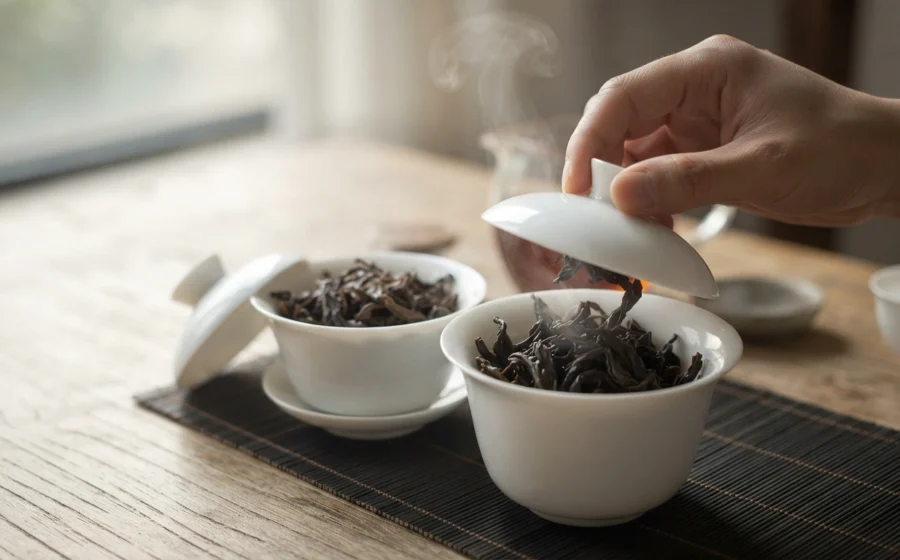
Open the gaiwan after the first rinse, and a wave of floral, fruity, or honey-like fragrance rises from the warmed leaves. It can feel surprisingly vivid — almost like smelling fresh flowers or ripe fruit rather than a simple tea infusion.
This is what makes Phoenix Dancong different from many other oolong teas.
The reason behind this fragrance begins with the tea plant itself.
The Role of Cultivar: Why Every Dancong Can Smell Different
Phoenix Dancong is not one single tea variety.
The name refers to a large family of teas traditionally produced from selected Fenghuang Shuixian (Phoenix Narcissus) tea bushes. For generations, tea farmers selected individual bushes based on their unique aroma and separated their production.
This is where the meaning of Dancong (单丛) comes from — “single bush.”
Unlike many teas that are blended together after harvesting, traditional Dancong production focuses on preserving the character of individual tea trees. One bush may produce a floral aroma, while another may produce fruity, honey-like, or roasted notes.
This is why Phoenix Dancong is sometimes called a “perfume tea.”
The fragrance is not created by adding flowers, fruit, or flavoring. It is the natural expression of the tea plant itself.
How Phoenix Mountain Shapes Dancong Aroma
The tea plant is only part of the story.
The environment of Phoenix Mountain plays an important role in creating Dancong’s distinctive fragrance.
Located in Guangdong’s Chaozhou region, the Phoenix Mountains provide:
- High elevation growing areas
- Frequent mist and cloud cover
- Rich mountain soil
- Significant temperature differences between day and night
These conditions slow the growth of tea leaves and encourage the development of aromatic compounds.
The result is a tea with greater depth and complexity.
A good Phoenix Dancong does not simply smell strong. Its aroma feels layered.
You may notice:
- A bright floral note at first
- A sweeter honey or fruit character underneath
- A deeper mineral or roasted impression in the finish
This changing fragrance is part of the experience of drinking Dancong.
How Processing Creates Phoenix Dancong’s Signature Aroma
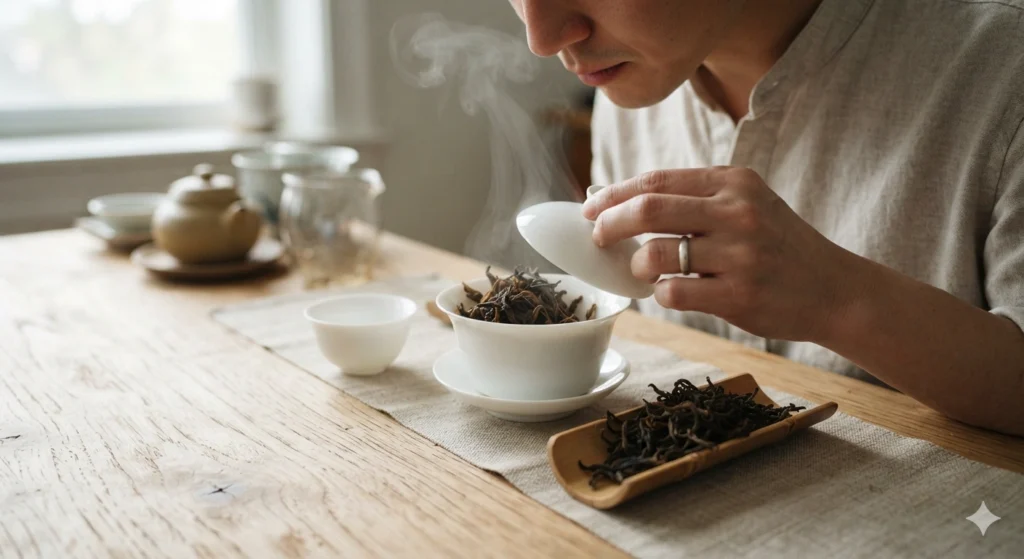
Cultivar and terroir create the foundation, but processing determines how those qualities appear in the cup.
Traditional Phoenix Dancong goes through several important steps:
- Withering
- Oxidation (“making green” / 做青)
- Fixation
- Rolling
- Drying
- Roasting
Among these steps, oxidation is especially important.
During the “making green” process, tea makers carefully control how much the leaves change before fixing the aroma into the finished tea.
Too little oxidation may result in a sharper, greener character.
Too much oxidation may reduce freshness and make the tea feel heavy.
The skill of the tea maker is finding the balance where the leaf’s natural fragrance becomes clear, expressive, and stable.
Roasting then adds another layer.
A lighter roast may highlight:
- Floral sweetness
- Fresh fruit notes
- Bright aroma
A deeper roast may create:
- Honeyed warmth
- Toasted notes
- A richer mouthfeel
The same tea cultivar can express a completely different personality depending on how it is processed.
The Main Aroma Types of Phoenix Dancong
Phoenix Dancong is famous because it contains many different aroma styles.
Traditional classifications include numerous fragrance types, each named after the aroma that tea drinkers perceive.
These names are not ingredients.
A tea called Honey Orchid does not contain honey.
A tea called Almond Aroma does not contain almonds.
The names are simply a way to describe the natural fragrance experience.
For beginners, these are some of the most important Phoenix Dancong aroma types to understand.
Honey Orchid Aroma (蜜兰香, Mi Lan Xiang)
Honey Orchid is one of the most popular and approachable Phoenix Dancong varieties.
It combines:
- Soft honey sweetness
- Orchid-like floral notes
- A smooth, rounded texture
Compared with some more intense Dancong varieties, Honey Orchid feels balanced and easy to enjoy.
For many tea drinkers, it is the first Phoenix Dancong they try because it introduces the unique fragrance style of Dancong without becoming overwhelming.
Duck Shit Aroma (鸭屎香, Ya Shi Xiang)
Despite its unusual name, Duck Shit Aroma is one of the most famous Phoenix Dancong varieties.
The name often surprises new tea drinkers, but the tea itself has nothing unpleasant about it.
Its aroma is usually described as:
- Strong floral fragrance
- Creamy sweetness
- Honey-like notes
- A hint of almond character
The traditional story behind the name is that a farmer used an unattractive name to protect a valuable tea bush from being stolen.
Today, Duck Shit Aroma has become one of the most recognized Dancong styles worldwide.
It is sometimes also called Silver Flower Aroma (Yin Hua Xiang), although the original name remains widely used.
Gardenia Aroma (黄栀香, Huang Zhi Xiang)
Gardenia Aroma has a brighter and more elegant floral character.
Compared with Honey Orchid, it often feels lighter and more lifted, with:
- Fresh floral fragrance
- Clean sweetness
- A refreshing finish
It is a good choice for drinkers who enjoy delicate floral teas.
Almond Aroma (杏仁香, Xing Ren Xiang)
Almond Aroma moves toward a warmer direction.
Instead of focusing mainly on flowers, it often shows:
- Nutty sweetness
- Roasted almond-like notes
- A fuller body
It is a good example of how diverse Phoenix Dancong can be. Not every Dancong is purely floral.
Does Phoenix Dancong Really Taste Like Its Name?
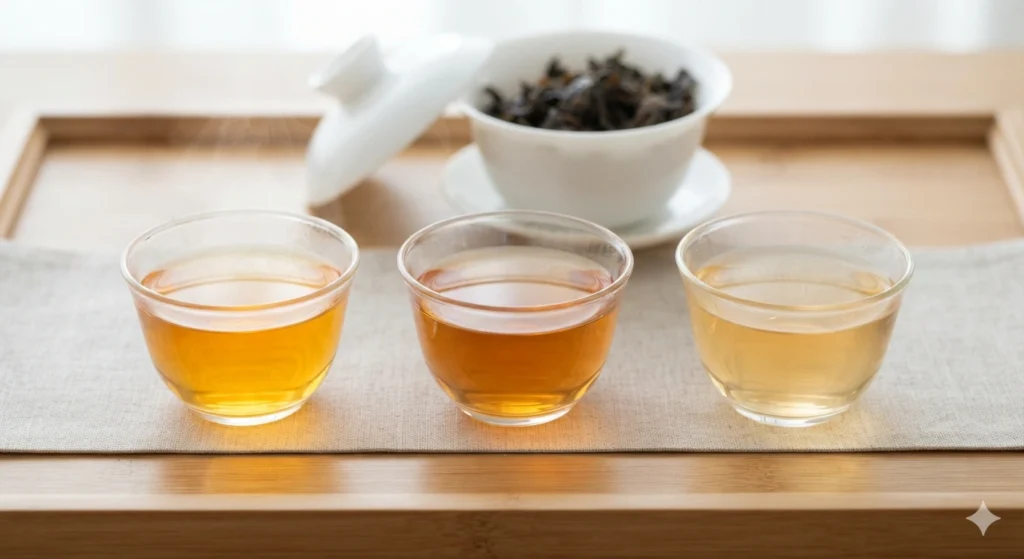
This is one of the first questions many people have when they discover Phoenix Dancong.
Does Honey Orchid taste like honey?
Does Almond Aroma contain almonds?
Does Duck Shit Aroma really have anything to do with its unusual name?
The answer is no.
These names describe the aromatic impression of the tea, not added ingredients.
Just like coffee can be described as having “chocolate” or “berry” notes without containing chocolate or fruit, Phoenix Dancong uses these names to help tea drinkers understand the natural fragrance produced by the tea leaf.
The aroma comes from a combination of:
- The tea cultivar
- The Phoenix Mountain environment
- The oxidation process
- Roasting technique
- The skill of the tea maker
A well-made Dancong fragrance feels integrated into the tea. It does not smell like perfume added on top of the leaf. The aroma should continue to develop as you drink, revealing sweetness, texture, and a lingering finish.
This is what makes Phoenix Dancong fascinating: the fragrance is not just something you smell. It becomes part of the entire tasting experience.
How To Experience Phoenix Dancong Aroma
Phoenix Dancong is not a tea that should be judged only from the first sip.
Its character appears gradually through the brewing process.
For a better experience, pay attention to three stages.
1. Smell the Dry Leaves
Before adding water, take a moment to smell the dry leaves.
Traditional Phoenix Dancong leaves are usually:
- Long and twisted
- Dark brown or charcoal-colored
- Slightly curled and tightly shaped
The dry aroma is often subtle compared with the brewed tea, but you may already notice hints of:
- Floral sweetness
- Roasted notes
- Fruit-like fragrance
This first impression gives you a preview of the tea’s personality.
2. Warm the Leaves
The warmed leaves reveal the true character of Phoenix Dancong.
Using a gaiwan, add hot water briefly, then discard the first rinse. Close the lid for a few seconds and smell the leaves while they are still warm.
This is when the hidden aroma begins to open.
A good Dancong may reveal several layers:
- A floral top note
- A honey-like sweetness underneath
- A deeper roasted or mineral foundation
The fragrance should feel alive and changing, not flat.
This is one of the most enjoyable moments when drinking Dancong — before tasting the tea, you are already experiencing the tea.
3. Taste Through Multiple Infusions
Phoenix Dancong changes significantly across different brews.
The first infusion often shows the strongest aroma.
You may notice:
- Bright floral fragrance
- Fresh sweetness
- Clear varietal character
The second and third infusions are often where the tea becomes more balanced.
The initial fragrance softens, allowing other qualities to appear:
- Fuller texture
- Honey-like sweetness
- More rounded mouthfeel
- Longer finish
Later infusions reveal the structure of the tea.
A high-quality Dancong may become lighter, but it should still maintain:
- Aroma
- Sweetness
- Smooth texture
- Lingering aftertaste
A tea that smells impressive in the first cup but quickly becomes empty often relies on strong processing rather than true depth.
Does Stronger Aroma Mean Better Phoenix Dancong?
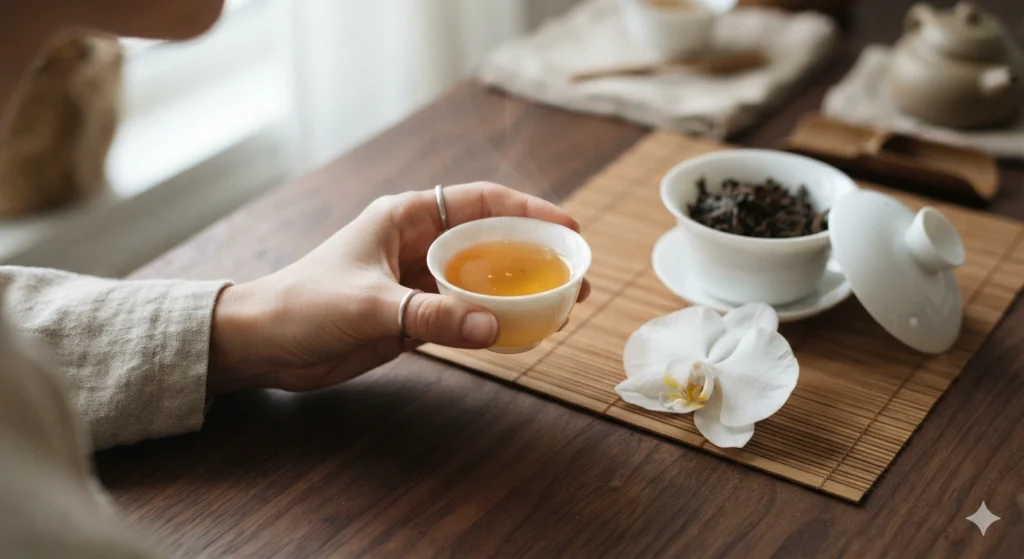
No.
This is one of the most important lessons when exploring Phoenix Dancong.
Because Dancong is famous for fragrance, many beginners assume:
The stronger the aroma, the better the tea.
But quality is not measured by intensity alone.
A very strong aroma can sometimes be impressive at first but lack depth underneath.
A great Phoenix Dancong should have balance between:
- Aroma
- Flavor
- Texture
- Aftertaste
- Brewing endurance
The fragrance should not feel separate from the tea.
A high-quality Dancong does not simply “smell strong.” It creates a complete experience where the aroma, sweetness, and mouthfeel support each other.
A tea with a softer but more natural fragrance can often be more enjoyable than one with an overwhelming aroma that disappears quickly.
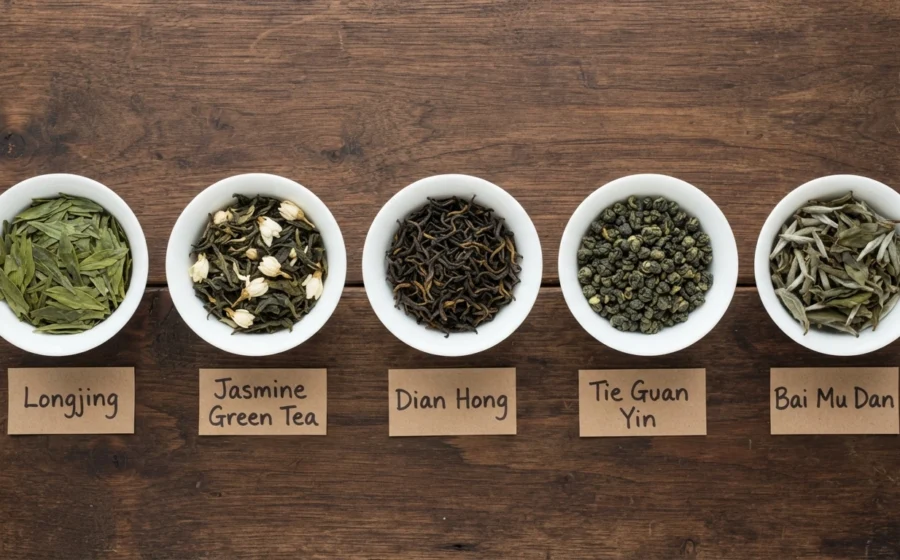
Phoenix Dancong Aroma vs Other Oolong Teas
Phoenix Dancong is often considered one of the most aromatic styles of Chinese oolong.
However, different oolongs express fragrance in completely different ways.
| Tea | Aroma Character |
|---|---|
| Phoenix Dancong | Intense floral, fruity, honey-like, complex |
| Tie Guan Yin | Orchid, creamy, fresh |
| Da Hong Pao | Roasted, mineral, woody |
| Taiwanese High Mountain Oolong | Floral, fresh, elegant |
Tie Guan Yin from Anxi is known for its orchid-like fragrance and creamy texture, but its aroma is usually softer and more delicate.
Da Hong Pao from Wuyi focuses more on roasted depth, mineral character, and long-lasting warmth.
Taiwanese high mountain oolongs often emphasize freshness, sweetness, and a lighter floral expression.
Phoenix Dancong stands apart because of its unusual range of aromas. One tea can remind you of flowers, fruit, honey, or roasted nuts depending on the variety.
How To Choose Phoenix Dancong For Beginners
The variety of Phoenix Dancong can feel overwhelming at first.
For beginners, the easiest approach is to start with approachable aroma types.
Start With Honey Orchid
Honey Orchid is usually the best introduction to Dancong.
It offers:
- Gentle floral fragrance
- Natural sweetness
- Smooth texture
- Balanced character
It allows new drinkers to understand why Dancong is famous without being too intense.
Try Duck Shit Aroma Next
After experiencing Honey Orchid, Duck Shit Aroma is worth exploring.
Despite the unusual name, it is one of the most popular Dancong styles today.
It offers:
- Stronger floral fragrance
- Creamier texture
- More complex aroma layers
For many tea lovers, this is the tea that makes them understand the unique charm of Phoenix Dancong.
Explore Other Aromas Slowly
Once you become familiar with Dancong, you can explore:
- Gardenia Aroma
- Almond Aroma
- Ginger Flower Aroma
- Osmanthus Aroma
The goal is not to collect every aroma type immediately.
The joy of Dancong comes from slowly discovering how different bushes, mountains, and craftsmanship create different expressions.
How To Buy Phoenix Dancong Online
Buying Phoenix Dancong online requires more attention because aroma is one of the most important parts of the experience.
A trustworthy seller should clearly explain:
- Tea origin
- Harvest season
- Aroma type
- Roasting level
- Production method
- Tasting notes
Be careful with descriptions that only use attractive words such as:
- “Premium”
- “Rare”
- “Ancient tree”
- “Best Dancong”
without explaining the actual tea.
A good tea description should help you understand the leaf, not only convince you to buy.
For first-time buyers, purchasing a smaller quantity is usually the better choice.
Taste the tea yourself.
Pay attention to:
- Does the aroma feel natural?
- Does the sweetness remain after swallowing?
- Does the tea become more interesting through several infusions?
The leaf will usually tell you more than the marketing.
Frequently Asked Questions
Why does Phoenix Dancong have so many aromas?
Phoenix Dancong comes from many different selected tea bushes, each with its own aromatic characteristics. The cultivar, Phoenix Mountain environment, and traditional processing all contribute to its diversity.
Is Phoenix Dancong naturally flavored?
No.
The aroma comes naturally from the tea leaf. No honey, flowers, fruit, or artificial flavoring is added.
What is the most popular Phoenix Dancong aroma?
Honey Orchid is one of the most popular and beginner-friendly varieties.
Duck Shit Aroma is also extremely famous because of its unusual name and intense floral fragrance.
Is Duck Shit Aroma Dancong good?
Yes.
Despite the name, Duck Shit Aroma is considered one of the most interesting Phoenix Dancong styles. It is known for strong floral notes, sweetness, and a creamy texture.
Does stronger aroma mean better Phoenix Dancong?
No.
Aroma intensity is only one part of quality. A great Dancong should also have good texture, sweetness, balance, and a lasting finish.
How many times can Phoenix Dancong be brewed?
A good Phoenix Dancong can usually handle multiple infusions. Depending on quality and brewing style, many teas can remain enjoyable through six or more cups.
Final Thoughts
Phoenix Dancong is a tea built around fragrance, but fragrance is only the beginning.
The most memorable Dancong is not always the tea with the strongest aroma. It is the one where the fragrance feels natural, the texture feels complete, and each infusion reveals something new.
At Tea Passage, we believe drinking Phoenix Dancong is not about chasing unusual names or impressive stories. It is about learning to appreciate the relationship between the mountain, the leaf, and the hands that created it.
A great Dancong does not need artificial flavor or exaggerated claims.
Its character appears naturally — in the aroma rising from the warmed leaves, in the sweetness that remains after each sip, and in the quiet moments when the tea slowly unfolds.
Explore Our Phoenix Dancong Tea →
References and Sources
- DB4451/T 1—2021: Geographical Indication Product — Fenghuang Dancong Tea — Chaozhou municipal standard defining the scope, environment requirements, cultivation practices, processing techniques, and quality requirements for Fenghuang Dancong Tea. Defines the tea as an oolong made from Fenghuang Shuixian cultivars with a quality profile of “natural floral or fruity fragrance with cong yun and honey yun.”
- DB44/T 2816.4—2026: Dancong Tea — Part 4: Quality Requirements — Guangdong provincial standard specifying product classification, grade, requirements, testing methods, and labeling for strip-shaped Dancong tea.
- Xinhua / China Tea Marketing Association: “The Craft of Chinese Tea — A Cup of Tea” — Reports on Phoenix Mountain tea production, including elevation data, the role of sunlight in aroma development, and the critical “making green” (做青) oxidation step that fixes the tea’s natural fragrance.
- China Tea Marketing Association: “Visiting the Hometown of Fenghuang Dancong — Wudong Village” — Provides background on Phoenix Mountain geography (main peak 1,498 meters), climate, and the traditional production process including sunlight withering and the multi-step processing that spans over 20 hours.
- Chaozhou Government: “Five Provincial Standards for Fenghuang Dancong Tea Released” — Announces new sensory terminology including “cong yun” (丛韵) and “shan yun” (山韵) as core flavor descriptors for Dancong tea, defining cong yun as the integrated expression of varietal, regional, and craft aromas.