Steeping time is one of the smallest details that creates the biggest difference in your cup of oolong tea.
Brew for too short a time, and the tea may feel light and underdeveloped. Brew for too long, and the flavor can become bitter, dry, or overpowering.
The right steeping time allows oolong tea to reveal what makes it special — its aroma, texture, sweetness, and changing layers of flavor.
This guide explains exactly how long to steep oolong tea, including Gongfu brewing, Western-style brewing, and timing recommendations for different oolong tea styles.
How Long Should You Steep Oolong Tea?
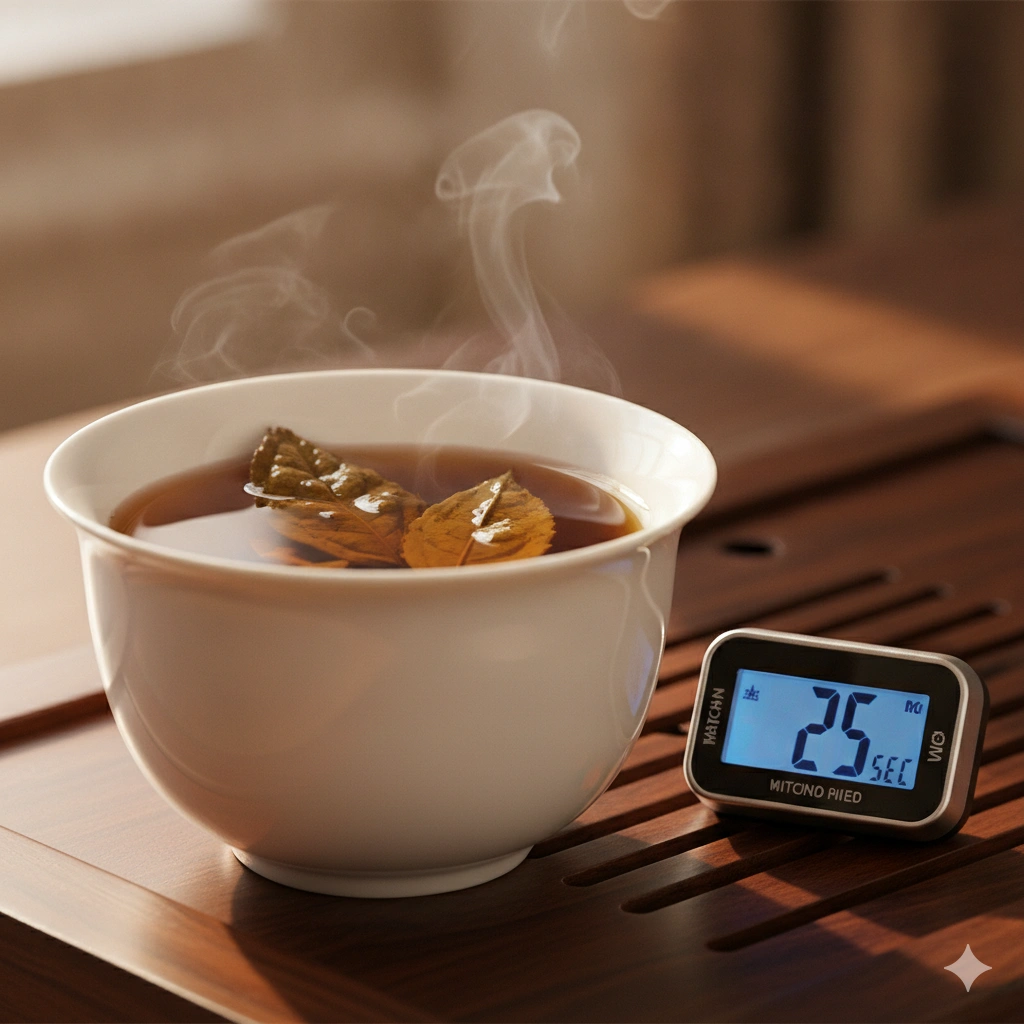
There is no single steeping time that works for every oolong tea.
The ideal timing depends on:
- Brewing method
- Tea variety
- Leaf size and shape
- Personal taste preference
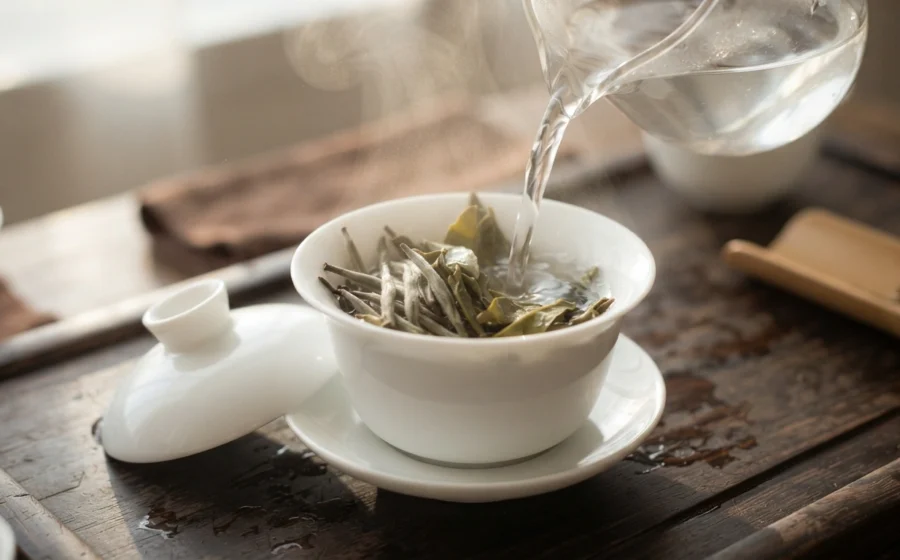
For Gongfu brewing, a good starting point is:
20–30 seconds for the first infusion
Because Gongfu brewing uses more tea leaves and less water, short steeping times create a concentrated but balanced cup. Each following infusion can be adjusted slightly longer as the leaves continue opening.
For Western-style brewing, a typical steeping time is:
2–3 minutes
This method uses more water and fewer leaves, creating a smoother everyday cup.
These times are starting points, not strict rules. Great tea comes from adjusting based on what you taste.
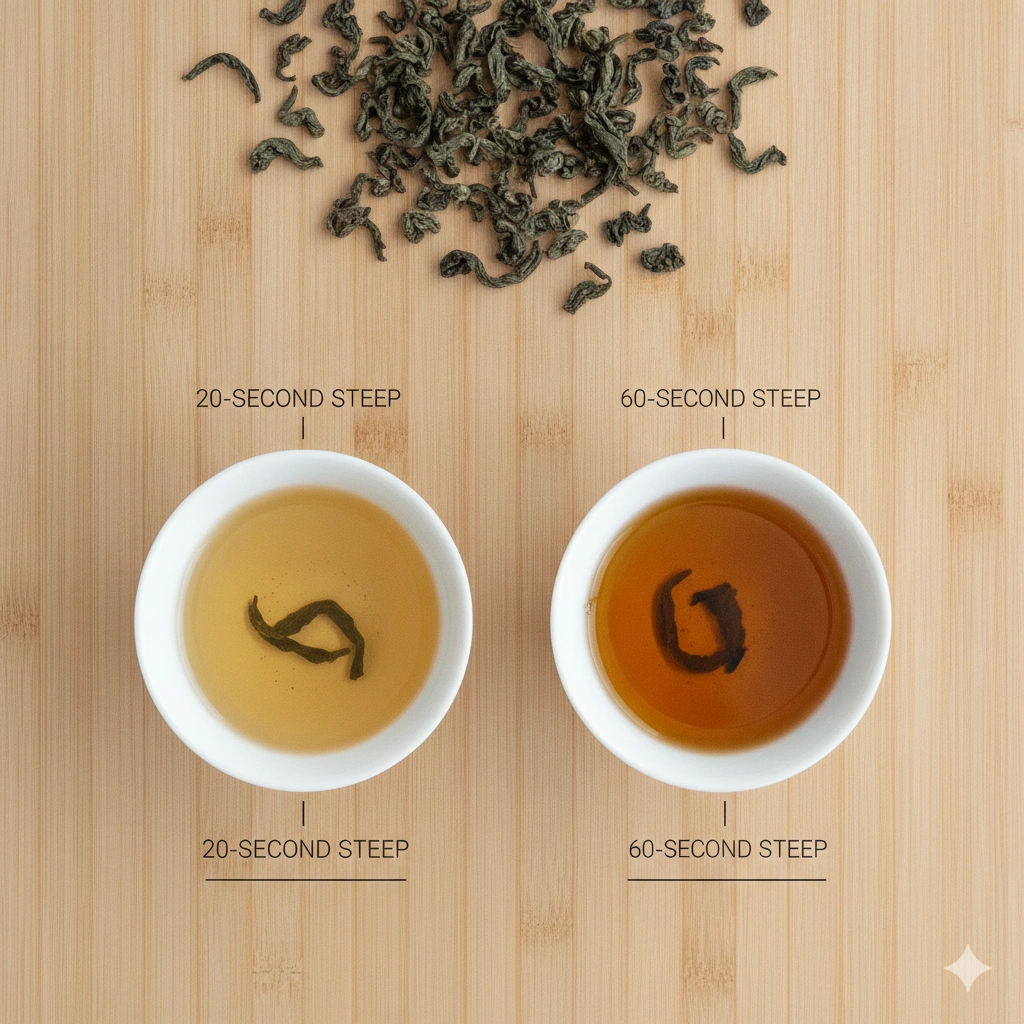
Oolong Tea Steeping Time Chart
| Brewing Method | Steeping Time |
|---|---|
| First Gongfu Infusion | 20–30 seconds |
| Later Gongfu Infusions | Gradually increase time based on flavor |
| Western Style Brewing | 2–3 minutes |
| Cold Brew Oolong | 6–12 hours refrigerated |
Cold brew oolong creates a completely different experience. The slow extraction produces a smooth, refreshing tea with a naturally sweet character and very little bitterness.
How Long To Steep Different Types of Oolong Tea?
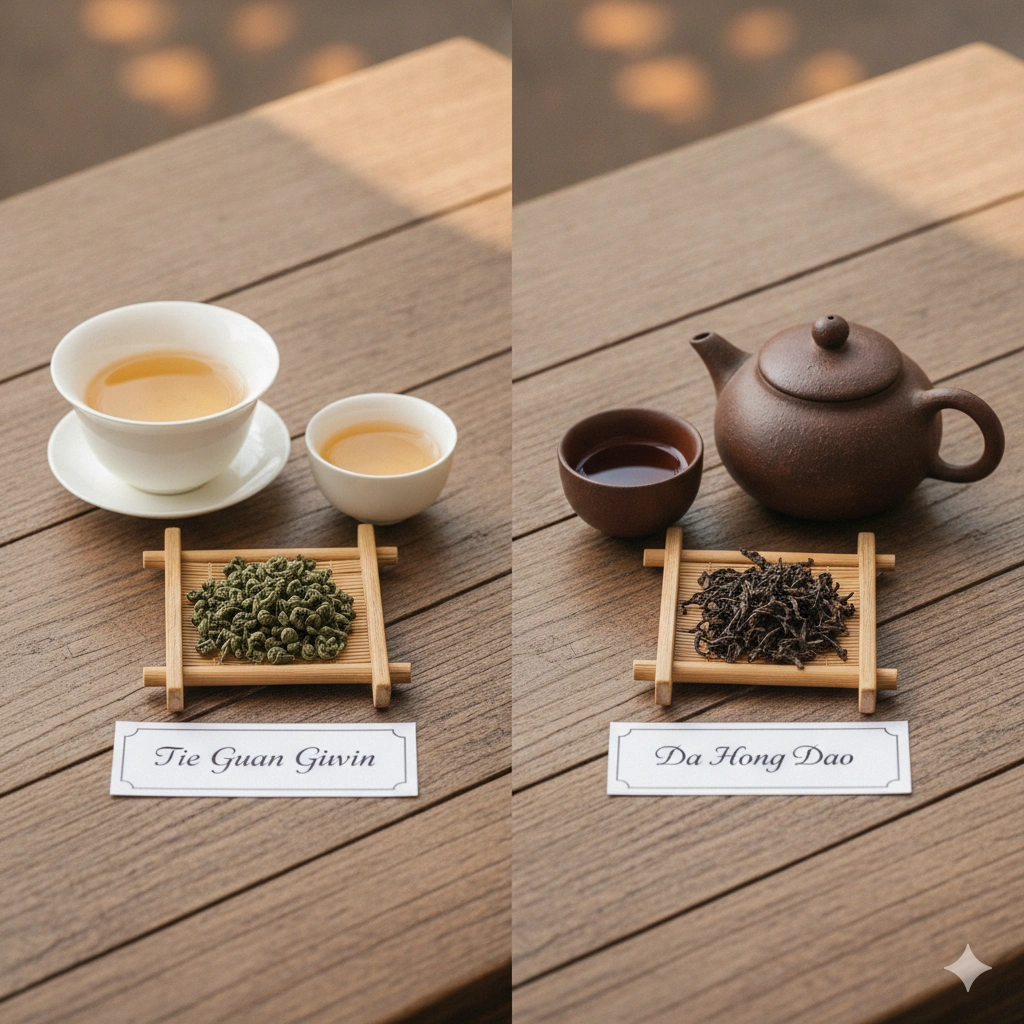
Different oolong styles have different personalities, so their ideal steeping times are slightly different.
Tie Guan Yin (Light Oolong)
Recommended first Gongfu infusion:
20–25 seconds
Lightly oxidized Tie Guan Yin is known for its floral aroma, creamy texture, and fresh character.
A shorter steep helps preserve its delicate orchid-like fragrance. Brewing too long can make the tea taste sharper and reduce the brightness of the aroma.
Da Hong Pao (Dark Roasted Oolong)
Recommended first Gongfu infusion:
30–40 seconds
Traditional Da Hong Pao from the Wuyi Mountains has a deeper roasted profile.
A slightly longer infusion helps bring out:
- Roasted notes
- Mineral character
- Cocoa-like richness
- Long-lasting sweetness
Dark roasted oolongs often need more time for their flavors to fully open.
High Mountain Oolong
Recommended first Gongfu infusion:
20–30 seconds
Taiwanese high mountain oolongs are valued for their floral aroma, smooth texture, and clean sweetness.
A gentle steep helps preserve their elegant and refreshing character.
What Happens If You Steep Oolong Tea Too Long?
Steeping oolong tea too long will not ruin the leaves, but it changes the balance of the cup.
The most common results are:
- Strong bitterness
- Dry mouthfeel
- Reduced floral aroma
- Heavy aftertaste
This happens because longer extraction pulls more compounds from the leaves.
If your tea tastes harsh, the solution is usually simple:
- Shorten the steeping time
- Lower the water temperature slightly
- Adjust the leaf amount
Oolong tea is quite forgiving. Small changes can bring the flavor back into balance.
Does Oolong Tea Get Stronger The Longer You Steep?
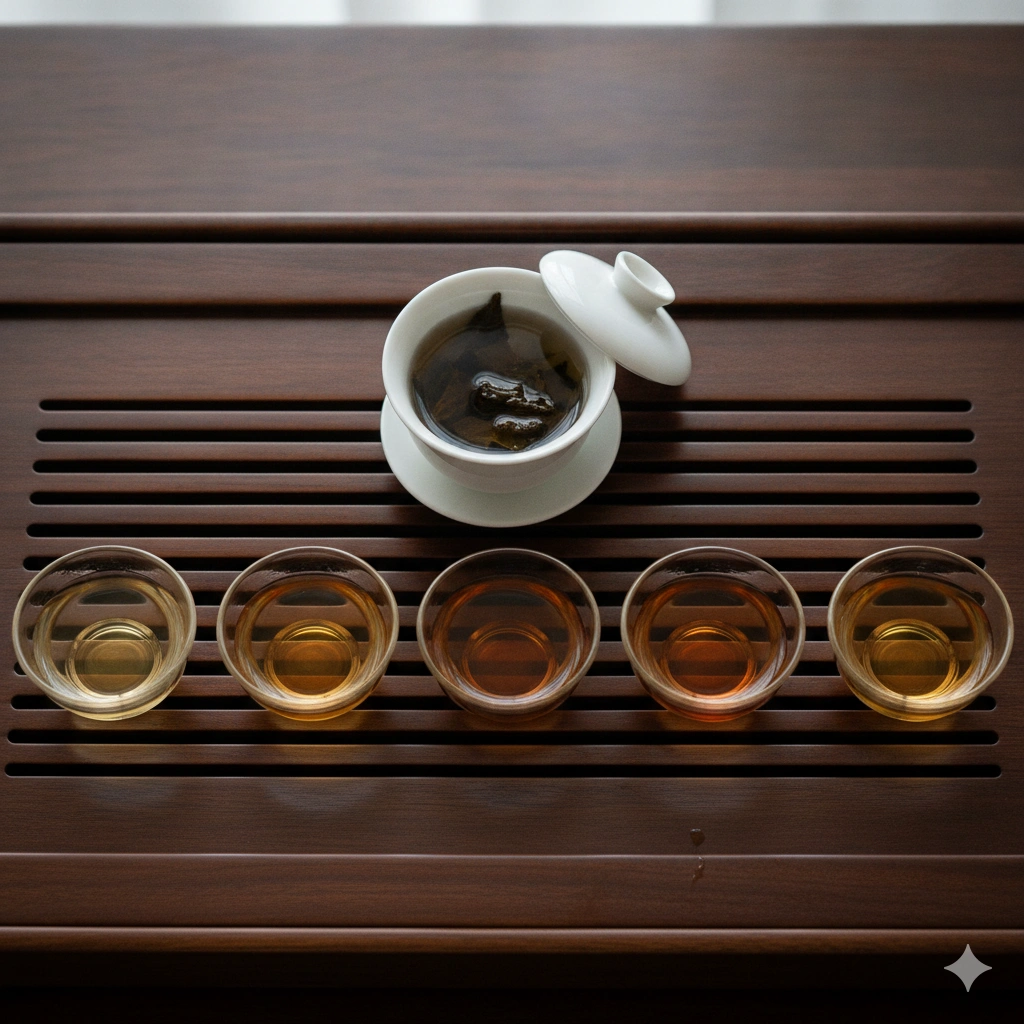
Yes, longer steeping generally creates a stronger cup because more flavor compounds and caffeine are extracted from the leaves.
However, stronger does not always mean better.
A well-brewed oolong should feel balanced:
- Clear aroma
- Smooth texture
- Pleasant sweetness
- Comfortable finish
The goal is not to extract everything from the leaf as quickly as possible. The goal is to find the point where the tea expresses itself naturally.
How To Adjust Steeping Time For Better Flavor
Steeping time is one of the easiest ways to improve your tea.
If your tea tastes too weak:
Try:
- Adding 5–10 more seconds
- Increasing the amount of tea leaves slightly
If your tea tastes bitter:
Try:
- Shortening the steep time
- Reducing water temperature
- Using fewer leaves
If your tea tastes flat:
Try:
- Increasing the leaf amount
- Using fresher, higher-quality loose leaf tea
Change one factor at a time so you can understand how each adjustment affects the cup.
Tea Passage Brewing Experience
At Tea Passage, we have learned that steeping oolong tea is less about following a perfect formula and more about understanding the character of each tea.
When brewing Da Hong Pao, we found that a slightly longer first infusion often works beautifully. Around 35–40 seconds allows the roasted aroma and mineral depth to become more noticeable without overpowering the tea.
With Tie Guan Yin, we prefer a shorter first infusion. Around 20 seconds helps maintain the fresh floral aroma and smooth texture that make this style special.
The biggest lesson we have found is that steeping time is a conversation between you and the tea.
The same leaves can taste completely different depending on how you treat them. Over time, you start to notice the small signals — the aroma, the color, and the feeling of the tea — that tell you when it is ready.
If you want to learn the complete brewing process, explore our guide on How To Brew Oolong Tea.
Frequently Asked Questions
How long should I steep oolong tea for the first time?
For Gongfu brewing, start with 20–30 seconds. For Western brewing, 2–3 minutes is a good starting point. Adjust based on taste.
Can I steep oolong tea overnight?
Cold brewing oolong tea in the refrigerator for 6–12 hours can create a smooth and refreshing drink.
Leaving hot-brewed oolong leaves in water overnight is not recommended because the tea will become overly extracted and bitter.
Why does my oolong tea taste bitter?
The most common reasons are steeping too long, using water that is too hot, or using an unbalanced tea-to-water ratio.
Try reducing steep time first.
Can I reuse oolong tea leaves?
Yes. High-quality loose leaf oolong can often be brewed 5–10 times.
The flavor will gradually change with each infusion, revealing different layers of the tea.
The best steeping time depends on both the tea style and the quality of the leaves.
At Tea Passage, we select oolong teas with different personalities — from floral Tie Guan Yin to traditional roasted Da Hong Pao — so tea drinkers can explore how different leaves develop through each infusion.