Longjing tea is famous for its smooth sweetness, chestnut aroma, and calm character. But if you drink tea regularly, one practical question always comes up: does Longjing tea have caffeine?
The short answer is yes. Longjing tea contains caffeine, just like other teas made from the Camellia sinensis plant. However, its caffeine experience is very different from coffee or stronger teas. Instead of a sudden rush, Longjing often provides a gentler, more balanced feeling that fits naturally into a morning routine or a focused afternoon.
This guide explains how much caffeine Longjing tea contains, how it compares with coffee and other teas, and how brewing methods change the caffeine level in your cup.
Does Longjing Tea Have Caffeine?
Yes, Longjing tea contains caffeine.
Because Longjing is a green tea made from the leaves of the Camellia sinensis plant, it naturally contains caffeine. The amount varies depending on the harvest season, leaf quality, brewing method, and how much tea you use.
Caffeine is not something added to tea. It is naturally produced by the tea plant as part of its own defense system. Along with caffeine, tea leaves also contain L-theanine and other compounds that shape the overall drinking experience.
This combination is one reason tea often feels different from coffee. The caffeine provides alertness, while other natural compounds contribute to a smoother feeling.
How Much Caffeine Is In Longjing Tea?
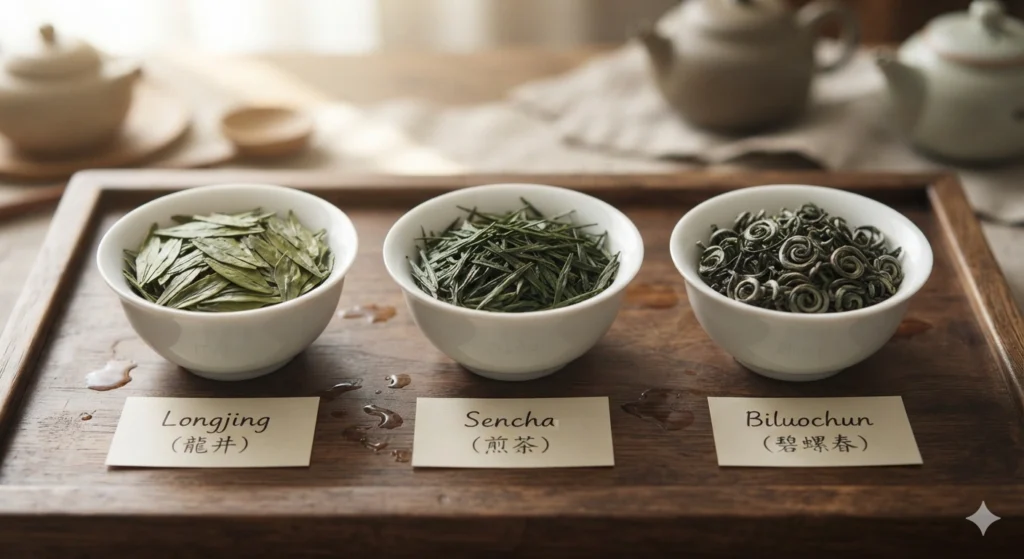
A typical cup of Longjing tea contains around 20–40 milligrams of caffeine per 8 oz (240 ml) serving.
The exact amount depends on several factors:
| Factor | Effect on Caffeine |
|---|---|
| More tea leaves | More caffeine extracted |
| Higher water temperature | More caffeine released |
| Longer steeping time | More caffeine extracted |
| Younger spring leaves | Often slightly lower caffeine |
Compared with coffee, Longjing contains a moderate amount of caffeine. It can provide a gentle lift, but it is usually much less intense than a standard cup of brewed coffee.
For most tea drinkers, the experience is less about the exact number of milligrams and more about how the energy feels.
Longjing Tea vs Coffee: Which Has More Caffeine?
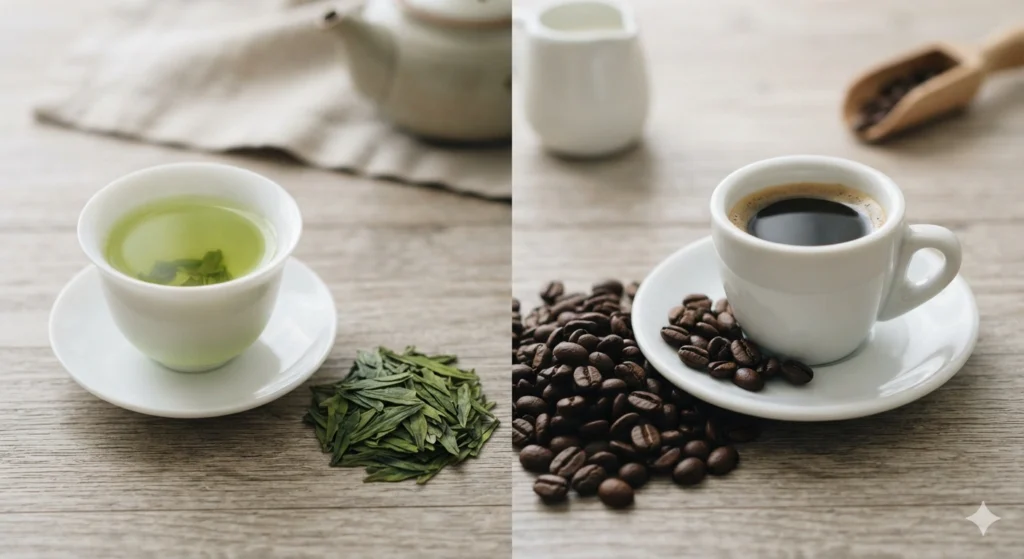
Coffee generally contains much more caffeine than Longjing tea.
| Drink | Caffeine per 8 oz cup (approx.) |
| Longjing Tea | 20–40 mg |
| Brewed Coffee | 80–120 mg |
A cup of Longjing usually contains around one-quarter to one-half of the caffeine found in coffee.
This difference is why many people enjoy Longjing as a daytime alternative to coffee. It offers enough stimulation to improve focus, but it is less likely to feel overwhelming.
Coffee often creates a quick rise in energy. Longjing tends to feel quieter and more gradual.
Why Does Longjing Tea Feel Different From Coffee?
The difference is not only caffeine.
Longjing tea also contains L-theanine, an amino acid naturally found in tea leaves. L-theanine is often associated with a feeling of calm alertness, which is why many tea drinkers describe tea energy as smoother compared with coffee.
A cup of coffee may feel sharp and immediate. A cup of Longjing often feels more balanced — enough clarity to focus, but without the same intensity.
This makes Longjing especially suitable for:
- Morning reading or work
- Long periods of concentration
- Afternoon breaks
- People who prefer a calmer caffeine experience
Of course, everyone responds differently to caffeine. Some people are highly sensitive, while others can enjoy tea later in the day without any issue.
Does Longjing Have More Caffeine Than Other Green Teas?
Longjing is not significantly higher or lower in caffeine compared with other green teas. The difference usually comes from the specific tea, harvest, and brewing method rather than the name of the tea itself.
Here is a general comparison:
| Green Tea | Approximate Caffeine (8 oz cup) |
| Longjing | 20–40 mg |
| Biluochun | 20–35 mg |
| Huangshan Maofeng | 20–35 mg |
| Japanese Sencha | 25–45 mg |
Longjing sits comfortably within the normal range for green tea.
What makes Longjing special is not its caffeine level. It is the combination of moderate caffeine, smooth texture, roasted chestnut aroma, and gentle sweetness that creates its unique drinking experience.
Does Mingqian Longjing Have Less Caffeine?
Many people assume that Mingqian Longjing (Longjing harvested before the Qingming Festival) must contain much less caffeine because the leaves are younger and more delicate.
The reality is more complicated.
Young tea buds can contain relatively high concentrations of certain compounds because the plant uses them to protect new growth. However, the overall caffeine difference between Mingqian and later harvest Longjing is usually not dramatic enough for most drinkers to notice.
The bigger difference between Mingqian and Yuqian Longjing is usually found in:
- Aroma
- Freshness
- Texture
- Sweetness
- Market value
Mingqian Longjing is prized mainly because of its rarity, early harvest timing, and refined flavor — not because it is a low-caffeine tea.
Does Brewing Method Affect Longjing Tea Caffeine?
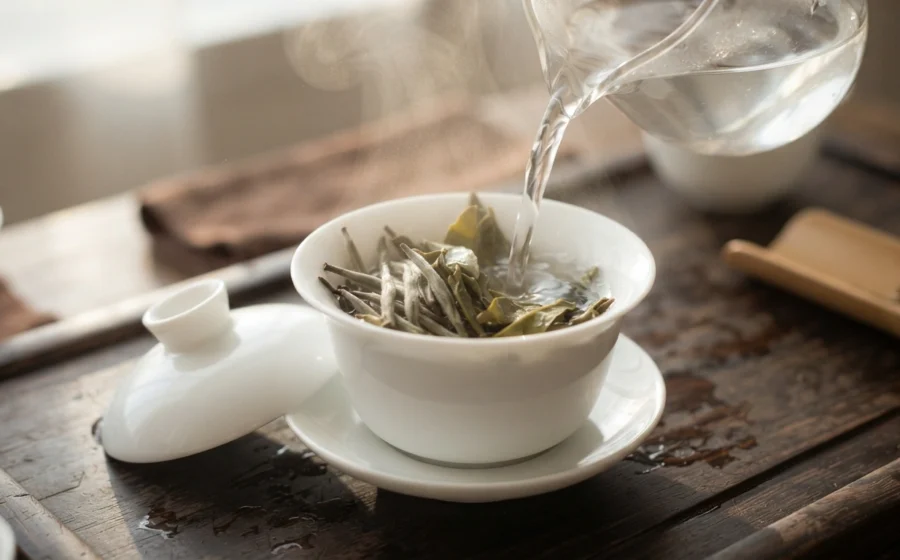
Yes. Brewing style can change how much caffeine ends up in your cup.
A few simple rules:
Hotter water extracts more caffeine.
A Longjing brewed at 85°C will generally release more caffeine than one brewed at 75°C.
Longer steeping extracts more caffeine.
A three-minute steep will usually contain more caffeine than a one-minute steep.
More leaves create a stronger cup.
Using more tea leaves increases both flavor intensity and caffeine content.
This means you can adjust your Longjing experience depending on your needs.
For a lighter afternoon cup:
- Use slightly cooler water
- Keep steeping time shorter
- Use a moderate amount of leaves
For a stronger morning cup:
- Use slightly hotter water
- Extend the steep slightly
- Increase the leaf amount
Can You Drink Longjing Tea At Night?
It depends on your caffeine sensitivity.
Because Longjing contains caffeine, drinking it late at night may affect sleep for some people. If you are sensitive to caffeine, morning or early afternoon is usually the best time to enjoy it.
However, Longjing contains less caffeine than coffee, and many people can comfortably drink it later in the day.
A good approach is to pay attention to your own response. Tea is a daily ritual, and the best timing is the one that fits your body and lifestyle.
Our Experience With Longjing Tea At Tea Passage
At Tea Passage, we do not think about Longjing caffeine only as a number.
What matters more is the feeling of drinking it.
A morning cup of Longjing gives a gentle sense of clarity. The aroma of roasted chestnut, the soft sweetness, and the clean finish create a calm start to the day. It does not feel like a sudden push of energy. Instead, it feels like slowly waking up.
We also notice how much brewing changes the experience. A lighter brew creates a softer, more refreshing cup. A slightly stronger brew brings out more body and warmth.
That balance is what makes Longjing special. It is not the strongest tea. It does not try to be. It offers a quieter kind of energy — one that fits naturally into everyday moments.
Frequently Asked Questions
Does Longjing tea have caffeine?
Yes. Longjing tea contains caffeine because it is made from the leaves of the Camellia sinensis plant.
How much caffeine is in Longjing tea?
A typical cup of Longjing tea contains around 20–40 mg of caffeine per 8 oz serving, depending on the amount of leaves and brewing method.
Is Longjing tea stronger than coffee?
No. Coffee contains significantly more caffeine. A typical cup of coffee contains around 80–120 mg, while Longjing usually contains around 20–40 mg.
Can Longjing tea replace coffee?
For some people, yes. Longjing provides a gentler caffeine experience with a smoother feeling, but it does not provide the same intensity as coffee.
Does Longjing tea have more caffeine than black tea?
Generally, no. Black tea often contains around 40–60 mg of caffeine per cup, while Longjing usually contains around 20–40 mg.
Can I drink Longjing tea before bed?
If you are sensitive to caffeine, it is better to avoid drinking Longjing late at night. Morning or afternoon is usually the best time.
Does brewing temperature affect Longjing caffeine?
Yes. Higher temperatures and longer steeping times generally extract more caffeine from the tea leaves.
Longjing tea is not about chasing the strongest caffeine boost. Its appeal comes from balance — a moderate lift, a smooth flavor, and a quiet moment in your day.
At Tea Passage, we select Longjing tea for its freshness, craftsmanship, and natural sweetness. Whether you drink it in the morning or during a peaceful afternoon break, a well-made Dragon Well tea offers a different way to experience energy.