Longjing tea is often described as one of the easiest Chinese green teas to enjoy, but its flavor is quite different from what many people expect from green tea.
If your previous experience with green tea was bitterness, strong grassy notes, or a sharp aftertaste, Longjing may feel completely different. A good Dragon Well tea has a smooth texture, roasted chestnut aroma, gentle sweetness, and a clean finish.
Its character comes from a unique combination of the tea variety, growing environment, and traditional pan-firing process. The result is a green tea that feels warm, balanced, and approachable.
This guide explores the complete Longjing tea taste profile, including its aroma, flavor notes, mouthfeel, bitterness, and how it compares with other famous green teas.
What Does Longjing Tea Taste Like?
Longjing tea tastes smooth, nutty, and lightly sweet, with a signature roasted chestnut aroma.
The first impression is usually warm and toasty. As the tea enters the mouth, you may notice:
- Roasted chestnut notes
- Fresh spring leaf flavors
- Gentle vegetal sweetness
- A soft, rounded texture
- A clean and lingering finish
Unlike some green teas that focus on freshness and sharp vegetal flavors, Longjing has a warmer character. The pan-firing process gives it a subtle roasted quality while preserving the freshness of green tea.
A good Longjing should feel balanced. It is not overly strong, heavily aromatic, or aggressive. Instead, the flavor develops slowly, revealing more sweetness and depth with each sip.
The Main Flavor Notes Of Longjing Tea
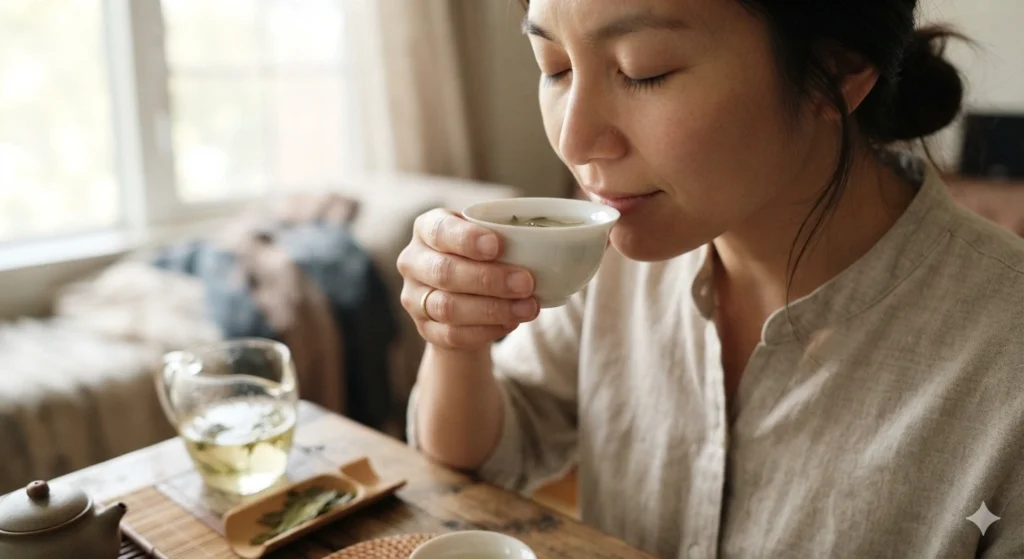
Longjing tea has several recognizable characteristics that define its taste.
1. Roasted Chestnut Aroma
The most famous feature of Longjing is its chestnut-like aroma.
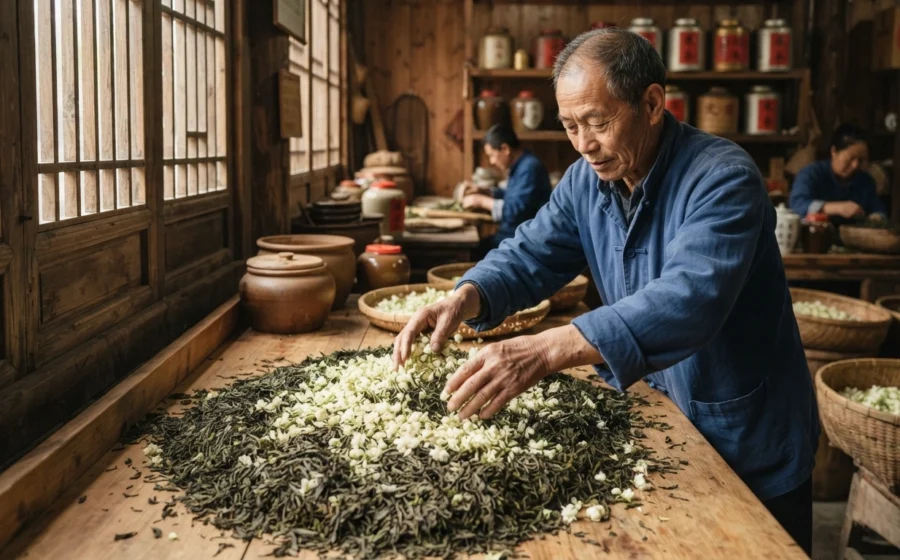
This flavor comes from the traditional pan-firing process. After harvesting, fresh tea leaves are heated in a wok, where skilled tea makers carefully shape and dry the leaves.
This process creates warm, toasted notes similar to:
- Roasted chestnuts
- Toasted grains
- Freshly baked nuts
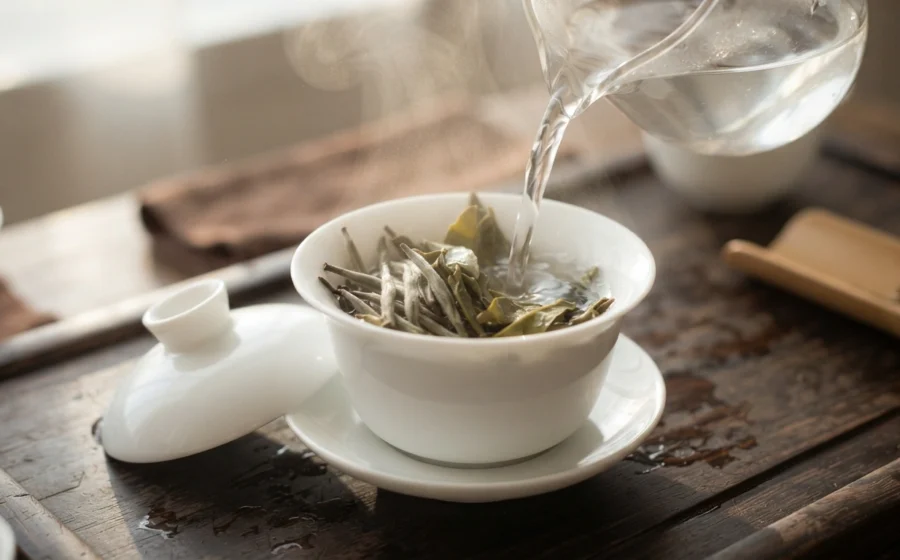
The aroma is often noticeable before the first sip. When hot water touches the leaves, the chestnut fragrance rises from the cup and becomes one of the most memorable parts of the experience.
This is also what separates Longjing from many other green teas. Instead of tasting purely fresh or grassy, it carries a comforting roasted character.
2. Fresh Green Notes
Although Longjing has a roasted aroma, it is still a green tea. It maintains a fresh, lively quality from the young tea leaves.
However, the green character is usually softer than Japanese steamed green teas.
You may notice flavors similar to:
- Fresh spring vegetables
- Tender young leaves
- Light garden freshness
It does not usually have the strong grassy or seaweed-like notes that some people associate with Japanese green tea.
The freshness creates balance. The roasted chestnut notes make the tea warm, while the green notes keep it bright and refreshing.
3. Natural Sweetness
One of the reasons people enjoy high-quality Longjing is its natural sweetness.
This sweetness is subtle. It is not like sugar or honey. Instead, it appears as a gentle sweetness that develops after swallowing the tea.
Chinese tea drinkers often describe this experience as hui gan, meaning the returning sweetness that appears in the aftertaste.
A good Longjing leaves your mouth feeling:
- Clean
- Slightly sweet
- Refreshing
This lingering sweetness is often a sign of good quality tea and careful brewing.
4. Smooth And Soft Mouthfeel
Longjing is known for its smooth texture.
Compared with many green teas, it has a softer and more rounded mouthfeel, with less sharp bitterness and less dryness.
A well-made Longjing should feel:
- Silky
- Balanced
- Light but satisfying
This smoothness is one reason Longjing is often recommended for beginners. Even people who normally dislike green tea may find its texture much easier to enjoy.
Is Longjing Tea Bitter?
A good Longjing tea should not taste strongly bitter.
Some bitterness is natural in all teas because tea leaves contain compounds such as catechins and caffeine. However, excessive bitterness usually means something went wrong.
The most common reasons Longjing becomes bitter are:
Water Temperature Too High
Boiling water is one of the biggest mistakes when brewing Longjing.
Using water close to 100°C can extract too many bitter compounds and overpower the tea’s natural sweetness.
For most Longjing teas, water around:
75°C–85°C (167°F–185°F)
works better.
Steeping Too Long
Longjing does not need a long steep.
Leaving the leaves in hot water for too long can create:
- Strong bitterness
- Dry mouthfeel
- Harsh aftertaste
A shorter brewing time usually produces a smoother cup.
Lower Quality Tea
Poor-quality Longjing often lacks the balance found in better teas.
Low-quality leaves may taste:
- Flat
- Overly grassy
- Bitter
- Lacking sweetness
Freshness, harvest time, and processing quality all affect the final taste.
How Longjing Taste Changes With Quality
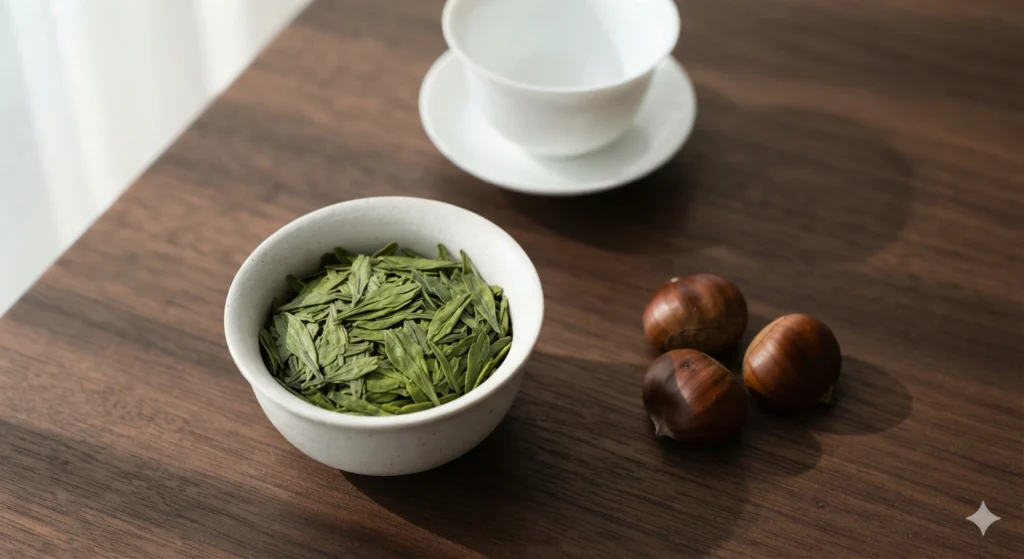
The flavor difference between Longjing grades can be significant.
Premium Longjing
High-quality Longjing, especially authentic West Lake Longjing and early spring harvests, usually offers:
- Clear chestnut aroma
- More refined sweetness
- Softer texture
- Longer aftertaste
The flavor feels more complete and balanced.
Mid-Grade Longjing
A good daily-drinking Longjing can still provide the classic characteristics:
- Nutty aroma
- Smooth body
- Gentle sweetness
The difference is that the aroma may be less intense and the finish may not last as long.
For many tea drinkers, this level offers the best balance between quality and price.
Lower Quality Longjing
Lower-quality Longjing often loses the features that make the tea special.
Common signs include:
- Weak aroma
- Flat flavor
- Excessive grassiness
- Rough aftertaste
This can happen because of older harvests, poor storage, or less careful processing.
Longjing Tea Taste Compared With Other Green Teas
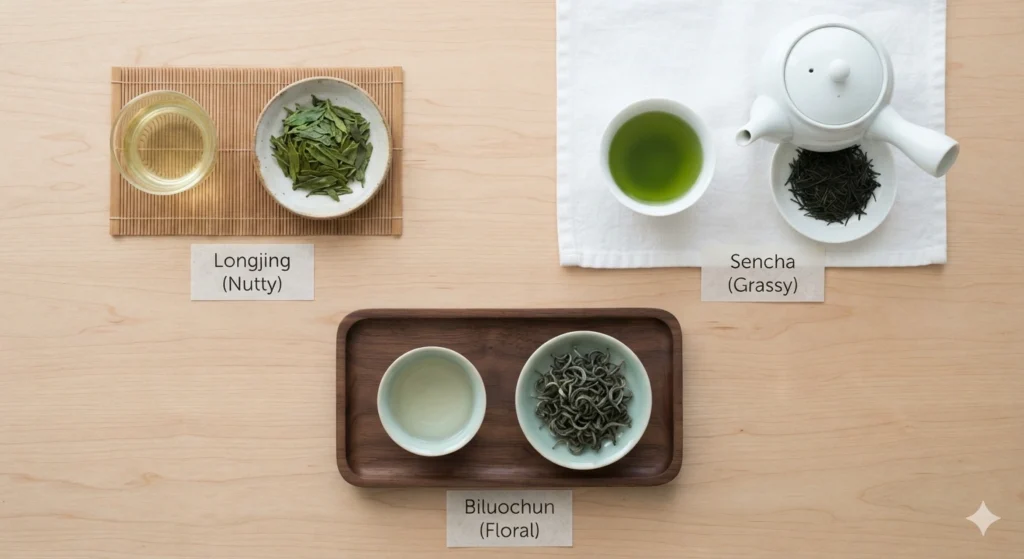
Longjing has a unique position among green teas because of its pan-fired character.
| Tea | Taste Profile |
|---|---|
| Longjing | Nutty, chestnut, smooth, lightly sweet |
| Biluochun | Floral, fruity, delicate |
| Huangshan Maofeng | Fresh, light, clean |
| Japanese Sencha | Grassy, vegetal, umami-rich |
Longjing vs Sencha
The biggest difference is processing.
Longjing is pan-fired, creating roasted and nutty flavors.
Sencha is steam processed, preserving brighter green flavors with stronger vegetal and umami notes.
If you enjoy:
- Roasted nuts
- Toasted flavors
- Smooth sweetness
Longjing may suit you better.
If you prefer:
- Fresh grassiness
- Strong vegetal flavors
- Umami
Sencha may be a better match.
Who Will Enjoy Longjing Tea?
Longjing is especially suitable for people who enjoy:
Coffee Drinkers Looking For A Softer Alternative
The roasted aroma gives Longjing a warm, familiar feeling, while its caffeine level is gentler than coffee.
Beginners Who Find Green Tea Too Bitter
Because of its smooth texture and low bitterness, Longjing is one of the easiest green teas to start with.
People Who Enjoy Roasted Flavors
If you like:
- Roasted nuts
- Toasted grains
- Warm aromas
you will likely appreciate Longjing.
Daily Tea Drinkers
Longjing is simple to brew and works well as an everyday tea.
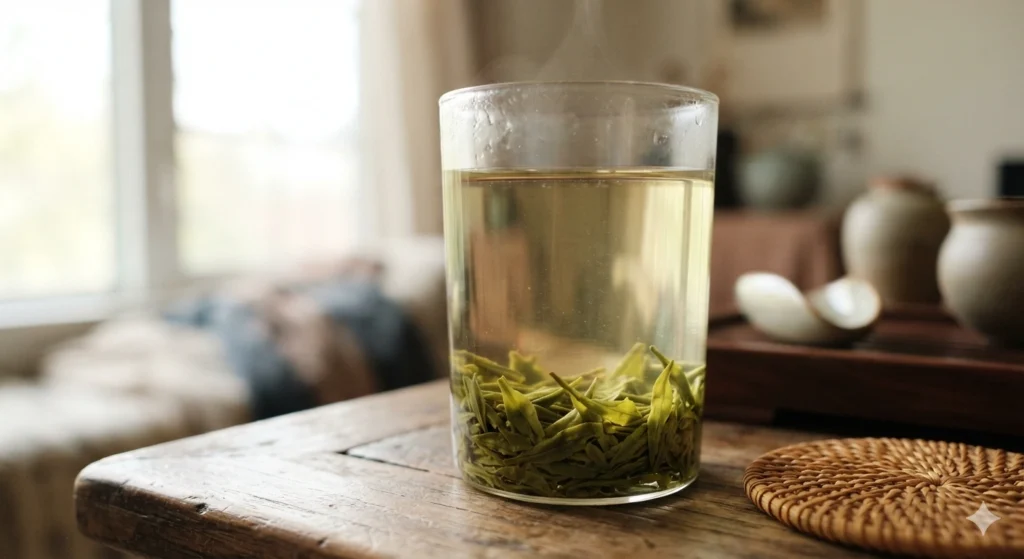
It does not require complicated equipment or advanced knowledge. A glass cup and good water are enough to enjoy it.
How We Experience Longjing At Tea Passage
At Tea Passage, Longjing is one of the teas we return to most often.
The first thing we notice is always the aroma. As hot water touches the leaves, the familiar scent of roasted chestnuts appears immediately. It feels warm and comforting, yet still fresh.
The first sip is gentle. There is no sharp bitterness, only a smooth nutty flavor followed by a clean sweetness that stays after swallowing.
What makes Longjing special is its balance. It is not a tea that tries to impress with intensity. Instead, it offers a quiet, refined experience that fits naturally into everyday moments.
A morning cup before work. An afternoon pause. A few minutes watching the leaves slowly unfold.
That simplicity is part of what makes Dragon Well tea so memorable.
Frequently Asked Questions
What does Longjing tea taste like?
Longjing tea tastes smooth, nutty, and slightly sweet, with a roasted chestnut aroma and a clean finish. Good-quality Longjing should not taste harsh or overly bitter.
Is Longjing tea sweet?
Yes, but the sweetness is subtle. It appears naturally through the tea’s flavor and aftertaste rather than tasting sugary.
Why does Longjing tea taste like chestnuts?
The chestnut aroma comes from the traditional pan-firing process, which creates roasted and toasted flavor compounds in the leaves.
Does Longjing tea taste bitter?
Properly brewed Longjing should not be strongly bitter. Excessive bitterness usually comes from water that is too hot, steeping too long, or lower-quality tea.
Is Longjing tea good for beginners?
Yes. Its smooth texture, gentle sweetness, and low bitterness make it one of the most beginner-friendly Chinese green teas.
How is Longjing different from Sencha?
Longjing is pan-fired and tastes nutty, roasted, and smooth. Sencha is steamed and usually tastes fresher, greener, and more umami-focused.
Longjing tea is famous not because it has the strongest flavor, but because it achieves a rare balance between freshness, warmth, sweetness, and smoothness. At Tea Passage, we select Longjing that represents this balance — a tea that is easy to appreciate, yet deep enough to explore over time.