Longjing tea is one of the most recognizable Chinese teas in the world.
For many people, it is the first Chinese green tea they encounter. The flat, smooth leaves, the fresh chestnut aroma, and the elegant brewing style have made Longjing a symbol of Chinese tea culture for centuries.
But Longjing is famous for more than its reputation.
Behind the name is a story of place, craftsmanship, and taste.
It comes from the hills around West Lake in Hangzhou. It is shaped by traditional pan-firing techniques that create its famous nutty character. And unlike many teas that are appreciated only by experts, Longjing remains approachable enough for beginners to enjoy.
That combination is what makes Longjing special.
It has history, but it does not feel distant.
It has craftsmanship, but it does not feel complicated.
Most importantly, it has a flavor that continues to attract tea drinkers today.
A Brief History Of Longjing Tea
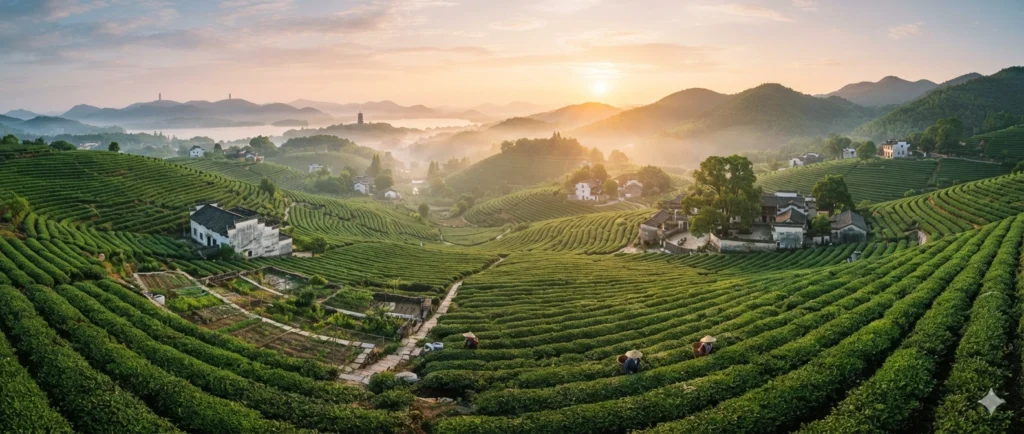
Longjing tea has been connected with Hangzhou for hundreds of years.
The tea gardens around West Lake have produced Longjing since ancient times, but the tea became especially famous during the Ming and Qing dynasties.
One of the biggest moments in Longjing’s history came during the Qing Dynasty, when Emperor Qianlong visited Hangzhou and praised the tea from the region.
According to the famous story, the emperor was so impressed by the tea gardens near West Lake that he personally named several tea bushes as imperial tea trees.
Whether every detail of the story is historically accurate or not, it reflects something important:
Longjing had already become a tea associated with quality, refinement, and appreciation.
Over time, it moved from imperial courts and wealthy families into everyday tea culture.
Today, it remains one of the most respected Chinese teas, enjoyed both in China and internationally.
What Makes Longjing Tea Different From Other Green Teas?
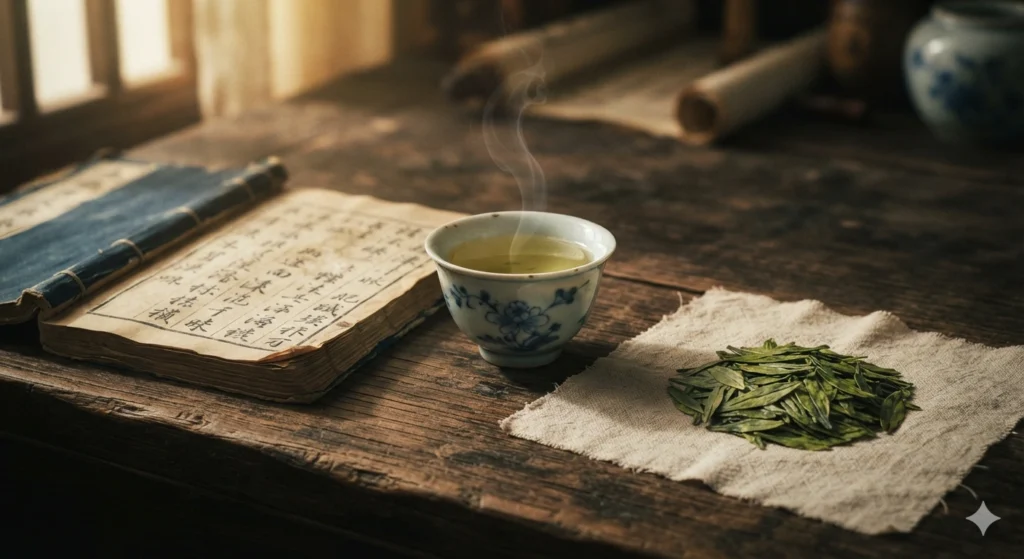
Longjing belongs to the green tea family, but its character is very different from many other green teas.
The biggest difference comes from the way it is made.
After harvesting, Longjing leaves are pan-fired in a hot wok.
This process stops oxidation while also creating the tea’s famous shape and aroma.
The result is a tea with:
- Flat, smooth leaves
- A roasted chestnut fragrance
- A soft, rounded texture
- A naturally sweet finish
This is very different from Japanese steamed green teas, which often have stronger grassy and vegetal notes.
Longjing feels warmer and more balanced.
It combines freshness with a subtle roasted character, which is one reason it appeals to people who are new to green tea.
The Role Of West Lake In Longjing’s Reputation
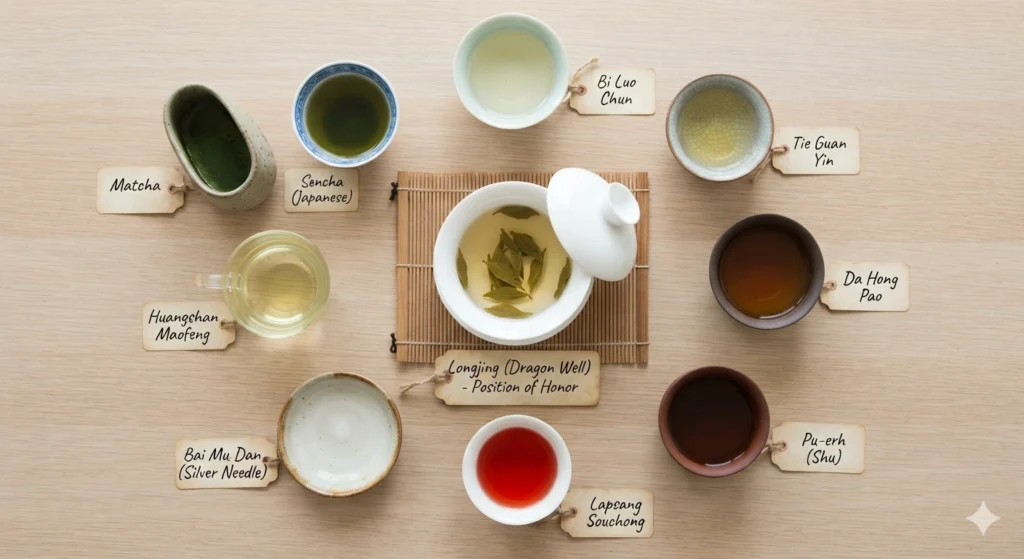
When people talk about famous Longjing tea, they often mention West Lake Longjing (Xihu Longjing).
West Lake is the historic birthplace of Longjing tea.
The area around Hangzhou provides a unique environment for tea growing:
- Mountain slopes surrounding the lake
- Rich soil
- Mild spring temperatures
- Traditional tea gardens with generations of experience
These conditions help create the delicate character associated with premium Longjing.
Within the West Lake region, several areas are especially famous, including:
- Shi Feng (Lion Peak)
- Meijiawu
- Longwu
Among them, Shi Feng Longjing has long been considered one of the most prestigious.
However, the fame of West Lake Longjing has also created confusion.
A higher price or famous name does not always mean better tea.
A good Longjing depends on many factors:
- Where it was grown
- When it was harvested
- How it was processed
- How fresh it is
Understanding these details helps you appreciate Longjing beyond the label.
Why Longjing Became A Symbol Of Chinese Tea Culture

Longjing represents a particular idea in Chinese tea culture:
Quality does not always come from intensity.
Some teas are famous because they are powerful, smoky, or bold.
Longjing is famous because of balance.
Its beauty comes from small details:
The gentle aroma when hot water touches the leaves.
The clear golden-green color in the cup.
The soft sweetness that appears after each sip.
The quiet feeling of drinking something carefully made.
This style of tea appreciation has made Longjing an important part of Chinese tea tradition.
It is often served to guests, given as a gift, and enjoyed during important occasions.
But at the same time, it remains simple enough for an ordinary daily cup.
Why Is Longjing Tea Still Famous Today?
Many teas have a long history.
Many teas have beautiful stories.
But very few teas remain famous for hundreds of years.
Longjing is one of them.
The reason is simple: Longjing is not famous only because of tradition. It became famous because the tea itself continues to offer something people enjoy.
A cup of good Longjing brings together:
- A clear sense of place
- A unique way of making tea
- A flavor that feels refined but approachable
It is a tea with history, but it does not feel old-fashioned.
That is why Longjing is still found in Chinese homes, tea shops, restaurants, and collections around the world today.
Why Is Longjing Called Dragon Well Tea?
The English name Dragon Well Tea comes from the Chinese name Longjing (龙井).
Longjing means “Dragon Well.”
The name comes from an ancient well near West Lake in Hangzhou. Local legends say the well was connected with a dragon, a powerful symbol of good fortune and protection in Chinese culture.
Over time, the tea grown around this area became known by the same name.
Today, Longjing and Dragon Well refer to the same tea.
The name is more than a translation. It carries a connection to the landscape where the tea was born — the hills, springs, and villages surrounding West Lake.
Why Is Longjing Considered One Of China’s Most Famous Teas?
Longjing is often included among China’s Ten Famous Teas.
But its reputation does not come from a title alone.
What makes Longjing important is that it represents many elements of Chinese tea culture:
Seasonal harvesting.
The best Longjing is made from young spring leaves, picked during a short harvest period.
Careful craftsmanship.
The leaves are shaped by skilled tea makers using traditional pan-firing techniques.
A focus on balance.
Longjing is not a strong or aggressive tea. Its beauty comes from subtle details.
In Chinese tea culture, the highest quality is often not about intensity.
It is about harmony.
Longjing represents this idea very well.
Why Is West Lake Longjing So Special?
When people talk about premium Longjing, they usually mean West Lake Longjing (Xihu Longjing).
This tea comes from the area around West Lake in Hangzhou, Zhejiang.
The region has been connected with Longjing production for centuries.
The environment helps create the tea’s character:
- Misty mountain slopes
- Mild spring weather
- Rich soil
- Traditional tea gardens passed down through generations
Within the West Lake area, places such as:
- Shi Feng (Lion Peak)
- Meijiawu
- Longwu
are especially respected.
Among them, Shi Feng Longjing has the strongest reputation among tea lovers.
However, West Lake Longjing is also one of the most misunderstood parts of Longjing.
A famous name does not automatically guarantee a great tea.
Because authentic West Lake production is limited, many teas labeled as “West Lake Longjing” are not actually from the core area.
This is why experienced tea drinkers look beyond the name.
They pay attention to:
- Harvest date
- Processing quality
- Freshness
- Flavor
The Flavor That Made Longjing Famous
History may introduce people to Longjing.
But flavor is what makes them stay.
A good Longjing has a taste that is difficult to confuse with other green teas.
The most famous notes are:
Roasted Chestnut Aroma
This is the signature character of Longjing.
The aroma comes from the pan-firing process, creating a warm, nutty scent similar to roasted chestnuts or toasted grains.
Fresh Spring Character
Although it has roasted notes, Longjing is still a green tea.
It carries a light freshness that reminds many people of young spring leaves.
Natural Sweetness
Good Longjing has a gentle sweetness that appears after swallowing.
It is not sugary.
It is a quiet sweetness that stays in the mouth.
Smooth Texture
Unlike some green teas that can taste sharp or bitter, Longjing is known for being soft and balanced.
This approachable character is one reason it attracts so many new tea drinkers.
Why Is Longjing Tea Expensive?
Not every Longjing tea is expensive.
Daily-drinking Longjing can be quite accessible.
The high prices usually come from several factors.
Limited Origin
Authentic West Lake Longjing comes from a small production area.
The land is limited, while demand is high.
Early Harvest
Mingqian Longjing, picked before the Qingming Festival, is especially valuable.
The leaves are young and tender, but the harvest period is extremely short.
Small production and high demand naturally increase the price.
Traditional Skill
Making Longjing requires experience.
The tea maker must control the heat and movement of the leaves carefully.
This skill affects the final aroma, shape, and taste.
The price of premium Longjing is not only paying for leaves.
It is paying for time, place, and craftsmanship.
Why Should You Try Longjing Tea?
Longjing remains famous because it connects the past with everyday life.
You can appreciate it as a piece of Chinese history.
You can study it as an example of traditional tea craftsmanship.
But most importantly, you can simply drink it.
A beginner can enjoy its smooth sweetness.
An experienced tea drinker can spend years exploring different regions and harvests.
That is the special thing about Longjing.
It does not require you to understand everything before enjoying it.
The first cup is enough to begin.
Our Experience With Longjing At Tea Passage
At Tea Passage, Longjing is one of the teas we return to most often.
What surprises many people is how different it feels from their expectations of green tea.
The first thing you notice is the aroma.
As hot water touches the leaves, a warm chestnut fragrance rises from the cup.
The taste is gentle and clean.
There is freshness, but also warmth.
There is sweetness, but never heaviness.
For us, this is why Longjing remains special.
It does not try to impress with intensity.
It creates a quiet moment.
And after hundreds of years, perhaps that is the real reason people still love it.
Frequently Asked Questions
Why is Longjing tea famous?
Longjing is famous because of its historic origin, West Lake reputation, traditional pan-firing craftsmanship, and unique smooth, nutty flavor.
Why is Longjing called Dragon Well Tea?
Longjing means “Dragon Well,” named after an ancient well near West Lake in Hangzhou where the tea originated.
Is Longjing the best Chinese green tea?
Longjing is considered one of China’s most famous green teas. Whether it is the “best” depends on personal taste.
Why is West Lake Longjing expensive?
Its price comes from limited production, famous origin, early spring harvests, and traditional processing methods.
Is Longjing tea good for beginners?
Yes. Its smooth texture, gentle sweetness, and low bitterness make it one of the easiest Chinese green teas to enjoy.
Longjing tea is famous for reasons that still hold true today: genuine craftsmanship, a beautiful growing region, and a flavor that speaks for itself. At Tea Passage, we select Longjing that reflects the best of this tradition, so you can taste what the centuries have been talking about.