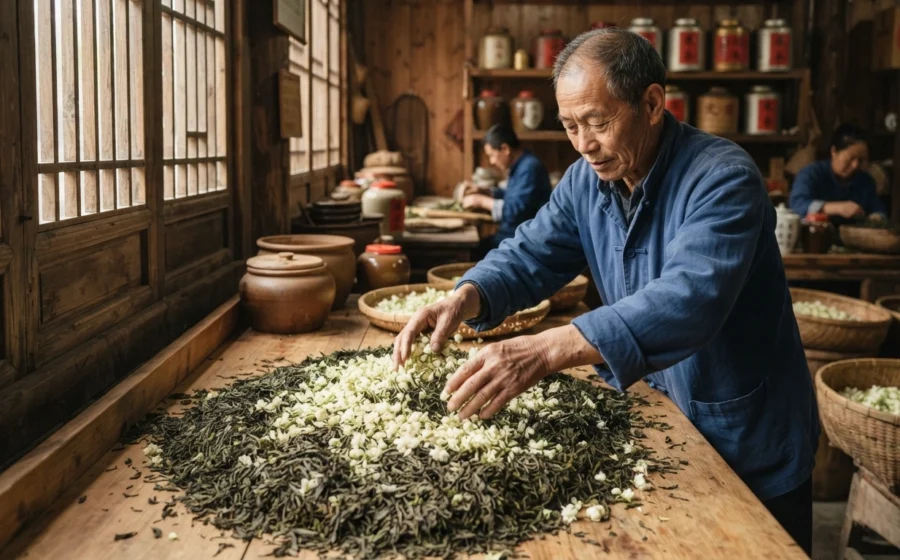
You may already know Dahongpao, one of China’s most celebrated oolong teas. But sooner or later, you’ll come across another name: Wuyi Rock Tea, sometimes called Yancha.
That often raises a few questions.
Is Wuyi Rock Tea simply another name for Dahongpao? Why is it called Rock Tea? And why do experienced tea drinkers describe it as having a “mineral” taste?
The answer is that Wuyi Rock Tea is not one tea, but an entire family of oolong teas grown in one of China’s most distinctive tea regions. Dahongpao is only one member of that family, alongside well-known varieties like Rou Gui, Shui Xian, and Tie Luo Han.
Each tea has its own personality, but they all share one defining characteristic: a deep, lingering mineral character created by the unique landscape of the Wuyi Mountains.
In this guide, we’ll explore where Wuyi Rock Tea comes from, what makes it different from other oolongs, how it tastes, and which varieties are worth trying first.
What Is Wuyi Rock Tea?
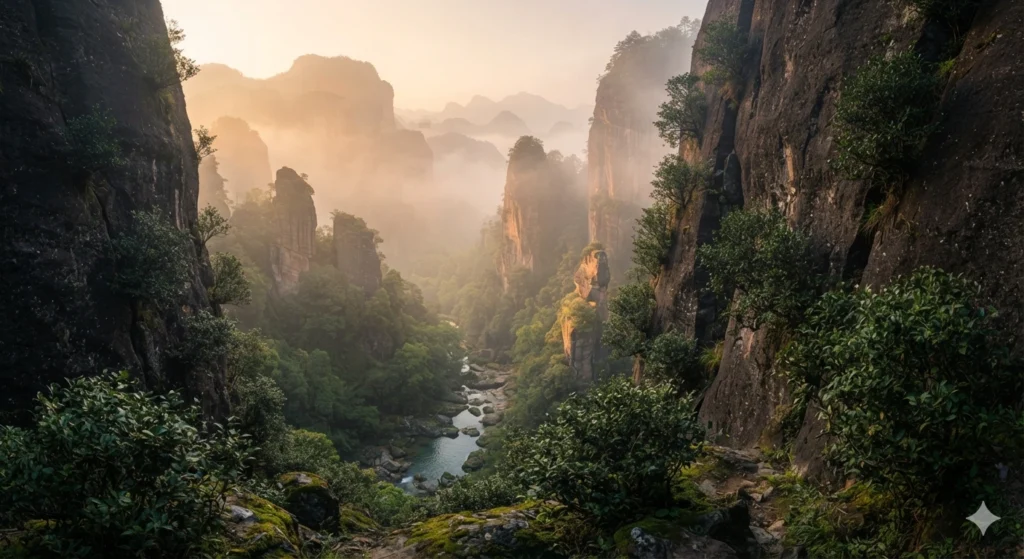
Wuyi Rock Tea (武夷岩茶), known in Chinese as Yancha, is a traditional style of Chinese oolong tea produced in the Wuyi Mountains of northern Fujian Province.
Like all oolong teas, it sits between green tea and black tea. The leaves are partially oxidized, then carefully roasted over charcoal or electric roasting baskets to develop their signature depth and warmth.
What makes Yancha unique, however, isn’t just the processing.
It’s the place.
Unlike tea gardens spread across rolling hills, Wuyi tea bushes grow among dramatic cliffs, narrow valleys, and rocky terraces. The roots push deep into mineral-rich soil, while mist drifts through the mountains for much of the year. These conditions shape the flavor in a way that’s difficult to reproduce elsewhere.
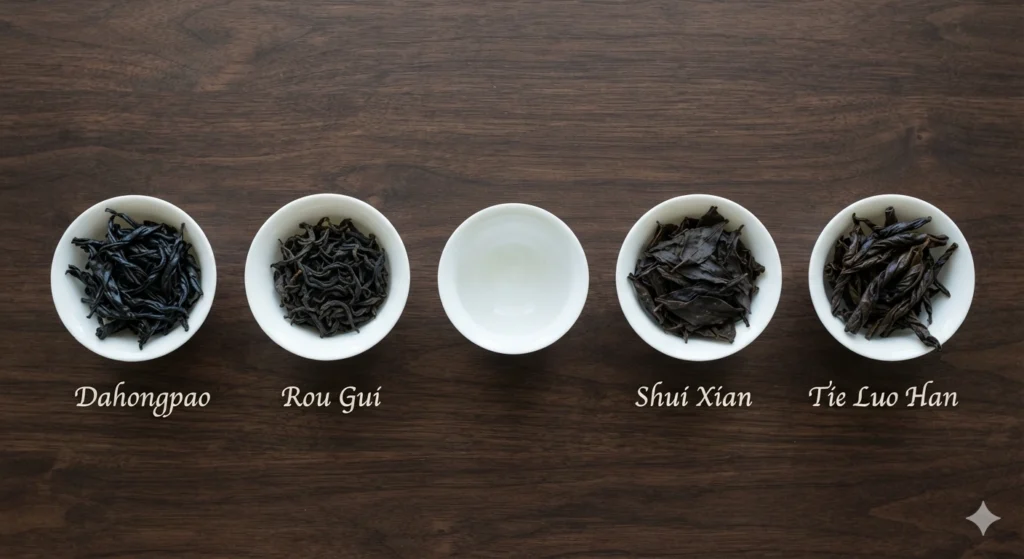
Rather than being a single cultivar, Wuyi Rock Tea is a broad category that includes many famous varieties, including:
- Dahongpao (Big Red Robe)
- Rou Gui (Cinnamon)
- Shui Xian (Narcissus)
- Tie Luo Han (Iron Arhat)
- Bai Ji Guan (White Cockscomb)
Each tastes different, but all belong to the same centuries-old tea tradition.
Why Is It Called “Rock Tea”?
The name is more literal than many people expect.
Wuyi Rock Tea isn’t grown on rocks, but among them.
The tea gardens of the Wuyi Mountains are surrounded by towering sandstone cliffs and weathered rock formations. Instead of deep farmland, tea bushes grow in narrow pockets of rocky soil where water drains slowly and minerals accumulate over time.
Tea makers believe this environment contributes to the tea’s most distinctive quality, known as Yan Yun (岩韵), often translated as Rock Rhyme.
Yan Yun isn’t a single flavor.
Instead, it’s a combination of sensations that are difficult to describe but easy to recognize once you’ve experienced them.
Many drinkers notice:
- A gentle mineral depth rather than obvious sweetness.
- A smooth, rounded texture.
- A cooling sensation after swallowing.
- A long finish that lingers long after each sip.
Unlike floral aromas or roasted notes, Yan Yun isn’t something created during processing. It comes from the interaction between the tea plants and their environment.
That’s why authentic Wuyi Rock Tea can only come from the Wuyi Mountains.
Where Does Wuyi Rock Tea Come From?
Every authentic Wuyi Rock Tea comes from the Wuyi Mountains, located in northern Fujian Province in southeastern China.


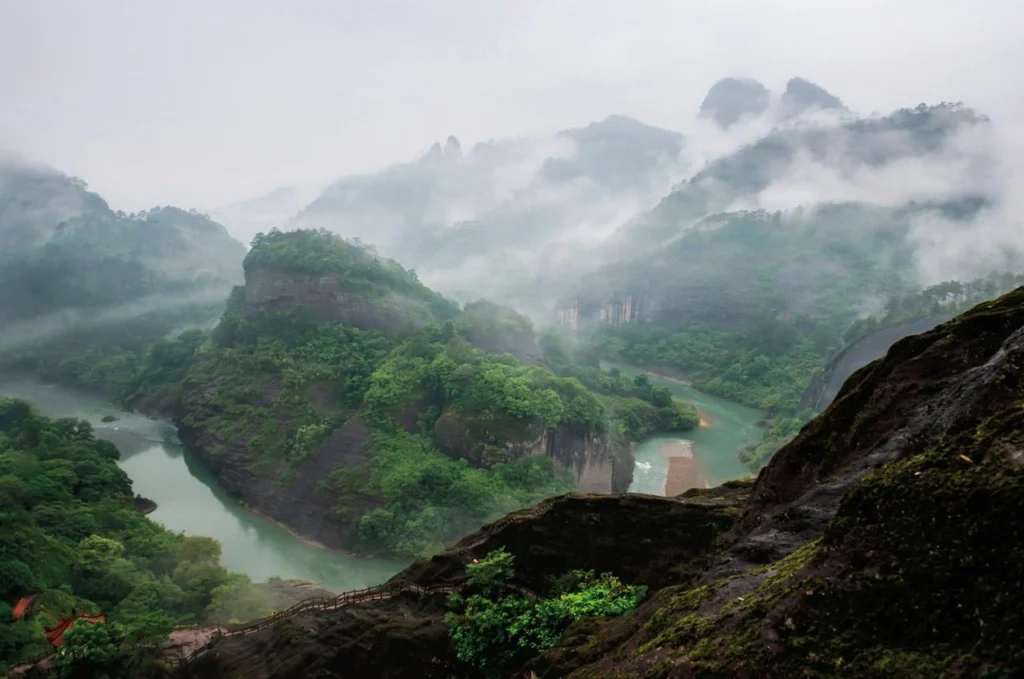
This region is famous not only for tea, but also for its striking natural landscape.
Towering cliffs rise above narrow valleys, streams wind through ancient forests, and morning mist often covers the mountains before giving way to warm afternoon sunshine. Together, these conditions create a slow-growing environment that helps tea leaves develop concentrated aromas and complex flavors.
Within the Wuyi Mountains, you’ll often hear people mention Zhengyan (正岩), or True Rock tea.
This refers to the historic core production area where tea bushes grow closest to the cliffs. Because the area is limited and production is small, Zhengyan teas are generally considered the highest expression of Wuyi Rock Tea.
Outside the core area are Banyan and Zhoucha growing regions, which produce teas in the same style at more accessible prices. Many excellent everyday Wuyi teas come from these surrounding areas.
What Does Wuyi Rock Tea Taste Like?
Although every variety has its own personality, most Wuyi Rock Teas share several recognizable characteristics.
Instead of bright grassiness or intense floral aromas, they lean toward a warmer, deeper flavor profile.
| Character | What You’ll Notice |
|---|---|
| Aroma | Roasted nuts, warm stone, cocoa, gentle flowers or spice |
| Taste | Rich, smooth, slightly sweet with clear mineral depth |
| Body | Full, silky and warming |
| Finish | Long-lasting, clean, with lingering minerality |
One reason people become devoted to Yancha is that the tea evolves throughout a brewing session.
The first infusion usually emphasizes the roast and aroma.
The middle infusions become sweeter and rounder.
Later infusions reveal a softer mineral character that stays on the palate surprisingly long.
Good Wuyi Rock Tea should never taste aggressively smoky or burnt. A skilled roast enhances the tea rather than hiding it. When everything is balanced, the roast, sweetness, fragrance, and mineral character work together instead of competing.
Famous Types Of Wuyi Rock Tea
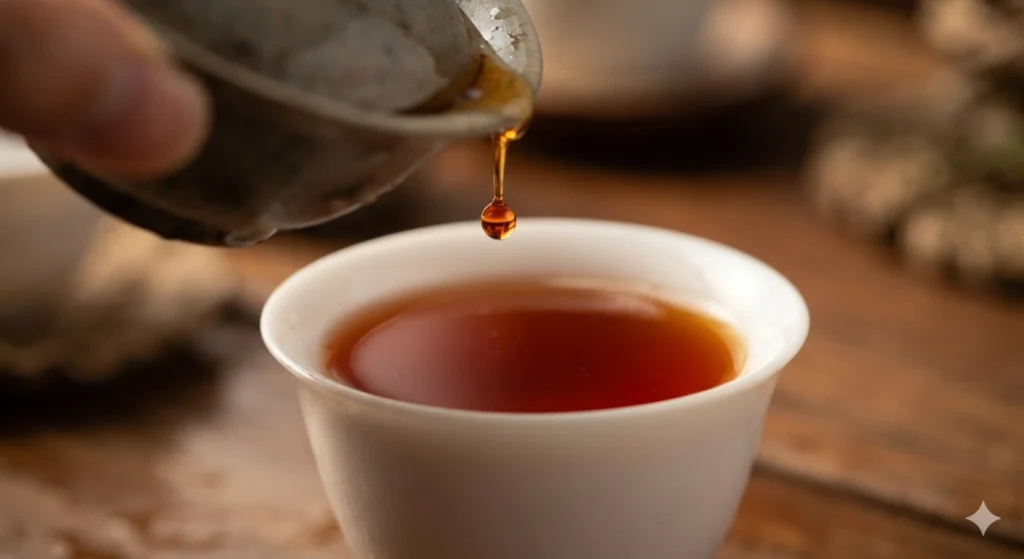
One of the most enjoyable parts of exploring Yancha is discovering how different each variety can be.
Although they share the same origin and traditional processing methods, every cultivar expresses the Wuyi landscape in its own way.
Dahongpao (Big Red Robe)
Dahongpao is easily the most famous Wuyi Rock Tea.
It offers an excellent balance of roasted warmth, mineral depth, gentle sweetness, and a lingering finish, making it the tea many people associate with Yancha as a whole.
If you’re trying Wuyi Rock Tea for the first time, Dahongpao is usually the best place to start.
Rou Gui (Cinnamon)
Rou Gui is known for its unmistakable spicy aroma.
Despite its name, it doesn’t taste like ground cinnamon. Instead, it combines warming spice with roasted sweetness and a bold mineral backbone, creating one of the most aromatic teas in the Wuyi family.
Many experienced tea drinkers consider Rou Gui the most expressive everyday Yancha.
Shui Xian (Narcissus)
Compared with Dahongpao or Rou Gui, Shui Xian feels softer and calmer.
Its woody aroma, smooth body, and mellow sweetness make it particularly approachable for daily drinking. Older or lightly aged Shui Xian develops even more depth while remaining remarkably gentle.
For those who enjoy rich tea without overwhelming intensity, Shui Xian is often an excellent choice.
Tie Luo Han & Bai Ji Guan
Beyond the three best-known varieties, the Wuyi Mountains are also home to several historic teas that are prized by collectors and long-time Yancha drinkers.
Tie Luo Han (Iron Arhat)
Tie Luo Han is one of the oldest recorded Wuyi Rock Teas.
Compared with Dahongpao, it has a deeper, more mature character. Expect notes of roasted nuts, dried fruit, gentle wood, and a lingering mineral finish. It isn’t as immediately expressive as Rou Gui, but its quiet complexity is exactly what many experienced drinkers appreciate.
Bai Ji Guan (White Cockscomb)
Bai Ji Guan is the outlier of the Wuyi family.
Its leaves are naturally lighter in color, and the tea is roasted much more gently than most Yancha. The result is a brighter, softer cup with floral aromas and subtle sweetness rather than heavy roasted notes.
For drinkers who find Dahongpao too bold, Bai Ji Guan offers a completely different side of Wuyi Rock Tea.
Wuyi Rock Tea vs Other Oolong Teas
Wuyi Rock Tea belongs to the oolong family, but its personality is very different from other famous Chinese oolongs.
| Tea | Main Character |
|---|---|
| Wuyi Rock Tea | Roasted, mineral, deep, warming |
| Tie Guan Yin | Floral, creamy, fresh |
| Phoenix Dancong | Highly aromatic, fruity, layered |
| Oriental Beauty | Honeyed, sweet, naturally fruity |
If you enjoy floral fragrances, Tie Guan Yin or Phoenix Dancong may appeal to you first.
If you prefer roasted coffee beans, toasted nuts, dark chocolate, or whisky-like depth, Wuyi Rock Tea will probably feel much more familiar.
Neither style is better—they simply offer different experiences.
Many tea drinkers eventually enjoy both, choosing one depending on the season or even the time of day.
Is Wuyi Rock Tea Good For Beginners?
Absolutely.
Although Yancha has a reputation among experienced tea drinkers, it doesn’t mean beginners should avoid it.
In fact, Wuyi Rock Tea can be surprisingly approachable for people who normally drink coffee.
The roasted aroma feels familiar.
The body is rich without being heavy.
And the moderate caffeine provides steady energy instead of a sudden spike.
If you’re completely new to Chinese tea, Dahongpao is usually the easiest place to begin. It captures everything people love about Wuyi Rock Tea while remaining balanced and forgiving.
If you already enjoy oolong tea and want something with more complexity, Rou Gui is a natural next step.
For those who prefer softer, smoother teas, Shui Xian makes an excellent everyday choice.
Rather than chasing the rarest or most expensive Yancha, start with a well-made daily tea. Learning the style matters far more than buying the highest grade.
How To Brew Wuyi Rock Tea
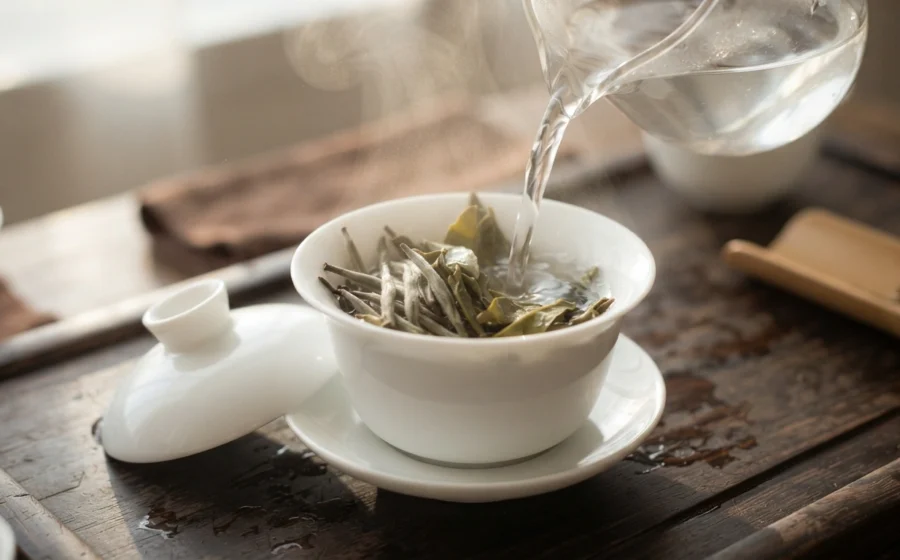
Wuyi Rock Tea is traditionally brewed Gongfu style, using a gaiwan or small clay teapot.
The method is simple, but a few details make a noticeable difference.
| Parameter | Recommendation |
|---|---|
| Tea | 5–7 g |
| Water | 95–100°C (203–212°F) |
| Vessel | 100–120 ml gaiwan |
| First Infusion | 10–15 seconds |
| Later Infusions | Add 5–10 seconds each round |
Near-boiling water is recommended because the roasted leaves need heat to fully release their aroma.
Instead of one long steep, brew several short infusions.
The first cups highlight the roast and fragrance.
The middle infusions become sweeter and rounder.
Later steeps reveal the mineral depth that makes Yancha so distinctive.
Good Wuyi Rock Tea easily produces six to eight enjoyable infusions, and exceptional teas often go beyond ten.
Why Is Wuyi Rock Tea Expensive?
Not every Wuyi Rock Tea is expensive, but the best examples command premium prices for good reasons.
First, production is limited.
The historic core growing area is relatively small, and many famous gardens produce only modest harvests each year.
Second, making Yancha is highly skilled work.
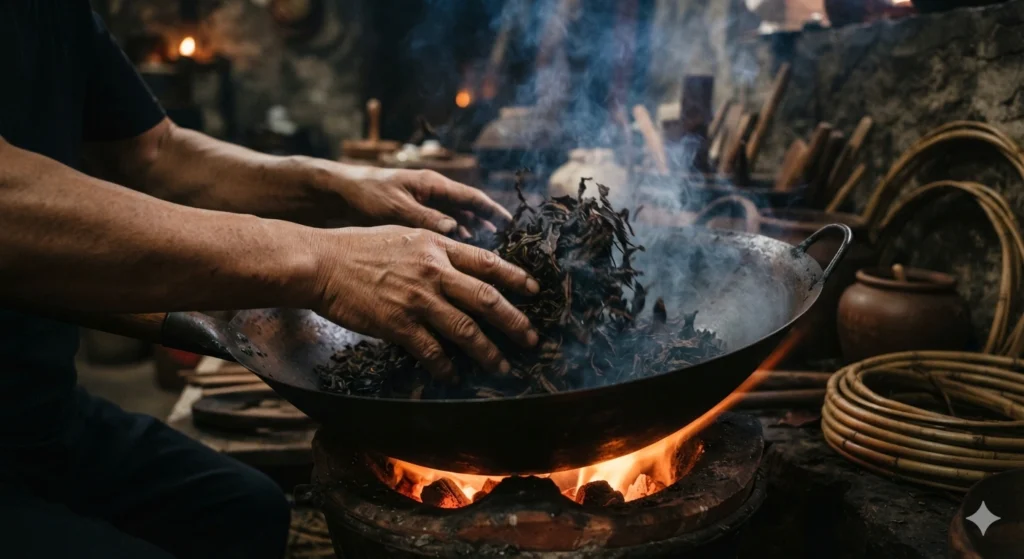
From picking and oxidation to repeated roasting over many weeks, every stage requires experience. Small changes during roasting can completely alter the finished tea.
Finally, demand has grown steadily around the world while supply has remained limited.
That combination naturally pushes prices upward.
Fortunately, you don’t need rare collector-grade tea to appreciate what makes Yancha special.
Many mid-range Wuyi Rock Teas deliver excellent balance, aroma, and mineral character at prices suitable for everyday drinking.
How To Choose Wuyi Rock Tea
If you’re buying Wuyi Rock Tea for the first time, keep the process simple.
Choose a trusted tea merchant that clearly lists the origin, harvest season, and tea variety.
Start with one of the classic cultivars like Dahongpao, Rou Gui, or Shui Xian rather than chasing obscure names.
Pay attention to freshness and roasting quality instead of marketing claims.
Most importantly, buy a small amount first.
Taste it over several brewing sessions before committing to a larger purchase. As your palate develops, you’ll naturally begin to notice the differences between cultivars, roast levels, and growing areas.
Good Yancha rewards experience, but that experience begins with a single well-made tea.
Our Approach To Wuyi Rock Tea At Tea Passage
At Tea Passage, we think Wuyi Rock Tea is best appreciated slowly.
It’s not a tea that tries to impress with intense fragrance or dramatic sweetness. Instead, it reveals itself gradually—through warmth, texture, and a mineral finish that seems to linger a little longer with every infusion.
When selecting Yancha, we look for balance rather than extremes.
The roast should support the tea, not dominate it.
The mineral character should feel clean rather than harsh.
And every cup should invite another, whether you’re brewing a quick afternoon session or spending an hour with friends around a gaiwan.
For us, that’s what makes Wuyi Rock Tea timeless.
Frequently Asked Questions
What is Wuyi Rock Tea?
Wuyi Rock Tea (Yancha) is a traditional Chinese oolong tea grown in the Wuyi Mountains of Fujian Province. It’s famous for its roasted flavor, mineral character, and layered complexity.
Is Dahongpao the same as Wuyi Rock Tea?
No. Dahongpao is one variety of Wuyi Rock Tea. Other famous Yancha include Rou Gui, Shui Xian, Tie Luo Han, and Bai Ji Guan.
Why is it called Rock Tea?
The tea grows in the rocky valleys and cliffs of the Wuyi Mountains. These unique growing conditions contribute to the tea’s signature mineral character, known as Yan Yun or Rock Rhyme.
What does Wuyi Rock Tea taste like?
Most Wuyi Rock Teas are rich, roasted, smooth, and mineral-driven, with notes of toasted nuts, cocoa, warm stone, and a long, sweet finish.
Is Wuyi Rock Tea good for beginners?
Yes. Dahongpao is one of the best starting points because it offers a balanced introduction to the roasted, mineral style that defines Yancha.
How many times can Wuyi Rock Tea be steeped?
A good-quality Yancha can usually be brewed 6–8 times, while premium teas often produce 10 or more flavorful infusions.
Wuyi Rock Tea isn’t defined by a single flavor or a single famous tea. It’s a centuries-old tradition shaped by cliffs, mineral-rich soil, and generations of craftsmanship. At Tea Passage, we select Yancha that expresses this heritage with balance, depth, and clarity—so every session brings you a little closer to the character of the Wuyi Mountains.