Finding the best Dancong tea is not about finding the most expensive variety or the rarest name.
Dancong is not a single tea. It is a family of aromatic oolong teas from Phoenix Mountain in Guangdong, China. Each variety has its own personality: some are sweet and floral, some are bold and fragrant, while others are deeper and more traditional.
The best Dancong is the one that matches your taste.
A beginner may fall in love with the honey-like sweetness of Mi Lan Xiang. Someone looking for a more memorable experience may prefer the intense floral character of Ya Shi Xiang. Experienced tea drinkers may enjoy the complexity of old tree Dancong.
This guide explains the most famous Dancong varieties, what they taste like, and how to choose the right one.
What Makes A Dancong Tea Good?
Before choosing a specific variety, it helps to understand what separates a great Dancong from an average one.
Natural Aroma
The most important quality of Dancong is its aroma.
A good Dancong should have a clear, natural fragrance that comes from the tea leaves themselves. The aroma may remind you of flowers, honey, fruit, or roasted nuts, depending on the variety.
The fragrance should feel layered and alive, not artificial or perfume-like.
When you warm the dry leaves or pour hot water over them, the aroma should gradually open and become more complex.
Authentic Origin
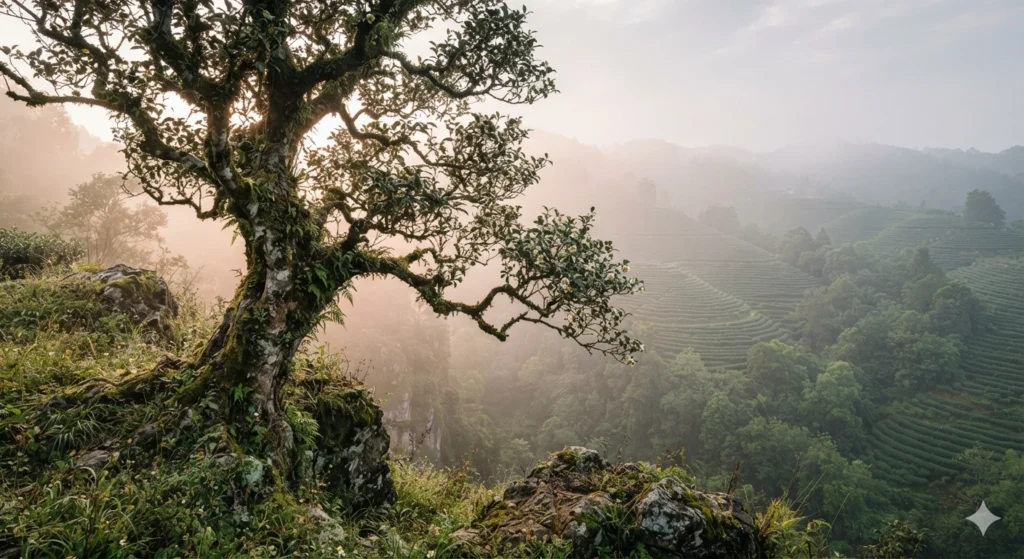
True Dancong comes from Phoenix Mountain (Fenghuang Mountain) in Guangdong province.
The mountain environment plays an important role in the tea’s character. Rocky soil, high elevation, and frequent mist create the conditions that give Dancong its famous depth and fragrance.
Teas made outside this region may copy the style, but they usually lack the same mineral character and aromatic complexity.
Tea Tree Quality
Tree age is another factor that influences Dancong.
Older tea trees often produce deeper flavors, stronger aftertaste, and more layered aromas. This is why old tree Dancong is highly valued among experienced tea drinkers.
However, expensive does not always mean better.
A well-made younger tree Dancong can be more enjoyable than a poorly processed premium tea. Processing skill and overall balance matter just as much as age.
Processing Skill
Dancong is not an easy tea to make.
After harvesting, the leaves go through several careful steps:
- Withering
- Oxidation
- Rolling
- Roasting
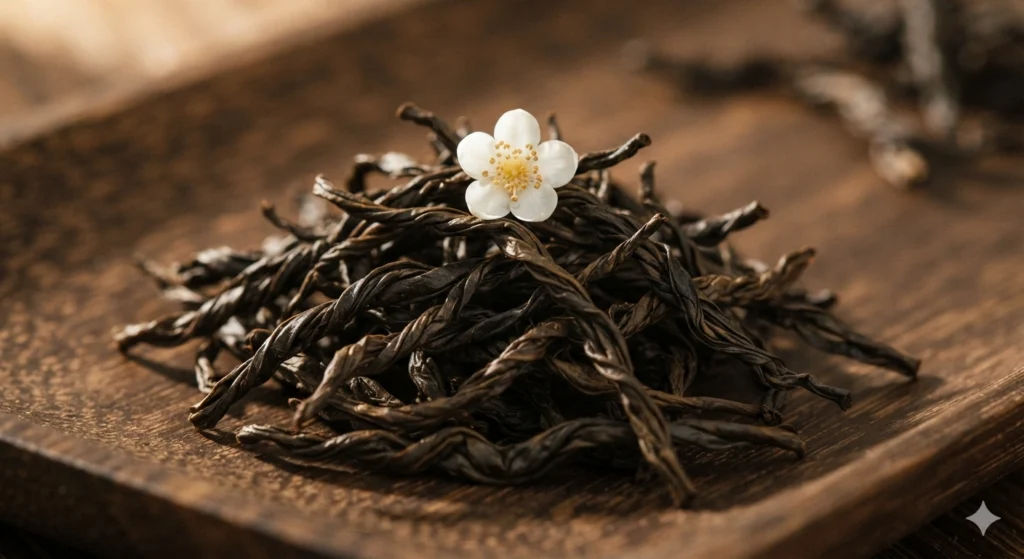
The tea maker must balance these steps carefully. Too much roasting can hide the natural aroma. Too little processing can leave the tea sharp or unfinished.
The best Dancong combines fragrance, sweetness, texture, and a long aftertaste.
The Best Dancong Tea Varieties To Try
There is no single “best” Dancong. Different varieties offer completely different experiences.
Here are the most famous Phoenix Dancong teas worth exploring.
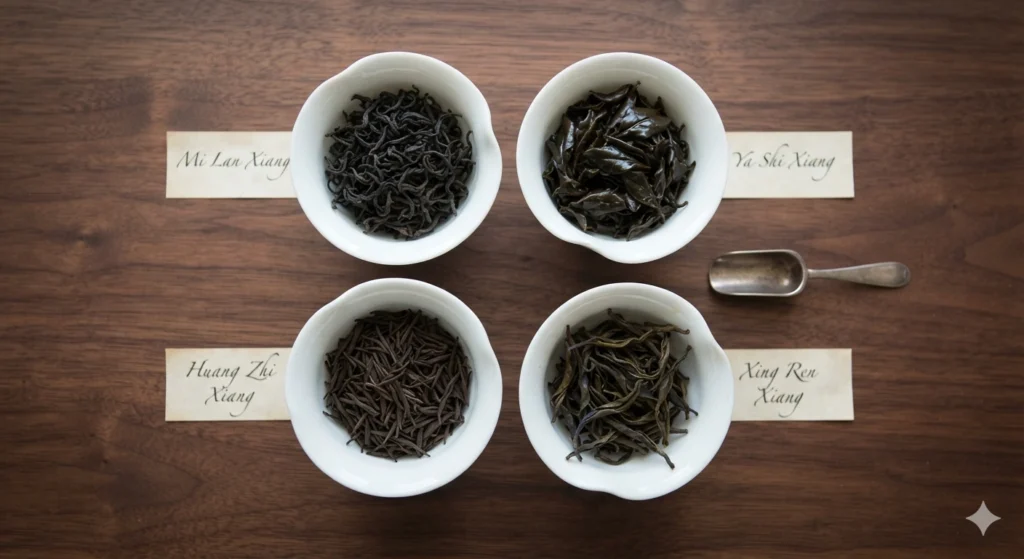
1. Mi Lan Xiang (Honey Orchid)
Best for: Beginners and lovers of sweet floral teas
Mi Lan Xiang is often considered the best starting point for Dancong beginners.
The name means “Honey Orchid Aroma,” and the flavor matches its name. It offers a sweet floral fragrance with notes of honey, orchid, and ripe fruit.
Compared with other Dancong varieties, Mi Lan Xiang feels softer and more approachable. The aroma is noticeable but not overwhelming, making it an easy tea to enjoy from the first cup.
The texture is smooth, with a gentle sweetness that stays in the mouth after drinking.
Flavor Profile
- Aroma: Honey, orchid, light fruit
- Taste: Sweet, floral, smooth
- Body: Soft and balanced
- Finish: Clean sweetness
Best for:
- First-time Dancong drinkers
- People who enjoy jasmine tea or floral green tea
- Daily drinking
For most beginners, Mi Lan Xiang is the safest and most rewarding first choice.
2. Ya Shi Xiang (Duck Shit Oolong)
Best for: Aroma lovers and adventurous tea drinkers
Ya Shi Xiang is probably the most famous Dancong variety outside China, mainly because of its unforgettable name.
But the name is the least interesting thing about this tea.
The actual experience is completely different. A good Ya Shi Xiang has an intense floral aroma with notes of orchid, fruit, and a subtle creamy sweetness.
The fragrance is stronger and more dramatic than Mi Lan Xiang. It is the kind of tea that fills the room when brewed.
The taste is richer, with a deeper mineral character and a long, sweet finish.
Flavor Profile
- Aroma: Orchid, flowers, fruit
- Taste: Floral, creamy, slightly mineral
- Body: Rich and layered
- Finish: Long-lasting sweetness
Best for:
- People who love aromatic teas
- Experienced oolong drinkers
- Anyone looking for a memorable tea experience
Ya Shi Xiang is not necessarily better than Mi Lan Xiang. It simply has a stronger personality.
3. Huang Zhi Xiang (Gardenia Aroma)
Best for: Drinkers who prefer elegant and delicate floral teas
Huang Zhi Xiang means “Gardenia Aroma,” and it is one of the more refined styles of Phoenix Dancong.
Compared with Ya Shi Xiang, which has a stronger and more dramatic fragrance, Huang Zhi Xiang feels softer and more graceful.
The aroma is floral but not overwhelming, with notes that resemble fresh gardenia flowers, light sweetness, and a clean spring-like freshness.
The tea is smooth and easy to appreciate. It does not rely on intensity. Instead, it focuses on balance, clarity, and a gentle lingering finish.
Flavor Profile
- Aroma: Gardenia, white flowers, fresh sweetness
- Taste: Soft floral, clean, slightly sweet
- Body: Light and elegant
- Finish: Gentle and refreshing
Best for:
- People who enjoy floral teas
- Drinkers who prefer subtle flavors
- Those who find stronger Dancong varieties too intense
Huang Zhi Xiang is a good reminder that Dancong is not only about powerful aromas. Some varieties are beautiful because of their restraint.
4. Xing Ren Xiang (Almond Aroma)
Best for: Fans of roasted and nutty teas
Not all Dancong teas are dominated by floral notes.
Xing Ren Xiang offers a different side of Phoenix Dancong. Its aroma is warmer and more roasted, with notes of almond, toasted grains, and gentle sweetness.
The tea feels fuller and more grounding than many floral Dancong varieties. It has a comforting character that appeals to people who enjoy roasted oolongs such as Dahongpao.
The finish is smooth, with a subtle nutty sweetness that stays on the palate.
Flavor Profile
- Aroma: Almond, roasted nuts, warm grain
- Taste: Nutty, smooth, slightly sweet
- Body: Fuller and richer
- Finish: Warm and lingering
Best for:
- Dahongpao drinkers exploring Dancong
- People who prefer roasted flavors
- Those who enjoy deeper tea styles
If floral Dancong feels too bright for your taste, Xing Ren Xiang is a natural direction to explore.
5. Song Zhong Dancong
Best for: Experienced tea drinkers seeking depth and tradition
Song Zhong represents one of the most traditional and respected expressions of Phoenix Dancong.
The name is often associated with older tea trees and classic Dancong craftsmanship. These teas are usually rarer and more expensive because of their limited availability and complex character.
Unlike younger Dancong, which may show one obvious aroma, Song Zhong develops gradually.
The first infusion may reveal floral notes. Later infusions bring out sweetness, minerality, and deeper layers that continue changing throughout the session.
Flavor Profile
- Aroma: Complex floral, fruit, mineral
- Taste: Deep, layered, evolving
- Body: Rich but smooth
- Finish: Extremely long and persistent
Best for:
- Experienced tea drinkers
- Dancong enthusiasts
- People looking for traditional character
Song Zhong is not necessarily the best first Dancong to buy. It is a tea that becomes more interesting after you already understand the category.
Best Dancong Tea For Beginners
If you are new to Phoenix Dancong, the variety you choose matters.
Starting with the wrong tea can make Dancong feel too strong or confusing.
Here is the simplest path:
Start With Mi Lan Xiang
For most beginners, Mi Lan Xiang is the best introduction.
It has:
- A clear floral aroma
- Natural sweetness
- Smooth texture
- Easy brewing characteristics
It shows the beauty of Dancong without being overwhelming.
Try Ya Shi Xiang Next
Once you understand the basic character of Dancong, Ya Shi Xiang is the next step.
It offers:
- Stronger fragrance
- More complexity
- A longer finish
- A more memorable experience
It helps you understand why Dancong is famous among tea enthusiasts.
Explore Old Tree Dancong Later
Premium old tree Dancong can be incredible, but it is not where beginners should start.
Without experience, it is difficult to understand what makes an expensive tea special.
A good mid-range Dancong will teach you more than an overpriced tea with a famous name.
Best Dancong Tea Compared
| Tea | Main Character | Best For |
|---|---|---|
| Mi Lan Xiang | Honey, orchid, sweet floral | Beginners and daily drinking |
| Ya Shi Xiang | Orchid, fruit, creamy aroma | Aroma lovers |
| Huang Zhi Xiang | Gardenia, elegant floral | Light floral tea fans |
| Xing Ren Xiang | Almond, roasted, warm | Dark oolong drinkers |
| Song Zhong | Deep, layered, traditional | Experienced drinkers |
These varieties are not a ranking.
They represent different experiences.
The “best” Dancong depends on what kind of tea experience you enjoy.
How Much Should You Spend On Dancong Tea?
Dancong prices vary greatly. Understanding the different levels helps you avoid overpaying.
Entry-Level Dancong
Around $20–$40 per 50g
These teas are suitable for casual drinking.
They may have a pleasant aroma, but usually lack the depth, complexity, and long finish of better examples.
Good for learning what Dancong tastes like.
Good Daily Dancong
Around $40–$80 per 50g
This is the range where most tea drinkers will find the best value.
At this level, you can expect:
- Clear natural aroma
- Smooth texture
- Good sweetness
- Several enjoyable infusions
For most people, this is the ideal starting point.
Premium Dancong
$100+ per 50g
Premium Dancong usually comes from:
- Older tea trees
- Better harvest seasons
- Skilled tea makers
- More careful processing
These teas offer deeper aroma, longer aftertaste, and more complexity.
However, expensive does not automatically mean better.
A well-made $60 Dancong can easily be more enjoyable than an average $150 tea.
How To Choose Authentic Dancong Tea
A few simple checks can help you choose better tea.
Look At The Origin
Authentic Phoenix Dancong should clearly state its origin.
Look for:
- Phoenix Mountain
- Chaozhou, Guangdong
- Specific aroma variety
Transparency is usually a good sign.
Smell The Dry Leaves
Good Dancong should smell natural.
You should notice:
- Floral notes
- Fruit sweetness
- Clean tea aroma
Avoid teas that smell artificially strong or perfume-like.
Check The Leaves
Quality Dancong leaves are usually:
- Long and twisted
- Whole rather than broken
- Even in color
A lot of dust or small fragments may indicate lower quality.
Taste The Finish
The aftertaste is one of the most important signs of good Dancong.
A quality tea should leave:
- Sweetness in the throat
- Clean mouthfeel
- Lingering aroma
A tea that disappears immediately usually lacks depth.
Which Dancong Should You Choose Based On Your Taste?
Your current tea preferences are often the best guide.
If You Like Jasmine Tea Or Floral Green Tea
Choose:
Mi Lan Xiang
You will probably enjoy its sweet orchid character and gentle floral aroma.
If You Like Strong Aromatic Teas
Choose:
Ya Shi Xiang
It offers one of the most expressive fragrances in the Dancong family.
If You Like Elegant Floral Flavors
Choose:
Huang Zhi Xiang
It provides a softer and more refined floral experience.
If You Like Dahongpao Or Roasted Oolong
Choose:
Xing Ren Xiang
Its nutty and warm character will feel familiar.
If You Want A Traditional Premium Experience
Choose:
Song Zhong
It represents the deeper side of Phoenix Dancong.
How We Select Dancong At Tea Passage
At Tea Passage, we do not believe the best tea is simply the rarest or the most expensive.
We look for Dancong that captures what makes Phoenix Mountain special:
- Clear natural aroma
- Balanced flavor
- Smooth texture
- Long, sweet finish
Every Dancong we select needs to perform in the cup.
The fragrance should rise naturally when brewed. The taste should be smooth rather than aggressive. The finish should make you want another infusion.
For beginners, we recommend starting with an approachable variety like Mi Lan Xiang. For those looking for something more expressive, Ya Shi Xiang offers a deeper exploration of what Dancong can become.
The goal is simple: find a tea that you enjoy returning to.
Frequently Asked Questions
What is the best Dancong tea for beginners?
Mi Lan Xiang is usually the best choice for beginners. It has a sweet honey-orchid aroma, smooth texture, and balanced character.
Which Dancong tea is the most famous?
Mi Lan Xiang and Ya Shi Xiang are the two most famous Phoenix Dancong varieties. Mi Lan Xiang is known for sweetness, while Ya Shi Xiang is famous for its intense aroma.
Is Duck Shit Oolong the best Dancong?
Ya Shi Xiang (Duck Shit Oolong) is one of the most popular Dancong varieties, but it is not universally the best. Some drinkers prefer the softer sweetness of Mi Lan Xiang.
What is the difference between Mi Lan Xiang and Ya Shi Xiang?
Mi Lan Xiang is sweeter and more approachable, with honey and orchid notes. Ya Shi Xiang has a stronger floral aroma, more complexity, and a deeper mineral character.
How much does good Dancong tea cost?
A good daily Dancong usually costs around $40–$80 per 50g. Premium old tree Dancong can cost significantly more.
What does high-quality Dancong taste like?
High-quality Dancong has a natural aroma, smooth body, layered flavor, and a long sweet aftertaste that continues after each sip.
The best Dancong tea is not the one with the highest price or the most famous name.
It is the tea that matches your taste and becomes part of your daily ritual.
At Tea Passage, we select Phoenix Dancong varieties that show the true character of this remarkable tea family — from the honeyed sweetness of Mi Lan Xiang to the bold fragrance of Ya Shi Xiang.