Choosing the best Dahongpao tea is not as simple as choosing the most expensive one.
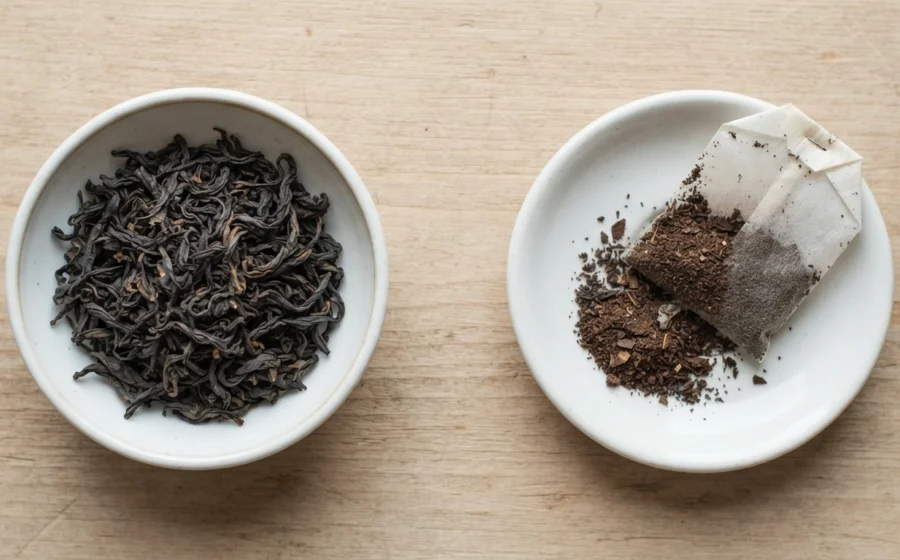
Walk into the world of Wuyi rock tea, and you will quickly notice something confusing: two teas can both carry the name “Dahongpao,” yet their prices, flavors, and quality can be completely different.
One may cost $30. Another may cost $300.
The difference is not only in the name. It comes from where the tea grows, how it is processed, how it is roasted, and how clearly it expresses the character of Wuyi rock tea.
The best Dahongpao is not necessarily the rarest or the most expensive. It is the tea that offers the right balance of origin, craftsmanship, flavor, and value.
This guide will help you understand what makes a Dahongpao worth buying and how to choose one that matches your taste.
What Makes A Dahongpao Tea The Best?
A great Dahongpao is the result of several elements working together.
There is no single factor that defines quality. A tea from an excellent area can still disappoint if it is poorly roasted. A beautifully roasted tea cannot fully express itself if the raw material lacks character.
The best Dahongpao usually comes down to three things:
- Growing region
- Roasting skill
- Flavor balance
1. Origin: Where The Tea Comes From
Dahongpao comes from the Wuyi Mountains in Fujian, China.
This region is famous for Wuyi rock tea, or yancha, a group of oolongs grown among cliffs, rocky soil, and mist-covered valleys.
The unique environment creates the quality known as yan yun, often translated as “rock rhyme.”
It is a subtle mineral character that gives Wuyi teas their depth and distinctive identity.
Within the Wuyi region, Dahongpao is usually divided into different growing areas.
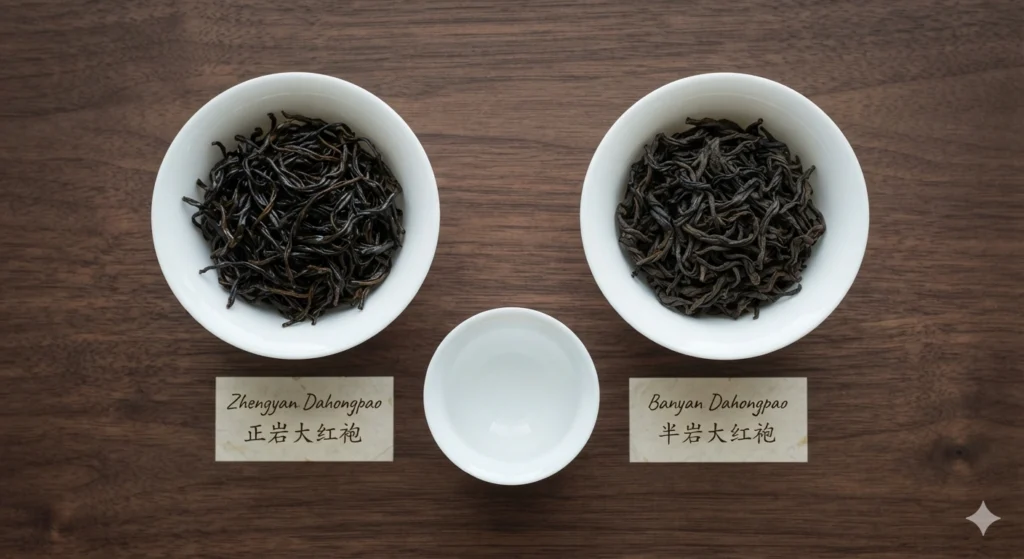
Zhengyan Dahongpao (True Rock Area)
Zhengyan means “true rock.”
These teas come from the core Wuyi scenic area, where tea bushes grow among the famous rocky landscapes of the mountains.
They are considered the highest category because the environment provides:
- Rich mineral soil
- Traditional growing conditions
- Stronger rock character
A good Zhengyan Dahongpao usually has:
- Deeper mineral notes
- More layers across infusions
- Longer aftertaste
- Greater complexity
However, Zhengyan also comes with a higher price because the production area is limited.
Banyan Dahongpao (Half Rock Area)
Banyan refers to tea grown around the core rock area.
While it does not have the same prestige as Zhengyan, good Banyan Dahongpao can still deliver an authentic Wuyi rock tea experience.
For many drinkers, Banyan offers the best balance between quality and price.
A well-made Banyan Dahongpao can provide:
- Smooth roasted aroma
- Clear mineral character
- Good sweetness
- Excellent daily drinking value
For most people exploring Dahongpao for the first time, this is where we recommend starting.
Zhoucha And Outer Mountain Dahongpao
These teas come from areas farther away from the Wuyi core region.
They can still be enjoyable, but they usually have less depth and a weaker mineral character.
They are often cheaper and are sometimes used in commercial blends.
The name “Dahongpao” alone does not guarantee the tea comes from the best growing area.
Origin matters.
Zhengyan vs Banyan Dahongpao: Which One Should You Choose?
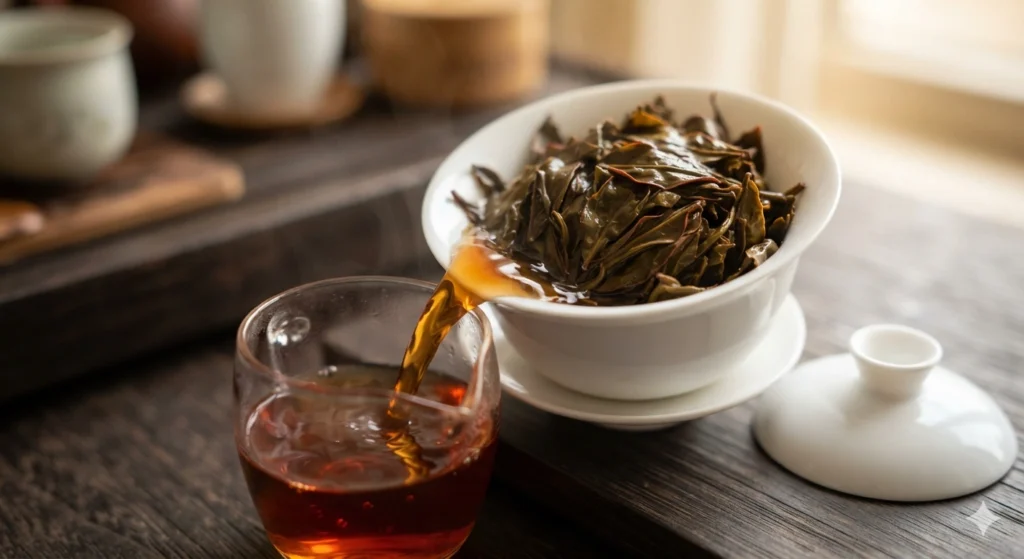
| Zhengyan Dahongpao | Banyan Dahongpao | |
|---|---|---|
| Origin | Core Wuyi rock area | Surrounding rock areas |
| Flavor | Deep, complex, mineral | Balanced, smooth, approachable |
| Price | Higher | More affordable |
| Best for | Experienced drinkers | Daily drinking and beginners |
Zhengyan Dahongpao represents the highest expression of Wuyi rock tea.
But for many tea drinkers, a carefully made Banyan Dahongpao may actually be the better choice.
Why?
Because the difference in price is often much larger than the difference in enjoyment.
A good Banyan tea can give you the roasted warmth, mineral depth, and lingering sweetness that define Dahongpao — without requiring a collector-level budget.
2. Roasting Skill: The Difference Between Good And Average Dahongpao
Roasting is one of the most important parts of Dahongpao production.
Traditional Dahongpao is roasted over charcoal, sometimes through multiple roasting sessions. This process develops the tea’s famous warm and toasted character.
A skilled roast does not hide the tea.
It reveals it.
A well-made Dahongpao should have:
- Toasted nut aromas
- Warm sweetness
- Smooth body
- Clear mineral notes
The roast should support the tea, not overpower it.
Poorly roasted Dahongpao often tastes:
- Burnt
- Smoky
- Flat
- Harsh
A common mistake is assuming that a heavier roast means better quality.
It does not.
The best Dahongpao is not the darkest tea. It is the most balanced one.
3. Flavor Clarity: What A Good Dahongpao Should Taste Like
A high-quality Dahongpao should feel complete from the first sip.
The opening notes are usually:
- Roasted nuts
- Toasted grain
- Warm stone
As you continue drinking, the tea develops:
- Mineral depth
- Gentle sweetness
- A smooth, coating texture
The best part is often the finish.
After swallowing, the sweetness remains and the mineral character slowly returns. This is one of the reasons experienced tea drinkers enjoy Wuyi rock tea.
A lower-quality Dahongpao often feels flat. It may have a strong roast, but little underneath.
Great Dahongpao has layers.
The tea changes as you drink it.
What Dahongpao Is Best For Different Drinkers?
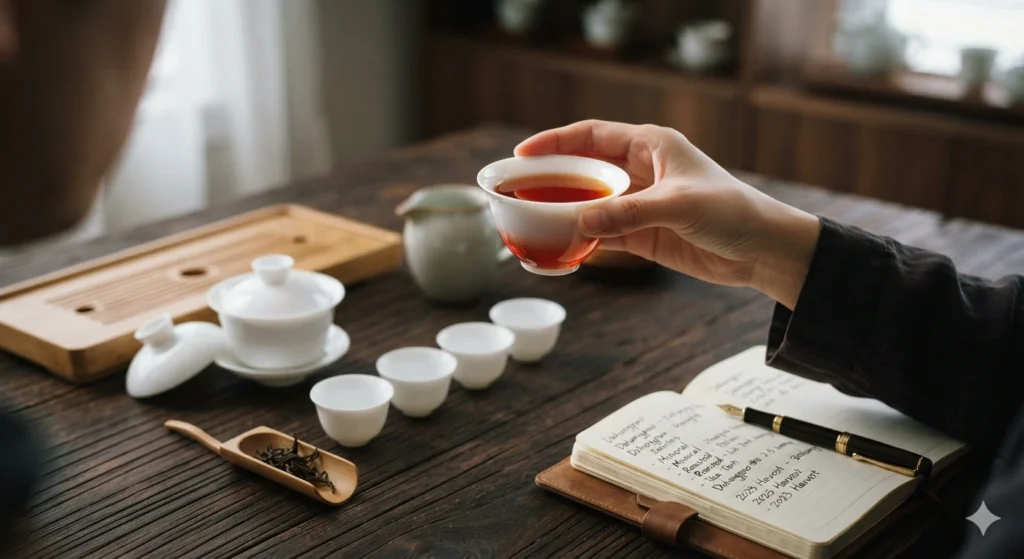
The best Dahongpao depends on what you already enjoy drinking.
There is no single “perfect” Dahongpao for everyone. A beginner, a coffee drinker, and an experienced tea enthusiast may all prefer different styles.
Understanding your own taste is just as important as understanding the tea.
Best Dahongpao For Beginners
If you are new to Dahongpao, avoid starting with the most expensive tea.
A balanced, medium-roasted Banyan Dahongpao is usually the best introduction.
Look for a tea with:
- Smooth roasted aroma
- Gentle sweetness
- Moderate body
- Clean finish
A beginner-friendly Dahongpao should feel welcoming rather than overwhelming.
It should introduce you to the core characteristics of Wuyi rock tea:
The warmth of roasting.
The depth of minerals.
The sweetness that appears after each sip.
You do not need a rare Zhengyan tea to understand why Dahongpao is famous.
A well-made daily-drinking Dahongpao can already show you the beauty of this tea.
Best Dahongpao For Coffee Drinkers
Dahongpao is one of the easiest teas for coffee drinkers to appreciate.
The reason is simple: it has warmth and depth.
A roasted Dahongpao can remind people of:
- Toasted nuts
- Dark chocolate
- Roasted grains
- Warm spices
Unlike coffee, the experience is softer and more layered.
A good Dahongpao provides richness without heaviness. It gives you a satisfying cup while keeping the natural sweetness and complexity that tea offers.
For coffee drinkers transitioning into tea, a medium to heavier roasted Dahongpao is often the most familiar starting point.
Best Dahongpao For Experienced Tea Drinkers
For experienced tea drinkers, the search usually moves toward complexity.
This is where higher-quality Zhengyan Dahongpao becomes interesting.
A premium Dahongpao can reveal:
- More pronounced mineral character
- Deeper roasted layers
- Longer aftertaste
- More dramatic changes between infusions
It is not necessarily stronger.
It is more detailed.
The pleasure comes from noticing how the tea changes over time.
The first infusion may show warmth and roast. Later infusions reveal sweetness, texture, and deeper mineral notes.
This is the kind of tea that rewards patience.
How To Identify High-Quality Dahongpao
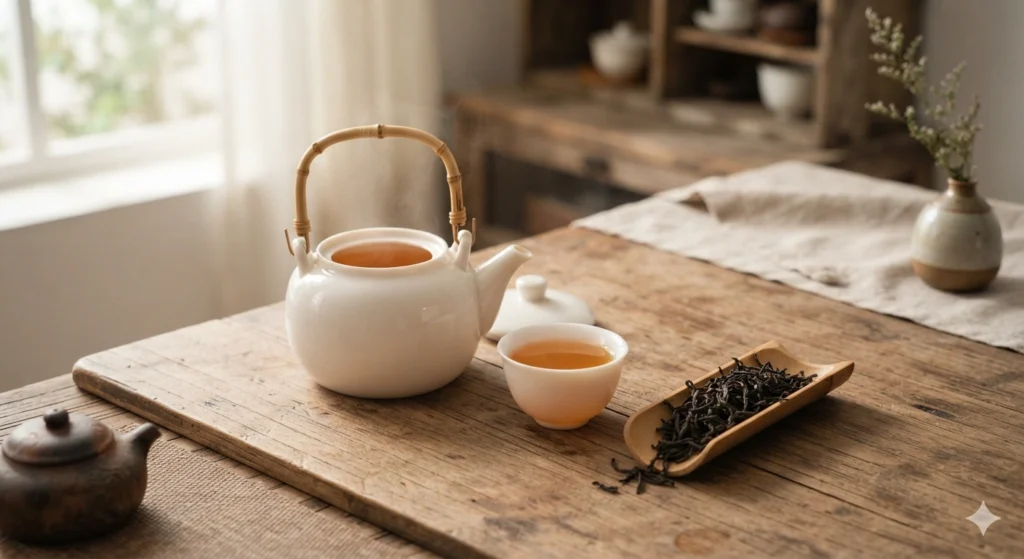
You do not need to be a tea expert to recognize a good Dahongpao.
A few simple details can tell you a lot.
Look At The Dry Leaves
High-quality Dahongpao leaves are usually:
- Long and tightly twisted
- Clean and intact
- Dark brown with natural shine
The aroma should feel warm and inviting.
You should notice:
- Roasted nuts
- Sweet woody notes
- A subtle mineral feeling
If the dry leaves smell strongly burnt or smoky, the roasting may have been too aggressive.
Pay Attention To The Aroma
When hot water touches the leaves, good Dahongpao should release its fragrance quickly.
The aroma should feel layered.
You may notice:
- Roasted nuts
- Cocoa-like sweetness
- Warm stone
- A subtle floral background
A low-quality tea often smells only of fire or charcoal.
A great Dahongpao smells like both the roast and the tea itself.
Taste The Texture
The mouthfeel is one of the biggest differences between average and excellent Dahongpao.
A quality tea should feel:
- Smooth
- Rounded
- Full-bodied
- Comfortable to drink
The finish should stay after swallowing.
You should feel a returning sweetness and a gentle mineral character.
A harsh, drying sensation usually indicates poor processing, excessive roasting, or lower-quality leaves.
Check The Wet Leaves
After brewing, open the leaves and look at their condition.
Good Dahongpao leaves should:
- Expand naturally
- Feel soft and flexible
- Show clear leaf structure
Broken, dusty, or extremely dark leaves may indicate lower processing quality.
How Much Should You Pay For Good Dahongpao?
Dahongpao prices vary widely.
The name alone does not tell you the quality.
A general guide:
| Price (50g) | Quality Level |
|---|---|
| $20–$40 | Entry-level Dahongpao, simpler flavor |
| $40–$100 | Good daily drinking quality |
| $100+ | Premium origin or more complex craftsmanship |
For most drinkers, the $40–$100 range is the sweet spot.
At this level, you can find Dahongpao with:
- Clear roasted character
- Balanced flavor
- Good sweetness
- Authentic Wuyi influence
Higher prices usually reflect factors such as:
- Zhengyan origin
- Limited production
- Older trees
- Skilled roasting
But expensive does not always mean better.
The best tea is the one that gives you the experience you enjoy.
Best Way To Brew Dahongpao Tea
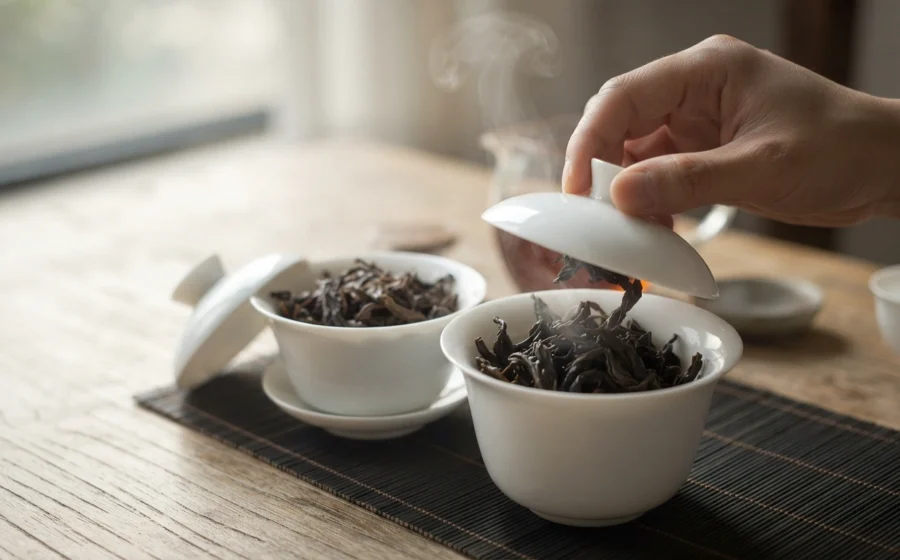
Dahongpao is best prepared with Gongfu brewing.
This method allows the tea to slowly reveal its layers.
Recommended starting point:
- Tea amount: 5–7g
- Vessel: 100–120ml gaiwan or small teapot
- Water temperature: 95–100°C
- First infusion: 10–15 seconds
The first infusion highlights the roasted aroma.
The middle infusions usually bring out:
- More sweetness
- Fuller texture
- Stronger mineral notes
Later infusions become softer and smoother.
A good Dahongpao can usually be brewed 6–10 times, sometimes more.
The key is short infusions.
Do not treat Dahongpao like black tea and leave it steeping for several minutes. Long steeping can overpower the balance and create unnecessary bitterness.
Common Dahongpao Buying Mistakes
Many people make the same mistakes when buying Dahongpao.
Understanding these can save you money.
Mistake 1: Buying The Most Expensive Tea
High price does not automatically mean better flavor.
Some teas are expensive because of rarity or reputation.
A moderately priced Dahongpao with excellent craftsmanship can be more enjoyable than an expensive tea that does not match your preference.
Mistake 2: Choosing The Darkest Roast
A darker roast does not always mean higher quality.
Heavy roasting can hide flaws in the original tea leaves.
The goal is balance.
The roast should create depth, not cover everything else.
Mistake 3: Ignoring Origin Information
A trustworthy seller should explain:
- Where the tea comes from
- How it was processed
- What roasting style was used
A Dahongpao label without clear information is difficult to evaluate.
Transparency matters.
Mistake 4: Believing “Mother Tree Dahongpao” Claims
The original Dahongpao mother trees in Wuyi are protected cultural treasures.
Their tea is extremely limited and not commercially available.
Most Dahongpao sold today comes from propagated plants or carefully crafted blends inspired by the original style.
If a seller claims to offer affordable “authentic mother tree Dahongpao,” be cautious.
Our Dahongpao Recommendation At Tea Passage
At Tea Passage, we believe the best Dahongpao is not about rarity.
It is about expression.
A great Dahongpao should represent what makes Wuyi rock tea special:
The warmth of fire.
The depth of stone.
The sweetness that appears slowly.
When selecting Dahongpao, we focus on three things:
- Clear origin
- Balanced roasting
- A smooth, lingering finish
We do not chase expensive labels.
We look for tea that is enjoyable to drink again and again.
A good Dahongpao should not sit untouched in a collection.
It should become part of your daily tea ritual.
Frequently Asked Questions
What is the best Dahongpao tea?
The best Dahongpao is a tea with clear origin, balanced roasting, and a smooth mineral finish. For most drinkers, a well-made Banyan Dahongpao offers the best combination of quality and value.
Is Zhengyan Dahongpao worth the price?
For experienced tea drinkers, Zhengyan Dahongpao can offer greater complexity and depth. However, a high-quality Banyan Dahongpao is often a better starting point.
How much does good Dahongpao cost?
A good daily Dahongpao usually costs around $40–$100 per 50g. Premium teas with stronger origin and craftsmanship can cost more.
What Dahongpao is best for beginners?
A medium-roasted Banyan Dahongpao is usually the best choice for beginners because it offers authentic Wuyi rock tea character without being too expensive or intense.
Is expensive Dahongpao always better?
No. Price reflects origin, rarity, and craftsmanship, but personal taste matters more. A balanced tea that you enjoy drinking is always the better choice.
How can I tell if Dahongpao is authentic?
Look for clear origin information, natural roasted aroma, whole leaves, and a smooth mineral finish. A reliable seller should explain the tea’s source and processing method.
Choosing the best Dahongpao is not about finding the rarest tea in the world.
It is about finding the tea that matches your taste.
A well-made Dahongpao tells the story of Wuyi Mountain through aroma, texture, and flavor.
At Tea Passage, we select Dahongpao that represents this balance — authentic, thoughtful, and enjoyable from the first cup to the last infusion.