White tea is one of the easiest Chinese teas to brew, but it is also one of the most misunderstood.
Many people brew white tea like green tea, using water that is too cool and steeping for too short a time. The result is often a thin, quiet cup that fails to show the tea’s natural sweetness. Others use boiling water immediately, only to lose the delicate floral notes and replace them with a flat, harsh taste.
The truth is that white tea is surprisingly forgiving. It does not require expensive equipment or complicated techniques. It simply asks you to understand three things: water temperature, tea amount, and steeping time.
Once these basics are right, the tea does most of the work.
Whether you are brewing delicate Silver Needle, balanced White Peony, or a deeper aged white tea, this guide will help you find the best way to bring out the character of each tea.
What Is The Best Temperature For White Tea?
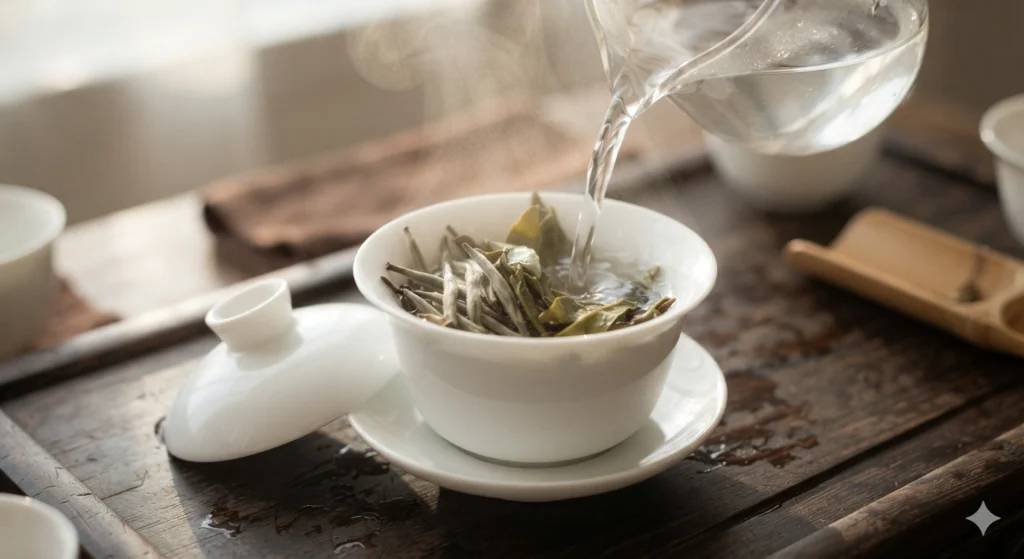
White tea enjoys warm water, but different types of white tea respond differently to heat.
The ideal brewing temperature depends on the maturity of the leaves and the style of tea you are preparing.
| Tea Type | Recommended Temperature |
|---|---|
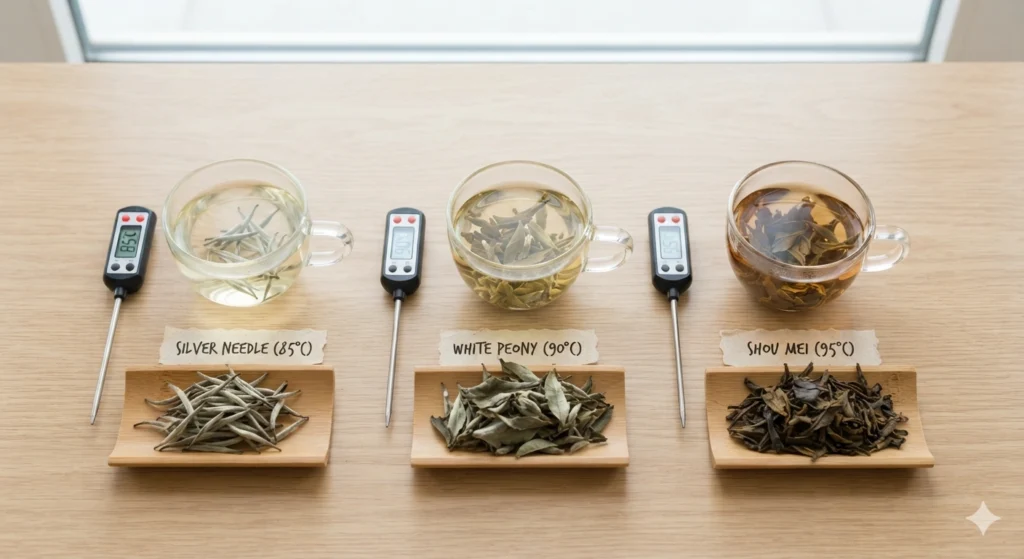
| Silver Needle (Bai Hao Yinzhen) | 85°C – 90°C (185°F – 195°F) |
| White Peony (Bai Mudan) | 90°C – 95°C (195°F – 200°F) |
| Shou Mei / Aged White Tea | 95°C (200°F) |
Silver Needle
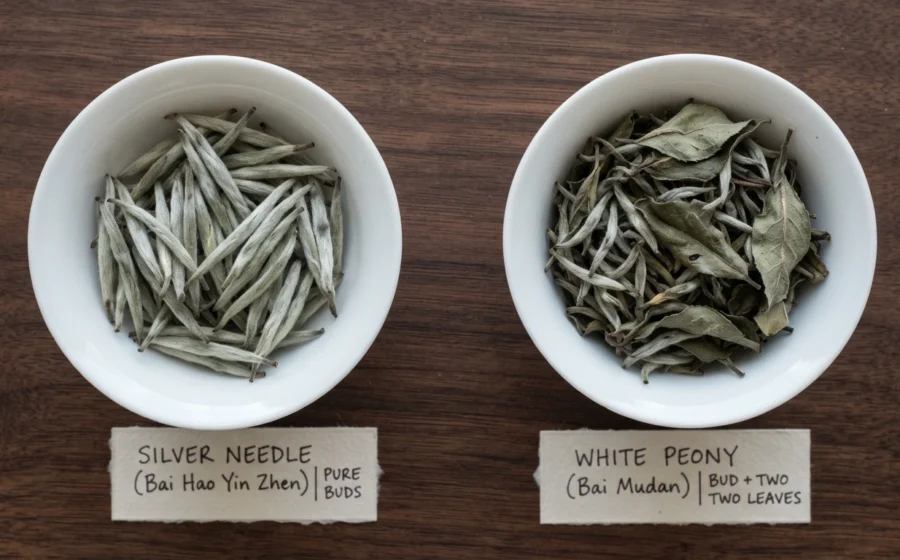
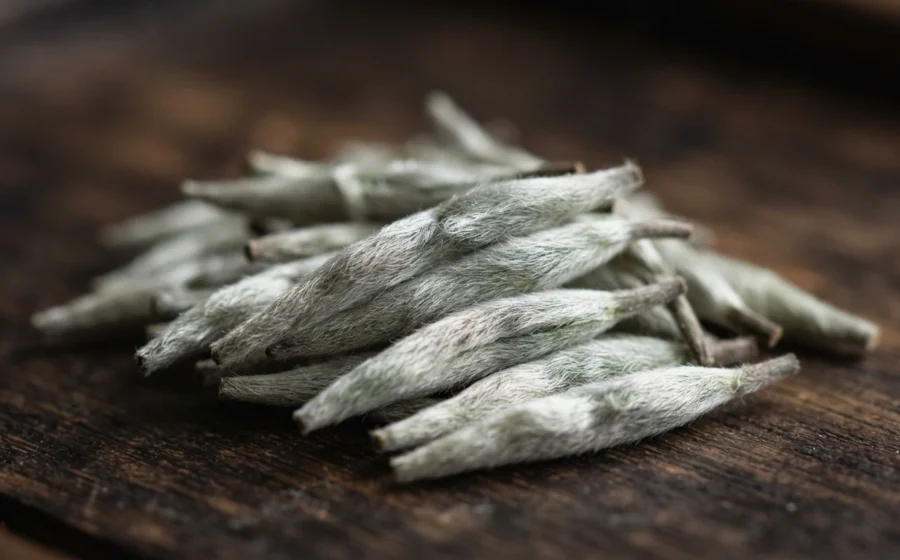
Silver Needle is made entirely from young tea buds, making it the most delicate style of white tea.
Lower temperatures help preserve its soft floral aroma, honey-like sweetness, and silky texture. Water that is too hot can overwhelm the subtle character of the buds and create a sharper finish.
For Silver Needle, gentle heat brings out elegance.
White Peony
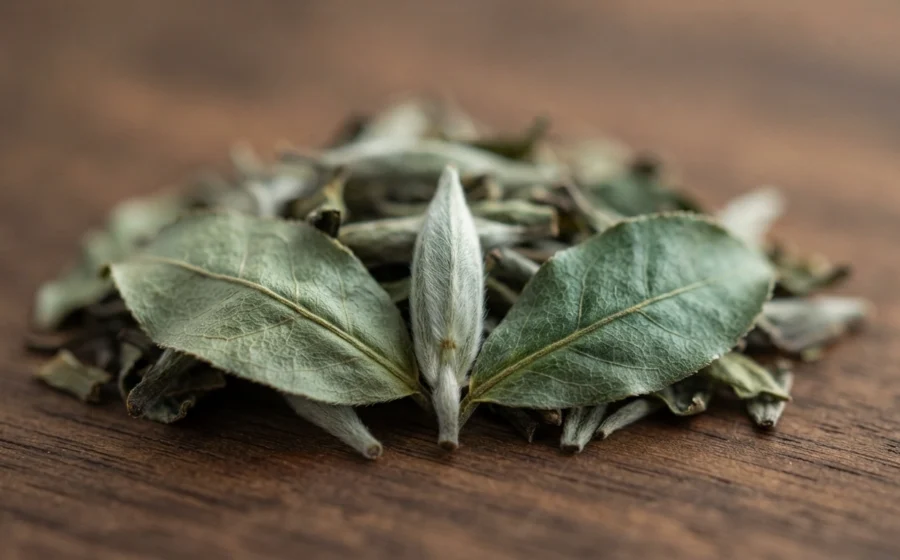
White Peony contains both buds and young leaves, giving it more structure and body.
Because of the leaf material, it benefits from slightly higher temperatures. Around 90°C to 95°C allows the leaves to open fully and release their sweeter, fuller flavor.
White Peony is more forgiving and easier to brew than Silver Needle.
Shou Mei And Aged White Tea
Shou Mei and aged white teas are made from more mature leaves and usually have deeper, richer flavors.
They can handle higher temperatures, including water close to boiling. The additional heat helps extract their notes of dried fruit, wood, herbs, and honey.
If you do not have a temperature-controlled kettle, there is no need to worry.
A simple method works well:
- For Silver Needle, let boiling water rest for 2–3 minutes.
- For White Peony, wait around 1–2 minutes.
- For Shou Mei or aged white tea, use water just off the boil.
How Much White Tea Should You Use?
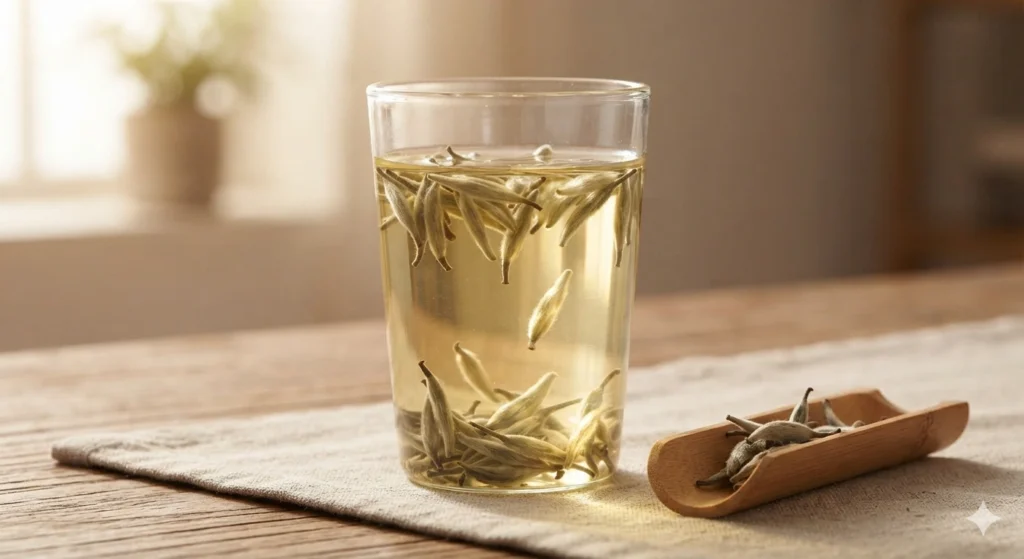
White tea leaves can be misleading.
Because they are large, light, and loosely shaped, a small handful may look like a lot while actually weighing very little. For this reason, measuring by weight is much more reliable than measuring by volume.
Gongfu Brewing
For a traditional Gongfu style:
- Use around 5 grams of white tea
- Use a 100ml gaiwan
This may look like a generous amount of tea, especially with fluffy Silver Needle or White Peony leaves. That is normal. The leaves need space to expand and release their aroma.
Western-Style Brewing
For a larger cup:
- Use around 3 grams of tea
- Use 250ml of water
This creates a lighter and more relaxed cup, ideal for everyday drinking.
If your tea tastes weak, add more leaves before extending the steeping time.
White tea releases flavor gradually. Increasing the amount of tea usually creates a richer and more balanced cup than simply leaving the leaves in water longer.
How Long Should You Steep White Tea?
White tea is not a tea that needs to be rushed.
Its flavors unfold slowly, and shorter infusions often reveal more complexity than one long extraction.
| Brewing Method | Steeping Time |
|---|---|
| First Gongfu Infusion | 20–30 seconds |
| Later Gongfu Infusions | Add 5–10 seconds each time |
| Western Brewing | 2–3 minutes |
Gongfu Brewing Time
For the first infusion, steep the tea for around 20 to 30 seconds.
This first cup usually contains the clearest aroma, with the freshest floral notes and natural sweetness.
After pouring, empty the gaiwan completely. Do not leave the leaves sitting in water between infusions.
For later rounds:
- Second infusion: around 25–35 seconds
- Third infusion: around 35–45 seconds
- Continue increasing gradually
Good white tea can usually be brewed five to eight times, with each infusion revealing something different.
The early infusions are often brighter and more floral. The middle infusions bring more sweetness and body. Later infusions become softer, smoother, and more mineral.
Western Brewing Time
For a normal cup:
- Steep for 2–3 minutes
- Adjust according to taste
If the tea feels too light, add a little more time.
If it feels too strong, shorten the next infusion.
White tea gives you plenty of room to adjust.
Gongfu Brewing Method For White Tea
Gongfu brewing is one of the best ways to experience white tea.
Unlike a single large cup, multiple short infusions allow you to watch the tea change over time. The first steep may highlight floral aromas, while later infusions reveal deeper sweetness and texture.
Step 1: Warm Your Teaware
Pour hot water into your gaiwan or teapot.
Let it sit briefly, then discard the water.
This warms the vessel, helps maintain brewing temperature, and removes any unwanted smells from the teaware.
Step 2: Add The Tea Leaves
Add around 5 grams of white tea into a 100ml gaiwan.
The leaves may appear to fill much of the vessel, but this is normal. White tea leaves are light and expand significantly when they absorb water.
Allow enough space for the leaves to open naturally.
Step 3: Do You Need To Rinse White Tea?
Fresh white tea usually does not require rinsing.
Silver Needle and White Peony are minimally processed and generally clean. A rinse may remove some of the delicate aromatic compounds that make the first infusion special.
For aged white tea or Shou Mei, a quick rinse can sometimes help open the leaves.
If rinsing:
- Use hot water
- Pour it over the leaves
- Wait only 1–2 seconds
- Discard immediately
The rinse is not meant for drinking.
Step 4: First Infusion
Pour water over the leaves at the appropriate temperature.
For example:
- Silver Needle: 85°C–90°C
- White Peony: 90°C–95°C
- Shou Mei: around 95°C
Steep for 20–30 seconds, then pour completely.
The first infusion is often the most aromatic. This is when the tea’s floral character and natural sweetness are easiest to notice.
Step 5: Continue Multiple Infusions
Add fresh water for each new infusion.
A good rhythm:
- Second infusion: 25–35 seconds
- Third infusion: 35–45 seconds
- Later infusions: increase gradually
The beauty of white tea is its evolution.
It does not reveal everything immediately. Instead, it slowly changes from bright and floral to deeper, smoother, and more rounded.
How To Brew Different Types Of White Tea
Different white teas have different personalities.
A few small adjustments can help each one express itself better.
How To Brew Silver Needle Tea
Silver Needle is the most delicate white tea style.
Recommended:
- Water temperature: 85°C–90°C
- First infusion: around 20 seconds
- Teaware: gaiwan or tall glass
A glass cup is especially enjoyable for Silver Needle because you can watch the buds slowly rise and open in the water.
The key is patience.
Use gentle heat, short infusions, and allow the natural sweetness of the buds to appear gradually.
How To Brew White Peony Tea
White Peony is one of the easiest white teas to brew.
Recommended:
- Water temperature: 90°C–95°C
- First infusion: 20–30 seconds
- Teaware: gaiwan or teapot
The combination of buds and leaves gives White Peony more body, making it less sensitive to brewing mistakes.
It produces a fuller, sweeter cup and is an excellent choice for everyday drinking.
How To Brew Shou Mei Tea
Shou Mei and aged white teas benefit from more heat.
Recommended:
- Water temperature: 95°C or just below boiling
- First infusion: 25–35 seconds
The mature leaves need higher temperatures to fully release their deeper flavors.
Expect notes of:
- Dried fruit
- Honey
- Wood
- Herbs
Compared with Silver Needle and White Peony, Shou Mei is the most robust white tea style and the hardest to over-brew.
White Tea Brewing Mistakes
White tea is one of the most forgiving Chinese teas, but a few common mistakes can prevent you from experiencing its full character.
The good news is that most problems are easy to fix.
Using Water That Is Too Hot
This is the most common mistake with delicate white teas, especially Silver Needle.
Boiling water will not completely ruin white tea, but it can overwhelm the subtle aromas that make it special. The floral notes become less clear, and the tea may lose its soft, honey-like sweetness.
For Silver Needle, slightly cooler water usually creates a more elegant cup.
For White Peony and Shou Mei, higher temperatures are more acceptable because the leaves have more structure.
The goal is not to avoid heat. The goal is to match the temperature with the tea.
Steeping For Too Short A Time
Many beginners worry that white tea will become bitter and steep it for only a few seconds.
The result is often a weak and watery cup.
White tea is naturally low in bitterness compared with many other teas. It needs enough time for its sweetness, aroma, and texture to develop.
If your tea tastes flat:
- Increase the amount of tea
- Extend the steeping time slightly
- Try another infusion instead of discarding the leaves
White tea reveals itself slowly.
Using Too Little Tea
Because white tea leaves are large and lightweight, it is easy to underestimate how much tea you need.
A small handful of fluffy Silver Needle buds may look like enough, but the actual weight may be much lower than expected.
Using a scale at the beginning can help you understand the correct amount.
A good starting point:
- Gongfu brewing: 5g per 100ml
- Western brewing: 3g per 250ml
Once you become familiar with your tea, measuring by eye becomes easier.
Adding Sugar Or Milk
High-quality white tea is naturally sweet.
Good Silver Needle and White Peony often have notes of:
- Honey
- Fresh flowers
- Melon
- Hay
- Light fruit
Adding sugar or milk can cover these delicate flavors.
Of course, there are no strict rules. Tea should be enjoyed however you like. But before adding anything, try tasting the tea by itself first.
You may find that the natural sweetness is already enough.
White Tea Brewing Compared With Green Tea
White tea and green tea are both lightly processed Chinese teas, but they behave differently during brewing.
| Aspect | White Tea | Green Tea |
|---|---|---|
| Temperature | 85°C–95°C | 75°C–85°C |
| Brewing Difficulty | More forgiving | More sensitive |
| Flavor | Soft, sweet, floral | Fresh, vegetal, bright |
| Tolerance | Handles mistakes better | Easily becomes bitter |
White tea is often easier to brew than green tea.
Green tea requires more careful temperature control because excessive heat can quickly create bitterness and astringency.
White tea is more patient. It gives beginners more room to experiment and adjust.
This is one reason White Peony is often recommended as a first Chinese white tea.
Can You Cold Brew White Tea?

Yes.
Cold brewing is one of the simplest and most refreshing ways to enjoy white tea, especially during warmer months.
Unlike hot brewing, cold water extracts flavor slowly. This brings out white tea’s natural sweetness while reducing bitterness and astringency.
How To Cold Brew White Tea
Recommended ratio:
- 5 grams of white tea
- 500ml cold water
Method:
- Add tea leaves and cold water to a bottle or pitcher.
- Cover and refrigerate for 4–8 hours.
- Strain the leaves.
- Enjoy within the same day.
Silver Needle and White Peony are especially suitable for cold brewing.
The result is usually:
- Light golden color
- Soft honey sweetness
- Fresh floral aroma
- Clean, refreshing finish
Avoid leaving the tea in water for more than 12 hours. Extended steeping can make the flavor flat and reduce the freshness of the tea.
Best Teaware For White Tea
White tea does not require expensive equipment.
The most important thing is choosing a vessel that allows the leaves to open naturally.
Gaiwan
A porcelain gaiwan is one of the best choices for white tea.
Advantages:
- Preserves the natural aroma
- Allows multiple short infusions
- Makes it easy to control steeping time
- Lets you observe how the leaves change
A 100ml gaiwan is a versatile size for most Gongfu brewing.
Glass Cup
A tall glass cup is especially beautiful for Silver Needle.
The buds slowly rise and unfold in the water, making the brewing process part of the experience.
Glass also allows you to observe:
- Tea color
- Leaf movement
- Bud quality
For delicate white teas, the visual experience is part of the enjoyment.
Teapot
A simple teapot works well for White Peony and Shou Mei.
Because these teas have more body, they are comfortable with longer brewing and larger quantities.
Choose a pot that gives the leaves enough space to expand.
Our White Tea Brewing Philosophy At Tea Passage
At Tea Passage, we do not believe there is only one correct way to brew white tea.
Some mornings call for the quiet elegance of Silver Needle in a glass cup. Other afternoons call for the fuller sweetness of White Peony brewed in a gaiwan.
Both are correct.
The brewing guidelines in this article are starting points, not strict rules.
Use them to understand the tea:
- If the flavor feels too light, add more leaves.
- If the tea feels too strong, lower the temperature or shorten the steep.
- If the aroma feels closed, give the leaves more time.
Brewing white tea is not about controlling every detail.
It is about learning the personality of the tea in front of you.
The best cup of white tea is not necessarily the one brewed according to perfect measurements.
It is the one that makes you want to pour another cup.
Frequently Asked Questions
What temperature should I use for white tea?
Use 85°C–90°C for Silver Needle, 90°C–95°C for White Peony, and around 95°C for Shou Mei or aged white tea.
How long should white tea steep?
For Gongfu brewing, start with 20–30 seconds for the first infusion and increase gradually.
For Western-style brewing, steep for around 2–3 minutes.
Do you need to wash white tea?
Fresh white tea usually does not need rinsing.
Silver Needle and White Peony are minimally processed and generally clean.
Aged white tea or Shou Mei can benefit from a quick rinse of 1–2 seconds to help open the leaves.
Can white tea be brewed multiple times?
Yes.
High-quality white tea can usually be steeped five to eight times.
The flavor changes throughout the session, moving from floral and sweet in early infusions to softer and deeper later on.
Is white tea easy to brew?
Yes.
White tea is one of the most beginner-friendly Chinese teas.
It tolerates a wider range of temperatures than green tea and is difficult to make unpleasant when brewed with reasonable care.
Can you use boiling water for white tea?
You can, especially with Shou Mei and aged white tea.
However, lower temperatures are usually better for preserving the delicate aromas of Silver Needle and White Peony.
Brewing white tea is not about following a strict formula.
It is about understanding the tea and finding the expression you enjoy most.
At Tea Passage, we select white teas that respond beautifully to a gentle brewing approach — from the refined sweetness of Silver Needle to the balanced comfort of White Peony.
The right brew is simply the one that brings you back for another cup.
Explore Our White Tea Collection →