Jasmine tea is more than a tea scented with flowers. It is the result of centuries of Chinese craftsmanship, patience, and the belief that fragrance could become part of the leaf itself.
Every summer night in Fuzhou, when jasmine blossoms open and release their strongest aroma, tea makers begin a process that has been repeated for generations. Fresh flowers are layered with tea leaves, allowing the fragrance to slowly enter the leaf. By morning, the flowers are removed, but their memory remains.
This quiet meeting between flower and leaf created one of China’s most beloved teas.
Understanding the history of jasmine tea changes the way you experience it. The aroma is no longer just a pleasant floral note. It becomes a story of gardens, seasons, and the skilled hands that preserved this tradition.
Where Did Jasmine Tea Come From?
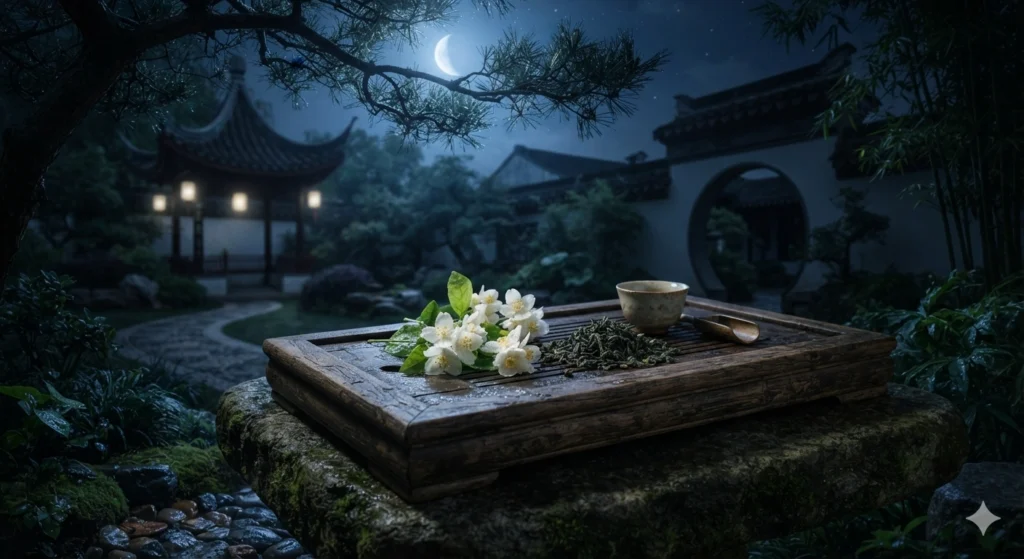
Jasmine tea originated in China, with Fujian province becoming the historical center of traditional jasmine tea production.
The jasmine flower itself was not originally from China. It was introduced through ancient trade routes and gradually became valued for its beauty and fragrance. During the Tang and Song dynasties, jasmine was mainly appreciated as an ornamental flower used in gardens.
The connection between jasmine and tea developed later, when Chinese tea makers began exploring how natural flowers could enhance the aroma of tea leaves.
China already had traditions of using flowers such as osmanthus and rose to scent tea. However, jasmine became especially important because its fragrance was powerful, elegant, and perfectly suited to the fresh character of green tea.
Over generations, tea makers refined the technique of combining jasmine blossoms with tea leaves. What began as experimentation slowly became a specialized craft.
How Jasmine Became China’s Most Famous Flower Tea
The uniqueness of jasmine tea comes from the relationship between the flower and the leaf.
Traditional jasmine tea is not made by simply mixing dried flowers with tea. The flowers are used during the scenting process, then removed afterward.
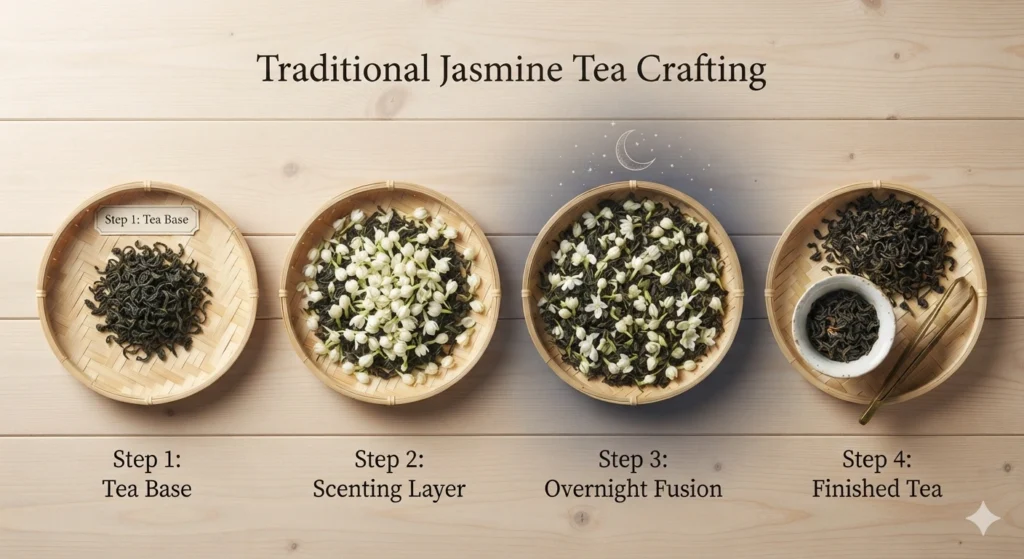
Fresh jasmine blossoms are picked during the day while they are still closed. At night, when the flowers naturally open and release their fragrance, they are layered together with prepared tea leaves.
The tea absorbs the aroma from the blossoms over several hours. In the morning, the flowers are separated from the tea. For premium jasmine tea, this process is repeated multiple times using fresh flowers each round.
The purpose is not to make tea smell like flowers.
The purpose is to allow the fragrance of jasmine to become part of the tea itself.
This idea reflects an important principle in Chinese tea culture: harmony. The flower does not overpower the leaf. The leaf does not disappear behind the flower. Together, they create something new.
The Rise Of Fuzhou Jasmine Tea
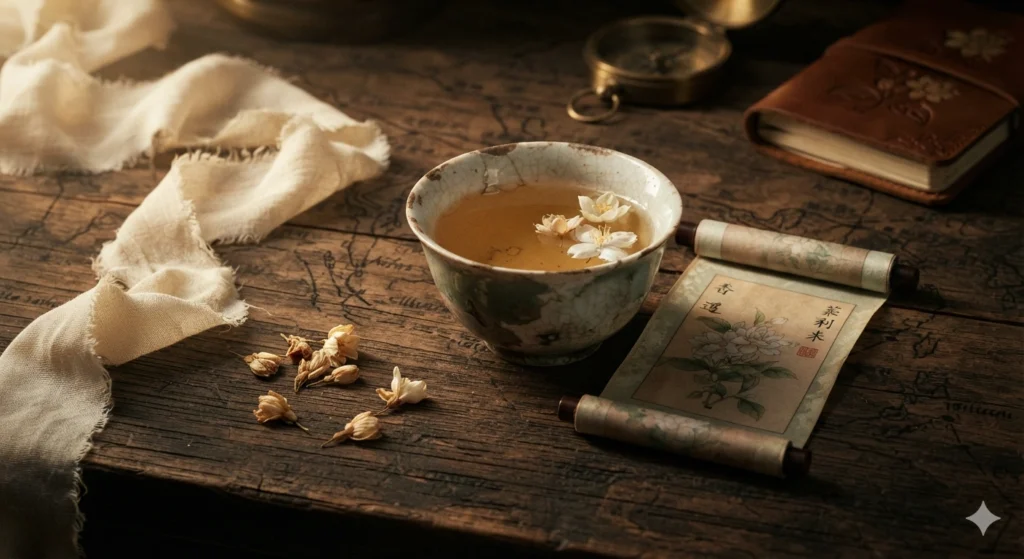
Although jasmine tea is now enjoyed around the world, Fuzhou in Fujian province remains one of the most important places in its history.
Fuzhou developed into the center of jasmine tea production because the region offered the perfect conditions:
- A warm climate suitable for growing jasmine flowers
- Nearby mountain areas producing quality green tea
- Generations of tea makers who developed the scenting technique
The combination of local flowers, tea leaves, and craftsmanship allowed Fuzhou jasmine tea to develop its unique identity.
During the Qing Dynasty, Fuzhou jasmine tea became an important export product. Through international trade, the tea reached markets outside China and became one of the earliest Chinese teas widely recognized overseas.
For many people around the world, jasmine tea became their first introduction to Chinese tea culture.
But behind that simple floral cup was a much deeper tradition — one built on patience and precision.
How Traditional Jasmine Tea Is Made
The making of traditional jasmine tea is not a simple process of adding fragrance to tea leaves. It is a seasonal craft that depends on timing, patience, and the natural rhythm of the jasmine flower.
The process begins months before the jasmine blossoms appear.
In early spring, tea leaves are harvested and processed into green tea. The leaves are fixed, shaped, and dried, then carefully stored until summer arrives. The tea itself is prepared before the flowers are ready because the best jasmine scenting happens during the short blooming season.
When summer comes, jasmine flowers become the focus.
The flower buds are collected during the day while they are still closed. Experienced tea makers know that the timing of harvest matters. The buds must be mature enough to release fragrance, but not too open before they reach the tea.
At night, when temperatures fall and the jasmine flowers naturally begin to bloom, the scenting process begins.
Fresh jasmine blossoms are layered together with tea leaves in a controlled environment. As the flowers open, they release their aroma into the surrounding air and into the waiting leaves.
The next morning, the flowers are removed. The tea is dried to restore its condition and prepare it for another round.
High-quality jasmine tea may go through this process five, six, or even more times. Each round adds another layer of fragrance and creates a deeper connection between the flower and the leaf.
This is why traditional jasmine tea cannot be made quickly.
The value of premium jasmine tea is not only in the ingredients. It is in the time, skill, and attention required to transform two simple things — a flower and a leaf — into one complete experience.
Jasmine Tea And Chinese Tea Philosophy
Jasmine tea holds a special place in Chinese tea culture because it represents more than flavor. It represents balance.
In Chinese tea philosophy, the goal is rarely to overpower one element with another. Instead, the focus is harmony — allowing different qualities to exist together.
Jasmine tea reflects this idea perfectly.
The flower brings fragrance, sweetness, and elegance.
The tea leaf brings depth, structure, and character.
A poorly made jasmine tea often feels separated. The aroma sits on top of the tea, like perfume added afterward. A well-made jasmine tea feels integrated. The fragrance belongs to the leaf. The tea carries the memory of the flower.
This is why traditional jasmine tea is appreciated not simply because it smells good, but because of the craftsmanship behind that fragrance.
The process requires waiting.
The tea maker cannot force the jasmine to bloom earlier. The flowers must open naturally. The scenting cannot be rushed. Each batch depends on the condition of the flowers, the temperature of the room, and the experience of the maker.
In this sense, jasmine tea represents an important idea in Chinese tea culture:
Some things become better not through speed, but through patience.
How Jasmine Tea Changed Around The World
From Fuzhou, jasmine tea gradually traveled beyond China and became one of the world’s most recognizable Chinese teas.
During the Qing Dynasty, jasmine tea was exported through international trade routes, reaching Europe and other parts of Asia. Its approachable aroma made it easier for people unfamiliar with Chinese tea to appreciate.
Unlike some traditional teas that require time and experience to understand, jasmine tea introduces itself immediately.
The fragrance is familiar.
The taste is gentle.
The experience feels welcoming.
For many people around the world, jasmine tea became their first connection with Chinese tea culture.
However, as global demand increased, the traditional craft also faced challenges. Large-scale production methods appeared, and some commercial jasmine teas began using artificial flavoring or shortcuts instead of traditional flower scenting.
This created a difference between jasmine tea as a mass-market product and jasmine tea as a traditional craft.
Authentic jasmine tea is not defined by how strong the aroma is. It is defined by how naturally the fragrance becomes part of the tea.
A tea that smells powerful when you first open the package may not always be the best tea. A traditionally scented jasmine tea reveals itself more slowly. Its fragrance develops across multiple infusions, and its connection between flower and leaf becomes clearer with time.
Why Understanding Jasmine Tea History Changes How You Taste It
Knowing the history behind jasmine tea changes the way you drink it.
The first thing you notice may still be the fragrance. But after learning its story, that fragrance becomes something more.
You begin to understand that the aroma came from jasmine flowers opening during summer nights.
You understand that the tea leaves were prepared months earlier, waiting for the right season.
You understand that every traditional batch represents hours of careful work from tea makers who learned this craft through generations.
A cup of jasmine tea is therefore not only a drink.
It is a connection between nature, craftsmanship, and time.
When you slow down and taste it carefully, you may notice different layers:
The first impression is the jasmine blossom.
The middle reveals the character of the tea leaf.
The finish leaves behind sweetness and a quiet floral memory.
This is the deeper pleasure of Chinese tea. The more you understand where a tea comes from, the more you can appreciate what is inside the cup.
Frequently Asked Questions
Where did jasmine tea originate?
Jasmine tea originated in China, with Fujian province and especially Fuzhou becoming the historical center of traditional jasmine tea production. The region developed the scenting techniques that define authentic jasmine tea today.
Is jasmine tea Chinese?
Yes. Although jasmine flowers were introduced to China through ancient trade routes, the craft of combining jasmine blossoms with tea leaves developed as a Chinese tea tradition over centuries.
When was jasmine tea invented?
Jasmine tea was not created at one specific moment. The practice developed gradually as Chinese tea makers experimented with flower-scented teas and refined the technique over generations.
Why is Fuzhou famous for jasmine tea?
Fuzhou became famous because of its ideal environment for both jasmine flowers and tea production, combined with centuries of experience in traditional scenting craftsmanship.
How is traditional jasmine tea made?
Traditional jasmine tea is made by layering fresh jasmine blossoms with prepared tea leaves. The flowers release their fragrance into the leaves overnight, and the process is repeated multiple times for high-quality teas.
What makes authentic jasmine tea different?
Authentic jasmine tea is scented naturally with fresh jasmine flowers. Its fragrance is integrated into the tea leaf, creating a balanced aroma that develops through multiple infusions rather than a strong artificial scent.
Final Thoughts: The Flower That Became Part Of The Leaf
Jasmine tea is a story of patience.
A flower blooms for only a short time, yet its fragrance can remain inside a tea leaf for months. A tea maker cannot hurry this process. They can only wait, observe, and guide what nature has already begun.
This is what makes jasmine tea special.
It is not simply the taste of jasmine flowers. It is the meeting of two traditions: the beauty of the blossom and the craftsmanship of the tea leaf.
At Tea Passage, we believe every tea carries a story beyond its flavor. The teas we choose are not only selected for their aroma or appearance, but for the tradition, craftsmanship, and quiet moments they create when shared.
A cup of jasmine tea is a small reminder that some of the most meaningful experiences are created slowly.