Quick Answer
Authentic Dahongpao is not simply the most expensive Wuyi tea, nor is it defined only by a strong roasted aroma. To understand whether a Dahongpao is “real,” the first step is understanding what the name actually represents.
True Dahongpao comes from the Wuyi Mountains in Fujian, China, and belongs to the Wuyi Rock Tea (Yancha) family. While the original mother trees are extremely limited, most Dahongpao available today comes from carefully selected Wuyi cultivars and traditional blends created to reproduce the style and character of this famous tea.
The term “fake Dahongpao” can refer to different situations. In some cases, it describes tea with no connection to Wuyi Rock Tea being sold under the Dahongpao name. In other cases, it refers to lower-quality tea, outside-origin tea, or poorly made blends presented as premium Dahongpao.
The most reliable way to judge authentic Dahongpao is not by price or appearance alone. Instead, pay attention to its origin, craftsmanship, aroma, texture, aftertaste, and overall balance. A well-made Dahongpao should show the roasted depth, mineral character, and layered finish that define Wuyi Rock Tea.
What Is Authentic Dahongpao?
Dahongpao (Big Red Robe) is one of the most famous Wuyi Rock Teas from the Wuyi Mountains of northern Fujian.
However, it is also one of the most misunderstood tea names. Many people assume authentic Dahongpao means tea harvested directly from the original mother trees growing on the cliffs of Wuyi Mountain. In reality, almost all Dahongpao available today does not come from those original trees.
The original six mother trees of Dahongpao are preserved as cultural treasures in Wuyi Mountain. Because their production is extremely limited, they are not part of the normal commercial tea market.
Most Dahongpao sold today refers to carefully crafted teas made from related Wuyi cultivars or traditional blends. These teas aim to express the style associated with the original Dahongpao: roasted aroma, mineral depth, rich texture, and a long-lasting finish.
This does not mean modern Dahongpao is fake.
A well-produced commercial Dahongpao can still represent the essential character of Wuyi Rock Tea. The important question is not whether the tea came directly from the original mother trees, but whether it honestly reflects the craftsmanship and tradition behind Wuyi Rock Tea.
The better question to ask is:
“Does this tea capture the character of Wuyi Rock Tea?”
Why Is Dahongpao Often Considered Fake?
The confusion around Dahongpao mainly comes from the popularity of its name.
As one of China’s most famous teas, Dahongpao has strong market recognition. Because of this, some sellers use the name as a marketing term even when the tea has little connection to Wuyi Mountain.
Common examples include:
- Tea from outside Wuyi Mountain sold as Dahongpao
- Lower-quality Wuyi tea given a premium name
- Ordinary roasted oolong marketed as rare Dahongpao
- Excessively roasted tea used to hide weak leaf quality
- Cheap tea promoted with exaggerated claims about origin or age
However, affordable Dahongpao is not automatically fake.
Wuyi Mountain produces teas across many quality levels. A reasonably priced Dahongpao can still be enjoyable as a daily tea if it is well made and honestly described.
The real issue is not whether the price is high or low. The important question is whether the description matches the tea inside the package.
Mother Tree Dahongpao vs Commercial Dahongpao
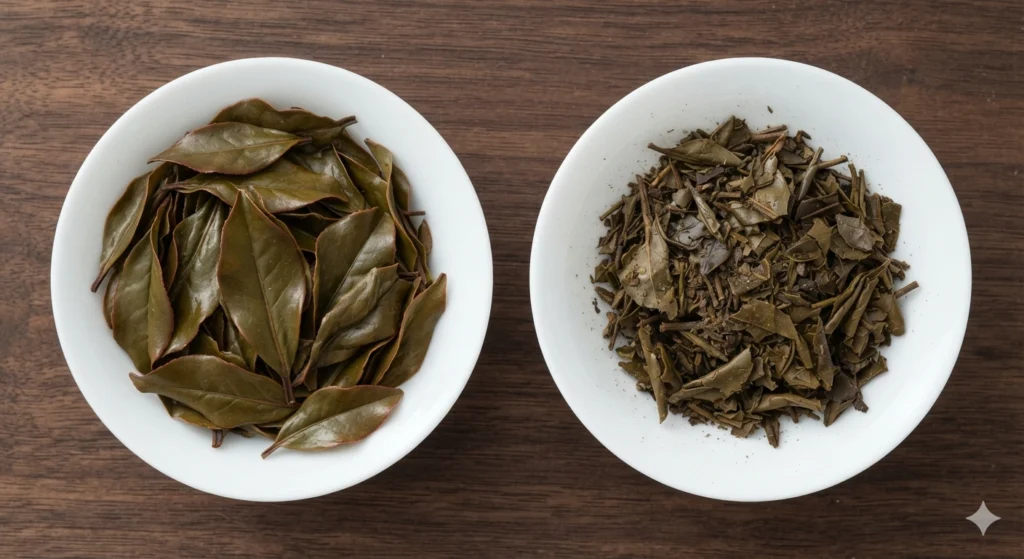
Understanding the difference between mother tree Dahongpao and commercial Dahongpao is the first step toward avoiding confusion.
| Feature | Mother Tree Dahongpao | Commercial Dahongpao |
|---|---|---|
| Origin | Original six mother trees in Wuyi Mountain | Wuyi cultivars and carefully selected blends |
| Availability | Extremely limited | Widely available |
| Market Value | Historical and cultural value | Depends on quality and craftsmanship |
| Production | Very limited harvest | Traditional commercial production |
| Flavor | Rare historical expression | Roasted, mineral, layered Wuyi character |
The biggest misunderstanding is assuming that commercial Dahongpao is automatically fake.
In traditional tea culture, names often represent a style, region, or production tradition rather than only a single genetic source. Similar examples can be found in wine, where a famous style may include many producers while still maintaining a recognizable identity.
For Dahongpao, the focus should not only be on whether it comes from the original mother trees. More importantly, look for whether the tea expresses the craftsmanship and character of Wuyi Rock Tea.
What Does Real Dahongpao Taste Like?
A genuine Wuyi-style Dahongpao should show a balance between roast, aroma, texture, and finish.
The first impression is usually the roast. Traditional Dahongpao may reveal notes of:
- Toasted nuts
- Charcoal warmth
- Dark cocoa
- Dried fruit
- Mineral sweetness
However, roast alone does not define quality.
A poorly made Dahongpao may taste simply smoky, burnt, or flat. Good Dahongpao uses roasting to develop the natural character of the leaf rather than cover its weaknesses.
When brewed, the tea should feel smooth and substantial. Compared with lighter oolongs, Dahongpao usually has a fuller body and deeper mouthfeel. The sweetness should gradually return after swallowing, leaving a comfortable and lasting impression.
The finish is where Wuyi Rock Tea reveals its character. A good Dahongpao often shows what tea drinkers describe as yan yun (rock rhyme). This is not a literal taste of stone. Instead, it describes the combination of mouthfeel, depth, mineral sensation, and lingering aftertaste associated with Wuyi terroir.
Authentic Dahongpao vs Fake Dahongpao: Key Differences
| Factor | Authentic Dahongpao | Fake or Misrepresented Dahongpao |
|---|---|---|
| Origin | Connected to Wuyi Rock Tea production areas | Unclear or unrelated origin |
| Aroma | Layered roast, mineral, floral, fruity notes | One-dimensional roast or artificial aroma |
| Taste | Balanced depth and sweetness | Flat, harsh, or overly smoky |
| Mouthfeel | Smooth, full, lingering | Thin or drying |
| Aftertaste | Long finish with returning sweetness | Quickly disappears |
| Processing | Skilled oxidation and roasting | Heavy roasting used to hide flaws |
The difference is not always obvious from dry leaves alone.
Many roasted oolongs can look similar after shaping and roasting. Appearance can provide clues, but the brewed tea reveals far more about the leaf, craftsmanship, and overall quality.
How To Check If Dahongpao Is Authentic
1. Check the Origin Information
The first step is understanding where the tea comes from.
Authentic Dahongpao should have a clear connection to Wuyi Mountain. A trustworthy seller should provide information about:
- Growing region
- Tea cultivar
- Harvest season
- Roasting style
- Production method
Be careful with descriptions such as:
- “Imperial Dahongpao”
- “Rare cliff tea”
- “100-year-old tree Dahongpao”
when there is no supporting information.
Premium names are easy to create. Quality tea requires careful cultivation, skilled processing, and honest sourcing.
2. Look Beyond Dry Leaf Appearance
Many buyers try to identify Dahongpao by looking only at the dry leaves. However, this method is unreliable.
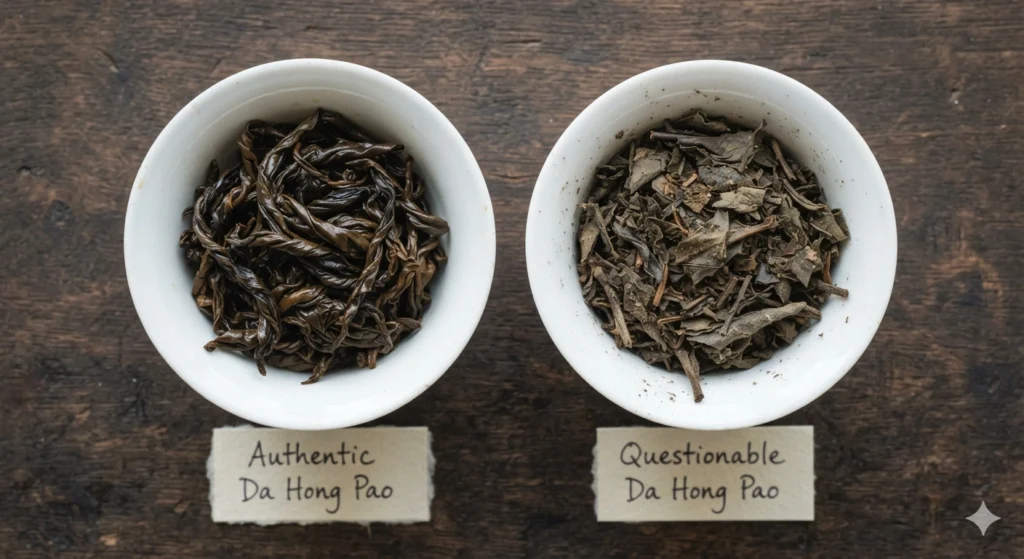
Traditional Dahongpao leaves are usually:
- Long and twisted
- Dark brown to dark green
- Slightly glossy after roasting
- Relatively uniform
However, appearance alone cannot prove authenticity. Different oolong teas can look similar after roasting and shaping.
The more important question is whether the leaves create a complete tea experience once brewed.
3. Smell the Aroma
Aroma is one of the strongest indicators of Dahongpao quality.
A good Dahongpao should have a layered fragrance. Depending on the roasting level, you may notice:
- Roasted grain
- Nuts
- Orchid-like floral notes
- Dried fruit
- Mineral sweetness
On the other hand, a fake or lower-quality Dahongpao may show:
- Strong burnt aromas
- Flat roasted notes
- Artificial fragrance
- Little change after brewing
A high-quality Wuyi tea should continue developing as the leaves open. The aroma should become deeper and more complex rather than disappearing after the first infusion.
How Does Brewing Reveal Authentic Dahongpao?
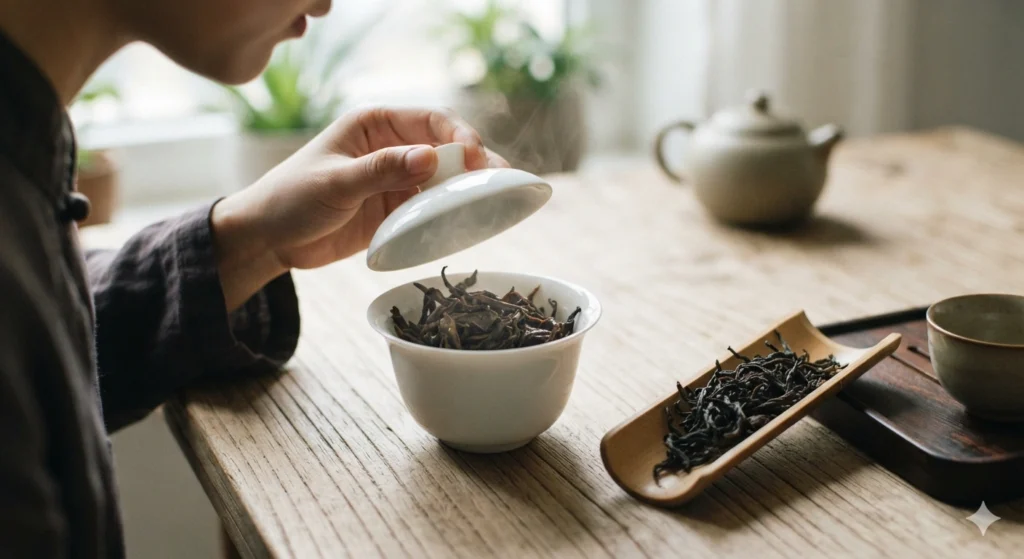
One of the most reliable ways to understand Dahongpao is to observe how the tea develops across multiple infusions.
A well-made Dahongpao should not reveal everything in the first cup and then quickly disappear. Instead, the flavor should gradually open as the leaves unfurl, showing different layers of aroma, texture, and finish.
The first infusion often reveals the tea’s roast character and initial fragrance. You may notice warm toasted notes, a gentle charcoal aroma, and the first signs of Wuyi Rock Tea’s mineral depth.
The second and third infusions are usually where Dahongpao begins to show its true structure. The roast becomes softer and more integrated, allowing sweeter notes, floral undertones, and a smoother mouthfeel to appear.
Later infusions reveal the quality of the leaf and craftsmanship. A good Dahongpao may become lighter over time, but it should still maintain fragrance, sweetness, body, and a pleasant aftertaste.
A tea that delivers only a strong roasted aroma in the first infusion but quickly becomes thin and empty may have been heavily roasted to create an immediate impression rather than carefully crafted to develop depth.
Does Expensive Dahongpao Mean It Is Authentic?
Not necessarily.
The price of Dahongpao can vary greatly because many factors influence its value:
- Origin
- Growing environment
- Cultivar
- Craftsmanship
- Roasting skill
- Harvest season
- Market reputation
A very expensive Dahongpao may reflect rarity, competition awards, historical value, or collector interest. However, a high price alone cannot prove that the tea is authentic or high quality.
At the same time, extremely cheap “premium Dahongpao” should be approached carefully. High-quality Wuyi Rock Tea requires skilled production, careful roasting, and suitable raw materials. A tea described as rare or exclusive but offered at an unusually low price may not match the story behind it.
A better way to judge Dahongpao is through the cup:
- Does the aroma feel natural and layered?
- Does the texture feel smooth and full?
- Does the sweetness return after swallowing?
- Does the tea continue developing across multiple infusions?
These questions reveal much more than the price tag alone.
Common Types of Fake Dahongpao
Not every misrepresented Dahongpao is presented in the same way. Several common situations appear in the market.
1. Non-Wuyi Tea Sold as Dahongpao
One of the most common issues is tea grown outside the Wuyi region being marketed as Dahongpao.
Because the name is widely recognized, some sellers use it to attract buyers even when the tea has no true connection to traditional Wuyi production areas.
The tea itself may still be enjoyable, but it should not be presented as authentic Wuyi Dahongpao.
2. Low-Quality Wuyi Tea With Heavy Roasting
Roasting is an important part of Wuyi Rock Tea craftsmanship. However, excessive roasting can sometimes be used to hide weaknesses in the original leaf material.
A lower-quality tea may be roasted heavily to create:
- Strong charcoal aroma
- Darker leaf appearance
- Immediate intensity
However, after brewing, it may lack:
- Depth
- Sweetness
- Texture
- Long-lasting finish
Good roasting should develop the tea’s character, not simply cover problems.
3. Cheap “Ancient Tree” or “Mother Tree” Claims
Claims about ancient trees, heritage bushes, or mother tree Dahongpao should be considered carefully.
The original mother trees are extremely limited, and authentic material from them is not something normally available in the everyday tea market.
When a seller emphasizes these claims without providing clear information about origin, production, and craftsmanship, the story may become more important than the tea itself.
A good Dahongpao does not need exaggerated claims. Its quality should appear naturally through the cup.
How To Taste Dahongpao Like a Tea Drinker
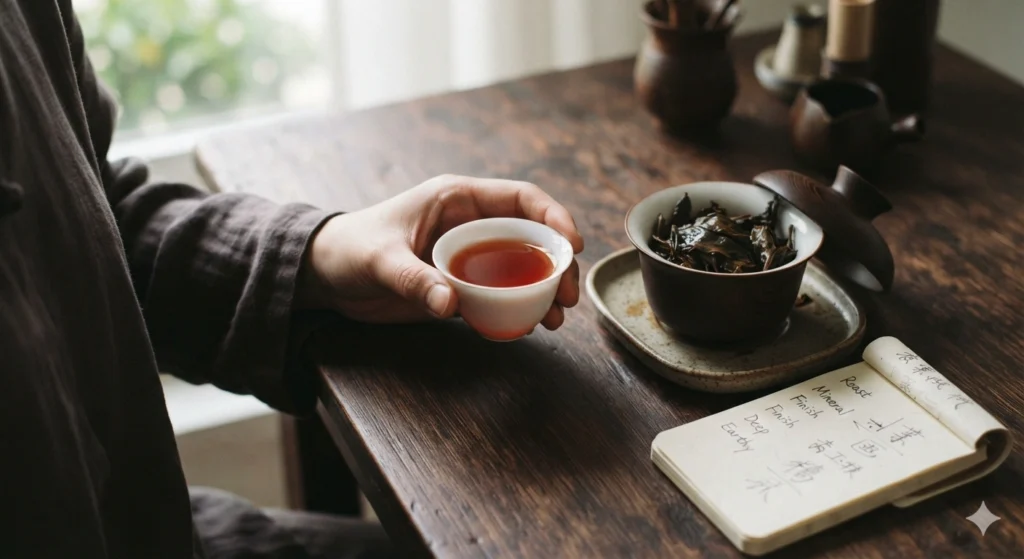
The best way to judge Dahongpao is not by chasing labels or expensive names. It is by paying attention to the complete tasting experience.
Start with the dry leaves.
Observe the shape, color, and condition of the leaves. Traditional Dahongpao usually has twisted leaves with a deep roasted appearance. The leaves should look carefully processed rather than dull or broken.
Next, warm the leaves.
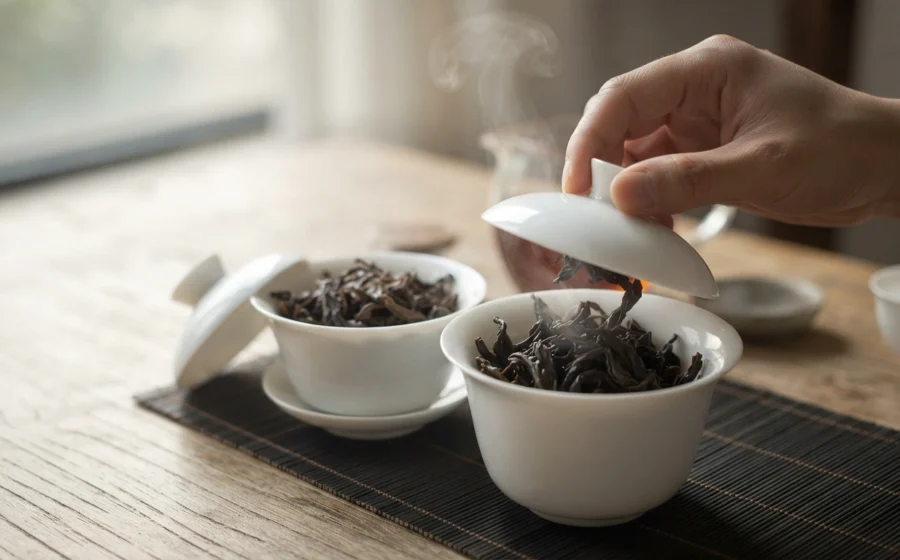
Place the tea into a gaiwan, rinse briefly with hot water, and smell the warmed leaves. This step allows the hidden aroma to emerge.
A good Dahongpao should become more expressive after warming. The fragrance should open and become more complex instead of disappearing quickly.
Then taste the first infusion.
Pay attention to:
- Is the roast smooth or harsh?
- Does the tea feel full and balanced in the mouth?
- Is there sweetness after swallowing?
- Does the flavor continue?
Do not judge Dahongpao only from the first impression. The character of Wuyi Rock Tea often appears gradually through several infusions.
Dahongpao vs Other Wuyi Rock Teas
Understanding Dahongpao also means understanding that it belongs to a larger family of Wuyi Rock Teas.
| Tea | Main Character |
|---|---|
| Dahongpao | Balanced roast, mineral depth, layered character |
| Rou Gui | Strong cinnamon-like aroma, spice, deeper fragrance |
| Shui Xian | Fuller body, woody notes, softer character |
Dahongpao is often considered a balanced introduction to Wuyi Rock Tea because it combines several important characteristics:
- Roasted warmth
- Mineral structure
- Moderate fragrance
- Long finish
However, Dahongpao is not automatically better than other Wuyi teas.
A well-made Rou Gui may offer a more intense aroma, while a high-quality Shui Xian may provide a softer and fuller drinking experience. The best choice depends on personal preference rather than reputation alone.
Is Real Dahongpao Worth Trying?
For tea drinkers interested in Chinese oolong, Dahongpao is worth experiencing because it represents a unique style of tea craftsmanship.
Through Dahongpao, drinkers can experience how:
- Mountain environment influences flavor
- Roasting changes the personality of the leaf
- Processing creates depth beyond simple aroma
- Brewing reveals different layers over time
The goal is not to find the most expensive Dahongpao or the tea with the most impressive story.
The goal is to find a tea that feels complete in the cup.
A good Dahongpao does not need exaggerated claims. Its quality appears naturally through aroma, texture, balance, and finish.
How To Buy Authentic Dahongpao Online
Buying Dahongpao online requires more attention because you cannot smell or taste the tea before purchasing.
A reliable seller should provide:
- Clear origin information
- Production details
- Roast level
- Harvest information
- Honest tasting notes
Be cautious with sellers who rely only on words such as:
- “Imperial”
- “Rare”
- “Authentic”
- “Collector grade”
without explaining what makes the tea special.
A good description helps you understand the tea itself, not just persuade you to buy it.
For first-time buyers, starting with a smaller quantity is usually the better approach. Taste the tea yourself before committing to a larger purchase.
Frequently Asked Questions
Is all Dahongpao sold today fake?
No. Most Dahongpao available today does not come from the original mother trees, but that does not make it fake. Many commercial Dahongpao teas are carefully produced Wuyi Rock Teas made from related cultivars and traditional blending methods.
How can I tell if Dahongpao is real?
Look at the complete experience: origin information, aroma, flavor, mouthfeel, aftertaste, and reinfusion performance. No single feature can prove authenticity.
Is real Dahongpao very expensive?
Authentic mother tree Dahongpao is extremely rare, but high-quality commercial Dahongpao exists at different price levels. Price alone does not determine authenticity or quality.
What does authentic Dahongpao taste like?
Authentic Dahongpao usually shows roasted, mineral, nutty, woody, and sometimes floral notes. It should have a smooth body and a lingering finish.
Is Dahongpao the same as Wuyi Rock Tea?
Dahongpao is one type of Wuyi Rock Tea. Wuyi Rock Tea is the larger category that includes Dahongpao, Rou Gui, Shui Xian, and other varieties.
Why is Dahongpao called fake sometimes?
Because the name is often used as a marketing term. Some teas are sold as Dahongpao despite lacking a true connection to Wuyi production areas or traditional processing methods.
A famous tea name can create expectations, but the leaf itself always tells the truth.
At Tea Passage, we believe understanding Dahongpao is not about chasing rarity. It is about learning how to recognize craftsmanship: the balance of roast, aroma, texture, and finish that turns a simple leaf into a complete tea experience.
The best Dahongpao is not the one with the biggest story.
It is the one that keeps revealing something new, cup after cup.
References and Sources
- GB/T 18745—2026: Geographical Indication Product Quality Requirements — Wuyi Rock Tea — The revised national standard for Wuyi Rock Tea, effective April 2027. Officially defines Da Hong Pao as a blended tea made from multiple asexually propagated Wuyi cultivars, quantifies withering and kill-green temperatures, and establishes six core terms including the definition of Da Hong Pao.
- Wuyi Mountain Da Hong Pao Mother Tree Protection Status — Reports that the six Da Hong Pao mother trees, over 300 years old, have been under protected “stop-picking and resting” management since 2006.
- China News Service: Wuyi Mountain Stops Harvesting Da Hong Pao Mother Trees — Confirms the 2006 government decision to permanently stop commercial harvesting of the six mother trees for their protection and scientific management.
- Wuyi Rock Tea Production Area Division and Zhengyan Definition — Describes the Zhengyan (true rock), Banyan (half rock), and Zhoucha (outer) production tiers, with the core scenic area covering approximately 69 square kilometers.
- Xinhua News: Counterfeit Cigarette-Packaged Tea Market Investigation — Documents the market for low-quality tea sold in packaging mimicking cigarette brands, priced at 10 yuan per pack, with vague production information and no verifiable company details.