You bought a good Longjing tea. The leaves look beautiful—flat, smooth, and slightly glossy.
You brew it once. It tastes bitter, sharp, almost like grass.
So you assume the tea is bad.
But in most cases, the tea is not the problem.
The water temperature is.
For Longjing tea, temperature is not a detail. It is the difference between sweetness and bitterness, between a clean cup and a disappointing one.
Why Water Temperature Changes Everything
Longjing tea is delicate by nature.
The leaves are pan-fired during production, but once dried, they become extremely sensitive to heat.
When water is too hot:
- The leaf releases tannins too quickly
- Bitterness appears immediately
- The natural sweetness disappears
When water is too cool:
- The leaves do not fully open
- Aroma stays locked inside
- The cup tastes flat and thin
The goal is not “hot water.”
The goal is controlled extraction.
The Ideal Water Temperature for Longjing Tea
The sweet spot is:
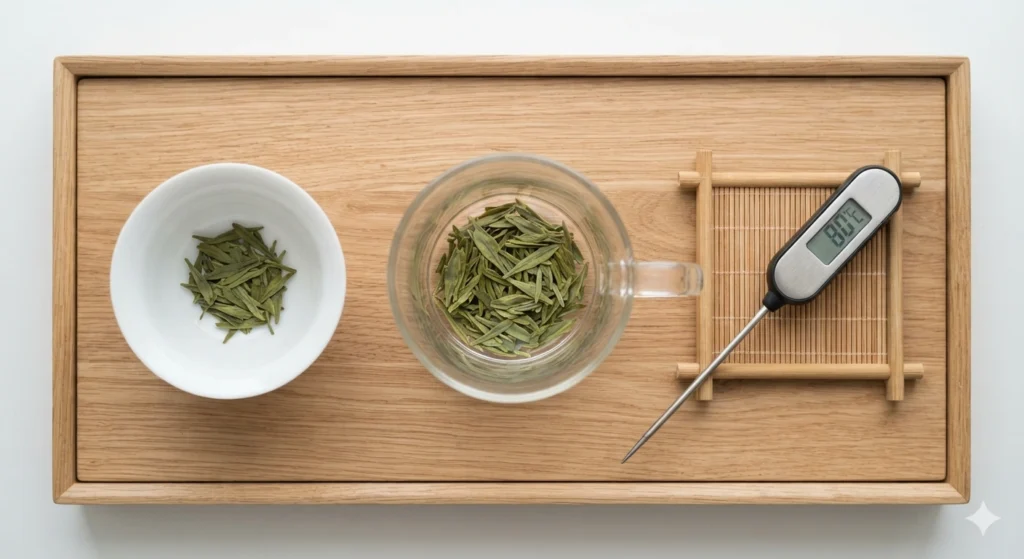
75°C – 85°C (170°F – 185°F)
This range allows Longjing to show its real character:
- Soft chestnut aroma
- Gentle sweetness
- Clean, smooth finish
- No harsh bitterness
A simple breakdown:
- 75–80°C → more delicate, sweet, floral expression
- 80–85°C → slightly stronger, more body and chestnut depth
If you remember one thing:
👉 Boiling water does not belong to Longjing tea.
What Happens If You Use Boiling Water?
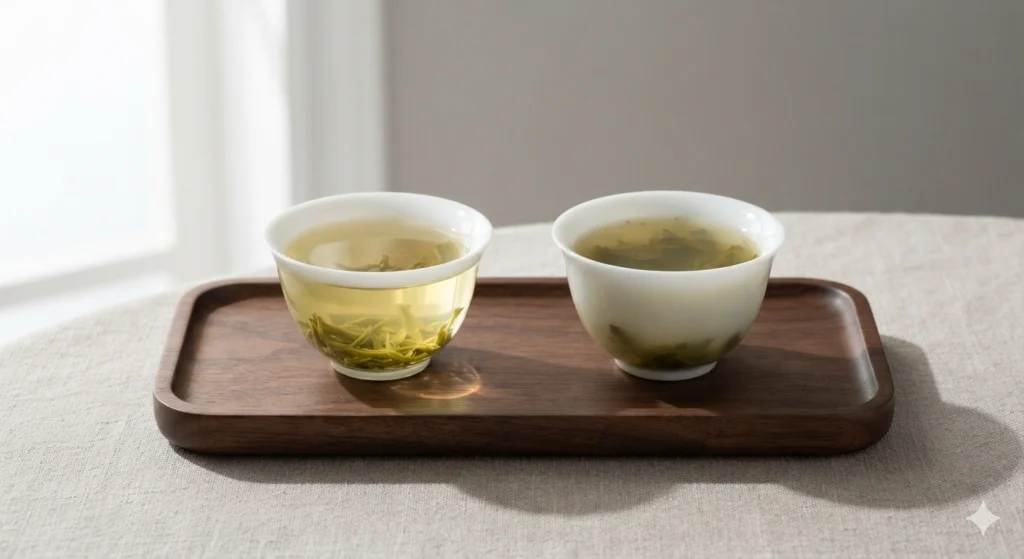
At 100°C, Longjing changes completely.
Instead of sweetness, you get:
- Sharp bitterness
- Vegetal harshness
- Dry, astringent finish
- Loss of aroma
The tea is not ruined.
It is simply over-extracted.
Lower the temperature, and the same leaves will taste like a different tea.
How to Get the Right Temperature Without a Thermometer
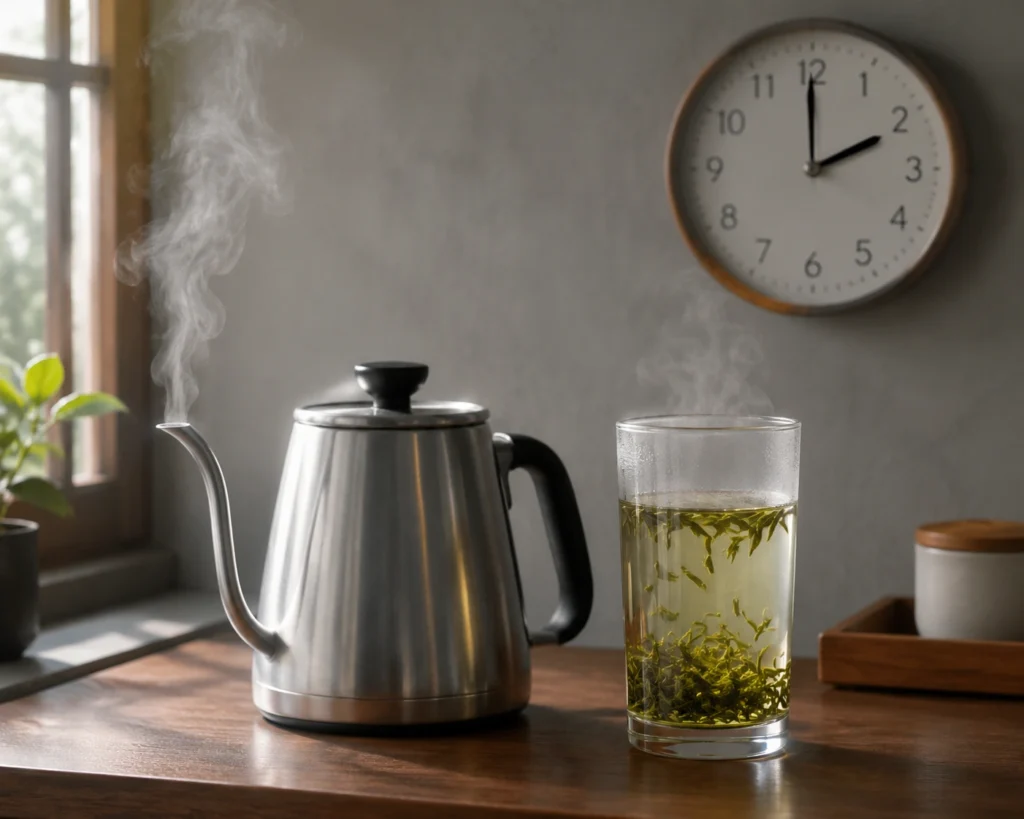
You do not need equipment.
Method 1: The Waiting Method
- Boil water
- Let it rest for 2–3 minutes
- Then brew
This naturally brings water into the ideal range.
Method 2: The Transfer Method
- Pour boiling water into another cup or pitcher
- Then pour again into your teacup
Each transfer reduces temperature and smooths the water.
Method 3: Visual Cue
- Heavy, fast steam = too hot
- Light, slow steam = ready
When steam becomes soft and gentle, you are close to 80°C.
Does Different Longjing Require Different Temperature?
Yes—but only slightly.
Mingqian Longjing (Pre-Qingming, highest grade)
- Very tender buds
- Best at 75–80°C
- Focus: sweetness and fragrance
Yuqian Longjing (Later spring harvest)
- Slightly stronger leaves
- Best at 80–85°C
- Focus: body and chestnut depth
The difference is subtle.
If you stay around 80°C, you will be safe in most cases.
How We Brew Longjing at Tea Passage
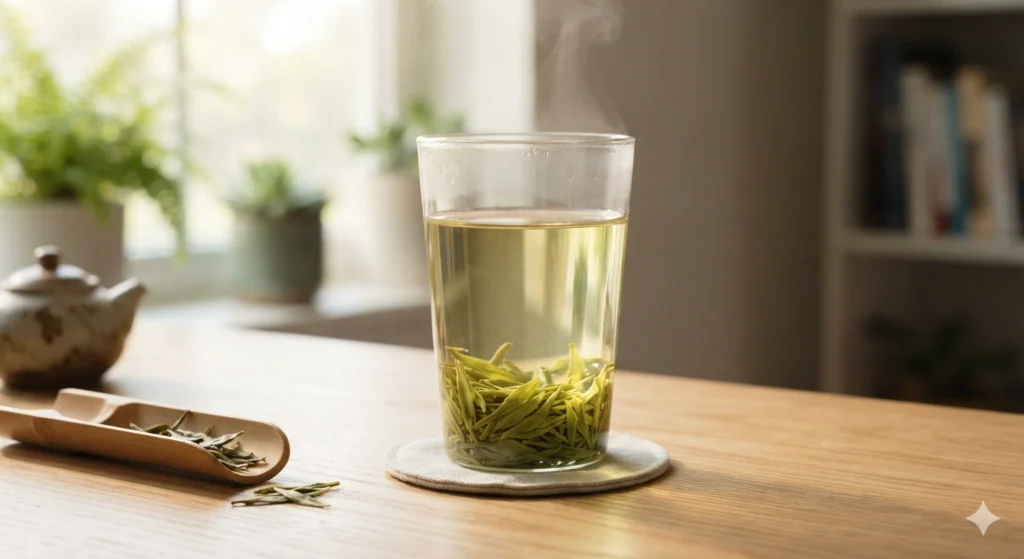
We keep it simple.
No thermometer. No complexity.
We boil water, then let it rest for about two minutes.
We pour it over Longjing leaves in a tall glass.
The leaves slowly sink.
A soft chestnut aroma rises.
The liquor turns pale gold-green.
The first sip tells everything:
- If it is smooth and sweet → temperature is right
- If it is sharp or bitter → water was too hot
Over time, we stopped chasing precision.
We started trusting timing.
Longjing teaches patience more than technique.
Quick Brewing Summary
- Temperature: 75–85°C
- Best method: glass or simple infusion
- Key rule: never use boiling water directly
- Goal: sweet, nutty, clean cup (not strong cup)
Frequently Asked Questions
What is the best water temperature for Longjing tea?
75°C–85°C is ideal. It preserves sweetness and prevents bitterness.
Can I use boiling water?
No. Boiling water destroys the balance of the tea and makes it taste harsh.
Why does my Longjing taste bitter?
Almost always because the water is too hot or the steeping time is too long.
Do I need a thermometer?
No. Let boiled water rest for 2–3 minutes and you will be in the right range.
Does higher grade Longjing need lower temperature?
Yes, slightly. Early spring (Mingqian) is more delicate and prefers lower heat.
Final Thought
Longjing tea does not ask for skill.
It only asks for one thing:
Do not rush the water.
When brewed gently, it becomes one of the most cal
The right water temperature transforms Longjing tea from a disappointment into one of the smoothest, most rewarding green teas you can drink. At Tea Passage, we select seasonal Longjing that responds beautifully to a gentle hand. If you haven’t yet tasted this tea at its best, there’s no better time to start.