For many tea drinkers outside China, the name Dragon Well tea sounds mysterious. But in China, this tea is better known as Longjing tea (龙井茶) — a green tea that represents spring harvest, traditional craftsmanship, and one of the most recognizable flavors in Chinese tea culture.
Longjing is famous for its flat jade-colored leaves, roasted chestnut aroma, and smooth sweetness. It is often introduced as one of China’s greatest green teas, but its reputation can also make it confusing for beginners.
Why is Dragon Well tea so famous?
What makes West Lake Longjing different?
Is expensive Mingqian Longjing really worth the price?
And how can you choose a good Dragon Well tea?
This guide explains everything you need to know about Chinese Dragon Well tea, from its history and origin to flavor, processing, grades, and how to choose the right one.
What Is Chinese Dragon Well Tea?
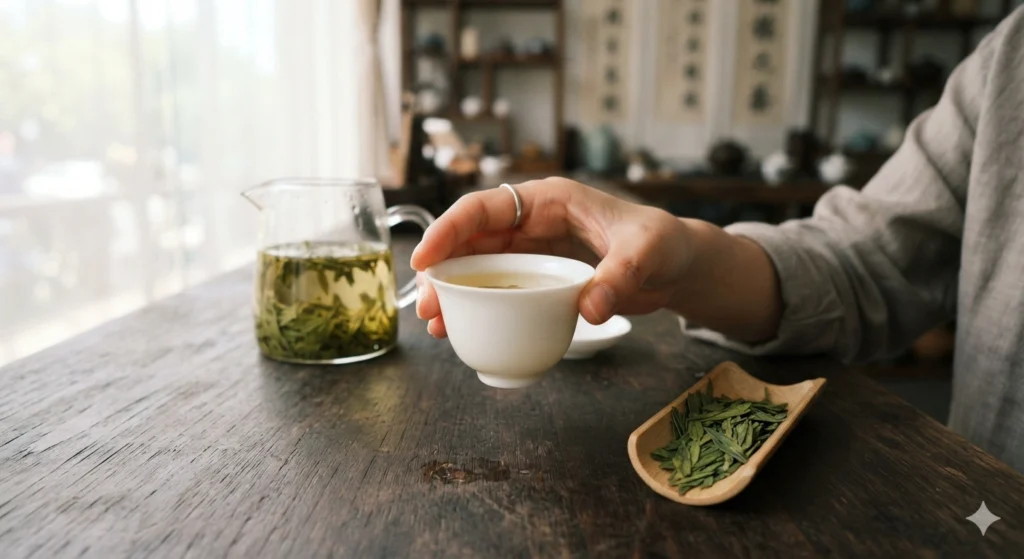
Dragon Well tea is the English name for Longjing tea, one of the most famous Chinese green teas.
It is produced mainly around Hangzhou, Zhejiang Province, especially the West Lake area where generations of tea farmers have cultivated and crafted this tea.
Like all true teas, Dragon Well comes from the Camellia sinensis plant. What makes it special is not that it belongs to a different tea category, but the way it is grown, processed, and shaped.
Unlike Japanese green teas such as Sencha, which are usually steamed, Dragon Well is pan-fired in a hot wok shortly after harvesting. This process stops oxidation while creating the tea’s signature character:
- Flat, smooth leaves
- Fresh green appearance
- Roasted chestnut aroma
- Soft sweetness
- Clean, lingering finish
The name “Dragon Well” comes from a famous spring near West Lake. According to local legend, the spring’s water was connected with a dragon, and the tea grown nearby eventually adopted the name.
Today, Dragon Well and Longjing refer to the same tea.
Why Is Dragon Well Tea Famous?
Dragon Well tea became famous not only because of its flavor, but because it represents centuries of Chinese tea tradition.
The tea has been appreciated since the Tang Dynasty, but its reputation grew significantly during the Qing Dynasty. According to legend, Emperor Qianlong visited the West Lake tea gardens and was so impressed by the tea that he gave special recognition to several Longjing tea bushes.
Whether every detail of the story is historical or not, the meaning behind it remains important: Longjing became a symbol of refinement, craftsmanship, and quality.
For Chinese tea drinkers, Longjing is often associated with:
- The arrival of spring
- Fresh tea harvests
- Skilled tea makers
- Hospitality and gift-giving
However, its popularity has never depended only on history.
Many famous teas have a reputation that feels distant or difficult to understand. Dragon Well is different. Even beginners can appreciate its gentle sweetness, smooth texture, and warm roasted aroma.
It is a prestigious tea, but it is also an everyday tea.
Where Does Dragon Well Tea Come From?
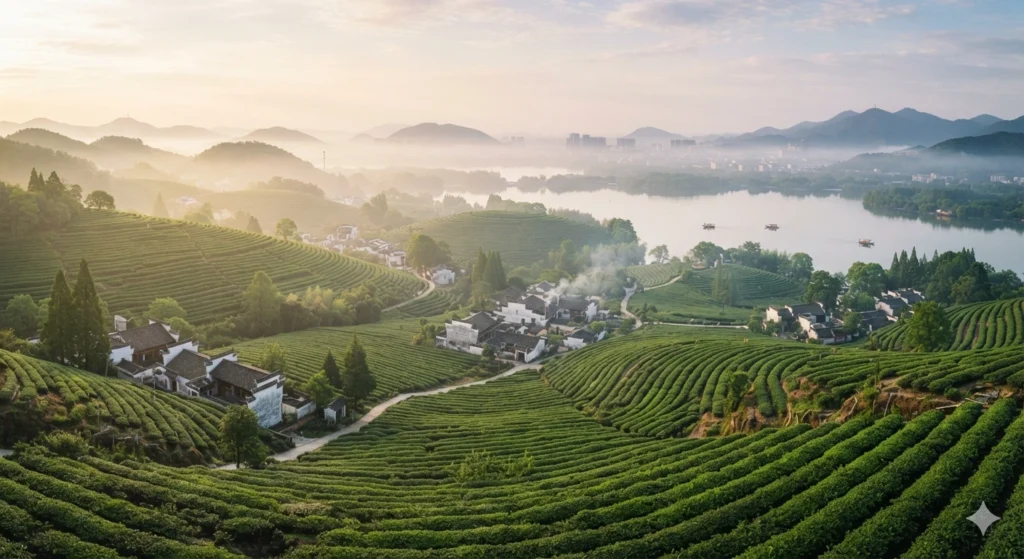
The most famous Dragon Well tea comes from the West Lake area of Hangzhou.
This region has a unique environment for tea production:
- Mild spring temperatures
- Mountain mist
- Rich soil
- Slow-growing young tea buds
- Long traditions of handcrafting
Within the West Lake area, several villages and growing areas are especially famous.
Shi Feng (Lion Peak)
Shi Feng is considered one of the most prestigious Longjing-producing areas.
Tea from Shi Feng is known for:
- Strong chestnut aroma
- Refined sweetness
- Smooth texture
- Elegant aftertaste
Because the production area is limited, authentic Shi Feng Longjing is rare and expensive.
Meijiawu
Meijiawu is another well-known Longjing village near West Lake.
Its teas are often appreciated for their balance between quality and accessibility. Many tea drinkers consider Meijiawu Longjing an excellent choice for enjoying authentic West Lake character without reaching the highest prices.
Longwu
Longwu also produces respected Longjing teas.
Compared with some premium West Lake areas, Longwu teas are often more approachable in price while still offering the classic Longjing profile.
Is West Lake Longjing Always Better?
This is one of the most common questions among people buying Dragon Well tea.
The short answer: not always.
West Lake Longjing has undeniable advantages. The region has a long history, limited production, and a reputation built over centuries.
But the final quality of tea depends on more than location.
A great Dragon Well also requires:
- Fresh harvest
- Good processing
- Skilled tea makers
- Proper storage
A carefully made Longjing from another part of Zhejiang can sometimes provide a better drinking experience than an expensive tea that has been stored poorly.
For beginners, the most important thing is not chasing the most famous name. It is learning what good Dragon Well should taste like.
How Is Chinese Dragon Well Tea Made?
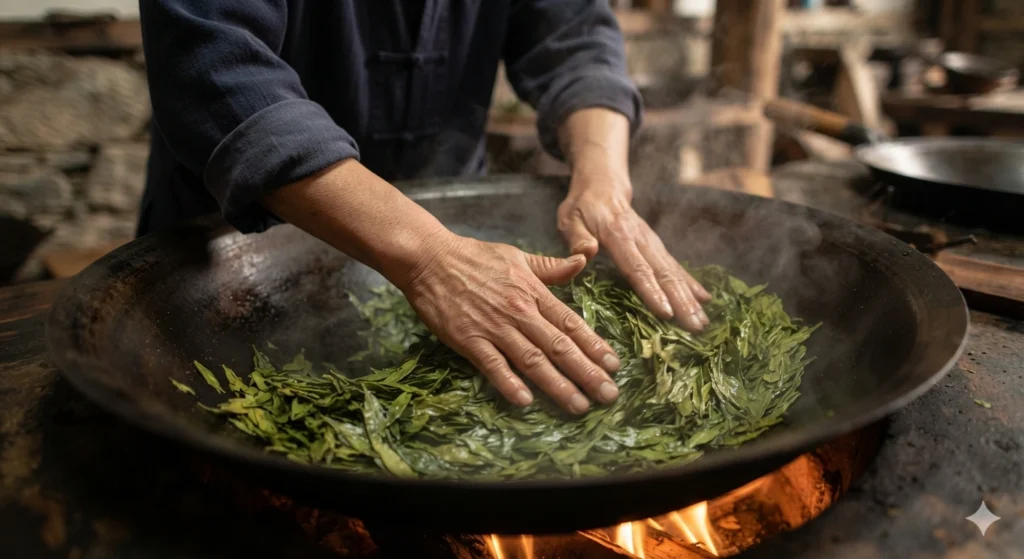
The character of Dragon Well tea is created during processing.
Unlike many teas that are shaped mainly by machines, traditional Dragon Well production relies heavily on the skill of the tea maker.
Harvesting
High-quality Dragon Well is usually harvested in early spring when the tea buds are young and tender.
Many premium Longjing teas are made from:
- One bud and one leaf
- One bud and two leaves
These young leaves contain concentrated sweetness and delicate aromas.
Pan-Firing
The most important step is pan-firing.
Fresh leaves are placed into a heated wok, where tea makers press, move, and shape the leaves by hand.
This process does several things:
- Stops oxidation
- Creates the flat leaf shape
- Develops the roasted aroma
- Preserves the tea’s freshness
The famous chestnut-like character of Dragon Well comes largely from this step.
Unlike steamed green teas, which often emphasize fresh vegetal notes, pan-fired Dragon Well develops a warmer and more rounded flavor.
Finishing
After shaping and drying, the leaves become the classic Dragon Well appearance:
- Flat like small blades
- Smooth and glossy
- Bright green to yellow-green
Traditional hand-finishing requires experience and patience, which is why premium Longjing often commands higher prices.
Machine-made versions exist and can be affordable, but they usually lack the complexity and depth of carefully crafted tea.
How To Choose Chinese Dragon Well Tea
With so many Longjing teas available, choosing the right one can feel overwhelming. The most important thing is not chasing the most expensive name, but understanding what actually affects the tea: origin, harvest time, processing, and freshness.
Check The Origin
The first thing to understand is that not all Longjing tea is the same.
The most famous Longjing comes from the West Lake area in Hangzhou, Zhejiang province. This region is considered the traditional home of Dragon Well tea and produces the most prestigious examples.
Within West Lake, several areas are especially well known:
- Shi Feng (Lion Peak) — Often considered the highest reputation area, known for elegant sweetness and refined aroma.
- Mei Jia Wu — Famous for smooth texture and balanced flavor.
- Long Wu — Produces approachable Longjing with good value.
However, West Lake Longjing is not the only quality option.
Longjing is also produced in other areas of Zhejiang, such as Qiantang and Yuezhou. These teas may not carry the same prestige, but well-made examples can still offer excellent flavor at a much more reasonable price.
For everyday drinking, a carefully processed Zhejiang Longjing can often provide better value than an expensive tea with questionable authenticity.
Mingqian vs Yuqian Dragon Well Tea
Harvest timing is one of the biggest factors that influences Longjing quality and price.
Mingqian Longjing (Before Qingming)
Mingqian Longjing refers to tea harvested before the Qingming Festival, usually around early April.
These early spring leaves are extremely tender. Because the picking window is short and the yield is limited, Mingqian Longjing is considered the most premium style.
Typical characteristics:
- More delicate aroma
- Softer sweetness
- Smoother texture
- Lighter but more refined flavor
Mingqian Longjing is often chosen for gifts, special occasions, or tea drinkers who appreciate subtle differences.
However, the higher price does not always mean it is the best choice for everyone. Its delicate character can actually be harder for beginners to appreciate.
Yuqian Longjing (Before Grain Rain)
Yuqian Longjing is harvested after Qingming but before the Grain Rain Festival, usually in mid to late April.
The leaves have grown slightly larger, creating a tea with:
- Fuller body
- Stronger chestnut aroma
- More noticeable sweetness
- Better value for daily drinking
For many beginners, Yuqian Longjing is actually the better starting point. It offers the classic Dragon Well character without the premium price of early spring tea.
A good Yuqian Longjing often gives you a more satisfying everyday cup than an average Mingqian tea.
How Much Does Chinese Dragon Well Tea Cost?
Longjing prices vary dramatically depending on origin, harvest season, and craftsmanship.
A general guide:
| Type | Approximate Price (50g) | Suitable For |
|---|---|---|
| Everyday Longjing | $20–40 | Daily drinking |
| Good Yuqian Longjing | $40–80 | Best value choice |
| Premium Mingqian Longjing | $100+ | Gifts and collectors |
The highest prices usually come from:
- Authentic West Lake origin
- Early spring harvest
- Hand-fired processing
- Limited production
However, expensive does not automatically mean better.
For most tea drinkers, a high-quality Yuqian Longjing or a reliable regional Longjing between $40–80 per 50g offers the best balance between flavor and price.
How To Brew Chinese Dragon Well Tea
One reason Longjing became famous is that it is surprisingly easy to enjoy.
The simplest traditional method is using a glass cup.
Simple Glass Brewing
Step 1: Add tea leaves
Use around 3 grams of Longjing tea for one cup.
Because Longjing leaves are flat and lightweight, they may look like a lot more than their actual weight.
Step 2: Add warm water
Use water around:
75°C–85°C (167°F–185°F)
Avoid boiling water. Too much heat can destroy Longjing’s delicate sweetness and create bitterness.
Step 3: Watch the leaves open
One of the pleasures of Longjing is watching the leaves slowly sink and unfold.
The tea gradually releases:
- Chestnut aroma
- Fresh green notes
- Gentle sweetness
The first infusion is usually the brightest, while later infusions become softer and smoother.
How Chinese Dragon Well Tea Compares With Other Green Teas
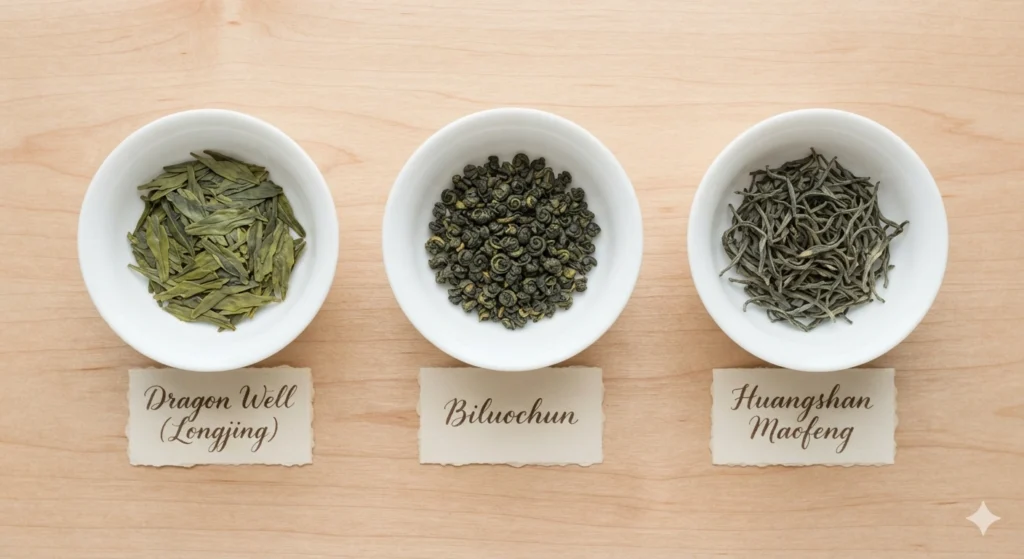
Longjing belongs to the Chinese green tea family, but its flavor profile is very different from many other green teas.
| Tea | Processing | Flavor |
|---|---|---|
| Longjing | Pan-fired | Chestnut, sweet, smooth |
| Biluochun | Pan-fired | Floral, fruity, delicate |
| Huangshan Maofeng | Pan-fired | Fresh, light, clean |
| Sencha | Steamed | Vegetal, grassy, umami |
The defining feature of Longjing is its pan-firing process.
Instead of steaming the leaves like Japanese green tea, Chinese tea makers heat the leaves in a wok. This creates the roasted chestnut aroma and smooth texture that make Dragon Well unique.
Why Chinese Dragon Well Tea Remains Popular Today
Longjing has survived for centuries because it balances tradition and accessibility.
It has the history of a famous Chinese tea, but it is not difficult to enjoy. You do not need advanced brewing skills or expensive equipment. A simple glass, good water, and a few minutes are enough.
For many people, Longjing represents a different way of drinking tea.
It is not about intensity.
It is about clarity.
A cup in the morning brings gentle energy. A cup in the afternoon creates a quiet pause. The tea fits naturally into everyday life while carrying centuries of craftsmanship behind every leaf.
Frequently Asked Questions
Is Chinese Dragon Well tea the same as Longjing tea?
Yes. Dragon Well tea is the English translation of Longjing tea. Both names refer to the same famous Chinese green tea.
Is West Lake Longjing worth the price?
West Lake Longjing offers historical significance and often excellent quality, but it is not the only good option. High-quality Zhejiang Longjing can provide excellent flavor at a lower price.
What is the difference between Mingqian and Yuqian Longjing?
Mingqian Longjing is harvested earlier and has a more delicate, refined flavor. Yuqian Longjing is harvested later and offers a fuller taste with better value for everyday drinking.
How much does real Dragon Well tea cost?
Quality Dragon Well tea usually ranges from around $40–80 per 50g for good daily tea. Premium West Lake Mingqian Longjing can cost much more.
How should beginners drink Dragon Well tea?
Beginners should start with a good-quality Yuqian Longjing or mid-grade Longjing. It provides the classic Dragon Well flavor without the high price of premium teas.
Chinese Dragon Well tea is more than a famous name. It is a combination of place, craftsmanship, and centuries of tea culture. At Tea Passage, we focus on selecting Longjing that offers authentic flavor, clear sourcing, and a tea experience that fits naturally into everyday life.