Quick Answer
Da Hong Pao is graded into Special Grade, First Grade, and Second Grade under the Wuyi Rock Tea grading system. The grades are based on sensory characteristics such as leaf appearance, aroma, taste, liquor color, and infused leaf quality. Special Grade represents the highest benchmark within this classification, but that does not automatically make it the best choice for every tea drinker. Roasting level, cultivar, growing environment, craftsmanship, storage, and personal taste also shape the final cup.
A grade tells you how a tea compares with a defined standard. It does not tell you whether you will enjoy drinking it. For Da Hong Pao, that difference matters.
What Are the Grades of Da Hong Pao?
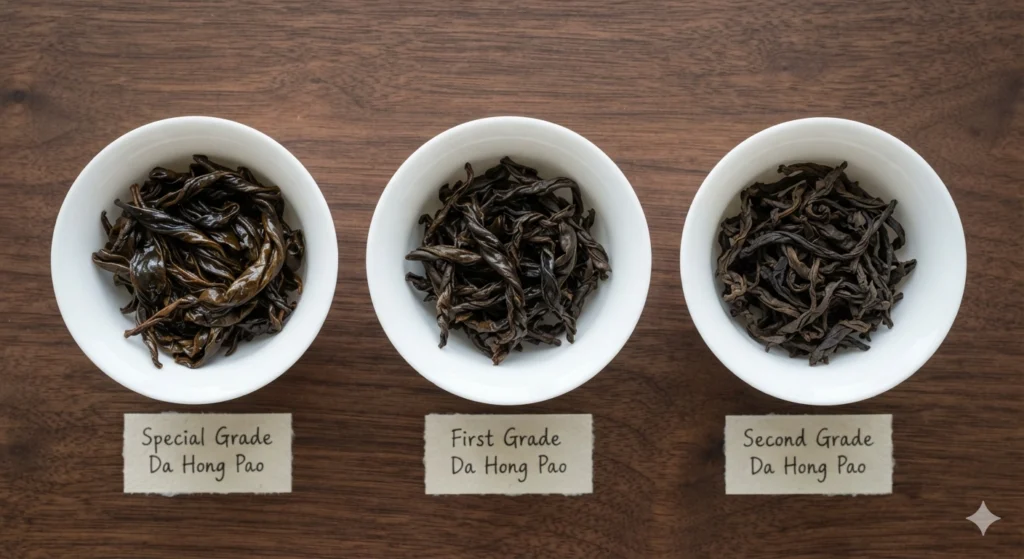
According to the Wuyi Rock Tea national standard, Da Hong Pao is divided into three grades: Special Grade (特级), First Grade (一级), and Second Grade (二级). The grading system uses physical reference samples to give producers and inspectors a consistent benchmark for each level.
The 2026 revision of the national standard (GB/T 18745—2026) refines the grading framework further. It describes eight sensory dimensions for each level and introduces quantified parameters for key processing steps, including withering and kill-green temperatures. The revised standard also includes a minimum tea polyphenol content of 12.0% as a measurable quality indicator.
These grades are best understood as classifications rather than rankings of enjoyment.
A Special Grade tea is expected to match a more demanding sensory profile. That does not mean every drinker will prefer it to a First Grade tea. The grading system tells you how the tea was classified; your palate decides how much you enjoy it.
How Is Da Hong Pao Graded?
Da Hong Pao grading is based on sensory evaluation across eight dimensions. They can be grouped into two broad areas: appearance (外形) and internal quality (内质).
Appearance
The dry leaves are evaluated for:
- 条索 (Leaf shape): how tightly and evenly the leaves are twisted, including their weight and substance
- 整碎 (Integrity): how complete and uniform the leaves are
- 净度 (Cleanliness): the presence or absence of stems, dust, and foreign matter
- 色泽 (Color): the tone and luster of the dry leaves
Internal Quality
The brewed tea is evaluated through:
- 香气 (Aroma): the intensity, clarity, and persistence of the fragrance
- 滋味 (Taste): the tea’s thickness, sweetness, and aftertaste
- 汤色 (Liquor color): the clarity and brightness of the infusion
- 叶底 (Infused leaf): the softness, color, and uniformity of the spent leaves
These categories explain why judging Da Hong Pao involves more than looking at the dry leaves.
A tea may have attractive leaves, but its aroma could be flat. Another may have excellent fragrance but lack body or persistence. The grading process considers these characteristics together.
The 2026 revision also provides separate sensory tables for Da Hong Pao, Shui Xian, Rou Gui, and Qi Zhong. This makes the criteria more specific to each tea rather than treating every Wuyi Rock Tea as though it followed exactly the same profile.
Da Hong Pao Special Grade vs First Grade vs Second Grade
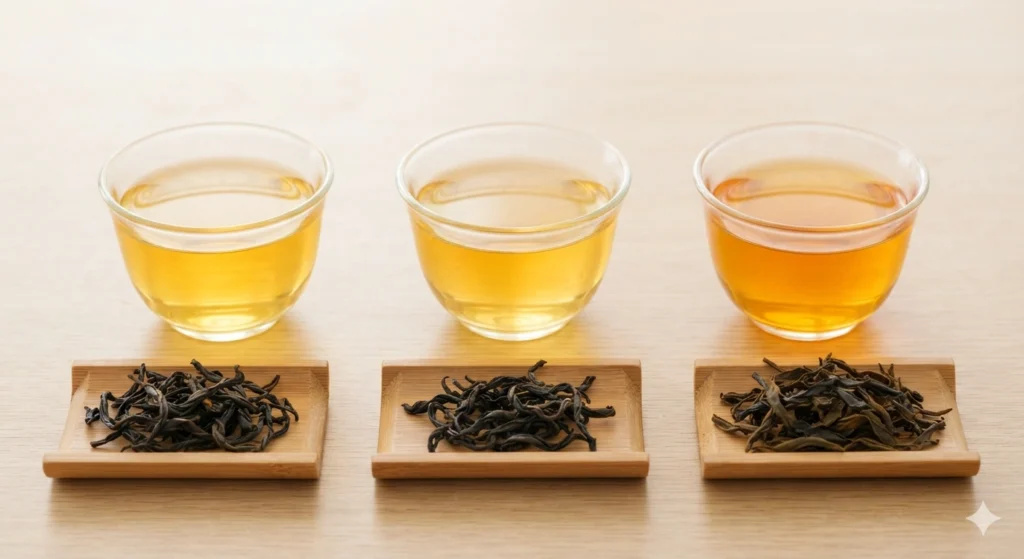
The differences between the grades are defined through specific sensory requirements. The table below summarizes the main distinctions.
| Dimension | Special Grade | First Grade | Second Grade |
|---|---|---|---|
| Leaf Shape | Tightly twisted, heavy, substantial | Tightly twisted, relatively heavy | Relatively tightly twisted |
| Integrity | Uniform | Uniform | Relatively uniform |
| Cleanliness | Clean | Clean | Relatively clean |
| Color | Dark brown, oily luster | Dark brown, relatively oily | Dark brown, somewhat moist |
| Aroma | Rich and lasting, varietal fragrance prominent | Strong and relatively lasting, varietal fragrance noticeable | Relatively rich, varietal fragrance present |
| Taste | Mellow, sweet, and refreshing | Mellow and refreshing | Mellow and mild |
| Liquor | Golden yellow, clear and bright | Golden yellow, bright | Deep orange-yellow, somewhat bright |
| Infused Leaf | Soft, bright, uniform | Soft, relatively bright, uniform | Somewhat soft and bright, relatively uniform |
Source: Sensory requirements for Da Hong Pao, Wuyi Rock Tea national standard
The differences are mainly differences in intensity, clarity, and consistency, rather than completely different kinds of tea.
Special Grade sits at the top of the classification and is expected to show a richer aroma, fuller taste, and brighter liquor. First Grade is slightly less pronounced across these characteristics, while Second Grade sits another step lower in the sensory scale.
What the table cannot tell you is how each tea will feel to you.
A Special Grade Da Hong Pao with a roast profile you dislike may be less enjoyable than a First Grade tea that suits your palate. Likewise, a well-stored First Grade tea can offer much more than its label suggests.
Grade describes the tea against a standard. It does not describe your personal experience of drinking it.
Does Higher Grade Da Hong Pao Taste Better?
Not necessarily.
A higher grade means the tea more closely matches the sensory requirements defined for that grade. The leaves may be more consistent, the aroma more pronounced, and the taste more developed within the standard’s criteria.
But tea preference is personal.
A drinker who prefers lighter, more delicate flavors may find an intense Special Grade Da Hong Pao less appealing. Someone who enjoys deeper roast and stronger body may want exactly that intensity. Another drinker may prefer a well-made First Grade tea because it feels more balanced and approachable for everyday drinking.
Storage and brewing also matter.
A high-grade tea that has been exposed to heat, moisture, or strong odors can lose much of the aroma that made it attractive in the first place. Meanwhile, a well-kept First Grade tea can remain expressive and satisfying.
The label reflects the tea’s classification. It does not tell you everything that happened to the tea afterward.
For that reason, the best grade is not automatically the highest grade. The best choice is the grade that matches the way you like to drink Da Hong Pao.
Does Da Hong Pao Grade Affect Price?
Higher grades often command higher prices because they require more selective leaf material and must meet stricter sensory benchmarks.
That can mean lower yields and more careful handling during production. When a tea consistently meets the highest standards for appearance, aroma, taste, and other sensory qualities, the market may place a premium on it.
Still, price should not be treated as a shortcut for judging quality.
A famous origin, limited supply, reputation, or market positioning can all raise the price of a tea. These factors may matter, but they do not guarantee that the tea will taste better to you.
A well-made First Grade Da Hong Pao from a transparent seller may offer more value for everyday drinking than an expensive Special Grade tea that does not match your preferences.
Grade and price provide useful information. Neither replaces tasting.
Grade vs Roast: Are They the Same?
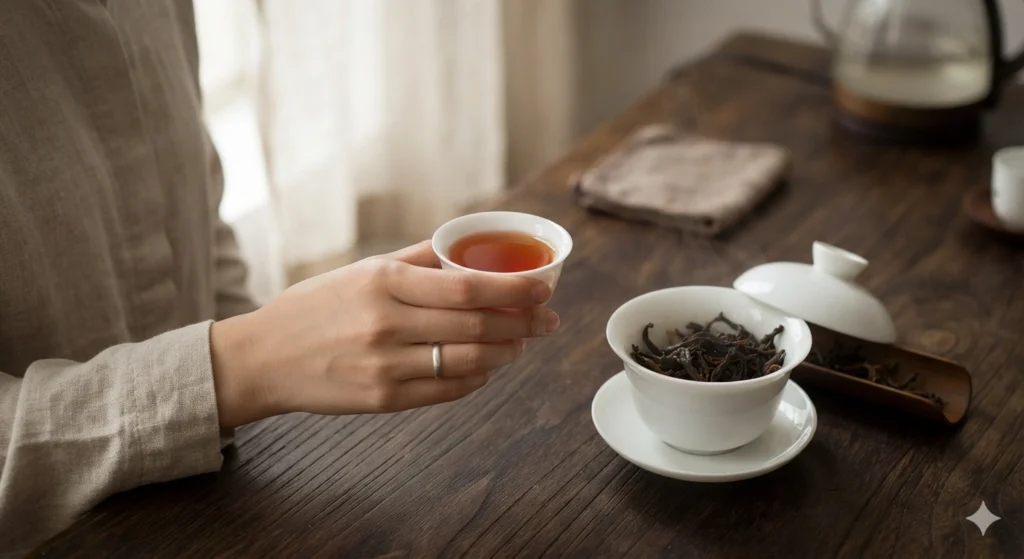
No. Grade and roasting level describe two different things.
Grading evaluates the tea against a sensory standard. It considers characteristics such as appearance, aroma, taste, liquor, and infused leaf quality.
Roasting is a processing choice.
The roast influences the final aroma, color, flavor, and texture of the tea, but it is not the same thing as the grade. The national standard defines roasting parameters in terms of processing conditions, including different roast levels.
A heavily roasted Da Hong Pao is therefore not automatically a higher-grade tea. Likewise, a lightly roasted tea is not automatically lower grade.
You can have a high-grade tea with a more developed roast and another high-grade tea with a lighter profile. The important question is whether the tea performs well within its intended style.
This distinction is especially useful when shopping. Do not use darkness as a shortcut for quality.
Grade vs Shan Chang: Which Matters More?
Grade and shan chang (山场), or growing environment, describe different aspects of a Wuyi Rock Tea.
In Wuyi, tea-growing areas are often discussed in terms of Zhengyan (正岩, core rock area), Banyan (半岩, surrounding rock area), and Zhoucha (洲茶, outer or flatter growing areas).
The growing environment can influence the tea’s character. Soil, landscape, climate, and local conditions all contribute to how the finished tea develops.
Zhengyan teas are traditionally associated with stronger mineral character and greater depth, but shan chang alone does not guarantee quality.
A poorly processed tea from a prestigious area can still disappoint. A carefully made tea from a less prestigious area can produce an excellent cup.
That is why grade and shan chang should not be treated as competing labels.
One tells you about the tea’s sensory classification. The other tells you about where the tea was grown.
Both can matter, but neither tells the whole story on its own.
How To Choose a Da Hong Pao Grade
Beginners do not need to start with Special Grade.
A well-made First Grade Da Hong Pao can be a practical starting point because it offers a clear introduction to the style without requiring the higher price that often comes with the top classification.
It also gives you a chance to learn what you actually enjoy.
Do you like a stronger roast? Do you prefer a smoother cup with less intensity? Are you more interested in mineral depth, aroma, sweetness, or a long finish?
Once you know those preferences, the grade becomes more useful.
A Special Grade may suit you when you want a more pronounced aroma and fuller sensory profile. A First Grade can be a comfortable choice for regular drinking. Second Grade can also be worth exploring when price and everyday use matter more than chasing the highest classification.
Rather than buying the highest grade immediately, start with a smaller amount and brew the tea several times.
Smell the dry leaves. Warm them in a gaiwan. Taste the first infusion, then return for the second and third.
That is where the label starts to become meaningful.
How To Taste Da Hong Pao Beyond the Grade
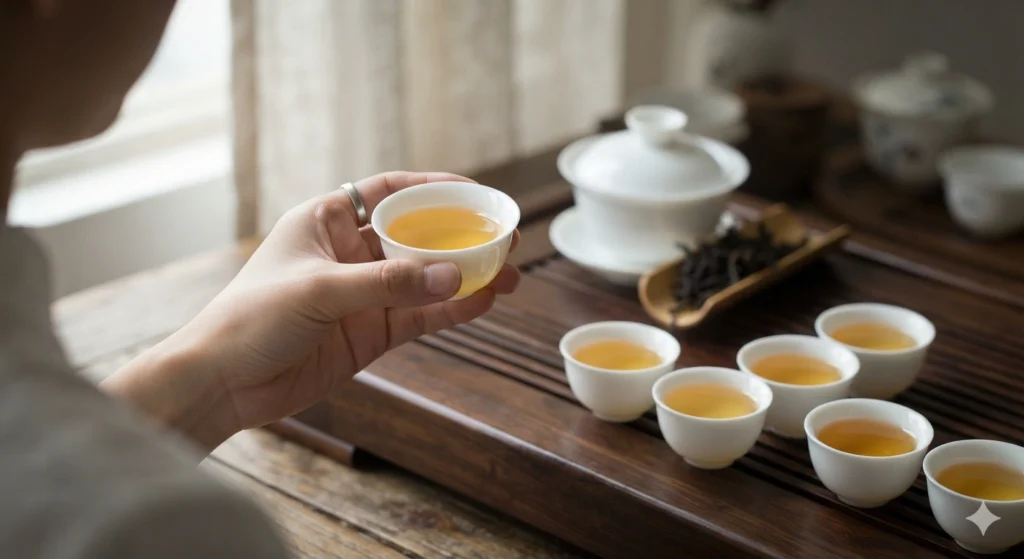
A grade label can tell you how the tea was classified. It cannot tell you how that tea will actually develop in your cup.
The best way to understand Da Hong Pao is to slow down and taste it.
Start with the dry leaves. Look at their shape, color, and luster. Well-made Da Hong Pao typically has tightly twisted, dark leaves with a natural sheen. Rather than looking for perfect uniformity, notice whether the tea appears clean, intact, and carefully processed.
Then warm the leaves.
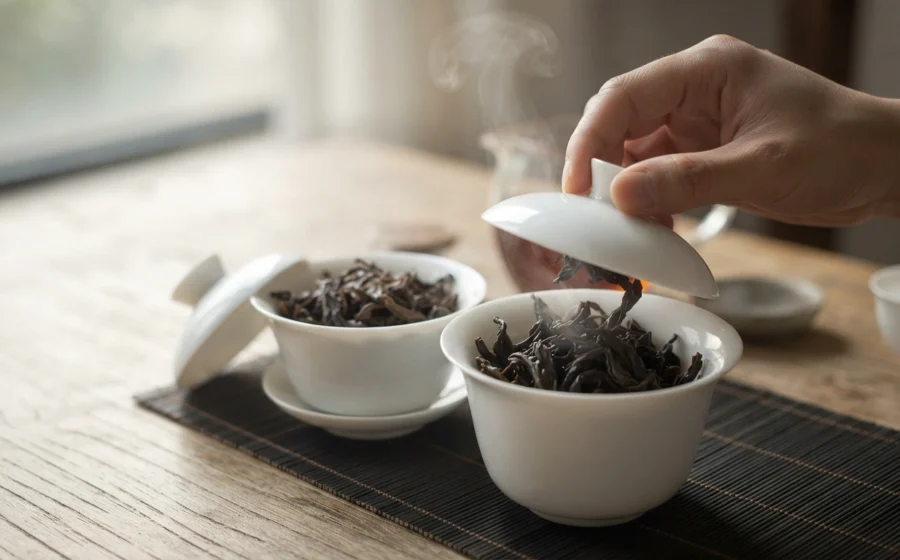
Pour hot water into your gaiwan, discard it, and add the dry tea. Close the lid for a few seconds before opening it again. The warmth can bring out aromas that are difficult to notice from the dry leaves alone.
You may find toasted nuts, dark cocoa, wood, or warm mineral notes. What matters most is whether the aroma feels clean, natural, and connected to the tea rather than dominated by the roast.
Taste the First Infusion
For a Gongfu-style tasting, you can start with water around 95–100°C and a short first steep of about 10–15 seconds.
Pour the tea completely into your cup or fairness pitcher, then take a moment to smell it before drinking.
The first infusion often gives you the clearest impression of the roast and aroma. A well-made Da Hong Pao should feel rounded rather than aggressively roasted, with depth underneath the initial roast character.
Notice the texture as much as the flavor.
Does the tea feel smooth? Does it fill the mouth? Does a mineral character remain after you swallow? Does sweetness begin to appear?
Pay Attention to the Finish
The finish can reveal qualities that are easy to miss during the first sip.
After swallowing, wait a few seconds.
Notice whether the aroma remains in the mouth, whether sweetness returns toward the throat, and whether the tea leaves a clean, refreshed feeling.
A good Da Hong Pao does not have to taste overwhelmingly strong. Depth and persistence can be more important than intensity.
This is especially useful when comparing teas of different grades. A more expensive tea may have greater aromatic intensity, while another tea may offer a smoother texture and longer finish that you personally prefer.
Taste the Second Infusion
The second infusion is often where the tea becomes more interesting.
As the leaves open further, the roast may soften and allow more of the underlying tea character to come forward. Mineral, woody, fruity, or sweet notes may become easier to notice.
Compare it with the first infusion.
Did the aroma change? Did the texture become fuller? Did the sweetness become more obvious?
This is one reason we prefer tasting loose leaf tea over judging it from a package description. The tea is not static. It changes as the leaves open.
Taste the Third Infusion
Continue to a third infusion.
A well-made Da Hong Pao should still have character. It may become softer and sweeter, while the roasted and mineral qualities settle into the background.
You do not need to force a tea through as many infusions as possible. What matters is whether the leaves continue to give you something worth noticing.
The point of this tasting is not to prove that one grade is superior to another.
It is to understand how the tea behaves in the cup.
The grade tells you how the tea was classified. The tasting tells you what you actually have.
Frequently Asked Questions
What are the grades of Da Hong Pao?
Da Hong Pao is classified into Special Grade, First Grade, and Second Grade under the Wuyi Rock Tea grading system.
How is Da Hong Pao graded?
The grading system evaluates eight sensory dimensions: leaf shape, integrity, cleanliness, color, aroma, taste, liquor color, and infused leaf characteristics.
What is the difference between Special Grade and First Grade Da Hong Pao?
Special Grade is expected to show a richer and more lasting aroma, fuller taste, and brighter liquor. First Grade is slightly less pronounced across these characteristics while still meeting its own quality requirements.
Does higher-grade Da Hong Pao taste better?
Not necessarily. A higher grade means the tea more closely matches the standard for that classification. Your preference will also depend on roast level, growing environment, processing, storage, and brewing.
Is darker roast a higher grade?
No. Roast level and grade are different concepts. A tea can be lightly or heavily roasted without that determining its grade.
Does grade affect the price of Da Hong Pao?
Higher grades often cost more because of more selective leaf material and stricter quality requirements. However, price also reflects origin, scarcity, reputation, and market positioning.
What grade of Da Hong Pao should beginners buy?
Beginners do not need to start with Special Grade. A well-made First Grade tea can be a practical introduction to the style and a good choice for everyday drinking.
Does shan chang matter more than grade?
Neither tells the whole story. Shan chang describes the growing environment, while grade describes how the finished tea matches a defined sensory standard. Both can influence how the tea is understood and valued.
A grade tells you how a tea was classified. It cannot tell you what the tea will do in your cup.
At Tea Passage, we believe the best way to understand Da Hong Pao is to look at the leaves, warm them, breathe in the aroma, and taste slowly. Pay attention to the texture, the finish, and the way the tea changes from the first infusion to the second and third.
The grade is a starting point. The cup is the conversation.
References and Sources
- GB/T 18745—2026: Geographical Indication Product Quality Requirements — Wuyi Rock Tea — The revised national standard for Wuyi Rock Tea, effective April 2027. Establishes eight sensory dimensions for Da Hong Pao, Shui Xian, Rou Gui, and Qi Zhong grades; quantifies withering and kill-green temperatures; sets a minimum tea polyphenol content of 12.0%; and defines Da Hong Pao as a blend of asexually propagated Wuyi Rock Tea cultivars.
- Sensory Requirements Table for Da Hong Pao — Wuyi Rock Tea National Standard — Detailed sensory evaluation criteria for Special Grade, First Grade, Second Grade, and Third Grade Da Hong Pao across leaf shape, integrity, cleanliness, color, aroma, taste, liquor color, and infused leaf characteristics.
- Wuyi Rock Tea National Standard and Production Area Division — Provides the standard sample grading system for Wuyi Rock Tea, including the division of Da Hong Pao into Special, First, and Second Grades, and explains the role of physical standard samples in quality assessment.
- National Standard Project — Geographical Indication Product Quality Requirements: Wuyi Rock Tea — Official record of the national standard revision project, including scope, drafting units, and key revisions such as the addition of aged tea terminology and sensory indicators.