Most people know jasmine tea by its fragrance.
The soft floral aroma arrives before the first sip — sweet, fresh, and instantly recognizable. But behind that familiar scent is a place with centuries of history.
For generations, Fujian has been the heart of Chinese jasmine tea production. It is where tea makers developed and refined the traditional scenting process that defines authentic jasmine tea today.
Fujian did not become famous because it produced the most jasmine flowers. Its reputation comes from something more difficult to create: the ability to bring tea leaves and jasmine blossoms together in perfect balance.
Understanding Fujian jasmine tea means understanding the relationship between the leaf, the flower, and the patient craft behind every cup.
Why Is Fujian Famous For Jasmine Tea?

Fujian’s reputation for jasmine tea comes from two things: its natural environment and its tea-making tradition.
The region provides ideal conditions for both tea and jasmine. The mountains of Fujian produce high-quality tea leaves, while the warmer lowland areas support jasmine cultivation. The combination of these landscapes created the foundation for jasmine tea production.
But geography alone does not explain Fujian’s importance.
The real difference lies in the scenting process.
Traditional jasmine tea production requires fresh jasmine blossoms to be layered with green tea leaves during the night, when the flowers naturally open and release their strongest fragrance.
Tea makers must carefully manage every stage:
- When the jasmine buds are harvested
- When the flowers begin opening
- How thick the tea and flowers are layered
- How long the scenting process continues
This process requires experience and patience. The fragrance cannot simply be added afterward. It must be slowly absorbed by the tea leaf.
This is the reason Fujian became known as the birthplace of traditional Chinese jasmine tea.
The History Of Fujian Jasmine Tea
Jasmine flowers were introduced to China through ancient trade routes and became widely cultivated in southern China over time. Originally valued for their fragrance and beauty, jasmine flowers were eventually paired with tea leaves to create scented teas.
During the Ming Dynasty, tea makers began developing techniques for combining fresh flowers with tea leaves. Although the concept was simple, achieving a balanced aroma required careful control of timing, temperature, and drying.
Over generations, Fujian tea makers refined this method.
By the Qing Dynasty, Fuzhou had become one of the most important jasmine tea production centers in China. Fuzhou jasmine tea gained recognition both domestically and internationally, becoming one of the Chinese teas introduced to overseas markets.
The history of Fujian jasmine tea is not only about creating a scented tea. It is about refining a relationship between flower and leaf — allowing the fragrance of jasmine to become part of the tea rather than simply resting on the surface.[history of Chinese jasmine tea]
Fuzhou Jasmine Tea: The Traditional Heart Of Jasmine Tea Production

Within Fujian, Fuzhou holds a special position in jasmine tea history.
For centuries, Fuzhou has been recognized as the traditional center of jasmine tea production. The city’s climate, nearby jasmine-growing areas, and experienced tea makers created the conditions needed for this craft to develop.
Fuzhou jasmine tea is known for balance.
The jasmine aroma is usually elegant rather than overwhelming. Instead of a strong perfume-like fragrance, a well-made Fuzhou jasmine tea offers a softer floral character supported by the natural sweetness of the green tea base.
Traditional production often relies on detailed handwork and experience. Tea makers understand how jasmine flowers behave throughout the night and adjust the process according to the condition of each batch.
This knowledge is difficult to replace with machines.
For this reason, Fuzhou jasmine tea remains closely connected with traditional Chinese tea craftsmanship.
How Fujian Jasmine Tea Is Made
The production of Fujian jasmine tea follows a traditional seasonal process that takes months to complete.
1. Preparing The Green Tea Base
The process begins in spring.
Fresh green tea leaves are harvested, fixed to prevent oxidation, shaped, and dried. The finished green tea is then stored until summer, when jasmine flowers reach their blooming season.
The quality of the tea base is essential. Jasmine can add fragrance, but it cannot improve poor-quality tea leaves.
2. Harvesting Fresh Jasmine Flowers
Jasmine buds are usually picked during the day before they fully open.
The flowers are carefully stored and prepared until evening, when they naturally release their strongest aroma.
Timing is critical because jasmine fragrance changes quickly after the flowers open.
3. Jasmine Scenting
At night, fresh jasmine flowers are layered with green tea leaves.
During several hours of contact, the tea leaves absorb the natural fragrance released by the blossoms.
The next morning, the spent flowers are removed, and the tea is dried.
4. Repeating The Scenting Process
Premium Fujian jasmine tea may go through multiple scenting rounds.
Each round uses fresh jasmine flowers and adds another layer of fragrance.
High-quality teas may be scented five, six, or even seven times. The result is a tea with a natural aroma that remains present across multiple infusions.
This is the signature characteristic of traditional Fujian jasmine tea.
Fujian Jasmine Tea vs Guangxi Jasmine Tea

Fujian and Guangxi are two of the most important regions connected with Chinese jasmine tea production.
They represent different styles and traditions.
| Aspect | Fujian Jasmine Tea | Guangxi Jasmine Tea |
|---|---|---|
| Main Role | Traditional jasmine tea craftsmanship | Major jasmine flower production |
| Production Style | Smaller-scale, traditional methods | Large-scale production |
| Aroma Style | Elegant, balanced, layered | Fuller, stronger floral aroma |
| Character | Refined and subtle | Bold and approachable |
| Known For | Fuzhou jasmine tea tradition | Hengxian jasmine flower production |
Fujian jasmine tea is often appreciated for elegance and balance. The jasmine fragrance blends with the tea rather than dominating it.
Guangxi jasmine tea benefits from abundant jasmine cultivation and is often known for a stronger floral character.
Neither region is automatically better.
They simply represent different expressions of jasmine tea.
What Makes Authentic Fujian Jasmine Tea Different?
Not every tea labeled “Fujian jasmine tea” is made using traditional methods.
Several factors help identify a higher-quality tea.
Traditional Jasmine Scenting
Authentic Fujian jasmine tea is scented with fresh jasmine blossoms.
The aroma should feel natural and layered, not sharp like perfume or artificial fragrance.
Quality Green Tea Base
The jasmine fragrance should support the tea, not hide it.
Good jasmine tea begins with good green tea leaves that provide sweetness, body, and a clean finish.
Multiple Scenting Rounds
Repeated scenting creates a deeper and longer-lasting aroma.
A tea scented multiple times usually has a more complex fragrance that develops across different infusions.
Clear Origin Information
A trustworthy jasmine tea should clearly state its origin.
Information such as Fujian, Fuzhou, or specific production areas helps buyers understand where the tea comes from.
Famous Fujian Jasmine Tea Styles
Fujian produces several famous styles of jasmine tea.
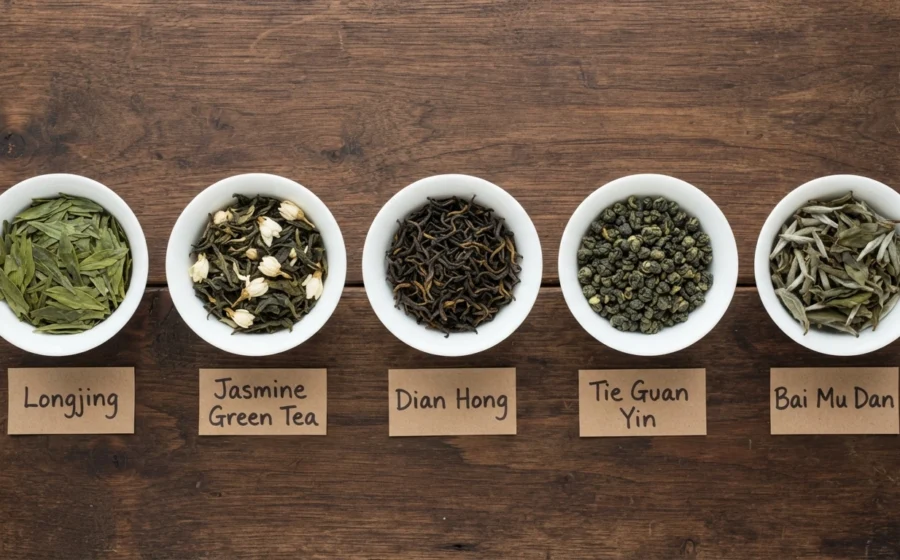
Jasmine Green Tea
This is the classic style most people associate with jasmine tea.
The leaves remain in their natural shape after scenting, creating a balanced tea suitable for everyday drinking.
Best for: Daily tea drinking and beginners.
Jasmine Dragon Pearls
Jasmine Dragon Pearls are hand-rolled into small round shapes.
The pearls slowly open during brewing, releasing layers of fragrance over multiple infusions.
Best for: Gongfu brewing, gifts, and tea rituals.
Jasmine Silver Needle
Jasmine Silver Needle is made from young tea buds.
It has a delicate body, refined sweetness, and an elegant floral aroma.
Best for: Premium tea experiences and quiet moments.
| Style | Character | Best For |
|---|---|---|
| Jasmine Green Tea | Balanced, floral, smooth | Everyday drinking |
| Jasmine Dragon Pearls | Layered, elegant, aromatic | Gongfu brewing and gifts |
| Jasmine Silver Needle | Delicate, refined, sweet | Premium experience |
How To Choose Fujian Jasmine Tea

Choosing good Fujian jasmine tea does not need to be complicated.
Check The Origin
Look for clear information about where the tea was produced.
Fuzhou jasmine tea has a particularly strong connection with traditional jasmine tea craftsmanship.
Look At The Leaves
High-quality jasmine tea usually contains whole leaves rather than excessive broken pieces.
A few jasmine petals are normal, but many petals do not necessarily mean better quality.
The fragrance should come from the tea leaf itself.
Smell The Aroma
A good jasmine tea should smell fresh, floral, and natural.
Avoid teas with a strong perfume-like or artificial scent.
Brew And Taste
A quality Fujian jasmine tea should remain enjoyable across multiple infusions.
The fragrance may soften over time, but it should not disappear immediately after the first cup.
If you’d like to learn how to select jasmine green tea, you can click the link to find out.:how to choose the [best authentic jasmine tea]
Frequently Asked Questions
Is Fujian jasmine tea the best jasmine tea?
Fujian is one of the most respected origins for traditional jasmine tea, especially Fuzhou jasmine tea. However, quality depends on the tea leaves, scenting process, and craftsmanship rather than location alone.
What is the difference between Fujian jasmine tea and regular jasmine tea?
Traditional Fujian jasmine tea is scented with fresh jasmine blossoms through a repeated scenting process. Many commercial jasmine teas use simpler methods or artificial flavoring.
Why is Fuzhou famous for jasmine tea?
Fuzhou developed a long tradition of jasmine tea production and became known for refining the technique of scenting green tea with fresh jasmine flowers.
Is all jasmine tea from Fujian?
No. Jasmine tea is also produced in regions such as Guangxi. Fujian is famous for its traditional craftsmanship, while Guangxi is one of the world’s largest jasmine-growing areas.
Is Fujian jasmine tea naturally scented?
Traditional Fujian jasmine tea is naturally scented by layering fresh jasmine blossoms with tea leaves. The fragrance comes from the interaction between flower and leaf rather than added flavoring.
Fujian jasmine tea is more than a fragrant cup of tea.
It represents centuries of patience, seasonal rhythms, and the careful relationship between jasmine flowers and green tea leaves.
At Tea Passage, we select jasmine teas that respect this traditional approach — teas where the floral aroma comes from the leaf itself, created through time, craftsmanship, and careful attention.