You open the bag of Dancong tea and immediately notice the aroma.
The dry leaves already smell floral and complex. However, when you brew the tea for the first time, the result may not match your expectations.
The fragrance disappears. The tea tastes too strong, slightly bitter, or simply flat.
This is a common experience with Phoenix Dancong.
Dancong is one of the most aromatic oolong teas, but it also requires a little more attention during brewing. The good news is that once you understand the basics — water temperature, tea amount, and steeping time — it becomes much easier to enjoy.
This guide explains how to brew Dancong tea at home and bring out its floral aroma, sweetness, and smooth texture.
What Makes Dancong Tea Different From Other Oolong Teas?
Dancong tea has a unique character among oolong teas.
It comes from Phoenix Mountain in Guangdong, China, and is famous for its natural floral aromas. Varieties such as Duck Shit Oolong (Ya Shi Xiang), Honey Orchid (Mi Lan Xiang), and other Phoenix Dancong teas are known for their fragrance and layered flavors.
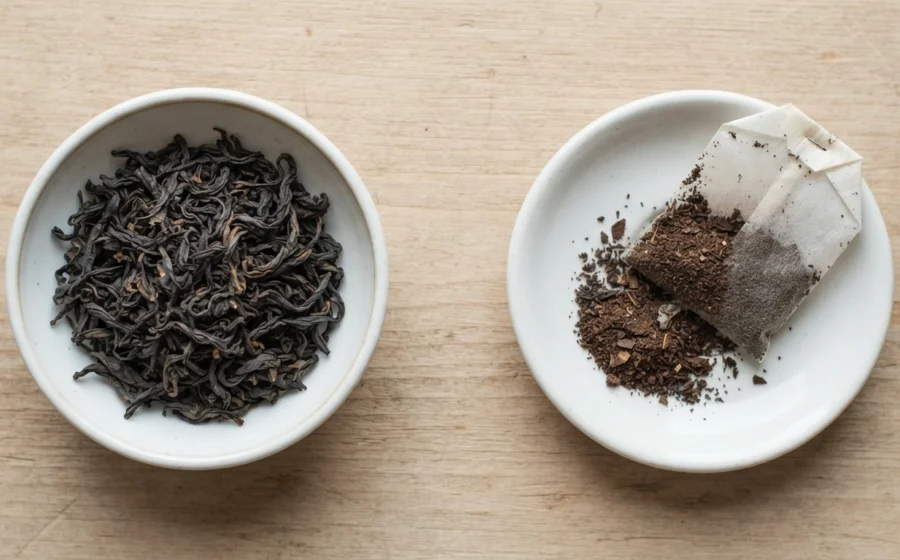
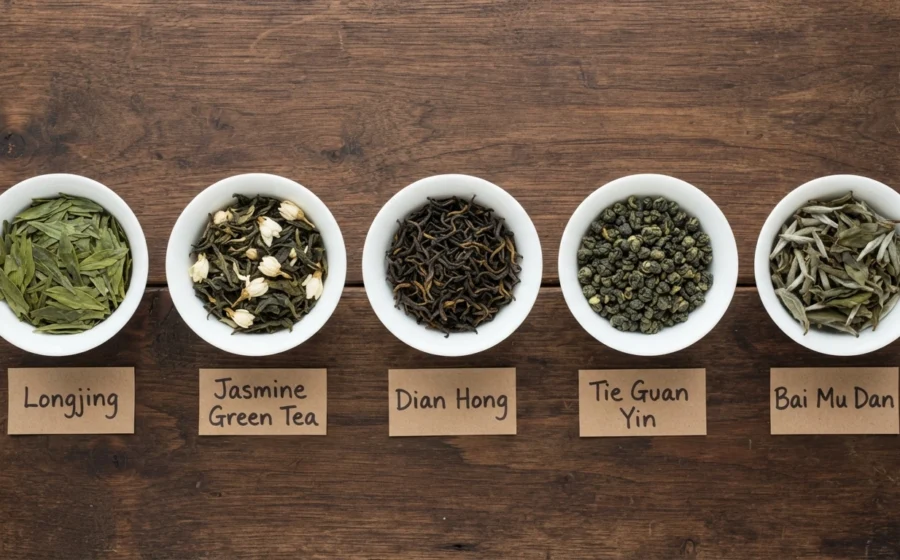
The leaves are long and twisted, unlike tightly rolled oolongs such as Tie Guan Yin.
Because of this shape, Dancong releases its flavors gradually. Each infusion can reveal something different:
- the first cups highlight aroma
- the middle infusions bring out sweetness and texture
- later infusions reveal softer mineral notes
This is why Dancong is usually brewed with multiple short infusions instead of one long steep.
Another important difference is water temperature.
Many delicate green teas require cooler water. Dancong is different. The tightly twisted leaves need higher temperatures to fully release their aromatic compounds.
Hot water helps unlock:
- orchid-like floral notes
- honey sweetness
- fruity aromas
- mineral depth
When brewed correctly, Dancong should feel expressive but balanced.
Best Tea Ware For Brewing Dancong Tea
The brewing vessel can influence how your Dancong tastes.
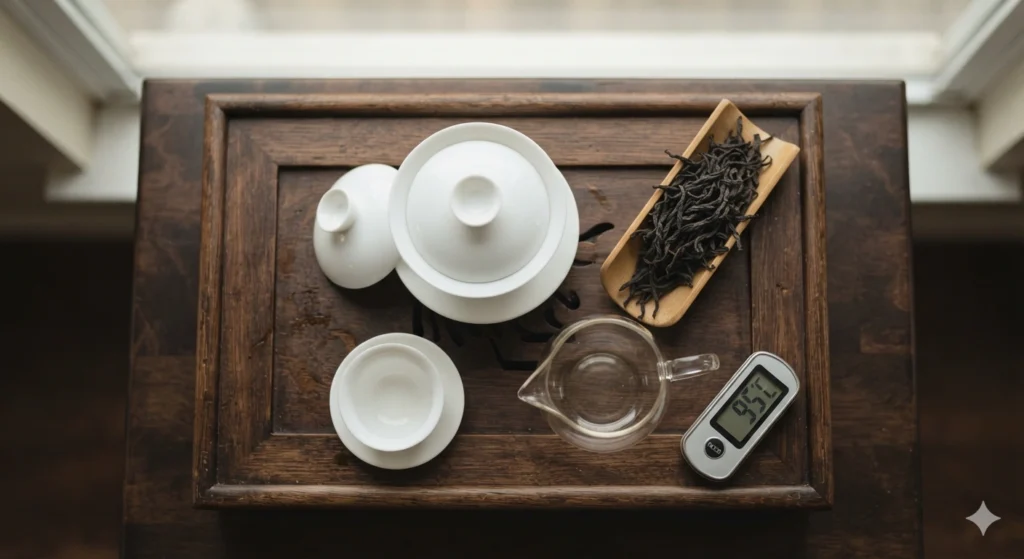
For beginners, a gaiwan is usually the best choice.
A porcelain gaiwan allows you to:
- control steeping time easily
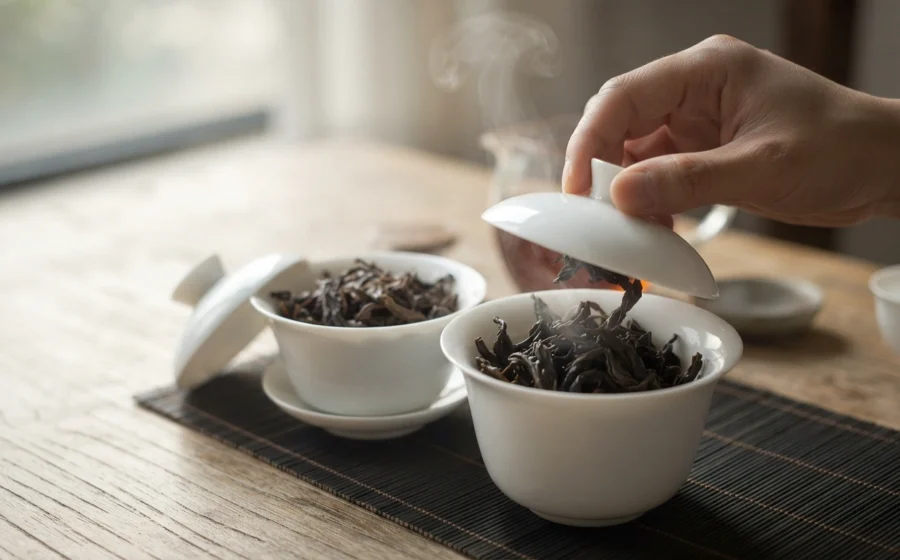
- observe the leaves as they open
- experience the aroma clearly
A 100–120ml gaiwan works well for most Gongfu brewing sessions.
A small Yixing clay teapot is another good option, especially for experienced tea drinkers who regularly drink Dancong.
Over time, the clay can develop a relationship with the tea and create a softer, rounder texture.
However, if you are still learning, a gaiwan is more practical because it gives you better control.
Large teapots and oversized mugs are less suitable.
Dancong leaves need enough space to expand. When the leaves are crowded, the tea may not release its full aroma.
Dancong Tea Brewing Parameters
Before brewing, it helps to understand the basic numbers.
These are good starting points:
| Brewing Element | Recommendation |
|---|---|
| Tea Amount | 5–8 grams |
| Water Temperature | 95°C–100°C (203°F–212°F) |
| Vessel Size | 100–120ml |
| First Infusion | 5–10 seconds |
| Later Infusions | Increase gradually |
These parameters are designed for Gongfu brewing, the traditional Chinese method that suits Dancong especially well.
The idea is simple:
Use more leaves.
Use hotter water.
Keep each infusion short.
This allows the tea to release its aroma without becoming harsh.
If you prefer Western-style brewing, you can still enjoy Dancong.
Use around 3–4 grams of tea for 250ml of water and steep for about 1–2 minutes. The result will be lighter and less complex, but it can still be enjoyable.
Step-by-Step: How To Brew Dancong Tea
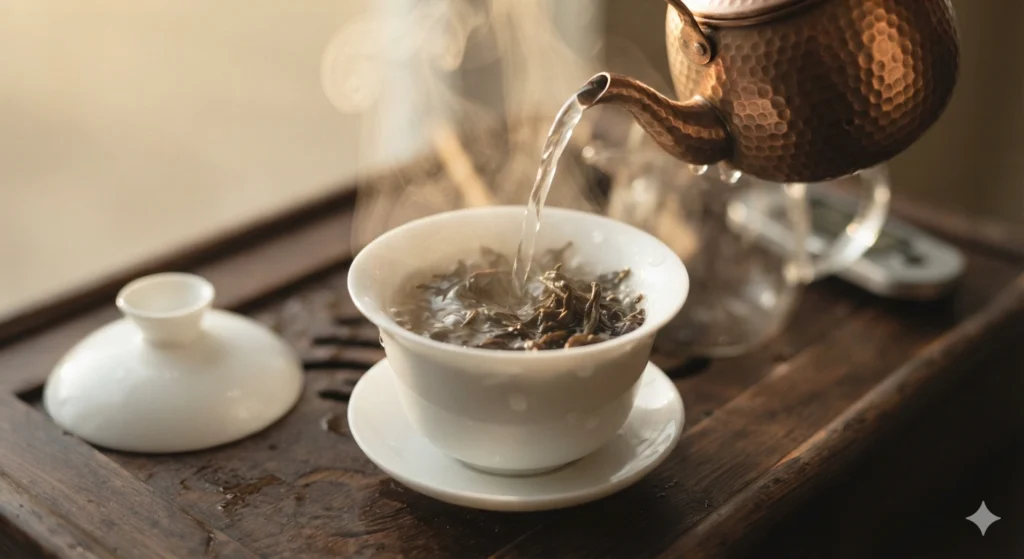
Step 1: Warm Your Teaware
Start by pouring hot water into your gaiwan or teapot.
Let it sit for a few seconds, then discard the water.
This helps warm the vessel and keeps the brewing temperature stable. It also prepares the teaware to receive the dry leaves.
Step 2: Add Dancong Tea Leaves
Add around 5–8 grams of Dancong leaves into your warmed vessel.
At first, the amount may look generous. That is normal.
Dancong is usually brewed with a higher leaf-to-water ratio than many Western teas.
As the leaves absorb water, they will slowly unfold and fill the gaiwan.
The opening leaves are part of the experience. They reveal the craftsmanship behind the tea.
Step 3: Rinse The Tea (Optional)
Some tea drinkers rinse Dancong before the first proper infusion.
To do this:
- Add hot water.
- Pour it out immediately.
- Begin the first real steep.
A quick rinse can remove small particles from the surface and help open the leaves.
However, it is not always necessary.
High-quality Dancong with clean, well-processed leaves can be brewed directly.
Both methods are acceptable. Choose what works best for your tea.
Step 4: First Infusion
For the first infusion, use water around 95°C–100°C.
Steep for about 5–10 seconds.
Then pour the tea out completely.
The first infusion is usually the most aromatic. This is when you will notice the signature Dancong fragrance rising from the cup.
A good first cup should feel:
- fragrant
- smooth
- balanced
If it tastes harsh, the steeping time is probably too long.
Step 5: Adjust Later Infusions
Dancong changes as you continue brewing.
A simple timing guide:
Second infusion:
10–15 seconds
Third infusion:
15–20 seconds
After that, slowly increase the time according to taste.
The flavor develops in stages.
Early infusions usually bring stronger floral aromas.
Middle infusions often become sweeter and fuller.
Later infusions become softer, with gentle sweetness and mineral notes.
This gradual change is one of the reasons people enjoy Gongfu brewing.
You are not drinking the same cup repeatedly.
You are experiencing the tea as it evolves.
How Many Times Can You Steep Dancong Tea?
One of the best things about Dancong tea is how much character remains after the first cup.
A good Phoenix Dancong can usually be steeped 6–10 times. Higher-quality teas, especially those made from older trees or carefully processed leaves, may continue even longer.
However, the experience changes with each infusion.
The first few steeps are usually the most aromatic. This is when the famous floral fragrance appears most clearly.
The middle infusions often become richer:
- sweeter
- smoother
- more balanced
Later infusions are usually softer. The intense fragrance fades slightly, but a gentle sweetness and mineral character remain.
This is why Dancong is not a tea to rush.
The value is not only in the first cup. It is in watching the tea slowly change.
Common Mistakes When Brewing Dancong Tea
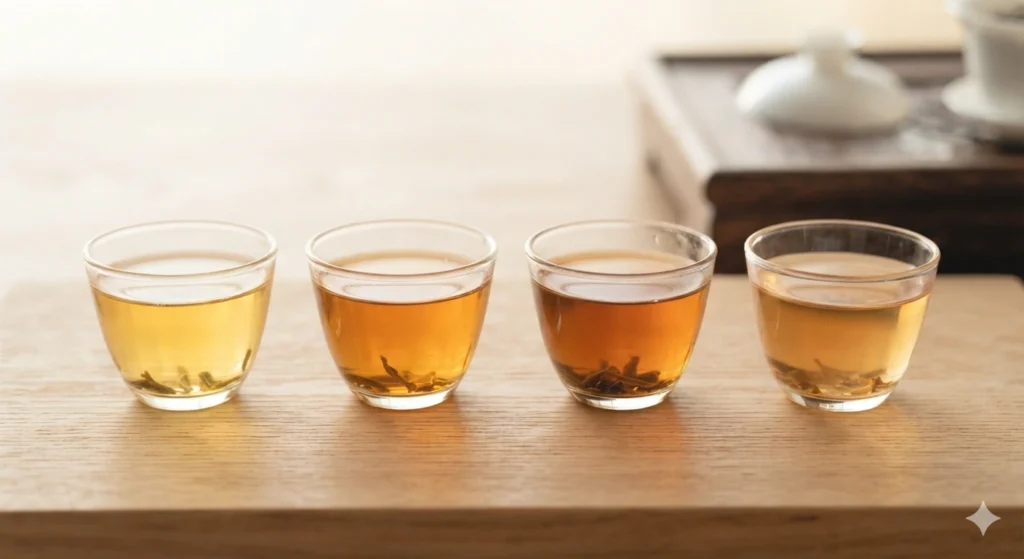
Dancong is not difficult to brew, but a few common mistakes can prevent you from experiencing its best qualities.
Using Water That Is Too Cool
This is probably the most common mistake.
Because Dancong has such a delicate floral aroma, many beginners assume it needs cooler water.
Actually, the opposite is usually true.
Water that is too cool may leave the leaves partially closed. The tea becomes:
- weaker
- less fragrant
- lacking in depth
For most Phoenix Dancong teas, water between 95°C and 100°C works best.
The high temperature helps release the natural aroma stored inside the twisted leaves.
Steeping For Too Long
Many people make the mistake of leaving Dancong in water like black tea.
This usually creates a strong but unpleasant cup.
Long steeping extracts more tannins, which can make the tea taste:
- bitter
- dry
- sharp
Dancong prefers short infusions.
Instead of one long steep, use several quick ones.
A 10-second infusion can often produce a more flavorful cup than a three-minute steep.
Using Too Few Tea Leaves
Another common problem is using too little tea.
Dancong is traditionally brewed with a relatively high leaf-to-water ratio.
If you only use a small amount of leaves in a large mug, the tea may taste thin and lack the fragrance it is known for.
For Gongfu brewing, around 5–8 grams of tea for a 100–120ml vessel is a good starting point.
You can always adjust later depending on your preference.
Brewing Dancong Like Green Tea
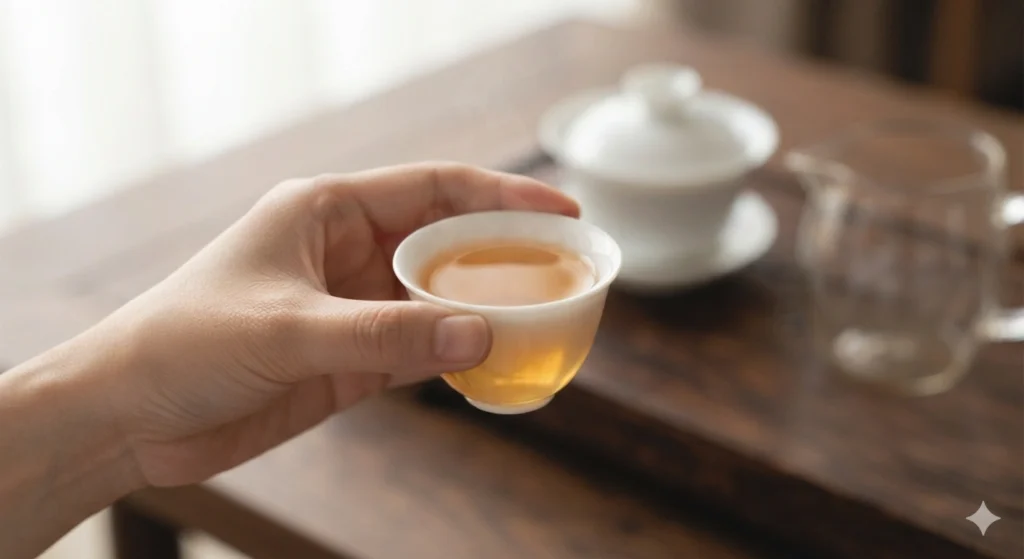
Dancong and green tea require different approaches.
For example:
Longjing tea is often brewed with cooler water to preserve its fresh sweetness.
Dancong needs more heat to reveal its aroma.
Using green tea habits — cooler water, fewer leaves, longer steeping — often results in a disappointing cup.
The tea is not the problem.
The brewing method simply does not match the character of the leaves.
How To Make Dancong Tea Less Bitter
If your Dancong tastes bitter, do not immediately assume the tea is poor quality.
Usually, a small adjustment can solve the problem.
Start with the steeping time.
A few extra seconds can make a big difference, especially during the first few infusions.
Try:
- reducing the first steep by 3–5 seconds
- pouring the tea out more quickly
- avoiding leftover water sitting with the leaves
If the bitterness continues, adjust the leaf amount.
Too many leaves in a small vessel can create a very concentrated cup.
You can also slightly lower the water temperature, but avoid going too low. Dancong still needs heat to express its aroma.
If none of these changes help, the issue may come from the tea itself.
Poor processing or improper storage can create harsh flavors that brewing adjustments cannot completely fix.
A well-made Dancong should have intensity, but it should also have balance.
Dancong Brewing Compared With Other Teas
Different teas have different brewing personalities.
Understanding the differences makes it easier to choose the right method.
| Tea | Water Temperature | Brewing Style |
|---|---|---|
| Dancong | 95°C–100°C | Short Gongfu infusions |
| Longjing | 75°C–85°C | Gentle glass brewing |
| Tie Guan Yin | 90°C–95°C | Floral Gongfu brewing |
| Black Tea | 90°C–95°C | Longer single infusions |
Dancong stands out because of its combination of:
- high temperature
- short steeping
- multiple infusions
This method allows the tea to show different layers instead of extracting everything at once.
Our Dancong Brewing Experience At Tea Passage
When we first started brewing Dancong, we approached it too carefully.
The water temperature was too low.
The steeping time was too long.
The result was a tea that smelled impressive but tasted ordinary.
The change came when we stopped treating Dancong like a fragile tea.
We used hotter water.
We added more leaves.
We shortened the first infusion.
The difference was immediate.
The floral aroma became much clearer, and the tea developed the smooth sweetness that makes Phoenix Dancong special.
Today, brewing Dancong has become one of our favorite tea rituals.
The process is simple:
Warm the gaiwan.
Add the leaves.
Pour the water.
Watch the tea change.
Each infusion feels slightly different, and that small sense of discovery is what keeps the experience interesting.
At Tea Passage, we enjoy Dancong not because it is complicated, but because it rewards attention.
A few careful adjustments are enough to reveal what the leaves already have to offer.
Frequently Asked Questions
How long should I steep Dancong tea?
For Gongfu brewing, start with around 5–10 seconds for the first infusion. Increase gradually by 5–10 seconds for later infusions.
For Western-style brewing, steep for around 1–2 minutes.
What temperature should Dancong tea be brewed at?
Dancong tea is best brewed with hot water around 95°C–100°C (203°F–212°F).
The high temperature helps release its floral and mineral aromas.
Should I rinse Dancong tea before brewing?
Rinsing is optional.
Some tea drinkers rinse Dancong briefly to open the leaves and remove surface particles. However, high-quality Dancong can also be brewed directly.
How many times can Dancong tea be steeped?
Good Dancong can usually be steeped 6–10 times.
Premium teas may produce even more flavorful infusions.
Can I brew Dancong tea in a teapot?
Yes.
A small Yixing teapot works well, especially for experienced tea drinkers.
For beginners, a porcelain gaiwan is often easier because it provides better control over steeping time.
Why does my Dancong tea taste bitter?
Bitterness is usually caused by:
- steeping too long
- using too many leaves
- poor water control
Try shortening the infusion time first.
A properly brewed Dancong should be aromatic, smooth, and sweet rather than aggressively bitter.
Brewing Dancong tea is less about following strict rules and more about understanding how the leaves behave.
With the right water temperature, a suitable amount of tea, and short infusions, Phoenix Dancong reveals the qualities that make it famous: vivid aroma, layered flavor, and a long-lasting finish.
At Tea Passage, we select Dancong teas that reward careful brewing and quiet moments.