Longjing tea is one of the easiest premium green teas to enjoy—if you brew it correctly.
But when it goes wrong, it quickly becomes what most people associate with green tea: bitter, grassy, and flat.
The difference is not the tea. It is almost always water temperature and timing.
This guide keeps things simple: no ceremony, no complexity—just how to make Longjing taste the way it should: smooth, nutty, and naturally sweet.
The Core Principle (Most Important Part)
Longjing tea is sensitive.
So the rule is simple:
Lower temperature. Shorter steep. Gentle handling.
If you remember only one thing, remember this:
👉 Never treat Longjing like black tea.
What Water Temperature Should You Use?
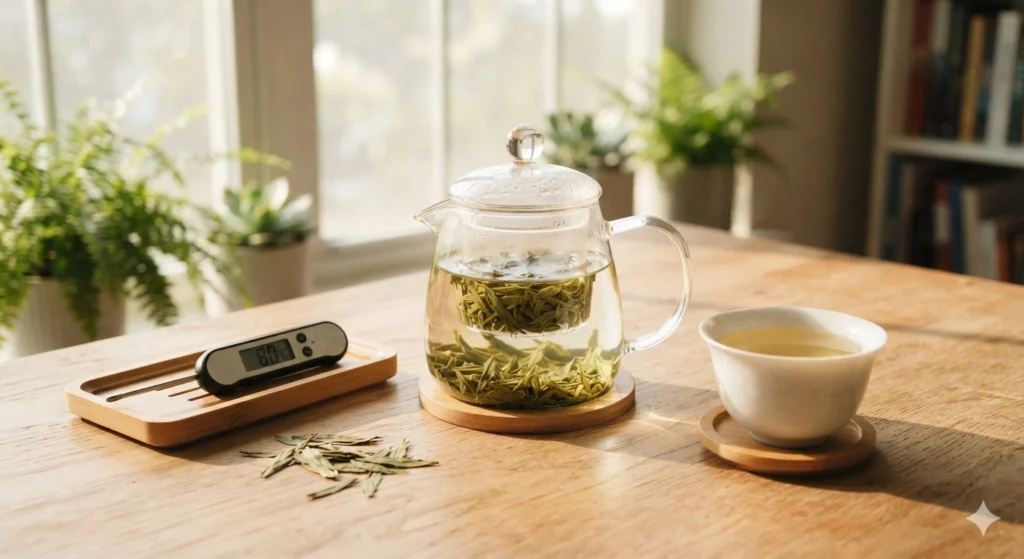
The ideal brewing range is:
75°C – 85°C (167°F – 185°F)
Why this matters:
- Too hot (boiling water) → bitterness, loss of sweetness
- Too cool → weak, flat flavor
If you don’t have a thermometer:
- Boil water
- Let it rest for 2–3 minutes before brewing
A slightly cooler temperature brings out what Longjing is known for:
👉 chestnut aroma, soft sweetness, clean finish
How Long Should You Steep Longjing Tea?
Start with:
1 to 2 minutes
Simple adjustment rules:
- Too weak → increase slightly next time
- Too bitter → shorten steep or lower temperature
Important idea:
Longjing is about precision, not strength.
Short steep = clean, sweet, aromatic
Long steep = grassy and harsh
How Much Tea Should You Use?
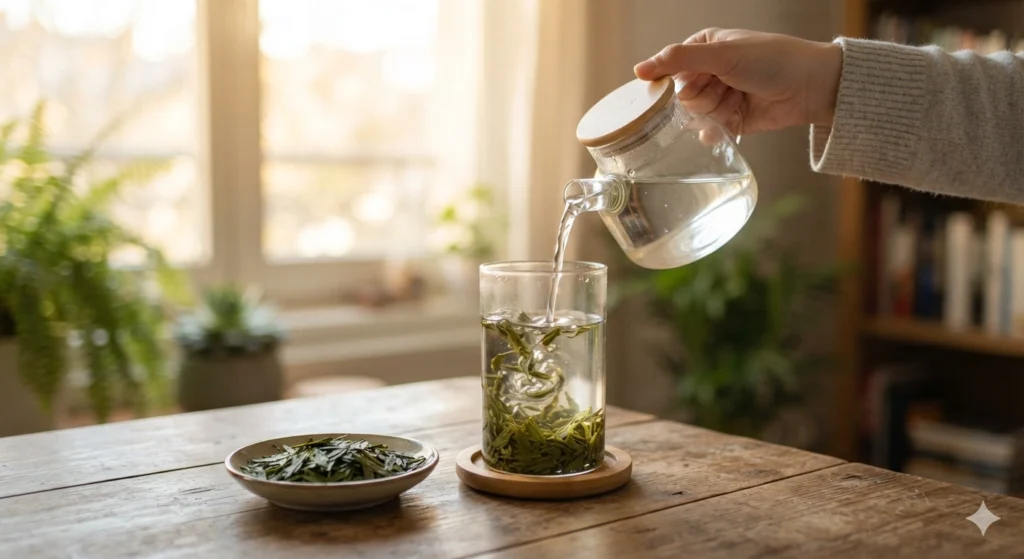
For one cup:
2–3 grams (a small pinch)
Longjing leaves look light but expand in water, so don’t overthink it.
If you want a stronger cup:
- add more leaves (not more time)
If you want a lighter cup:
- reduce leaves slightly
Best Brewing Methods (Two Options)
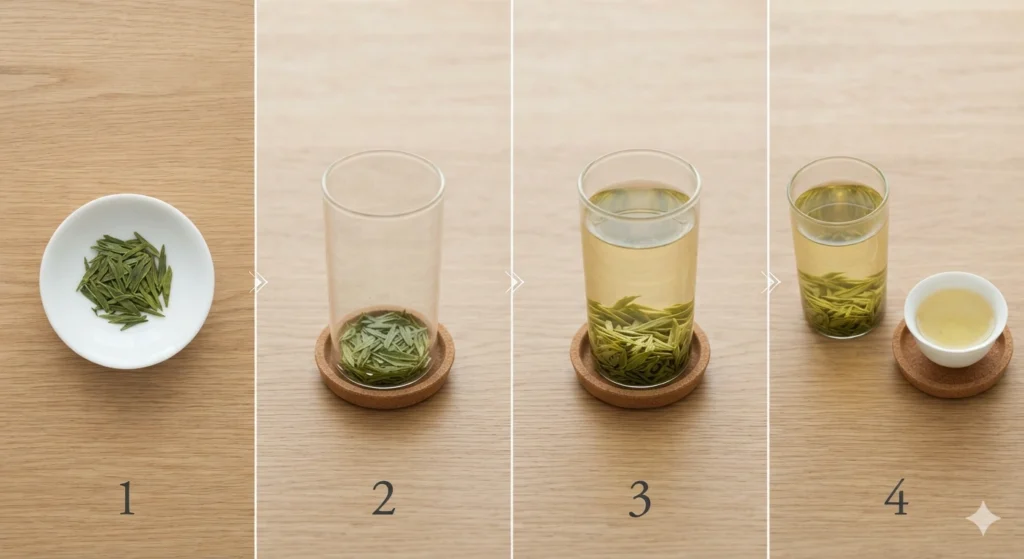
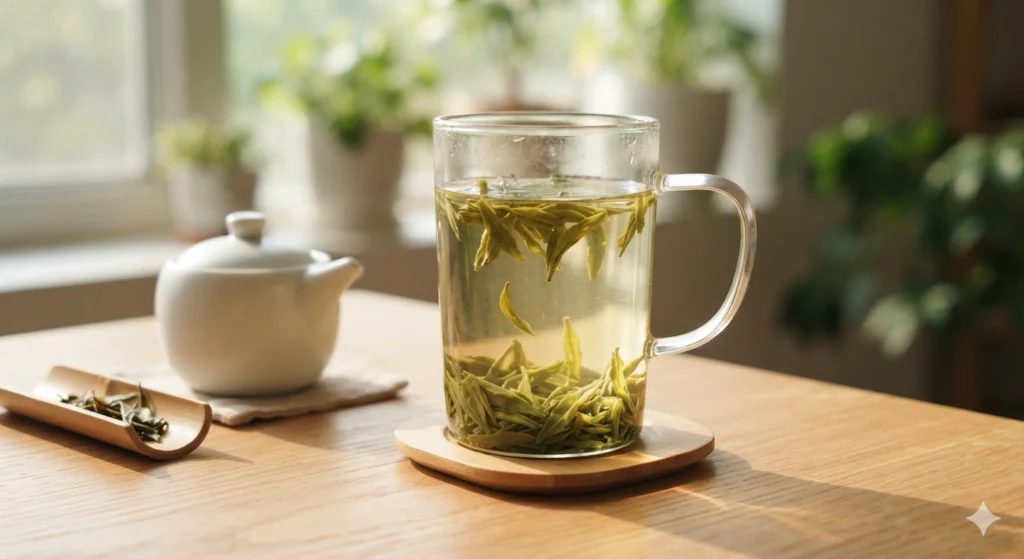
1. Simple Glass Method (Daily Brewing)
This is the most common way in China.
How:
- Put leaves in a tall glass
- Pour 80°C water
- Drink directly as it cools
Result:
- Easy, visual, relaxing
- Light evolving flavor over time
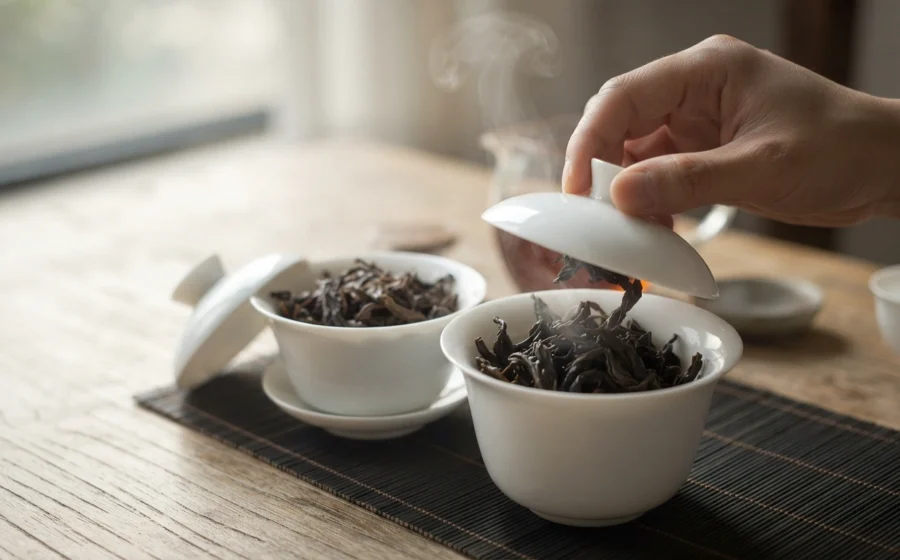
2. Gongfu Method (More Control)
How:
- Small teapot or gaiwan
- Short multiple infusions (1–2 min first steep equivalent split into rounds)
Result:
- More aroma detail
- Clear evolution across infusions
- Better for exploring high-grade Longjing
Common Mistakes (Why Most People Fail)
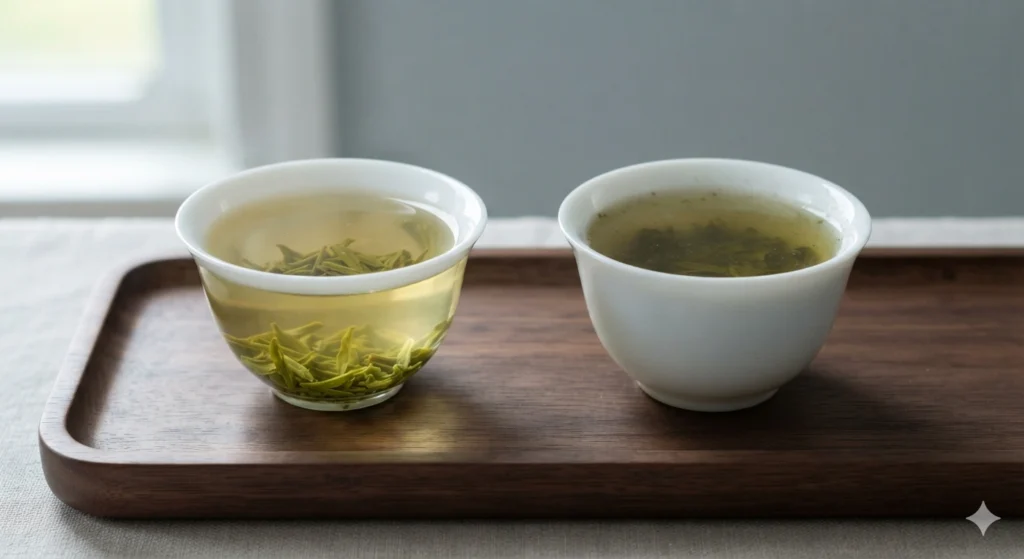
1. Water too hot
The biggest mistake. It destroys sweetness and adds bitterness.
2. Steeping too long
Longjing is not black tea. It doesn’t need time—it needs control.
3. Too few leaves
Weak tea is not “light tea.” It’s under-dosed tea.
How We Brew Longjing at Tea Passage
We keep it simple.
We use water at around 80°C, a tall glass, and a small handful of fresh Longjing leaves.
When water hits the leaves:
- they slowly sink
- aroma rises immediately
- the liquor turns pale green-gold
The first sip is soft, nutty, and clean.
No bitterness. No sharp edges.
What we value most is not complexity—it is clarity.
Longjing doesn’t need to be forced. It just needs space to express itself.
Brewing Summary (Quick Guide)
- Temperature: 75–85°C
- Time: 1–2 minutes
- Leaves: 2–3g per cup
- Method: glass or gaiwan
- Key rule: gentle brewing only
Frequently Asked Questions
What is the best water temperature for Longjing tea?
75°C–85°C. Boiling water will make it bitter.
Can I use boiling water?
You shouldn’t. Let it cool for a few minutes first.
Why does my Longjing taste bitter?
Almost always due to water that is too hot or steeping too long.
Can I brew it multiple times?
Yes. Good Longjing can be brewed 2–3 times, each with a softer profile.
Glass or teapot—which is better?
Glass is best for daily ease. Gaiwan is better for deeper tasting sessions.
Final Note
Longjing is not a complicated tea.
But it is a precise one.
When brewed correctly, it becomes something rare in green tea:
gentle, sweet, and quietly elegant without effort.