The first thing you notice about jasmine green tea is usually not the taste. It is the aroma.
Before the first sip, the fragrance of jasmine flowers rises from the cup — soft, fresh, and naturally sweet. It feels familiar, like walking past blooming jasmine on a warm evening.
But jasmine green tea is more than just a floral fragrance. Its taste comes from the relationship between two elements: the gentle character of green tea leaves and the delicate aroma of jasmine blossoms.
A well-made jasmine tea should never taste like perfume or artificial flavoring. It should taste like a carefully crafted green tea where the floral notes enhance the leaf rather than cover it.
What Does Jasmine Green Tea Taste Like?
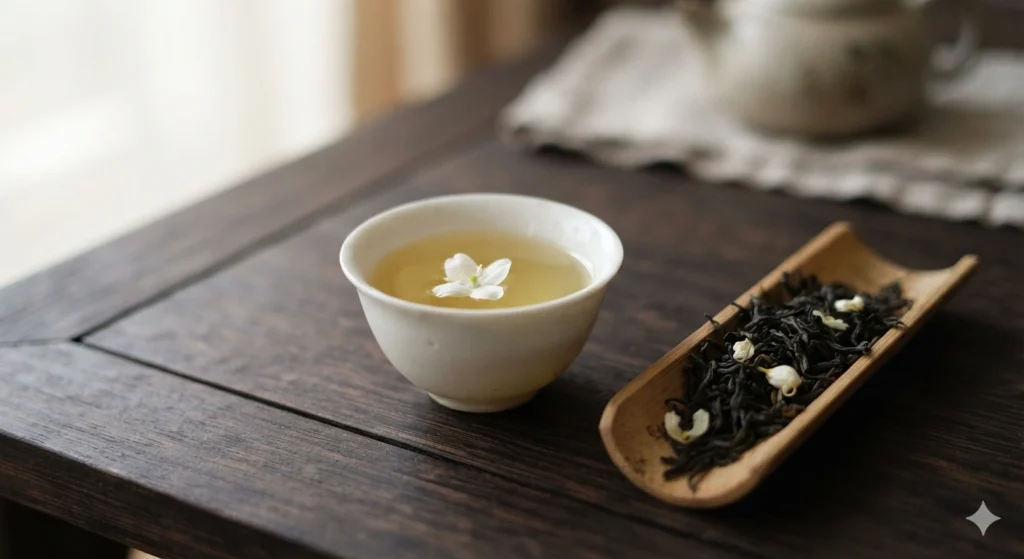
Jasmine green tea tastes floral, smooth, lightly sweet, and refreshing, with a clean finish that comes from the green tea base.
The jasmine aroma is usually the first impression. It is bright and noticeable, but high-quality jasmine tea should still feel natural and elegant. The fragrance should remind you of fresh flowers, not perfume or candy.
When you take a sip, the green tea underneath becomes clearer. You may notice gentle vegetal notes, a soft sweetness, and a light freshness similar to other Chinese green teas. The tea should feel smooth in the mouth, without harsh bitterness or dryness.
The overall flavor profile can be described as:
| Flavor Character | Description |
|---|---|
| Aroma | Fresh jasmine flowers, soft floral fragrance |
| Taste | Smooth, lightly sweet, clean |
| Body | Light to medium, refreshing |
| Finish | Gentle sweetness with lingering floral notes |
Unlike stronger teas such as black tea or roasted oolong, jasmine green tea is not heavy or intense. Its appeal comes from its balance — refreshing enough for daily drinking, but fragrant enough to feel special.
Does Jasmine Green Tea Taste Sweet?
Jasmine green tea has a natural sweetness, but it is different from the sweetness of sugar or honey.
The sweetness comes from two places: the jasmine flowers and the tea leaves themselves.
During traditional jasmine tea production, fresh jasmine blossoms are layered with green tea leaves. The tea absorbs the natural floral compounds released by the flowers, creating a soft sweetness in both aroma and flavor.
The green tea base also contributes its own gentle sweetness. High-quality green teas contain amino acids that create a smooth, rounded taste rather than a sharp or bitter one.
This sweetness is subtle. It does not taste like a sweet drink. Instead, it appears as a soft impression that makes the tea feel smoother and more pleasant.
If jasmine green tea tastes completely flat, overly bitter, or rough, the issue is usually related to tea quality or brewing rather than the natural character of jasmine tea.
Does Jasmine Tea Taste Like Flowers?
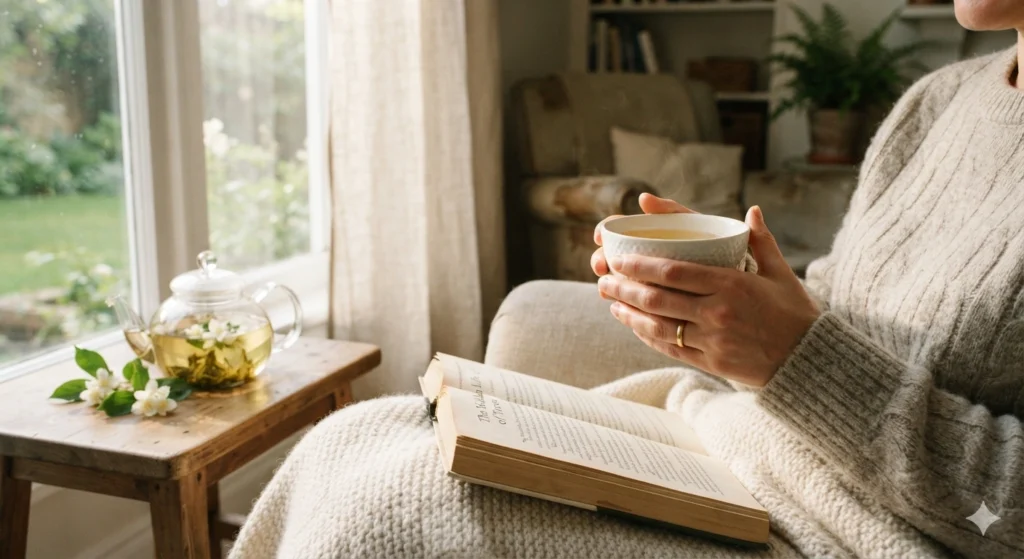
Yes, but not in the way many people imagine.
Jasmine tea does not taste like eating flowers. The floral character is mainly experienced through aroma rather than a strong flower-like taste on the tongue.
A good jasmine green tea has a fragrance that feels integrated with the tea. The jasmine does not sit separately on top of the flavor. Instead, it blends with the green tea to create a smoother, more aromatic cup.
High-quality jasmine tea usually has:
- A fresh floral aroma
- A gentle sweetness
- A smooth tea body
- A lingering fragrance after swallowing
Low-quality jasmine tea often tastes different. The floral note may feel sharp, artificial, or overly strong at first, but it disappears quickly after brewing.
This difference comes from the production method. Traditionally scented jasmine tea absorbs fragrance naturally from fresh jasmine flowers, while lower-quality teas may rely on added flavoring to create a stronger aroma.
Jasmine Green Tea Taste Compared With Other Green Teas
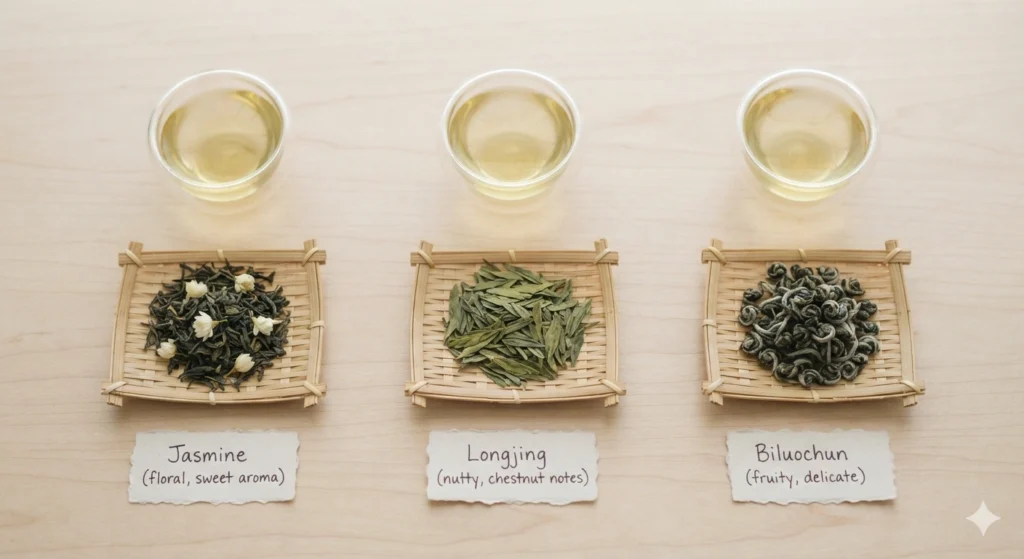
Jasmine green tea uses the same tea plant as other green teas, but the scenting process creates a completely different drinking experience.
| Tea | Taste Profile |
|---|---|
| Jasmine Green Tea | Floral, smooth, lightly sweet, aromatic |
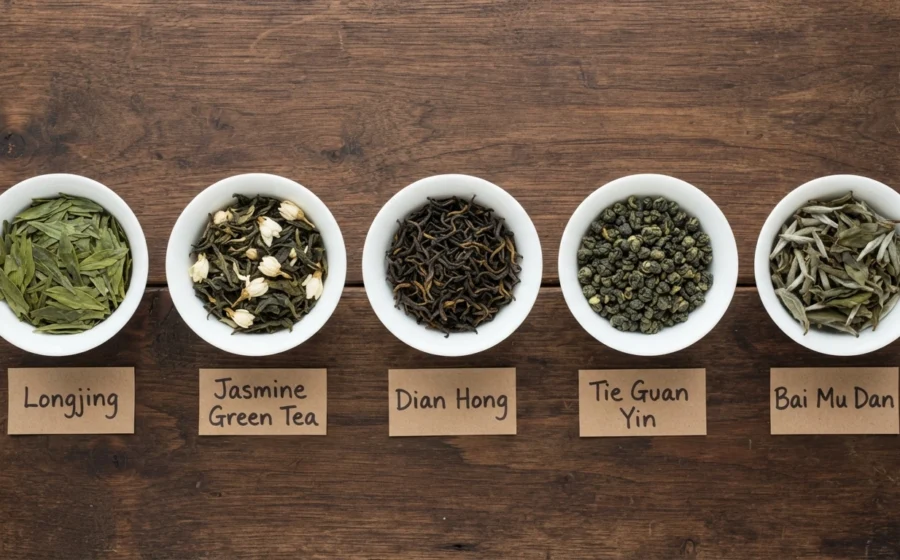
| Longjing (Dragon Well) | Nutty, fresh, chestnut-like, savory |
| Biluochun | Delicate, fruity, naturally floral |
| Gunpowder Green Tea | Stronger, smoky, bold |
Jasmine Green Tea
Jasmine green tea is the most aromatic of these styles. The floral fragrance is the defining feature, making it approachable even for people who are new to Chinese tea.
The green tea base provides freshness, while jasmine adds softness and sweetness.
Longjing Tea
Longjing, or Dragon Well tea, offers a completely different experience. Instead of floral notes, it is known for its roasted chestnut aroma, smooth texture, and fresh vegetal character.
It is a tea that highlights the personality of the leaf itself.
Biluochun Tea
Biluochun is lighter and more delicate. It often has fruity and naturally floral notes, but these come from the tea leaf rather than added jasmine flowers.
Its flavor is subtle and requires more attention to appreciate.
Gunpowder Green Tea
Gunpowder green tea has a stronger personality. Its tightly rolled leaves create a deeper, more robust flavor with smoky and earthy characteristics.
Compared with jasmine tea, it feels less soft and more intense.
Why Does Jasmine Green Tea Taste Different From Regular Green Tea?
The difference comes from the jasmine scenting process.
Regular green tea allows you to experience the tea leaf itself. Its flavor depends on the variety, growing region, harvest season, and processing method.
Jasmine green tea starts with the same type of green tea leaves but goes through an additional step: traditional scenting with fresh jasmine flowers.
During this process, jasmine blossoms are layered with tea leaves, allowing the leaves to absorb the natural fragrance of the flowers.
The result is a tea with two layers of character:
- The freshness and structure of green tea
- The floral sweetness of jasmine blossoms
Neither style is better. They simply offer different experiences.
Green tea is about discovering the leaf.
Jasmine tea is about discovering the relationship between leaf and flower.
What Does High-Quality Jasmine Green Tea Taste Like?
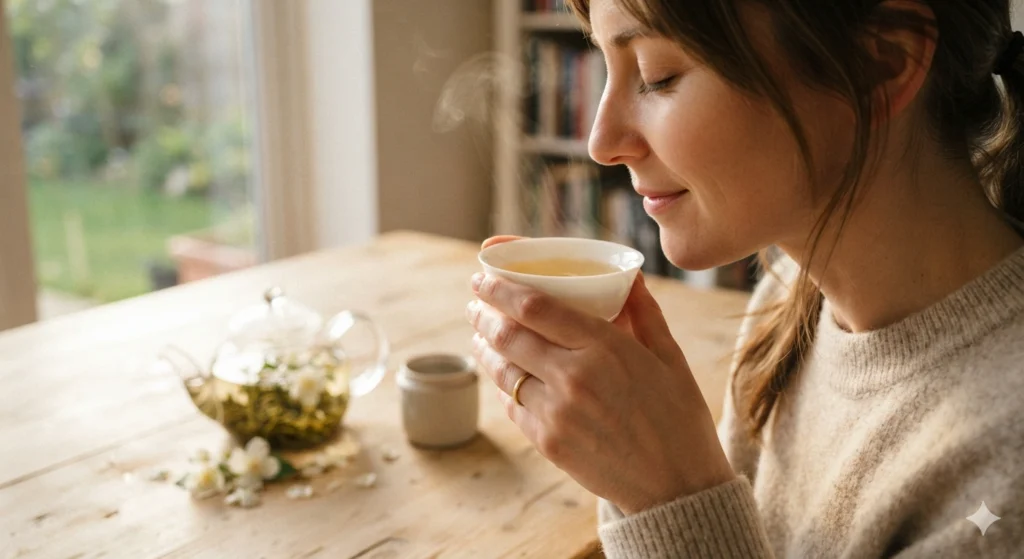
The difference between a high-quality jasmine green tea and an ordinary one becomes obvious from the first sip.
A good jasmine tea is not defined by the strongest aroma. Instead, it is defined by balance.
The jasmine fragrance should be clear but not overwhelming. You should still be able to taste the green tea underneath — its freshness, sweetness, and gentle structure.
A high-quality jasmine green tea usually has these characteristics:
- Natural floral aroma
- Smooth and clean mouthfeel
- Balanced sweetness
- Long-lasting fragrance
- Pleasant aftertaste
The first infusion often brings out the brightest jasmine notes. As you continue brewing, the floral aroma becomes softer, allowing more of the green tea character to appear.
This changing flavor is one of the signs of traditionally made jasmine tea. The tea does not rely on a strong surface aroma. Instead, the fragrance is naturally integrated into the leaf.
How Does Brewing Affect Jasmine Green Tea Taste?
Even a great jasmine tea can taste different depending on how it is brewed.
Temperature, steeping time, and tea quantity all influence the balance between floral aroma and green tea flavor.
Water Temperature
Water temperature has one of the biggest effects on jasmine green tea taste.
The ideal range is usually around 80°C to 85°C (176°F to 185°F).
Water that is too hot can:
- Increase bitterness
- Reduce the delicate jasmine aroma
- Make the tea taste sharper
Using slightly cooler water helps preserve the soft floral character and natural sweetness.
Steeping Time
Steeping time changes the overall intensity of the tea.
A shorter steep creates a lighter cup with:
- More noticeable jasmine fragrance
- Softer flavor
- A cleaner finish
A longer steep brings out:
- More green tea character
- A stronger body
- More vegetal notes
For most jasmine green teas, around 2 to 3 minutes is a good starting point.
Amount Of Tea Leaves
The amount of tea used also changes the flavor.
Using too many leaves can make the tea taste:
- Strong
- Bitter
- Overly vegetal
Using too few leaves may result in a weak cup where the jasmine aroma feels less noticeable.
A good starting point is around:
3 grams of tea per 250 ml of water
From there, you can adjust depending on whether you prefer a lighter floral cup or a stronger tea flavor.
Is Jasmine Green Tea Bitter?
A well-made jasmine green tea should not taste strongly bitter.
Its natural character is usually smooth, fresh, and slightly sweet. If your jasmine tea tastes bitter or dry, the cause is often related to brewing or tea quality.
Common reasons include:
Water Too Hot
Boiling water can extract more bitter compounds from green tea leaves.
Try lowering the temperature to around 80°C–85°C.
Steeping Too Long
Leaving jasmine tea in water for too long can make the flavor more astringent.
If your tea tastes harsh, reduce the steeping time first.
Poor Tea Quality
The jasmine fragrance cannot hide a weak green tea base.
Low-quality jasmine tea may taste:
- Flat
- Rough
- Overly bitter
- Empty after the first infusion
A good jasmine tea should still taste pleasant even without the floral aroma.
Why Does Jasmine Green Tea Smell So Good?
The unique aroma of jasmine green tea comes from a traditional scenting process that has been practiced in China for centuries.
Fresh jasmine flowers are harvested while their buds are still closed. At night, when the flowers naturally open and release their fragrance, they are layered with green tea leaves.
The tea leaves absorb the aromatic compounds from the flowers over several hours.
For premium jasmine teas, this process may be repeated multiple times.
This creates a fragrance that feels natural and layered rather than artificial. The aroma is not simply added to the outside of the tea leaf. It becomes part of the tea’s character.
This is why a good jasmine tea smells like fresh blossoms rather than perfume.
Is Jasmine Green Tea Good For Beginners?
Jasmine green tea is one of the most approachable Chinese teas for beginners.
Many people find plain green tea slightly challenging at first because of its vegetal flavor or occasional bitterness. Jasmine tea offers a softer introduction.
The floral aroma makes it immediately familiar, while the green tea base provides freshness and depth.
It is a good choice for beginners because it is:
- Easy to enjoy
- Naturally fragrant
- Smooth when brewed correctly
- Suitable for daily drinking
For many tea drinkers, jasmine green tea becomes the first step into exploring Chinese tea. After discovering jasmine, many people continue exploring other green teas such as Longjing, Biluochun, and other traditional varieties.
How To Describe Jasmine Green Tea Taste?
If you need a simple way to describe jasmine green tea, think of it as:
Fresh jasmine flowers + smooth green tea + gentle sweetness
The main tasting notes are:
Floral
The most recognizable feature is the jasmine aroma. It should feel fresh, soft, and natural.
Sweet
The sweetness is subtle rather than sugary. It creates a smooth and pleasant feeling.
Fresh
The green tea base adds a clean, refreshing character.
Light
Jasmine green tea is usually not heavy or intense. It is elegant and easy to drink.
Lingering
A good jasmine tea leaves a gentle floral sweetness after each sip.
Frequently Asked Questions
What does jasmine green tea taste like?
Jasmine green tea tastes floral, smooth, lightly sweet, and refreshing. The jasmine aroma is the main characteristic, while the green tea base provides freshness and balance.
Is jasmine green tea sweet?
Yes, jasmine green tea has a natural sweetness from the jasmine flowers and the tea leaves. However, it does not contain added sugar and should not taste like a sweet beverage.
Does jasmine tea taste like perfume?
High-quality jasmine tea should not taste like perfume. It should have a natural floral aroma that feels fresh and balanced. A strong artificial scent may indicate added flavoring.
Is jasmine green tea bitter?
Properly brewed jasmine green tea should not be very bitter. Bitterness usually comes from water that is too hot, steeping too long, or lower-quality tea leaves.
Is jasmine tea stronger than green tea?
Jasmine tea and regular green tea have similar strength because they use the same tea leaves. The main difference is the floral aroma added through jasmine scenting.
Does jasmine tea taste better than green tea?
It depends on personal preference.
Jasmine tea is floral, soft, and aromatic. Other green teas highlight the natural character of the tea leaf, with flavors such as nuttiness, freshness, or vegetal sweetness.
Neither is better. They simply offer different tea experiences.
Final Thoughts
Jasmine green tea is a tea where aroma and flavor work together.
The jasmine flower brings fragrance, sweetness, and elegance. The green tea leaf provides freshness, structure, and depth.
A well-made jasmine tea does not try to overwhelm your senses. Instead, it creates a balanced cup that feels refreshing, calming, and easy to return to.
At Tea Passage, we select jasmine teas that respect this traditional relationship between flower and leaf — teas with natural fragrance, smooth flavor, and the craftsmanship behind every cup.
Whether you are discovering jasmine tea for the first time or returning to a familiar favorite, the best jasmine green tea is the one that makes you slow down and enjoy the moment.