Jasmine tea and green tea come from the same plant: Camellia sinensis. Both are true teas, both contain natural compounds from the tea leaf, and both have been enjoyed in Chinese tea culture for centuries.
But the experience they offer is completely different.
Jasmine tea welcomes you with a fresh floral aroma before you even take your first sip. Its fragrance comes from thousands of years of traditional scenting techniques, where fresh jasmine blossoms slowly transfer their aroma into tea leaves.
Green tea without jasmine offers something different. It is a direct expression of the leaf itself — the cultivar, the growing region, the harvest season, and the craftsmanship behind its production.
Neither is better than the other. They simply represent two different ways to experience Chinese green tea.
This guide explains the differences between jasmine tea and other green teas, including flavor, aroma, caffeine, health characteristics, and which one may suit your taste better.
What Is The Difference Between Jasmine Tea And Green Tea?
The biggest difference between jasmine tea and other green teas is the scenting process.
Jasmine tea is a type of green tea that has been naturally scented with fresh jasmine flowers. Other green teas are left unscented, allowing the original character of the tea leaf to remain unchanged.
The tea plant is the same. The difference happens after the green tea leaves have been processed.
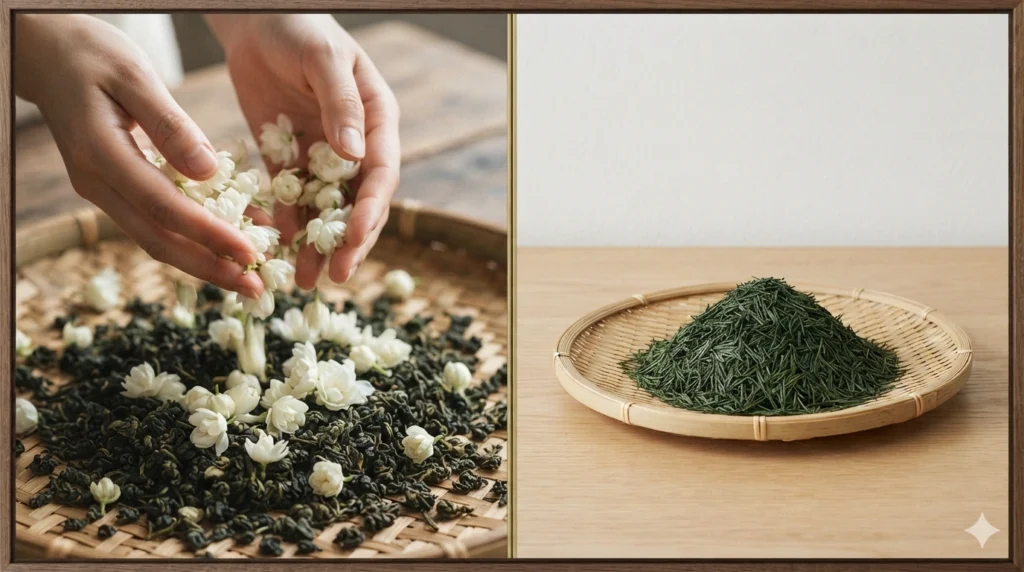
Traditional jasmine tea production begins with a finished green tea base, often produced in spring and stored until jasmine flowers bloom in summer. Fresh jasmine blossoms are harvested during the day while the buds are still closed. At night, when the flowers open and release their strongest fragrance, they are layered together with tea leaves.
Over several hours, the tea leaves absorb the natural aroma of the jasmine flowers. Afterward, the flowers are removed, and the process may be repeated multiple times for higher-quality jasmine teas.
The result is a tea where the jasmine fragrance becomes part of the leaf itself.
Other green teas skip this step. After the leaves are fixed, shaped, and dried, they are ready to drink. Their flavor comes entirely from the tea itself — its variety, origin, processing method, and growing conditions.
| Aspect | Jasmine Green Tea | Other Green Tea |
|---|---|---|
| Base | Green tea leaves | Green tea leaves |
| Processing | Scented with fresh jasmine flowers | No scenting |
| Aroma | Floral, sweet, fragrant | Fresh, vegetal, nutty, or roasted |
| Flavor | Smooth, floral, approachable | Direct, distinctive, leaf-focused |
| Experience | Gentle and inviting | Clean and expressive |
Jasmine tea adds another layer of aroma to green tea. Traditional green tea allows you to experience the leaf on its own.
Flavor Comparison: Jasmine Tea vs Other Green Teas
The difference in flavor comes down to one simple question:
Do you want to taste the flower, or do you want to taste the leaf?
Jasmine green tea is a meeting point between both.
The green tea base provides freshness, slight vegetal sweetness, and structure. The jasmine flowers add a soft floral character that makes the tea feel rounder and more aromatic.
A well-made jasmine tea should never taste like perfume. The fragrance should blend naturally with the tea, creating a balance between leaf and flower.
Other green teas reveal the unique personality of the tea plant itself. Their flavors are shaped by where they grow and how they are processed.
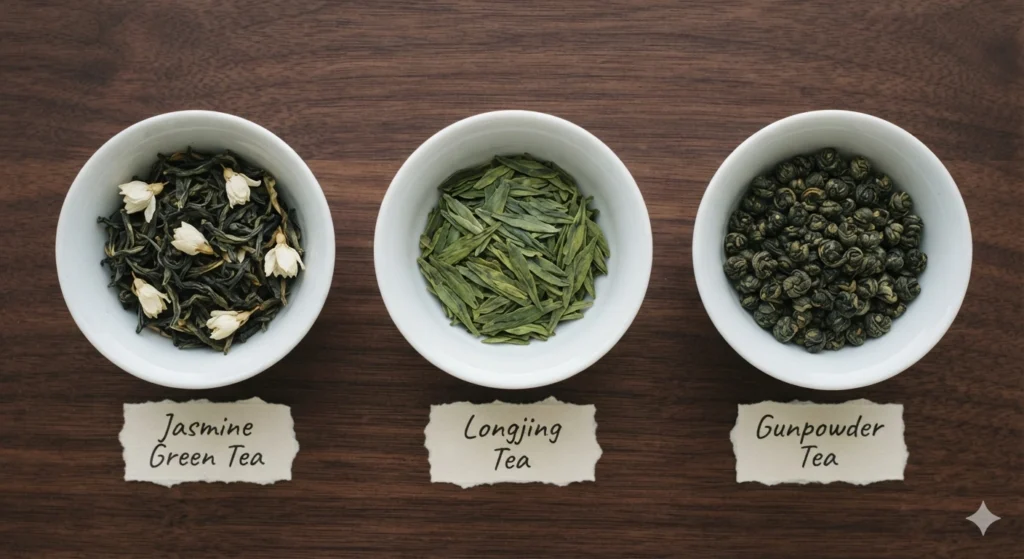
Jasmine Green Tea
Jasmine green tea is floral, smooth, and naturally sweet. The jasmine aroma appears immediately when the cup is brewed, creating a fresh and welcoming experience.
The flavor is usually soft and balanced, with notes of:
- Fresh jasmine blossoms
- Light sweetness
- Gentle vegetal freshness
- Clean, lingering finish
For many beginners, jasmine tea is easier to appreciate because the floral aroma makes the tea feel familiar and approachable.
Longjing (Dragon Well)
Longjing Tea offers a completely different expression of green tea.
Its famous character comes from pan-firing, which creates a distinctive chestnut-like aroma with notes of:
- Roasted chestnut
- Fresh greens
- Warm grain
- Subtle sweetness
Unlike jasmine tea, Longjing does not rely on added fragrance. Its aroma comes entirely from the leaf and processing technique.
Biluochun
Biluochun is known for its delicate and elegant character.
Compared with jasmine tea, its floral quality is much softer and comes naturally from the tea leaves themselves.
Typical notes include:
- Light fruitiness
- Fresh flowers
- Soft sweetness
- Delicate body
It appeals to drinkers who enjoy subtle flavors and want to explore the natural expression of green tea.
Gunpowder Green Tea
Gunpowder green tea has a stronger and more traditional character.
Its leaves are rolled into small pellets, creating a tea with:
- Stronger vegetal notes
- Slight smokiness
- More noticeable body
- A longer-lasting finish
Compared with jasmine tea, it feels more direct and robust rather than soft and floral.
| Tea | Flavor Profile |
|---|---|
| Jasmine Green Tea | Floral, sweet, smooth, fragrant |
| Longjing | Nutty, chestnut-like, fresh, savory |
| Biluochun | Fruity, floral, delicate |
| Gunpowder Green Tea | Bold, smoky, robust |
Jasmine Tea vs Other Green Tea: Aroma Difference
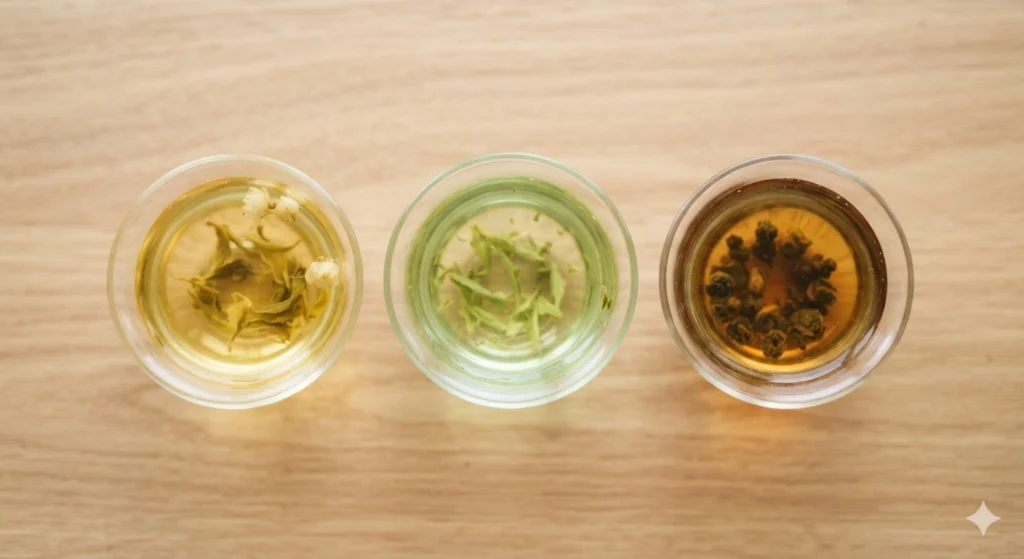
The most noticeable difference between jasmine tea and other green teas is the aroma.
Jasmine tea announces itself the moment hot water touches the leaves. The floral fragrance rises from the cup and creates an immediate sensory experience.
This aroma comes from traditional scenting, not artificial flavoring.
Fresh jasmine flowers are layered with green tea leaves while they are actively releasing fragrance. The tea absorbs these natural aromatic compounds over time, creating a scent that remains through multiple infusions.
A high-quality jasmine tea should smell:
- Fresh, not artificial
- Floral, not sugary
- Elegant, not overpowering
Other green teas have their own aromas, but they are usually quieter.
Longjing carries roasted chestnut and warm grain notes. Biluochun has a delicate fruity freshness. Gunpowder has a deeper vegetal and slightly smoky character.
These teas do not fill the room with fragrance. Instead, they invite you to lean closer and discover the details hidden in the leaf.
If you enjoy a tea with a clear floral identity, jasmine tea is likely to appeal to you.
If you prefer exploring the natural personality of different tea regions and cultivars, traditional green teas offer a deeper journey.
Caffeine Comparison: Jasmine Tea vs Other Green Tea
When it comes to caffeine, jasmine green tea and other green teas are very similar.
The reason is simple: jasmine tea uses a green tea base. The jasmine flowers add fragrance, but they do not significantly change the natural caffeine content of the tea leaves.
A typical cup of jasmine green tea contains around 20 to 40 milligrams of caffeine, which is similar to many other green teas.
| Tea | Caffeine per 8 oz cup (Approx.) |
|---|---|
| Jasmine Green Tea | 20 – 40 mg |
| Longjing | 20 – 35 mg |
| Sencha | 25 – 45 mg |
| Matcha | 60 – 70 mg |
Matcha is the exception because you consume the entire powdered tea leaf rather than drinking an infusion. This allows more caffeine and other compounds from the leaf to enter the cup.
For most people, the caffeine difference between jasmine tea and traditional green teas is relatively small. The bigger factors are:
- Amount of tea leaves used
- Water temperature
- Steeping time
- Brewing method
A stronger brew will naturally extract more caffeine, regardless of whether the tea is jasmine-scented or not.
Health Benefits Comparison: Jasmine Tea vs Green Tea
Jasmine green tea and other green teas share many of the same characteristics because they come from the same plant.
Both contain natural compounds such as catechins and polyphenols, which are commonly studied components of green tea. The jasmine scenting process adds aroma but does not transform the tea into a different category.
So is jasmine tea healthier than regular green tea?
Not necessarily.
The difference is not mainly in nutrition. It is in the drinking experience.[benefits of scented green tea]
A traditional green tea allows you to focus on the character of the leaf — the origin, cultivar, and craftsmanship behind it. Jasmine tea adds another sensory layer through the fragrance of jasmine flowers, creating a more aromatic and relaxing tea experience.
Both can be part of a balanced lifestyle. The better choice depends on what kind of tea moment you are looking for.
Choose jasmine tea when you want:
- A fragrant and comforting cup
- A softer introduction to green tea
- A tea with a strong floral character
Choose other green teas when you want:
- To explore the natural flavor of the tea leaf
- More variety between regions and cultivars
- A deeper understanding of green tea craftsmanship
Which Green Tea Is Better For Beginners?
For many beginners, jasmine green tea is one of the easiest Chinese teas to start with.
Its floral aroma makes it immediately approachable, and the fragrance softens some of the sharper characteristics that beginners may notice in plain green tea.
A well-made jasmine tea is usually:
- Smooth
- Naturally fragrant
- Easy to enjoy
- Less intimidating for new tea drinkers
After becoming familiar with jasmine tea, many people naturally move toward other green teas.
Longjing is often a great next step. It introduces drinkers to the pure taste of the tea leaf, with its famous chestnut aroma and fresh sweetness.
Biluochun and other delicate green teas are better suited for those who already enjoy subtle flavors and want to explore more nuanced expressions.
Jasmine tea is often the first step into Chinese tea.
Other green teas are the wider world waiting to be discovered.
Which One Should You Choose?
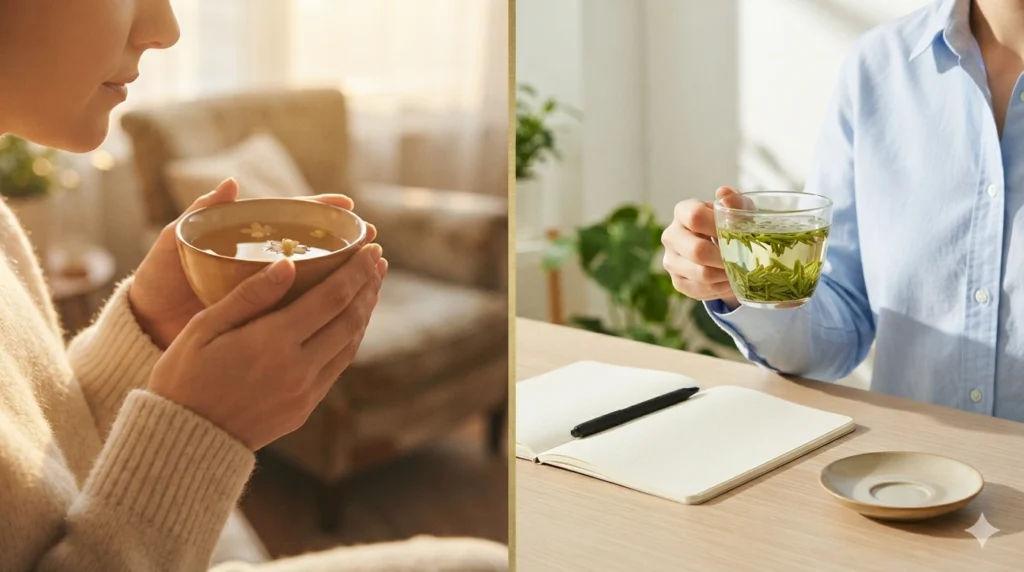
The best choice depends on the type of tea experience you enjoy.
Choose Jasmine Green Tea If You Prefer:
- Floral aromas
- Smooth and gentle flavors
- A relaxing tea ritual
- An easy introduction to Chinese tea
Jasmine tea is welcoming and expressive. The fragrance is part of the experience, making every cup feel more aromatic and memorable.
Choose Other Green Teas If You Prefer:
- Pure tea flavors
- Fresh, vegetal, or nutty notes
- Exploring different origins and processing styles
- A closer connection with the tea leaf itself
Green teas such as Longjing and Biluochun show how much variety exists within a single tea category. Their differences come from the land, the harvest, and the hands that make them.
You also do not have to choose only one.
Many tea drinkers keep both styles in their collection:
A jasmine green tea for mornings when they want fragrance and comfort.
A Longjing for afternoons when they want clarity and focus.
A Biluochun when they want something delicate and refined.
Jasmine tea and green tea are not competitors. They are different expressions of the same leaf.if you prefer floral notes, here is our [beginner’s guide]
Frequently Asked Questions
Is jasmine tea the same as green tea?
Jasmine tea is a type of green tea that has been naturally scented with fresh jasmine flowers. It uses the same tea plant but has a distinct floral aroma created through the traditional scenting process.
Is jasmine green tea healthier than regular green tea?
Neither is necessarily healthier. Both contain natural compounds from green tea leaves, including catechins and polyphenols. The main difference is flavor, aroma, and drinking experience.
Does jasmine tea taste better than green tea?
Taste is personal. Jasmine tea is floral, smooth, and fragrant, while other green teas can taste fresh, vegetal, nutty, or roasted. The better choice depends on your preference.
Which green tea is best for beginners?
Jasmine green tea is often a good starting point because its floral aroma and smooth character make it easy to enjoy. Longjing is another beginner-friendly choice for those who want to explore traditional green tea flavors.
Is jasmine tea sweeter than green tea?
Jasmine tea often gives a sweeter impression because of its floral fragrance. However, it does not contain added sugar. The sweetness comes from the natural aroma of jasmine and the character of the tea leaves.
Does jasmine tea have more caffeine than green tea?
No. Jasmine green tea generally has a similar caffeine level to other green teas, usually around 20 to 40 milligrams per cup.
Jasmine tea and traditional green teas represent two different ways of appreciating the same leaf.
One highlights the beauty of flowers and fragrance.
The other reveals the character of the tea itself.
At Tea Passage, we believe both deserve a place in the tea journey. Whether you prefer the floral elegance of jasmine or the pure expression of classic green tea, each cup tells a story of craftsmanship, origin, and tradition.
Explore Our Jasmine Green Tea →
Explore Our Green Tea Collection →