Quick Answer
Light oolong usually has a fresher, more floral character, while darker or more heavily roasted oolong often tastes deeper, warmer, and more toasted. Tie Guan Yin and Taiwanese High Mountain Oolong are common examples of lighter styles, with floral, creamy, or fresh notes. Da Hong Pao and other Wuyi oolongs can show roasted, nutty, mineral, and woody flavors. However, “light” and “dark” do not describe a single scale. Oxidation and roasting are separate parts of tea production, and both can influence the final color, aroma, texture, and flavor.
That distinction is important because the two terms are often used too simply.
A darker-looking oolong is not necessarily more oxidized, and a lighter-looking tea is not automatically lightly roasted. Some teas receive more oxidation with very little roasting, while others remain relatively light in oxidation but develop a deep character through roasting.
Once you understand that difference, it becomes much easier to make sense of the wide range of oolong tea.
What Is Light Oolong Tea?
Light oolong generally refers to teas with relatively low oxidation and little or no roasting. These teas aim to preserve more of the fresh character of the leaf, so floral fragrance and a clean, lively texture often play a major role.
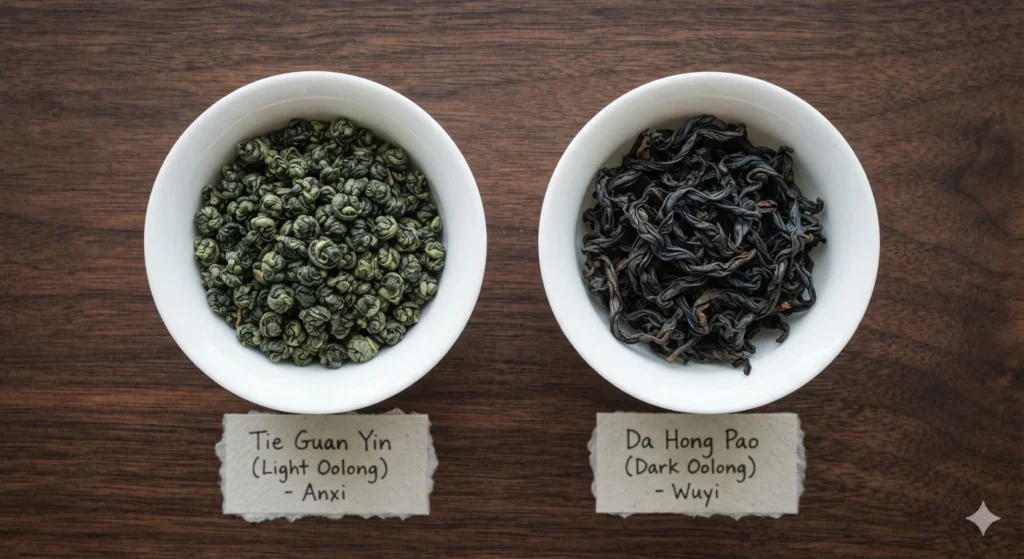
Tie Guan Yin is a familiar example. Many modern Anxi Tie Guan Yin teas are lightly oxidized and lightly roasted, with floral aromas, fresh green notes, and a smooth or creamy texture. Taiwanese High Mountain Oolongs can offer a similarly fresh style, although individual teas vary considerably.
In the cup, lighter oolongs often feel bright and aromatic. Floral notes may appear quickly, while the body tends to remain light to medium. A well-made tea can also develop gentle sweetness that becomes more noticeable toward the finish.
This style can appeal to drinkers who are moving from green tea into oolong. The tea still feels fresh and fragrant, yet the rolled leaves, fuller texture, and layered finish begin to introduce a different side of tea.
What Is Dark Oolong Tea?
Dark oolong covers teas with a deeper appearance or flavor, often as a result of higher oxidation, stronger roasting, or a combination of both.
Da Hong Pao is one of the best-known examples. Wuyi oolongs can develop roasted, nutty, mineral, woody, and dried-fruit notes depending on the tea and its processing. The roast may bring warmth and depth to the cup, while the underlying tea still contributes its own aroma and texture.
Some darker oolongs feel fuller and more rounded than lighter styles. Others may have a relatively lean body but a long roasted or mineral finish.
That is why “dark oolong” is better understood as a broad style description than as one exact category. The tea can look dark because of oxidation, roasting, or both, and the flavor can vary significantly from one producer to another.
Light Oolong vs Dark Oolong at a Glance
| Feature | Light Oolong | Dark Oolong |
|---|---|---|
| Oxidation | Usually lower | Often higher, depending on style |
| Roast | Light or minimal | Medium to heavy in many styles |
| Aroma | Floral, fresh, lifted | Warm, roasted, deep |
| Flavor | Fresh, creamy, fruity | Toasted, nutty, woody, mineral |
| Body | Light to medium | Medium to full |
| Finish | Fresh, sweet, floral | Warm, mineral, lingering |
| Examples | Tie Guan Yin, High Mountain Oolong | Da Hong Pao, Wuyi Rock Oolong |
These are broad tendencies rather than strict categories. A lightly roasted tea can still have considerable depth, while a darker tea can retain floral notes beneath the roast.
Oxidation vs Roasting: What’s the Difference?
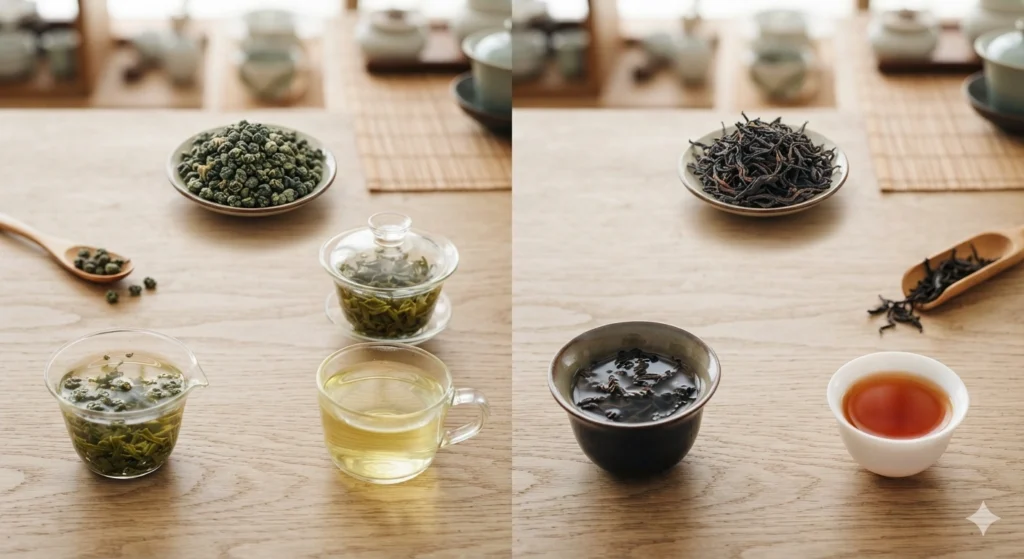
This is the key to understanding why two oolongs can look and taste so different.
Oxidation happens while the freshly picked leaves are being processed. As the leaves are bruised, rolled, and exposed to oxygen, chemical reactions change their color, aroma, and flavor. Tea makers control this process to create the style they want before heat stops further oxidation.
Lower oxidation generally preserves more of the leaf’s fresh, green character. Greater oxidation can bring more fruit, body, and depth.
Roasting, on the other hand, uses heat to further develop the finished tea. Depending on the temperature, duration, and production method, roasting can bring out toasted grain, nuts, cocoa, caramel, dried fruit, and woody notes.
The two processes can work independently.
A tea may have higher oxidation but relatively little roast, resulting in deeper fruit and body without a strongly toasted character. Another tea may have modest oxidation but a substantial roast, giving it a darker appearance and pronounced toasted flavors.
So when comparing two oolongs, do not assume that color tells you the whole story.
How Do Light and Dark Oolong Taste Different?
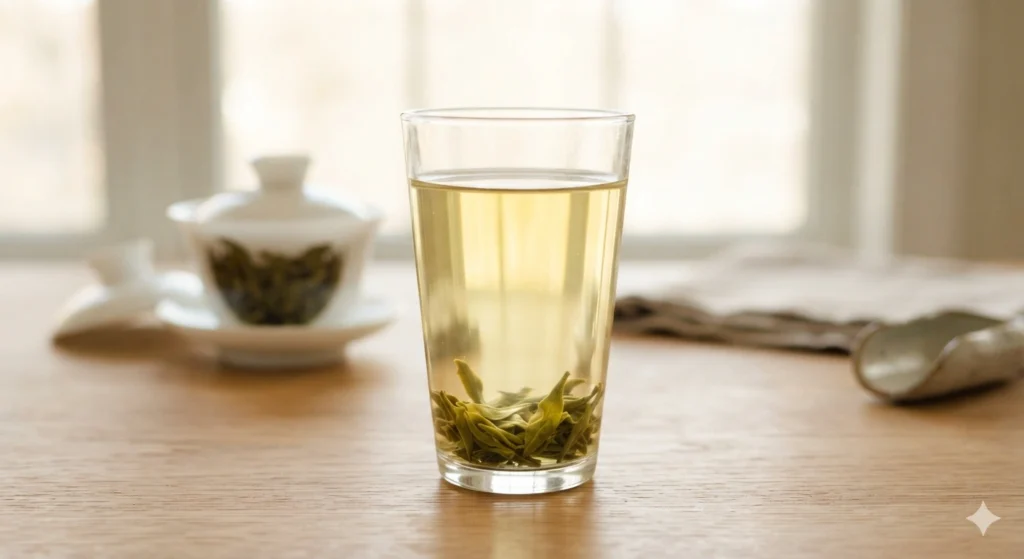
The clearest difference is usually the balance between freshness and roast.
Lighter oolongs often lead with floral and fresh aromas. Depending on the tea, you may notice orchid, gardenia, fresh fruit, or a creamy texture. The flavor tends to feel clean and lively, with sweetness becoming more noticeable toward the end of the sip.
Darker or more heavily roasted oolongs often move in another direction. Toasted grain, nuts, cocoa, caramel, woody notes, and mineral character may become more prominent. The cup can feel warmer and more substantial, particularly when the roast is well integrated.
Still, these differences should not be reduced to “light tastes weak, dark tastes strong.” A lightly processed oolong can be intense and highly aromatic, while a roasted tea can be smooth and surprisingly gentle.
The difference is more about where the flavor comes from and how it is expressed.
Light Oolong vs Dark Oolong: Aroma
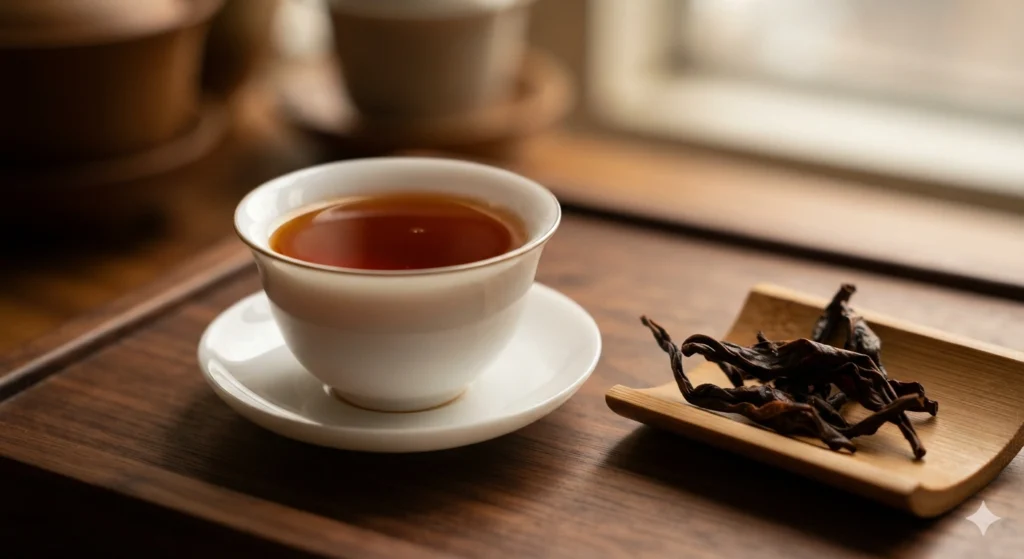
Aroma can reveal the difference before you even take a sip.
Lighter oolongs often have a lifted fragrance. When you open a gaiwan after warming the leaves, floral notes can rise quickly from the cup. The aroma may feel fresh, sweet, or creamy, depending on the tea.
Roasted oolongs usually develop a warmer fragrance. Instead of leading with flowers, they may suggest toasted grain, nuts, cocoa, wood, or dried fruit. The aroma can feel deeper and more settled.
This is one reason a side-by-side tasting is so useful. The difference is much easier to understand when a floral Tie Guan Yin sits next to a roasted Da Hong Pao.
Which Has a Fuller Body?
Dark or more heavily roasted oolong often feels fuller, but roast level is only one part of the picture.
Leaf maturity, cultivar, oxidation, production style, and brewing all contribute to body. A tea made from more mature leaves may feel substantial even when it has a relatively light roast. Likewise, some high mountain oolongs have a remarkably smooth or creamy texture despite their lighter processing.
In general, lighter oolongs tend to feel more delicate and silky, while darker styles often feel rounder and more substantial.
The best way to notice this difference is to pay attention to the middle of the sip. Does the tea simply pass across the tongue, or does it leave a broader, coating sensation? The answer can tell you more about body than color alone.
Does Dark Oolong Have More Caffeine?
Dark oolong does not automatically contain more caffeine than light oolong.
Caffeine levels depend on several factors, including the tea cultivar, leaf material, amount of tea used, and brewing method. Water temperature and steeping time also affect how much caffeine reaches the cup.
For that reason, the color of the tea is not a reliable way to judge its caffeine content.
If caffeine matters to you, pay more attention to serving size and brewing technique. Using more leaf or making a longer, more concentrated infusion can increase caffeine intake regardless of whether the oolong is light or dark.
How To Brew Light vs Dark Oolong
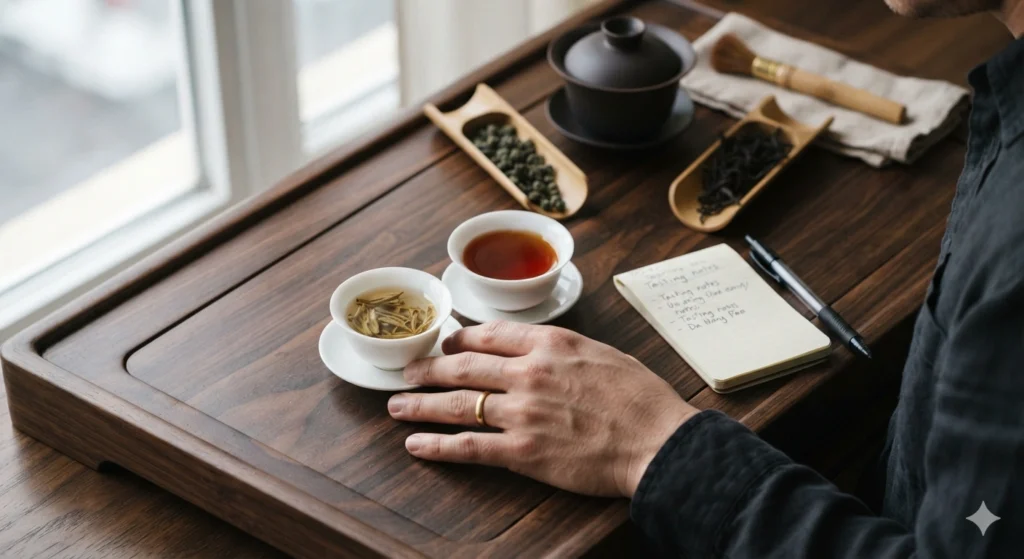
Both styles work well with short infusions, especially when brewed Gongfu style. However, the starting parameters can be slightly different.
For a lighter oolong, try water around 85–95°C (185–203°F) and begin with a short infusion. This helps preserve floral fragrance and keeps the cup from becoming unnecessarily sharp.
A darker or more heavily roasted oolong can usually handle hotter water, often around 90–100°C (194–212°F). Short infusions still work well because they allow you to watch how the roast and underlying tea change from one steep to the next.
These temperatures are starting points rather than strict rules. A particular tea may need a different approach.
If the cup tastes harsh, shorten the infusion or lower the temperature. When the tea feels too light, increase the leaf slightly or give it a little more time.
The goal is not to follow a recipe perfectly. It is to find the point where the aroma, texture, sweetness, and finish come into balance.
Is Light or Dark Oolong Better for Beginners?
Neither style is automatically better for a first-time drinker. Your existing taste preferences are a more useful guide.
Light oolong may suit you if you already enjoy green tea, floral aromas, fresh flavors, or creamy textures. Tie Guan Yin is a natural example because its fragrance is easy to notice and its texture can feel rounded without being heavy.
Dark oolong may appeal more if you enjoy roasted tea, nuts, cocoa, deeper flavors, or a fuller mouthfeel. Da Hong Pao can be an interesting introduction because the roast creates an obvious point of comparison with lighter oolongs.
There is also no need to choose only one.
Trying one light and one roasted oolong together can be one of the easiest ways to understand the range of the category.
Light vs Dark Oolong for Everyday Drinking
Both styles can work beautifully as everyday tea. What changes is the kind of experience they provide.
A lighter oolong can feel refreshing and fragrant, making it enjoyable when you want something bright and aromatic. A roasted oolong can feel warmer and more substantial, especially when you want a slower cup with more depth.
The time of day does not have to determine the choice. Some people prefer floral tea in the morning, while others reach for roasted oolong throughout the day. The more useful question is simply: What do you want from this cup?
Famous Light and Dark Oolong Examples
Lighter Oolong Styles
Tie Guan Yin from Anxi is one of the most familiar examples. Many modern versions emphasize floral fragrance, fresh green character, and a smooth texture.
Taiwanese High Mountain Oolong can also fall toward the lighter end of the spectrum. Depending on origin and processing, these teas may show floral, fresh, creamy, or lightly sweet characteristics.
Darker and Roasted Oolong Styles
Da Hong Pao from the Wuyi Mountains is a classic example of a more roasted style. Depending on the tea and roast, you may find toasted, nutty, mineral, woody, or cocoa-like notes.
Rou Gui and Shui Xian are other well-known Wuyi oolongs. Their character can vary considerably, so the name alone does not tell you exactly how much roast or depth you will find in the cup.
That variation is worth remembering. Tea names give you a direction, but the individual tea still has its own personality.
How To Taste Light and Dark Oolong Side by Side
One of the best ways to understand the difference is to taste a light and a roasted oolong together. Tie Guan Yin and Da Hong Pao make a particularly useful pair.
Start by looking at the dry leaves. Tie Guan Yin is typically rolled into compact, green balls, while Da Hong Pao is generally twisted into darker strips. Even before brewing, the two teas already tell you something about their processing.
Then smell the leaves. The Tie Guan Yin may suggest flowers, fresh greens, or soft sweetness. The Da Hong Pao may bring toasted grain, nuts, or a deeper roasted aroma.
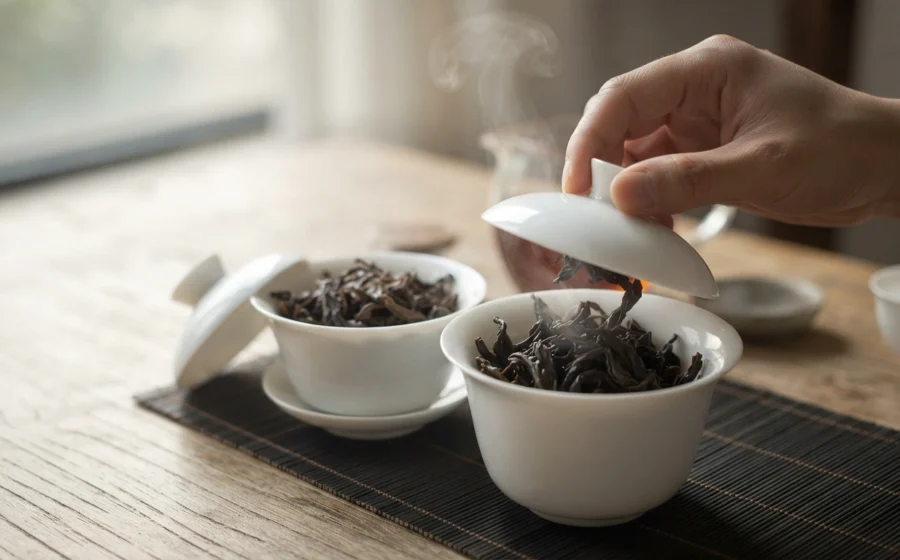
Warm the leaves before the first proper infusion. With a gaiwan, a quick rinse followed by a few seconds with the lid closed can reveal a much stronger aroma. Take a moment to smell both teas before adding more water.
Now taste the first infusion.
With Tie Guan Yin, pay attention to how the floral aroma sits alongside the texture. The tea may feel rounder or creamier than its light appearance suggests, with sweetness developing after the sip.
Da Hong Pao tells a different story. The roast may appear first, followed by mineral or woody notes as you hold the tea in your mouth. Instead of focusing only on flavor, notice how the tea feels and how long the finish remains.
Then come back to both teas for a second infusion.
This is where the comparison becomes especially useful. The initial fragrance may soften, allowing the underlying structure of each tea to come forward. Tie Guan Yin may become sweeter and rounder, while Da Hong Pao may reveal more of its mineral or woody side as the roast settles.
At Tea Passage, this is the part of tea we care about most.
A tasting is not simply a search for the correct tasting note. It is a way of paying attention to what the leaf does in water: how the aroma changes, how the texture develops, what remains after the sip, and whether the second infusion gives you something new to notice.
The more often you taste this way, the easier it becomes to understand your own preferences.
Frequently Asked Questions
What is the difference between light and dark oolong?
Light oolong generally has lower oxidation and less roasting, with fresher and more floral characteristics. Darker oolongs may have greater oxidation, more roasting, or both, which can produce deeper toasted, nutty, woody, or mineral notes.
Is dark oolong stronger than light oolong?
Not necessarily. Dark oolong often feels fuller and deeper, but “stronger” can mean different things. A light oolong can have intense aroma and flavor even when the tea feels delicate.
Does dark oolong have more caffeine?
No. Caffeine depends on factors such as leaf material, cultivar, amount used, and brewing method rather than the color or roast level alone.
Is light or dark oolong better for beginners?
It depends on your taste. Light oolong suits drinkers who enjoy floral and fresh teas, while roasted oolong can be a better fit for people who prefer nutty, deep, and toasted flavors.
Can I brew light and dark oolong the same way?
The basic approach is similar, but lighter oolongs often work well with slightly cooler water, while roasted oolongs can usually handle hotter water. Both benefit from short infusions.
What are some examples of light oolong?
Tie Guan Yin and Taiwanese High Mountain Oolong are common examples of lighter oolong styles, although the exact processing can vary.
What are some examples of dark oolong?
Da Hong Pao, Rou Gui, and Shui Xian are well-known Wuyi oolongs that can show deeper roasted and mineral characteristics.
Two Sides of the Oolong Spectrum
Light and dark oolong are not two competing categories. They are different ways of shaping the character of the same tea plant.
A floral Tie Guan Yin can draw you in with fragrance and texture. A roasted Da Hong Pao can keep you exploring through its deeper aroma and evolving finish.
At Tea Passage, we like to experience that difference slowly. Look at the leaf, warm it, smell the changing aroma, taste the first infusion, and then return for another. The most interesting part is often not the first obvious flavor, but what appears after you give the tea a little more time.
That is how the difference between light and dark oolong becomes something you can actually taste.