When buying Longjing tea, you will often see terms such as Pre Qingming (Ming Qian), Qingming harvest, or Yu Qian on tea labels and product descriptions.
These words describe when the tea was picked, and harvest timing plays an important role in shaping the tea’s aroma, texture, sweetness, and price.
Longjing is a seasonal tea. Unlike teas that can be produced throughout much of the year, the most celebrated Longjing comes from the short spring harvest, when the tea bushes awaken after winter and produce their first tender shoots.
Understanding the Longjing harvest season helps explain why two teas from the same region can taste completely different — and why some Longjing teas command much higher prices than others.
When Is Longjing Tea Harvested?

Longjing tea is mainly harvested during spring, usually from late March to early May.
The exact harvest dates change every year depending on weather conditions. A warmer spring may bring the first buds earlier, while a colder season can delay the harvest.
The most prized Longjing is produced from the earliest spring growth, when the leaves are small, tender, and full of concentrated flavor. As the season progresses, the leaves become larger and the tea develops a stronger, fuller character.
The harvest season is not a single moment. It moves through several stages, and each stage creates a different expression of Longjing.
Longjing Tea Harvest Timeline Explained
The spring harvest follows the natural rhythm of the tea plant.
Winter Dormancy
During winter, tea bushes enter a resting period. The plant stores energy in its roots, preparing for the new growing season.
No picking takes place during this time.
First Spring Shoots
When temperatures rise, the first young buds begin to appear.
These early shoots are the most delicate growth of the year. They are small, tender, and prized for their refined aroma and smooth texture.
Pre Qingming Longjing (Ming Qian)
The earliest harvest happens before the Qingming Festival, usually in early April.
This is the most famous and expensive Longjing harvest. The leaves are extremely tender, producing a tea with a delicate aroma, silky texture, and subtle sweetness.
Qingming Harvest
Around the Qingming Festival, the leaves begin to mature slightly.
This harvest offers a balance between refinement and body. The tea remains elegant but has a little more flavor intensity compared with the earliest picks.
Yu Qian Longjing (Before Grain Rain)
After Qingming and before the Grain Rain Festival in late April, tea leaves become larger and more developed.
Yu Qian Longjing often provides excellent value. It has a fuller body, stronger sweetness, and a more noticeable tea character, making it popular among daily drinkers.
Later Spring Harvest
By late April and early May, the leaves continue to mature.
The tea becomes stronger, more straightforward, and more affordable. It may lack the delicacy of early spring Longjing, but it can still offer a satisfying cup.
Each harvest represents a different stage of the tea plant’s growth. The “best” harvest depends on what kind of tea experience you prefer.
Pre Qingming Longjing (Ming Qian Longjing)
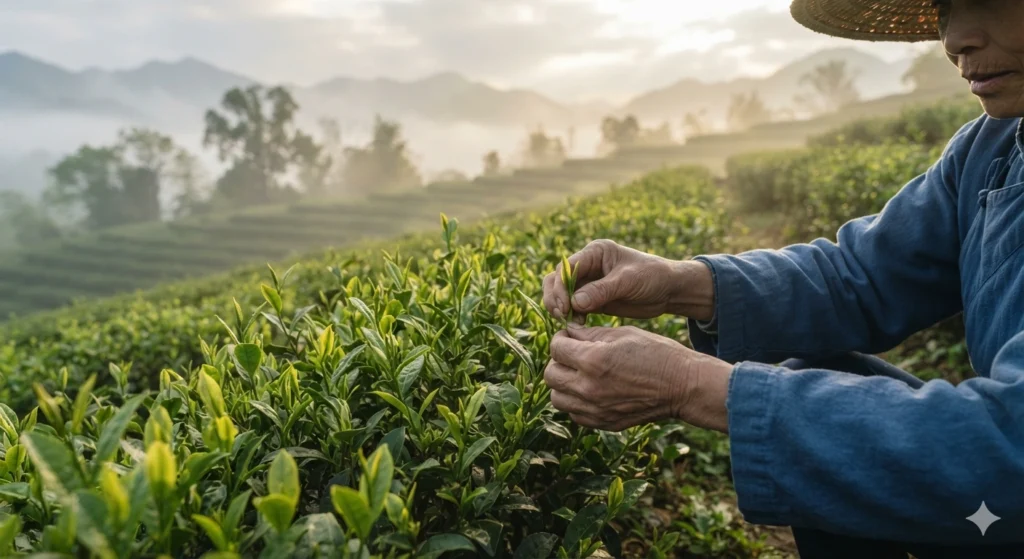
Pre Qingming Longjing, also called Ming Qian Longjing, is the earliest and most prestigious harvest period.
The name means the tea was picked before the Qingming Festival, which usually falls in early April.
At this time, the tea bushes have just begun their spring growth. The first buds and young leaves are small and delicate, producing a tea known for elegance rather than strength.
A good Pre Qingming Longjing typically offers:
| Character | Description |
|---|---|
| Aroma | Fresh chestnut, young greens, subtle floral notes |
| Texture | Smooth, silky, and light |
| Sweetness | Gentle sweetness appearing in the finish |
| Body | Delicate and refined |
| Finish | Clean and lingering |
Because the harvest window is short and the yield is limited, Pre Qingming Longjing is among the most expensive forms of Dragon Well tea.
However, higher price does not automatically mean it is the right tea for everyone. Some drinkers prefer the fuller flavor and stronger presence of later harvests.
Qingming Longjing Harvest
The Qingming harvest takes place around the Qingming Festival.
Compared with Pre Qingming Longjing, the leaves are slightly larger and more mature. This gives the tea a little more body while maintaining the freshness and refinement associated with early spring Longjing.
Many tea drinkers consider Qingming Longjing a balanced choice:
- More expressive than the earliest harvest
- More refined than later spring tea
- Less expensive than Pre Qingming Longjing
It offers a good middle ground for people who appreciate quality but want a tea suitable for regular enjoyment.
Yu Qian Longjing (Before Grain Rain Longjing)
Yu Qian Longjing is harvested after Qingming but before the Grain Rain Festival.
Although it receives less attention than Pre Qingming tea, Yu Qian Longjing is often considered one of the best choices for everyday drinking.
Because the leaves have had more time to develop, the tea usually has:
- A fuller body
- Stronger sweetness
- More noticeable green tea character
- Better value for regular consumption
The chestnut aroma remains, but it is often accompanied by deeper vegetal notes and a more satisfying mouthfeel.
For many Longjing drinkers, Yu Qian represents the ideal balance between quality and price.
Later Harvest, Buying Guide & How Harvest Season Changes Longjing Flavor

Later Spring Longjing Harvest
As spring continues into late April and early May, Longjing leaves continue to grow larger and develop a stronger character.
Later spring Longjing is usually more affordable because the harvest volume is higher and the leaves are more mature.
Compared with early spring Longjing, it often has:
- A stronger tea body
- More noticeable vegetal notes
- A more direct flavor profile
- A lower price point
This does not mean later harvest Longjing is poor quality.
A well-made later harvest Longjing can still be smooth, sweet, and enjoyable. It simply represents a different style of tea.
Early spring Longjing is often appreciated for subtlety and elegance.
Later harvest Longjing is appreciated for comfort, strength, and everyday value.
Both have their place.
Longjing Harvest Seasons Comparison
Understanding the differences between harvest periods makes choosing Longjing much easier.
| Harvest Period | Approximate Time | Flavor Profile | Price Level | Best For |
|---|---|---|---|---|
| Pre Qingming (Ming Qian) | Before early April | Delicate, refined, silky, subtle sweetness | Highest | Collectors, enthusiasts, gifts |
| Qingming Harvest | Around early April | Balanced, fresh, elegant | High | Premium daily drinking |
| Yu Qian (Before Grain Rain) | Mid April | Fuller body, sweeter, excellent balance | Medium | Everyday tea lovers |
| Later Spring | Late April–May | Stronger, more direct, affordable | Lower | Casual daily drinking |
These categories are not strict grades.
Harvest timing is only one factor that determines quality. Origin, processing skill, freshness, and storage conditions are equally important.
A well-made Yu Qian Longjing can easily provide a better drinking experience than a poorly stored early harvest tea.
How Harvest Season Affects Longjing Flavor
The biggest difference between harvest periods appears in the cup.
The earlier the harvest, the more the tea emphasizes delicacy and refinement.
The later the harvest, the more the tea develops body and strength.
Early Spring Longjing
Early harvest teas such as Pre Qingming Longjing are known for:
- Clear chestnut aroma
- Soft sweetness
- Smooth texture
- Gentle floral freshness
- Long, clean finish
The experience is subtle.
The tea does not overwhelm the senses. Instead, small details appear gradually — the aroma of the dry leaves, the softness of the first sip, and the sweetness that returns after swallowing.
Mid-Spring Longjing
Qingming and Yu Qian Longjing sit between delicacy and strength.
They often provide:
- More noticeable flavor
- Better balance
- Fuller mouthfeel
- Stronger sweetness
This is why many experienced tea drinkers choose these harvests for regular drinking.
They offer enough refinement to appreciate the craftsmanship while remaining practical for everyday use.
Later Spring Longjing
Later harvests develop a stronger personality.
They usually have:
- More obvious tea flavor
- A fuller body
- Less delicate aroma
- More affordable pricing
For people who prefer a stronger green tea experience, later harvest Longjing can be a satisfying choice.
Which Longjing Harvest Should You Buy?

The right harvest depends on your purpose, experience level, and budget.
There is no single “best” Longjing harvest for everyone.
For Beginners
For those trying Longjing for the first time, a good Yu Qian Longjing is often the best starting point.
Why?
Because it shows the classic character of Longjing clearly:
- Chestnut aroma
- Fresh sweetness
- Smooth texture
- Good value
Very early harvest tea can be subtle, and beginners may not immediately notice the differences that make it special.
Learning Longjing through a balanced tea often creates a better appreciation for premium harvests later.
For Daily Tea Drinkers
For everyday drinking, freshness and value usually matter more than rarity.
A fresh:
- Yu Qian Longjing
- Qingming Longjing
can provide an excellent daily experience.
These teas are refined enough to represent Longjing well, but practical enough to enjoy regularly.
For Tea Enthusiasts
For experienced tea drinkers, Pre Qingming Longjing offers something unique.
The attraction is not only flavor.
It represents:
- The first growth of spring
- A limited seasonal moment
- Traditional craftsmanship
- The connection between tea and time
It is a tea to drink slowly and pay attention to.
For Gift Buyers
Pre Qingming Longjing and authentic West Lake Longjing are popular choices for gifts because they carry cultural recognition and prestige.
However, the most important factors remain:
- Clear origin
- Recent harvest
- Proper storage
- Reliable sourcing
A transparent seller with a good-quality tea is always more valuable than an expensive label with unclear information.
Does Earlier Harvest Always Mean Better Longjing?
Earlier harvest does not always mean better.
It means the tea is usually:
- More delicate
- More limited
- More refined
But enjoyment depends on personal preference.
Some drinkers love the quiet elegance of Pre Qingming Longjing.
Others prefer the stronger flavor and fuller body of Yu Qian Longjing.
A useful comparison:
Pre Qingming Longjing
→ Like a spring morning
→ Light, elegant, detailed
Yu Qian Longjing
→ Like a warm spring afternoon
→ Fuller, sweeter, more comforting
Neither is superior in every situation.
The best Longjing is the one that matches how you want to drink tea.
How To Choose Longjing Based On Harvest Season
When buying Longjing, do not look only at the harvest name.
Consider these factors together:
1. Harvest Year
Longjing is a green tea, and freshness matters.
A recent harvest with good storage is usually preferable to an older tea that has lost its aroma.
2. Growing Region
Origin has a major influence on Longjing quality.
West Lake Longjing remains the most recognized origin, but other Zhejiang Longjing teas can also offer excellent value.
3. Processing Skill
Even the best leaves need skilled pan-firing.
A talented tea maker can create:
- Clear chestnut aroma
- Smooth texture
- Balanced sweetness
Poor processing can reduce the quality of even premium harvest material.
4. Storage Condition
Green tea is sensitive to:
- Heat
- Light
- Moisture
- Air exposure
A poorly stored Pre Qingming Longjing may taste worse than a well-preserved later harvest.
Frequently Asked Questions
When is Longjing tea harvested?
Longjing tea is mainly harvested from late March to early May. The earliest and most prized harvest happens before the Qingming Festival in early April.
What month is Longjing tea picked?
The main Longjing harvest season is March, April, and early May, depending on weather and growing conditions.
What is the best harvest season for Longjing tea?
There is no single best harvest season. Pre Qingming Longjing is the most delicate and rare, while Yu Qian Longjing often provides the best balance of flavor and value.
What is Ming Qian Longjing?
Ming Qian Longjing means Longjing tea harvested before the Qingming Festival. It is the earliest spring harvest and is known for its delicate flavor and limited production.
What is Yu Qian Longjing?
Yu Qian Longjing is harvested after Qingming but before the Grain Rain Festival. It usually has a fuller body, stronger sweetness, and better value for everyday drinking.
Is early harvest Longjing worth the price?
For tea enthusiasts who appreciate subtle flavors and seasonal rarity, yes. For everyday drinkers, a high-quality Yu Qian or Qingming Longjing may offer better value.
Final Thoughts: Choosing The Right Longjing Harvest
Longjing harvest season is not simply about finding the earliest possible picking date.
Each harvest captures a different moment in the life of the tea plant.
The earliest spring buds bring delicacy and rarity.
The middle harvests bring balance and everyday enjoyment.
The later harvests bring strength and value.
At Tea Passage, we believe understanding tea means understanding these differences. A great Longjing is not defined only by price or reputation. It is defined by how well it matches the moment — the quiet morning when you want something delicate, or the everyday cup that brings comfort to your routine.
Choose the harvest that fits your taste, brew it with care, and let the tea reveal its own character.