Loose leaf jasmine tea is more than just an alternative to tea bags. It represents a different way of experiencing jasmine tea — one where the shape of the leaf, the quality of the tea base, and the traditional scenting process all play a role.
When whole tea leaves scented with fresh jasmine blossoms meet hot water, the fragrance develops slowly. The first infusion reveals the floral aroma, later infusions uncover more of the green tea character, and the finish becomes softer and sweeter over time.
This guide explains what loose leaf jasmine tea is, how it differs from tea bags, how to choose high-quality jasmine tea, and how to brew it properly at home.
What Is Loose Leaf Jasmine Tea?

Loose leaf jasmine tea is a type of jasmine green tea made from whole tea leaves that have been naturally scented with fresh jasmine flowers.
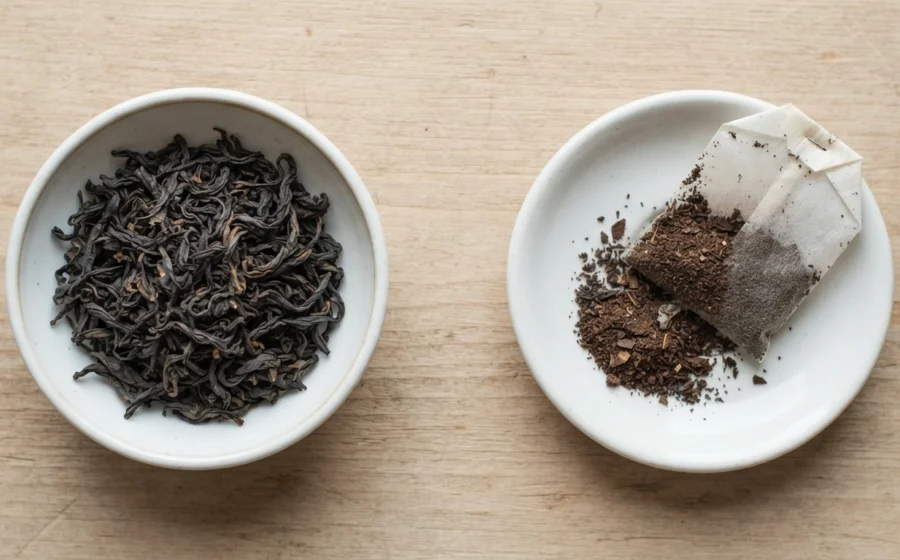
Unlike many tea bags that contain broken leaves or tea dust, loose leaf tea uses larger, more intact leaves. These leaves have more room to expand during brewing, allowing the tea to release its aroma and flavor gradually.
The process begins with a green tea base, usually produced in early spring. After the leaves are picked, they are fixed, shaped, and dried. The finished green tea is then stored until summer, when jasmine flowers bloom.
During the traditional scenting process, fresh jasmine blossoms are layered with the tea leaves at night when the flowers naturally release their fragrance. The tea absorbs the floral aroma over several hours before the flowers are removed. For higher-quality teas, this process is repeated multiple times using fresh blossoms.
The result is a tea where the jasmine fragrance becomes part of the leaf itself. The aroma is not simply added on the surface — it develops through careful craftsmanship.
Loose Leaf Jasmine Tea vs Jasmine Tea Bags

The difference between loose leaf jasmine tea and jasmine tea bags is not simply about convenience or tradition. It comes down to the quality of the tea material.
Many commercial tea bags use broken leaves or fine tea particles. Because these smaller pieces have more surface area, they release flavor quickly. This creates a strong first impression but often results in a simpler taste and a higher chance of bitterness when over-steeped.
Loose leaf jasmine tea behaves differently. Whole leaves slowly unfold in water, releasing fragrance and flavor in stages. The jasmine aroma appears first, followed by the fresh sweetness and gentle vegetal character of the green tea base.
| Loose Leaf Jasmine Tea | Jasmine Tea Bags | |
|---|---|---|
| Leaf Quality | Whole, intact leaves | Broken leaves or tea dust |
| Aroma | Natural, layered, lasting | Often simpler and shorter-lasting |
| Flavor | Smooth, complex, evolving | Faster, more one-dimensional |
| Brewing | Multiple infusions | Usually one infusion |
Tea bags are not necessarily bad. They are convenient, portable, and easy to prepare.
But loose leaf jasmine tea offers a different experience. If you want to explore the full character of jasmine tea, whole leaves provide more depth, aroma, and flexibility.
Why Choose Loose Leaf Jasmine Tea?
People choose loose leaf jasmine tea for different reasons. Some want better flavor. Some enjoy the brewing ritual. Others simply want a smoother cup of tea that does not become harsh after a few minutes.
A Fuller Natural Aroma
Whole leaves preserve fragrance more effectively than broken tea particles.
When you open a package of quality loose leaf jasmine tea, the aroma should feel fresh and floral. It should remind you of jasmine blossoms rather than perfume or artificial fragrance.
The scent develops naturally during brewing instead of appearing as a strong but short-lived burst.
A More Complex Flavor
Loose leaf jasmine tea changes throughout the drinking experience.
The first sip often highlights the jasmine fragrance — soft, floral, and slightly sweet.
As the tea opens, the green tea base becomes more noticeable, bringing freshness and depth.
Later infusions become gentler, revealing a cleaner finish and a lingering sweetness.
This layered experience is one of the biggest differences between loose leaf tea and many tea bags.
Multiple Infusions
One of the advantages of loose leaf jasmine tea is that the leaves can usually be brewed several times.
A quality jasmine tea may provide three to five infusions, with each cup offering a slightly different balance between flower and leaf.
Instead of using the tea once and discarding it, you experience how the tea evolves over time.
A More Meaningful Tea Ritual
Preparing loose leaf jasmine tea requires a little more attention.
Measuring the leaves, choosing the water temperature, watching the leaves slowly open — these small steps transform tea from a quick drink into a quiet daily ritual.
For many tea drinkers, this slower experience is part of the appeal.
How Is Loose Leaf Jasmine Tea Made?

Loose leaf jasmine tea follows a traditional scenting method that has been refined in China for generations.
1. Creating The Green Tea Base
The process begins with green tea leaves harvested in spring.
The leaves are:
- Picked
- Fixed to prevent oxidation
- Shaped or rolled
- Dried and stored
The quality of this tea base determines the final character of the jasmine tea. A poor tea leaf cannot be transformed into an excellent tea simply by adding fragrance.
2. Harvesting Jasmine Flowers
Fresh jasmine flowers are collected during summer when they are at their most fragrant.
The buds are usually picked during the day before they fully open. They are carefully stored until evening, when the flowers naturally release their aroma.
3. Traditional Scenting
At night, the jasmine flowers are layered with green tea leaves.
As the flowers open, the tea leaves absorb their fragrance. After several hours, the flowers are removed, and the tea is dried.
For premium jasmine teas, this process may be repeated several times with fresh flowers.
Each scenting round creates a deeper connection between the jasmine aroma and the tea leaf.
4. Final Drying And Selection
After scenting is complete, the tea is carefully dried and sorted.
The finished loose leaf jasmine tea should have:
- A natural floral aroma
- A clean green tea character
- Smooth flavor
- The ability to develop through multiple infusions
This traditional process is what separates authentic jasmine tea from products that simply add artificial flavor.
How To Choose High-Quality Loose Leaf Jasmine Tea

Choosing good loose leaf jasmine tea does not require advanced knowledge. A few simple observations can help you find better quality.[A Guide to Judging the Quality of Jasmine Green Tea]
Check The Tea Leaves
High-quality loose leaf jasmine tea usually contains whole or relatively intact leaves.
Look for:
- Uniform leaf size
- Clean appearance
- Minimal dust or broken fragments
A large amount of dried jasmine petals is not necessarily a sign of quality. The fragrance should come from the scenting process, not from adding more flowers to the blend.
Smell The Aroma
The aroma should be fresh, floral, and natural.
Good jasmine tea smells like blooming jasmine flowers.
Avoid teas that smell:
- Like perfume
- Like artificial sweeteners
- Overly strong or chemical
A natural jasmine aroma is usually softer and more elegant.
Check The Origin
The most famous jasmine tea regions in China include Fujian and Guangxi.
Fujian jasmine tea is known for a more traditional and refined style, especially around Fuzhou.
Guangxi jasmine tea is known for large-scale production and a fuller floral character.
Origin alone does not guarantee quality, but transparent sourcing is usually a positive sign.
Best Types Of Loose Leaf Jasmine Tea
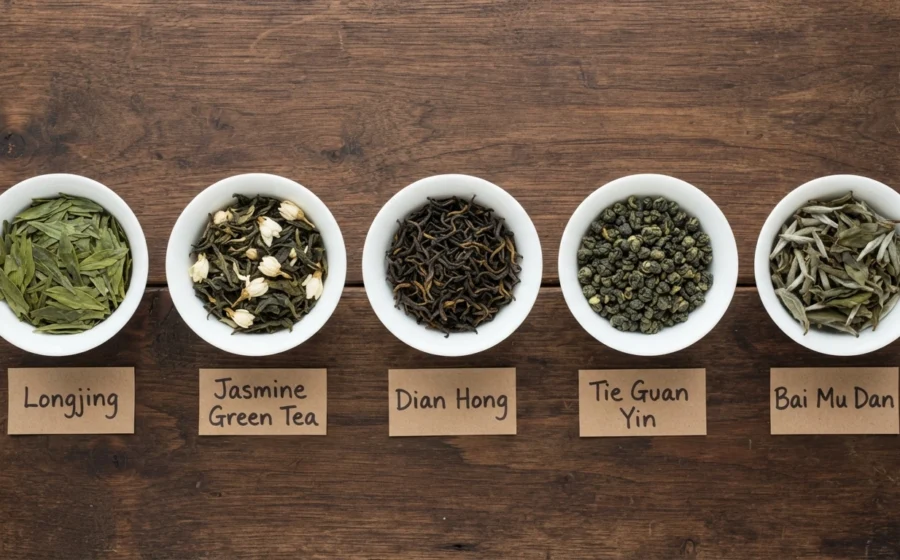
Loose leaf jasmine tea comes in several different styles. Each type uses the same basic idea — green tea scented with jasmine flowers — but the tea base, shape, and brewing experience can be very different.
Classic Loose Leaf Jasmine Green Tea
This is the most common style and the best choice for everyday drinking.
The leaves are usually kept in their natural shape or lightly twisted. This allows the tea to brew easily while maintaining a balance between jasmine fragrance and green tea freshness.
A good classic loose leaf jasmine tea should taste:
- Floral but not overpowering
- Smooth and slightly sweet
- Fresh with a clean finish
For beginners and daily tea drinkers, this is usually the easiest style to enjoy.
Jasmine Dragon Pearls
Jasmine Dragon Pearls are one of the most recognizable forms of Chinese jasmine tea.
The tea leaves are carefully rolled into small pearls, which slowly open when brewed. This process helps preserve the jasmine fragrance inside the leaves and creates a more layered aroma.
Dragon Pearls are especially suitable for:
- Gongfu brewing
- Tea ceremonies
- Gifts
- Drinkers who enjoy watching the leaves slowly unfold
Their flavor is often richer and more aromatic than regular loose leaf jasmine tea.
Jasmine Silver Needle
Jasmine Silver Needle represents a more premium style of jasmine tea.
It is made from young tea buds rather than mature leaves. The delicate buds create a lighter body, softer sweetness, and more refined aroma.
Compared with regular jasmine green tea, Jasmine Silver Needle is:
- More delicate
- Less bold
- More elegant and subtle
It is ideal for slow drinking when you want to focus on the finer details of the tea.
| Type | Flavor | Best For |
|---|---|---|
| Classic Loose Leaf Jasmine | Smooth, floral, balanced | Daily drinking, beginners |
| Jasmine Dragon Pearls | Rich, layered, aromatic | Gongfu brewing, gifts |
| Jasmine Silver Needle | Delicate, sweet, refined | Premium tea experiences |
How To Brew Loose Leaf Jasmine Tea
Loose leaf jasmine tea is simple to brew, but small adjustments can significantly affect the final flavor.
Water Temperature
Use water between 80°C and 85°C.
Jasmine tea uses a green tea base, which is sensitive to high temperatures. Boiling water can extract too many bitter compounds and reduce the delicate floral aroma.
Allow freshly boiled water to cool slightly before brewing.
Tea Amount
For a standard cup:
- Tea: 3 grams
- Water: 250 ml
This ratio creates a balanced cup with a clear jasmine aroma and a smooth green tea body.
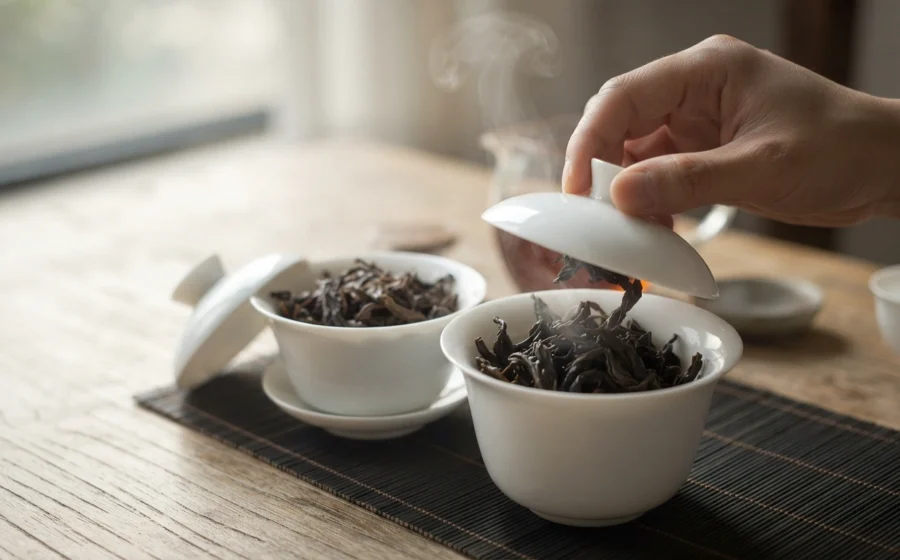
For Gongfu brewing:
- Tea: around 5 grams
- Vessel: 100 ml gaiwan
The higher leaf-to-water ratio allows you to explore more layers through multiple short infusions.
Steeping Time
For Western-style brewing:
- Steep for 2–3 minutes
A shorter steep produces a lighter floral cup.
A longer steep brings out more green tea character but may increase bitterness.
For Gongfu brewing:
- Start around 20 seconds
- Increase the time gradually with later infusions
How Many Times Can You Rebrew Loose Leaf Jasmine Tea?
One of the biggest advantages of loose leaf jasmine tea is that the leaves continue to develop after the first cup.
A high-quality jasmine tea can usually be brewed three to five times, sometimes more depending on the leaf quality and brewing method.
Each infusion reveals something different:
First infusion:
The jasmine aroma is strongest. The cup feels bright, floral, and inviting.
Second infusion:
The green tea base becomes more noticeable. The flavor becomes more balanced.
Third infusion:
The tea becomes softer, with a gentle sweetness and lingering floral notes.
Later infusions:
The aroma becomes quieter but the tea remains clean and refreshing.
If a jasmine tea loses all fragrance after one steep, it may indicate lower-quality leaves or artificial flavoring.
Loose Leaf Jasmine Tea vs Tea Bags: Which Should You Choose?
The answer depends on what you value.
Tea bags are practical. They are easy to carry, quick to brew, and require little preparation.
Loose leaf jasmine tea requires slightly more attention, but it offers:
- Better aroma
- More complex flavor
- Multiple brewing opportunities
- A closer connection to traditional tea culture
The goal is not to say that tea bags are wrong. They serve a purpose.
The difference is similar to choosing between instant coffee and freshly brewed coffee. Both provide caffeine, but the experience is not the same.
Loose leaf jasmine tea allows you to experience the full character of the tea leaf and the craftsmanship behind the jasmine scenting process.
Is Loose Leaf Jasmine Tea Worth Buying?
For people who drink jasmine tea regularly, loose leaf is usually worth the investment.
Although it may cost more upfront than tea bags, the leaves can often be brewed multiple times, making the value better over several cups.
More importantly, loose leaf tea provides something beyond convenience.
It allows you to experience:
- The natural fragrance of jasmine flowers
- The changing character of the tea across infusions
- The texture and freshness of whole leaves
- A slower and more mindful tea routine
Jasmine tea has existed for centuries because of this balance between simplicity and craftsmanship. Loose leaf tea preserves that experience.
Frequently Asked Questions
Is loose leaf jasmine tea better than tea bags?
Loose leaf jasmine tea usually provides better aroma, smoother flavor, and more opportunities for multiple infusions. Tea bags are more convenient but often use smaller tea particles.
How much loose leaf jasmine tea should I use per cup?
Use around 3 grams of loose leaf jasmine tea for 250 ml of water. Adjust slightly depending on your preferred strength.
Can loose leaf jasmine tea be reused?
Yes. Good-quality loose leaf jasmine tea can usually be brewed three to five times. Each infusion reveals different flavors and aromas.
Does loose leaf jasmine tea contain caffeine?
Yes. Since jasmine tea is usually made with green tea leaves, it naturally contains caffeine. A typical cup contains around 20–40 mg of caffeine depending on brewing conditions.
How should I store loose leaf jasmine tea?
Store jasmine tea in an airtight container away from:
- Light
- Heat
- Moisture
- Strong odors
Because jasmine tea depends heavily on aroma, proper storage is especially important.[Jasmine Green Tea Guide]
What is the best loose leaf jasmine tea for beginners?
A classic loose leaf jasmine green tea is usually the best starting point. It offers the traditional jasmine experience without being too delicate or expensive.
Loose leaf jasmine tea represents the traditional way of enjoying jasmine tea — whole leaves, natural fragrance, and a slower brewing experience.
At Tea Passage, we select jasmine teas that respect this tradition, focusing on balance between fresh jasmine aroma and the clean, smooth character of quality green tea.
A great jasmine tea does not need to be overwhelming. Its beauty comes from harmony — the fragrance of flowers, the taste of the leaf, and the quiet moment created in every cup.