Quick Answer
Oolong tea does not have one fixed flavor profile. Depending on its style and processing, it can taste floral, creamy, fruity, sweet, mineral, woody, or roasted. A lightly processed Tie Guan Yin from Anxi may show floral and fresh notes, while a roasted Wuyi oolong such as Da Hong Pao can develop deeper toasted, mineral, and woody character. Phoenix Dan Cong is often highly aromatic, with floral and fruity notes, while Taiwanese oolongs can range from light and floral to creamy, fruity, or honeyed. Cultivar, origin, oxidation, roasting, harvest, and brewing all shape the final cup.
That variety is one of the reasons oolong is so interesting. It is also what makes the category difficult to describe in a single sentence. Two teas can both be called oolong and still taste remarkably different.
To understand why, it helps to look beyond the name and pay attention to how the tea was grown, processed, roasted, and brewed.
What Does Oolong Tea Taste Like?
Oolong tea covers a wide range of flavors. At the lighter end, you can find teas that are floral, fresh, creamy, or lightly sweet. Other oolongs develop fruity, honeyed, mineral, or roasted character. Heavier roasted teas can taste warm and nutty, while some Wuyi oolongs develop deeper woody and mineral notes.
This variety comes partly from how oolong is processed. Oolong is partially oxidized, although the level of oxidation varies widely between styles. Tea makers control oxidation along with shaping, drying, and roasting, and each decision affects the finished tea.
A lightly oxidized oolong may retain more of the fresh character of the leaf. Greater oxidation can bring out deeper fruit and body, while roasting can add toasted, nutty, caramelized, or woody notes.
That is why “What does oolong tea taste like?” does not have one simple answer.
A better question is: What kind of oolong are you drinking?
Common Oolong Tea Flavor Notes
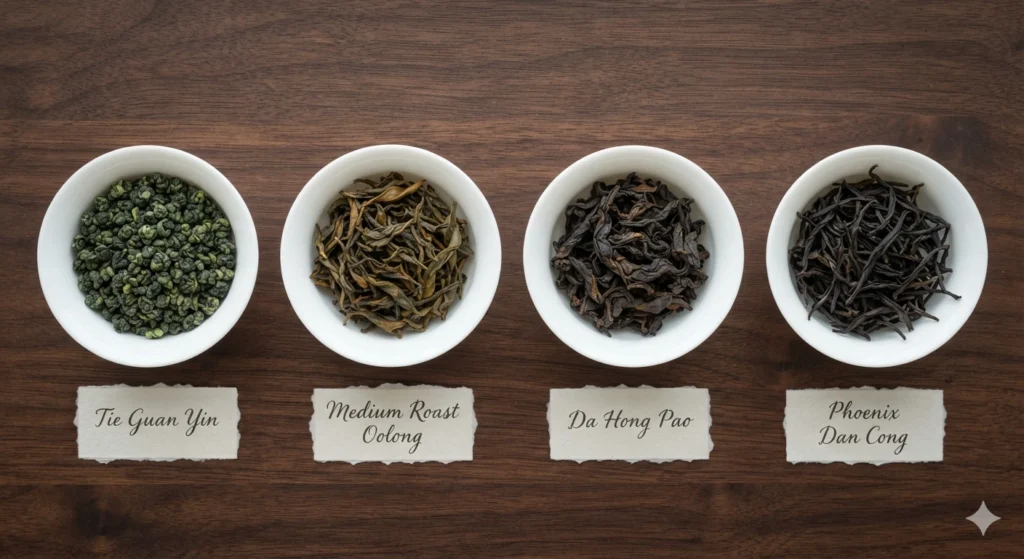
Oolong can show many different flavors, but a few broad groups appear again and again. These descriptions are useful starting points rather than strict rules.
Floral
Floral notes are especially common in lighter oolongs. You may notice orchid, gardenia, white flowers, or other soft floral impressions in teas such as Tie Guan Yin and some Taiwanese high mountain oolongs.
The fragrance can range from subtle and fresh to very pronounced. In some teas, the floral character appears immediately in the dry leaf. In others, it becomes clearer once the leaves are warmed and brewed.
Fruity
Fruit-like notes occur in many oolongs, particularly aromatic teas such as Phoenix Dan Cong.
Depending on the tea, you might notice peach, apricot, tropical fruit, or dried fruit. These descriptions do not mean the tea contains those fruits. They are ways of describing the aromas and flavors a drinker may perceive.
Creamy
Some lightly oxidized oolongs have a soft, creamy or buttery texture.
This is especially interesting because “creamy” can describe both flavor and mouthfeel. A tea may not taste like milk or cream, yet it can still feel round, smooth, and gently coating on the tongue.
Milk Oolong is a familiar example, although the character of individual teas can vary.
Sweet
Oolong can also have a naturally sweet character.
Honey, sugarcane, ripe fruit, or soft caramel are common ways to describe this impression. Sometimes the sweetness is clearest during the sip. Just as often, it appears after you swallow and becomes part of the finish.
Roasted
Roasting can give oolong a warmer and deeper character.
Depending on the level of roast, you may notice toasted grain, nuts, cocoa, caramel, or darker roasted aromas. Wuyi oolongs are well known for this style, although not every Wuyi tea is heavily roasted.
A roasted flavor does not automatically mean the tea is strong. It simply means that heat has played a more visible role in the finished profile.
Mineral and Woody
Some Wuyi oolongs are known for mineral and woody qualities. Tea drinkers may describe these sensations as rocky, mineral, dry, or woody, sometimes using the traditional term yan yun, or “rock rhyme.”
These descriptions are difficult to reduce to one flavor. Part of the experience comes from aroma, texture, aftertaste, and the way the tea develops across several infusions.
Light vs Dark Oolong Flavor Profiles
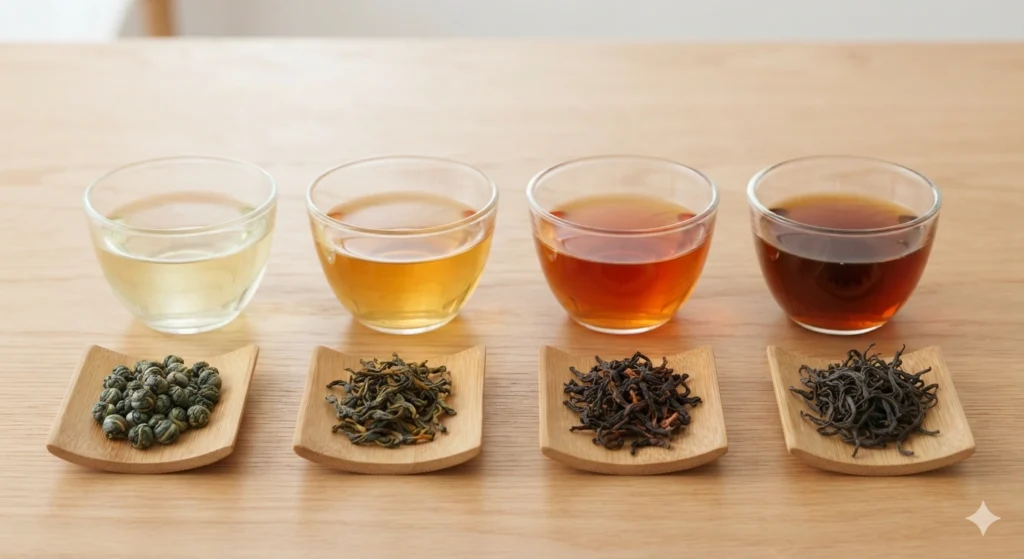
Oolong is sometimes divided into light and dark styles, but the category is better understood as a spectrum.
| Style | Typical Oxidation | Typical Roast | Flavor Tendencies | Aroma | Body |
|---|---|---|---|---|---|
| Light Oolong | Lower | Minimal | Floral, fresh, creamy | Lifted, floral | Light to medium |
| Medium Oolong | Moderate | Light to medium | Fruity, sweet, balanced | Floral, fruity, warm | Medium |
| Roasted Oolong | Moderate to higher | Medium to heavy | Toasted, nutty, caramelized | Warm, deep | Medium to full |
| Darker Oolong | Higher | Often heavier | Deep, woody, fruity, mineral | Rich, lingering | Medium to full |
This table gives you a general direction, but it should not be treated as a strict classification system.
Oxidation and roasting are separate variables. A tea can have relatively high oxidation with a light roast, or lower oxidation with a stronger roast. Those combinations can produce very different cups.
For that reason, “dark” does not automatically mean stronger, more bitter, or better. It simply points toward a different style.
How Oolong Flavor Changes by Region
Origin matters because each tea-growing area brings together different cultivars, climates, landscapes, and production traditions. Still, region should be treated as a starting point rather than a guarantee of flavor.
Anxi, Southern Fujian
Anxi is closely associated with Tie Guan Yin.
Many modern Tie Guan Yin teas are relatively lightly oxidized and lightly roasted, with floral, fresh, creamy, or sweet characteristics. Orchid-like aroma is a common tasting description.
However, Tie Guan Yin can vary considerably between producers and styles, so the name alone does not determine exactly how the tea will taste.
Wuyi, Northern Fujian
Wuyi is known for rock oolongs, including Da Hong Pao, Rou Gui, and Shui Xian.
These teas often show deeper roasted, mineral, woody, and nutty notes. Roasting style plays an important role, while the tea’s texture and lingering aftertaste can become just as important as the first aroma.
The traditional idea of yan yun, or rock rhyme, is especially associated with Wuyi rock tea.
Chaozhou, Guangdong
Chaozhou is the home of Phoenix Dan Cong.
These teas are famous for their strong fragrance and can show floral, fruity, honeyed, spicy, or other distinctive aromatic qualities. Different cultivars and styles produce very different profiles, which is one reason Dan Cong can be such an interesting tea to explore.
Taiwan
Taiwan produces many different kinds of oolong, from lighter high mountain teas to more developed styles such as Oriental Beauty.
Depending on the tea, you may encounter floral, creamy, fruity, fresh, or honeyed notes. Elevation, cultivar, harvest, and processing all contribute to the final character.
Across all of these regions, the same lesson applies: origin gives you context, but the individual tea tells the full story.
Why Does Oolong Tea Taste So Different?
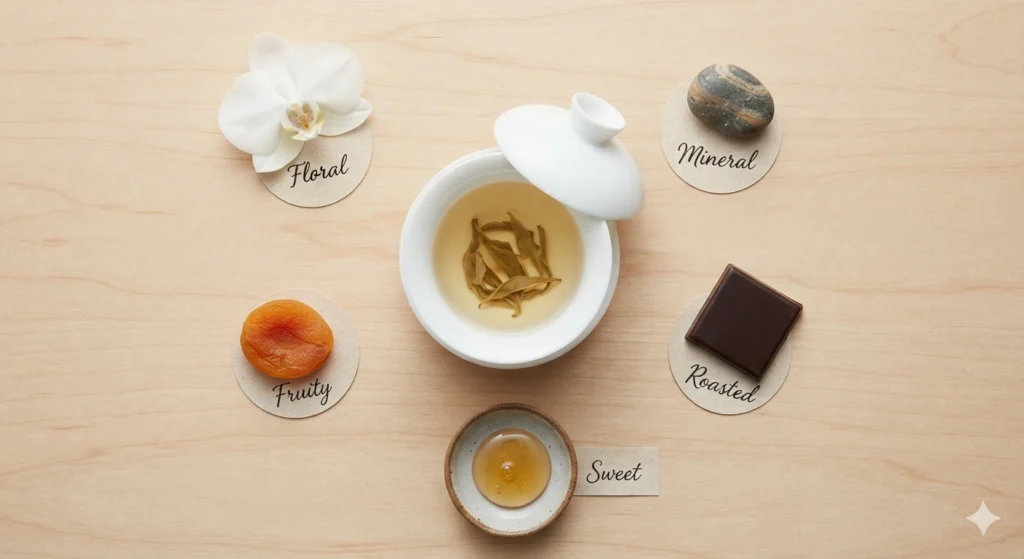
No single factor creates an oolong’s flavor. Instead, several parts of the tea’s journey come together.
Cultivar is one starting point. Different tea varieties naturally produce different aromas and flavor characteristics, which is why the same processing method can produce very different results from one cultivar to another.
Origin also matters. Climate, elevation, rainfall, and growing conditions affect how the tea plant develops. At the same time, the local cultivar and farming practices can have just as much influence.
Harvest timing changes the leaf material. Early spring leaves may produce a different balance of aroma and texture from later-season harvests.
Then comes oxidation. Tea makers control how much the leaf changes after picking, and that helps shape the balance between fresh green character, fruitiness, body, and depth.
Shaping matters as well. Oolong may be rolled into tight balls or twisted into long strips. These forms affect how quickly the leaves open and how flavor develops during brewing.
Finally, roasting can transform the tea further. A lighter roast may preserve more of the original floral character, while a deeper roast can bring out toasted, nutty, caramelized, or woody notes.
Storage and brewing complete the picture. A poorly stored tea can lose much of its aroma, while water temperature, leaf quantity, and steeping time can change what you taste from the same leaves.
In other words, oolong flavor comes from the interaction of leaf, place, processing, and brewing.
Oolong Tea Aroma vs Flavor
Aroma and flavor are closely connected, but they are not exactly the same thing.
Aroma is what you smell. Flavor is the broader experience you perceive while drinking, including taste, aroma, texture, and finish.
That distinction becomes very noticeable with oolong.
Take a Tie Guan Yin, for example. The dry leaves may smell floral and fresh. Once warmed in a gaiwan, the fragrance can become softer and more expressive. After brewing, the tea may feel round and creamy on the tongue, with sweetness appearing in the finish.
Da Hong Pao can offer a different experience. The dry leaf may suggest roast and toasted nuts. Once brewed, the tea can become smoother and more mineral, with woody depth emerging as the infusion develops.
These changes are part of the pleasure of oolong.
Instead of smelling the tea once and immediately trying to identify it, spend a little more time with it. Smell the dry leaves. Warm them. Smell the brewed leaves. Then notice the aroma that remains in the empty cup.
Each stage can reveal something different.
Is Oolong Tea Bitter?
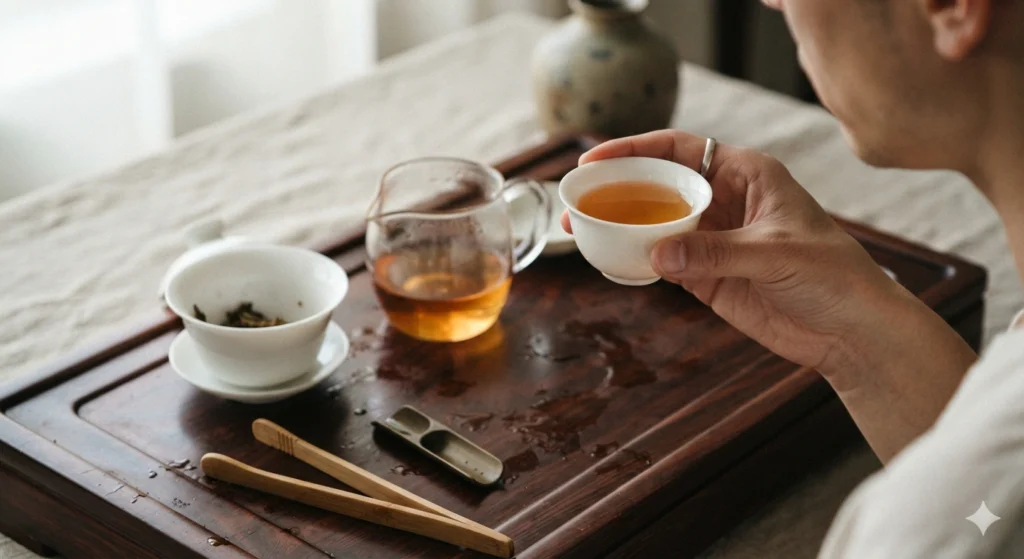
Oolong tea does not have to be bitter.
A well-made tea can have a small amount of astringency while still tasting balanced, fragrant, and sweet. In fact, a gentle drying sensation can add structure and make the next sip feel refreshing.
Problems usually arise when bitterness or astringency becomes overwhelming.
Water that is too hot can extract bitter compounds quickly. A very long steep can do the same, while using too much leaf can make the brew overly concentrated.
The brewing style also matters. A short Gongfu infusion extracts the tea differently from a long Western-style steep, so the same oolong can taste surprisingly different in the two methods.
When a cup tastes too bitter, start by adjusting the brewing. Lower the water temperature, shorten the infusion, or use a little less leaf.
If the tea still tastes harsh after several reasonable attempts, the issue may be the tea itself rather than your technique.
What Oolong Tea Is Best for Different Tastes?
Rather than asking which oolong is objectively best, start with the flavors you already enjoy.
| If You Like | Oolong to Explore | Typical Direction |
|---|---|---|
| Floral aromas | Tie Guan Yin | Fresh, floral, soft |
| Creamy texture | Milk Oolong | Smooth, creamy, sweet |
| Fruity fragrance | Phoenix Dan Cong | Floral, fruity, aromatic |
| Roasted flavors | Da Hong Pao | Toasted, nutty, mineral |
| Smooth sweetness | Oriental Beauty | Honeyed, fruity, mellow |
| Deep mineral character | Wuyi Oolong | Mineral, woody, roasted |
These are starting points, not rankings. A particular tea can taste quite different from the general style associated with its name.
If floral aroma is what draws you in, Tie Guan Yin is a natural place to begin. If you prefer the warmth of roasting, Da Hong Pao may be more satisfying. Phoenix Dan Cong is worth exploring when fragrance is your main priority.
How To Explore an Oolong Tea Flavor Profile
You do not need to be an experienced tea taster to learn the flavor of an oolong.
Start with the dry leaf. Look at its shape and color. Rolled leaves tell you something different from long, twisted strips, and the leaves may already give you hints of the tea’s processing.
Next, smell the leaf before brewing. Take your time. You may find floral, fruity, roasted, sweet, or mineral impressions, but you do not need to identify a specific note.
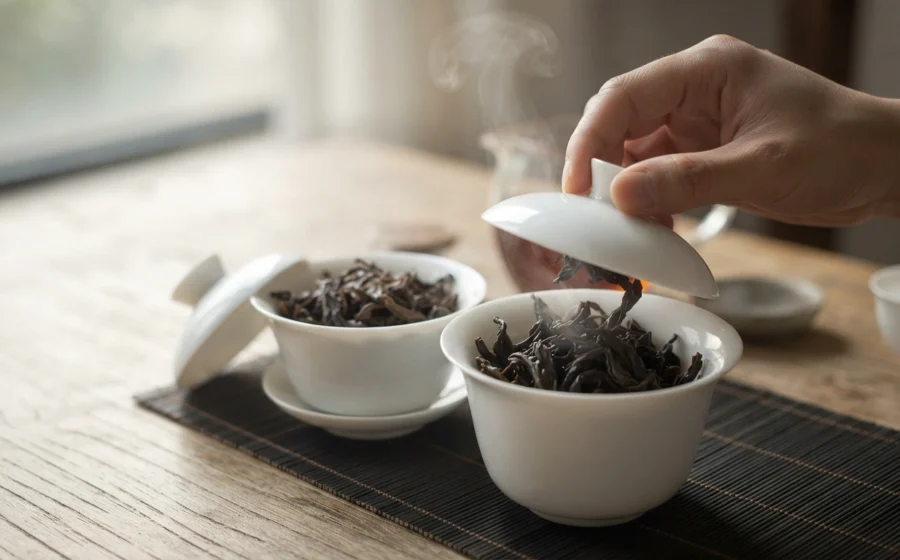
If you are using a gaiwan or small teapot, warm the leaves before the first full infusion. Pour in hot water, let it contact the leaves briefly, discard the water, and then smell again. The warmed leaf often gives a much clearer picture of the tea.
Now brew the first infusion and taste it slowly.
Rather than asking “What fruit is this?” begin with simpler questions:
Is the texture smooth or drying?
Does the aroma stay after I swallow?
Is there sweetness in the finish?
Does the tea feel light, rounded, or full?
The finish is particularly useful. A tea may seem quite simple at first, then reveal more sweetness or fragrance several seconds after the sip.
Then brew the leaves again.
The second infusion often tells you something the first one cannot. The initial aroma may soften, while the texture, sweetness, or deeper flavor becomes easier to notice.
This is also where Tea Passage’s approach to oolong begins: you do not need to memorize the “correct” tasting notes. You need to spend enough time with the tea to notice what is actually happening in your cup.
A Tie Guan Yin might begin with an orchid-like fragrance, move into a rounder and creamier texture, and leave a soft sweetness behind. A Da Hong Pao might start with roast and toasted notes, then reveal mineral depth and a longer finish after several sips.
Those examples are useful reference points, but every tea has its own character.
The more teas you taste, the easier it becomes to recognize the difference between aroma and flavor, between body and finish, and between a tea that simply tastes good and one that makes you want to keep exploring.
Frequently Asked Questions
What does oolong tea taste like?
Oolong tea can taste floral, creamy, fruity, sweet, roasted, mineral, or woody. Lightly processed oolongs often emphasize freshness and fragrance, while more oxidized or roasted styles can develop deeper flavors.
Is oolong tea sweet?
Many oolongs have a natural sweetness that may appear during the sip or become more noticeable in the finish. Honeyed, fruity, and sugarcane-like are common descriptions.
Is oolong tea bitter?
Oolong does not have to be bitter. Excessive heat, long steeping, or too much tea can increase bitterness and astringency. A well-brewed oolong should feel balanced.
What does Tie Guan Yin taste like?
Tie Guan Yin is often floral and fresh, with orchid-like aromas and a smooth, sometimes creamy texture. Different styles and producers can produce quite different profiles.
What does Da Hong Pao taste like?
Da Hong Pao commonly shows roasted, mineral, nutty, or woody notes. The exact balance depends on the tea’s processing and roast.
What does Phoenix Dan Cong taste like?
Phoenix Dan Cong is known for its strong aroma and can show floral, fruity, honeyed, or spicy notes. Different cultivars produce different aromatic profiles.
Why does oolong tea taste so different from one type to another?
Oolong flavor depends on several factors, including cultivar, origin, harvest, oxidation, shaping, roasting, storage, and brewing. The combination of these factors creates the category’s wide range of flavors.
How should I brew oolong tea for the best flavor?
Water temperature and steeping time depend on the tea. A useful starting point is around 90–100°C for many oolongs, with shorter infusions for Gongfu brewing. Lighter oolongs may benefit from slightly cooler water. Adjust according to the tea and taste.
Oolong Is a Spectrum, Not a Single Flavor
The easiest way to understand oolong is to taste across the spectrum.
Start with a floral Tie Guan Yin. Then try a fragrant Phoenix Dan Cong. Move toward a roasted Da Hong Pao and pay attention to how the aroma, texture, and finish change.
At Tea Passage, this is how we approach oolong. We care about the story behind the leaf, but we also care about what happens when that leaf meets water. The dry aroma, the first sip, the texture on the tongue, the return of sweetness, and the second infusion all become part of the experience.
That is why flavor notes are only a starting point.
The real flavor profile of an oolong is something you discover, cup by cup.