Water temperature is one of the most important factors when brewing oolong tea. The same tea leaves can taste completely different depending on how hot your water is.
Use water that is too hot for a delicate oolong, and the floral aroma may become sharper or less balanced. Use water that is too cool for a roasted oolong, and the deeper flavors may remain hidden.
The goal is not to chase a perfect number. It is to find the temperature that allows each oolong tea style to show its best character.
What Temperature Should Oolong Tea Be Brewed At?
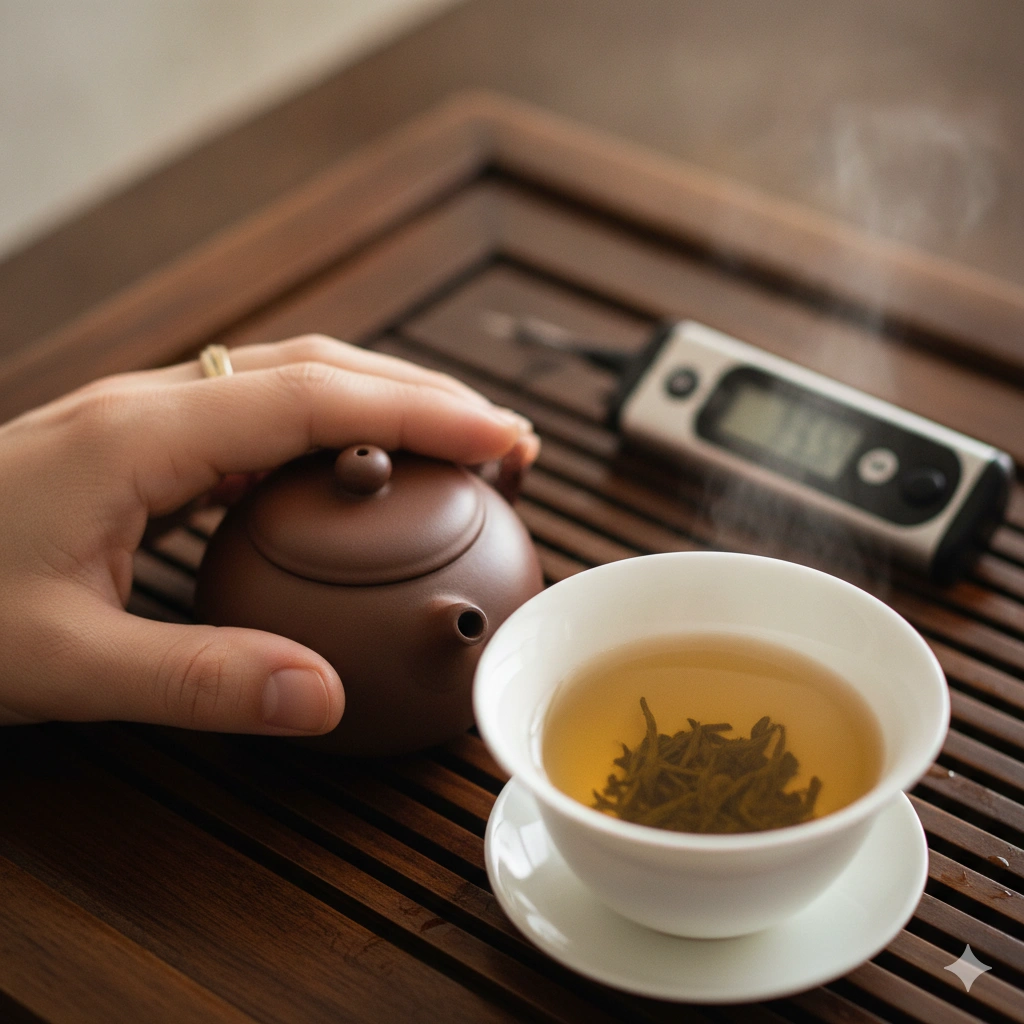
There is no single brewing temperature for all oolong teas. Unlike green tea or black tea, oolong covers a very wide range of styles, from lightly oxidized floral teas to heavily roasted mountain teas.
In general, oolong tea is best brewed between 85°C and 100°C (185°F–212°F).
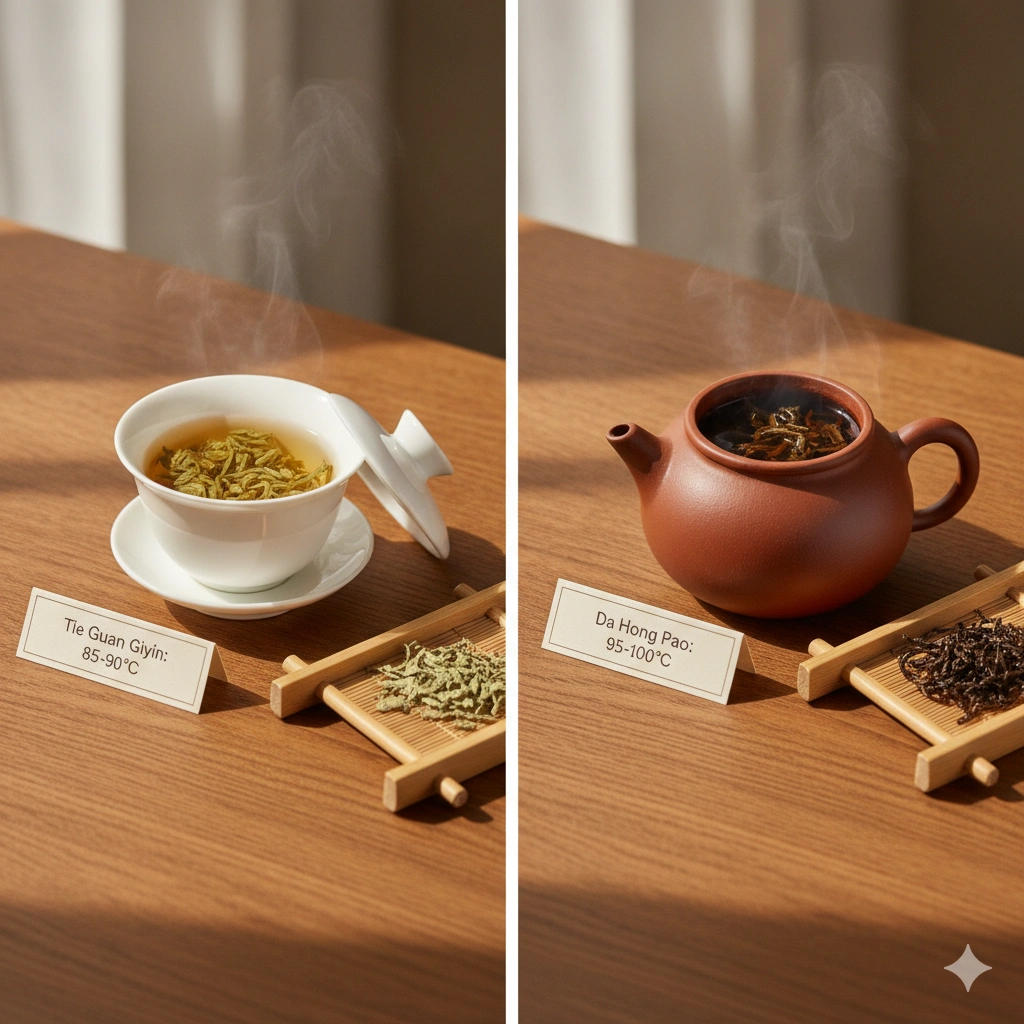
Light oolongs such as Tie Guan Yin and Taiwanese high mountain oolongs usually prefer lower temperatures, while roasted oolongs such as Da Hong Pao perform better with hotter water.
The right temperature depends on the oxidation level, roast level, and the flavor profile you want to experience.
Oolong Tea Temperature Chart
Use this as a simple starting guide:
| Oolong Type | Water Temperature |
|---|---|
| Light Oolong (Tie Guan Yin) | 85–95°C (185–200°F) |
| High Mountain Oolong | 90–95°C (195–200°F) |
| Medium Oxidized Oolong | 90–98°C (195–210°F) |
| Dark Roasted Oolong (Da Hong Pao) | 95–100°C (200–212°F) |
If you do not have a temperature-controlled kettle, you can still brew excellent tea.
For lighter oolongs, let boiling water cool for around 30–60 seconds before pouring.
For dark roasted oolongs, water straight off the boil usually works best.
Why Does Temperature Matter For Oolong Tea?
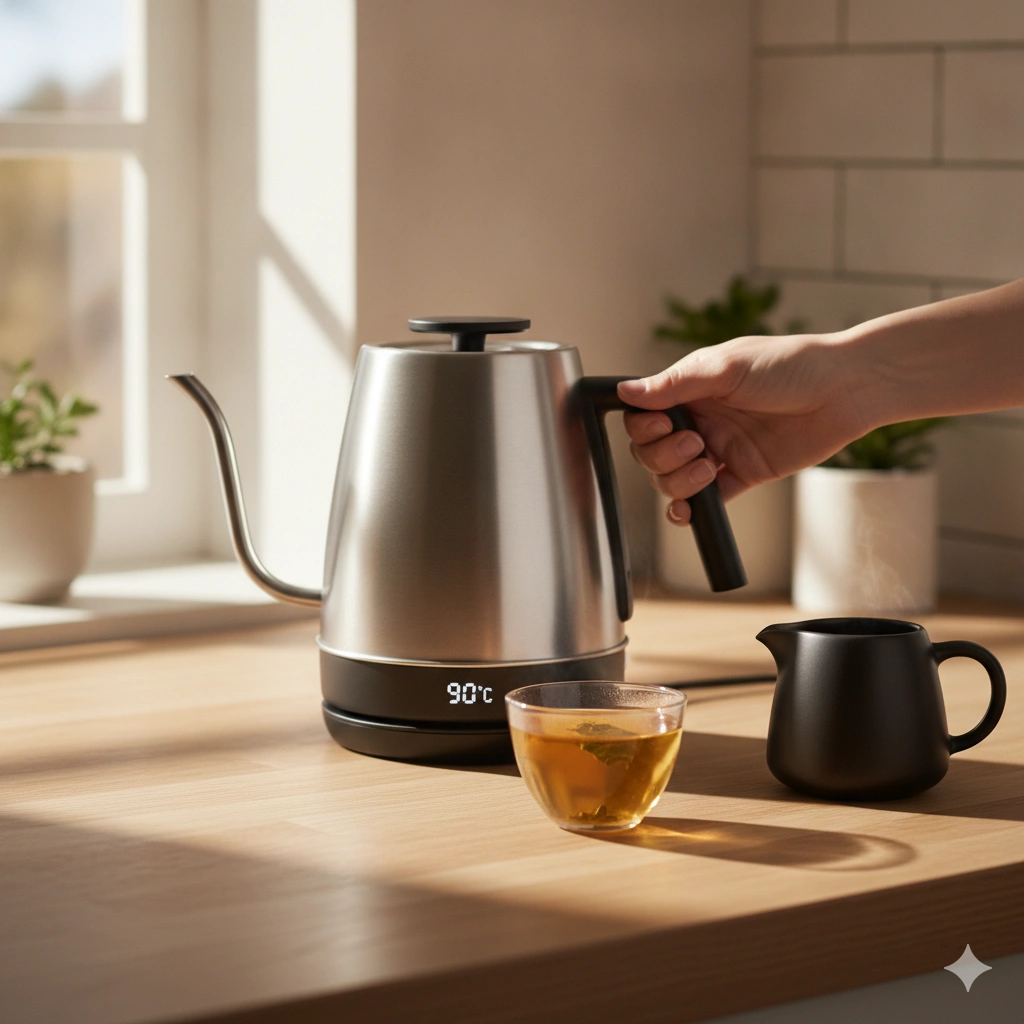
Water temperature changes how different compounds are extracted from the tea leaves.
Lower temperatures tend to highlight lighter and more delicate characteristics:
- Floral aroma
- Freshness
- Sweetness
- Smooth texture
This is why lightly oxidized oolongs often taste more elegant when brewed with slightly cooler water.
Higher temperatures extract deeper flavors:
- Roasted notes
- Mineral character
- Rich body
- Longer aftertaste
This is why traditional roasted oolongs need more heat to fully reveal their complexity.
A temperature that works beautifully for Tie Guan Yin may not be enough for Da Hong Pao.
Tie Guan Yin Brewing Temperature
Tie Guan Yin is one of the most popular Chinese oolong teas and a favorite starting point for many beginners.
Modern lightly oxidized Tie Guan Yin is known for:
- Orchid-like floral aroma
- Creamy texture
- Fresh sweetness
- Clean finish
For this style, 85–90°C is usually a great starting point.
When brewed around this range, the tea keeps its delicate fragrance and smooth character. Using boiling water is not necessarily wrong, but it can make the floral notes feel less refined and bring out more bitterness if the tea is steeped too strongly.
At Tea Passage, we usually prefer around 90°C water for Tie Guan Yin. We find that this temperature allows the orchid aroma to stay clear while keeping the tea soft and balanced.
The difference between 90°C and 100°C is surprisingly noticeable. The tea is the same, but the experience changes.
Da Hong Pao Brewing Temperature
Da Hong Pao, also known as Big Red Robe, is a famous Wuyi rock tea with a completely different personality.
Compared with light oolongs, Da Hong Pao is:
- More heavily roasted
- Fuller-bodied
- Warmer and deeper in flavor
For Da Hong Pao, 95–100°C water is recommended.
High heat helps open the tightly rolled leaves and releases its signature flavors:
- Roasted nuts
- Dark cocoa
- Toasted grains
- Mineral “rock” character
When we brew Da Hong Pao at Tea Passage, we usually use water close to boiling. The first infusion releases a deep roasted aroma, and the tea feels fuller and more grounding compared with lower-temperature brewing.
With this style of oolong, heat is not something to avoid — it is part of the experience.
Can You Brew Oolong Tea With Boiling Water?
Yes, but it depends on the type of oolong.
Boiling water works very well for darker roasted oolongs such as:
- Da Hong Pao
- Rou Gui
- Traditional Wuyi Yancha
These teas are designed to handle higher temperatures.
For lighter oolongs like Tie Guan Yin or Taiwanese high mountain tea, slightly cooler water is usually better because it preserves their delicate floral character.
A simple guideline:
The lighter and more floral the oolong, the lower the temperature.
The darker and more roasted the oolong, the higher the temperature.
Does Water Temperature Affect Oolong Tea Caffeine?
Yes, water temperature can influence caffeine extraction, but it is only one factor.
Other things also matter:
- Amount of tea leaves
- Steeping time
- Tea variety
- Brewing method
Hotter water generally extracts more compounds from tea leaves, including caffeine. A longer, hotter brew will usually produce a stronger cup than a short, cooler infusion.
If you enjoy oolong in the afternoon and prefer a lighter experience, using a lighter oolong with shorter brewing times can create a smoother cup.
Our Brewing Experience at Tea Passage
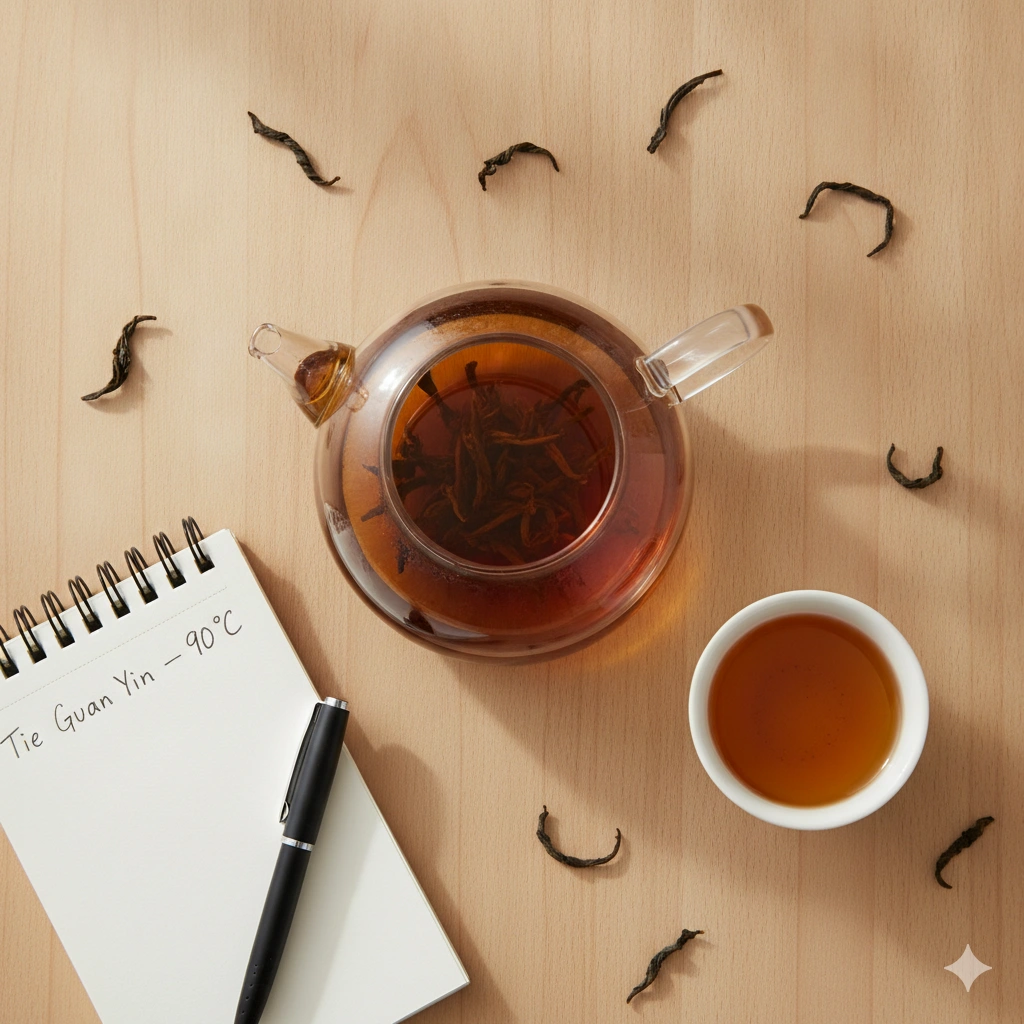
At Tea Passage, we have spent a lot of time comparing how temperature changes the same oolong tea.
One thing we noticed is that brewing temperature does not simply make tea “stronger” or “weaker”. It changes the personality of the tea.
With Tie Guan Yin, around 90°C water helps maintain the floral aroma and creamy texture we enjoy most. The tea feels bright, clean, and refreshing.
With Da Hong Pao, we prefer near-boiling water because the roasted character needs enough heat to fully develop. The aroma becomes deeper, the body becomes richer, and the aftertaste lasts longer.
This is one of the reasons we love oolong tea. A small adjustment in brewing can reveal a completely different side of the same leaves.
Over time, brewing becomes less about following exact rules and more about understanding what the tea is telling you.
Frequently Asked Questions
What temperature should I use for oolong tea?
Light oolongs usually brew best around 85–95°C. Dark roasted oolongs usually perform better around 95–100°C.
Can I use boiling water for all oolong tea?
Not always. Boiling water is excellent for roasted oolongs but may overpower delicate floral oolongs like Tie Guan Yin.
Why does my oolong tea taste bitter?
Bitterness often comes from water that is too hot, steeping too long, or using a brewing ratio that extracts too much from the leaves. Try reducing temperature or steeping time.
Does water temperature affect the caffeine in oolong tea?
Yes. Hotter water and longer steeping generally extract more caffeine, but tea type and brewing method also affect the final amount.
Different oolong teas reveal different personalities depending on how they are brewed.
At Tea Passage, we select oolong teas with unique character, from the floral elegance of Tie Guan Yin to the deep roasted warmth of Da Hong Pao.
Explore our oolong collection and discover how different teas respond in your own cup.