If you are exploring Chinese white tea, you will quickly come across two names: Silver Needle and White Peony.
Both are traditional white teas from Fujian, China. Both are lightly processed, naturally sweet, and valued for their elegance. Yet they offer very different experiences.
Silver Needle, known as Bai Hao Yinzhen, represents the most refined expression of white tea. Made entirely from unopened tea buds, it is delicate, subtle, and highly prized.
White Peony, known as Bai Mudan, represents the balanced side of white tea. Made from one bud and two young leaves, it offers more body, clearer flavor, and a more approachable price.
So which one is better?
The answer depends on what you are looking for.
Silver Needle is for those who enjoy subtlety, refinement, and slow appreciation.
White Peony is for those who want balance, sweetness, and a tea that fits naturally into everyday life.
This guide explains the differences between Silver Needle and White Peony, including their processing, flavor, price, brewing methods, and how to choose the right one for you.
What Is The Difference Between Silver Needle And White Peony?
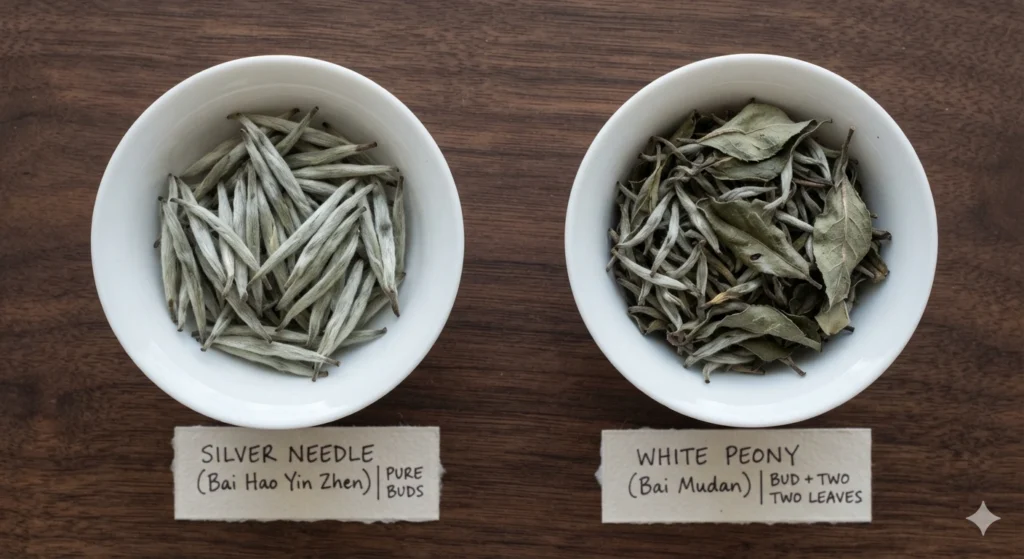
Silver Needle and White Peony come from the same tea plant and the same white tea tradition. The main difference begins with the harvesting standard.
| Silver Needle | White Peony | |
|---|---|---|
| Chinese Name | Bai Hao Yinzhen | Bai Mudan |
| Tea Material | Unopened buds only | One bud + two young leaves |
| Grade | Premium white tea | Classic white tea style |
| Processing | Withered and dried | Withered and dried |
| Flavor | Delicate, floral, refined | Fuller, sweeter, balanced |
| Body | Light and silky | Round and satisfying |
| Price | Higher | More accessible |
Silver Needle uses only the unopened buds of the tea plant. These buds are harvested in early spring while they are still covered with fine silver-white hairs.
White Peony includes the bud together with the young leaves below it. The bud contributes sweetness and floral aroma, while the leaves add structure, body, and a deeper flavor.
This small difference in harvesting creates two completely different tea experiences.
Silver Needle vs White Peony: Difference In Tea Material
The biggest difference between these two teas comes from the raw material.
Silver Needle: Buds Only
Silver Needle requires a very selective harvest.
Only unopened buds are picked, usually during a short early spring period. Each bud must be carefully selected by hand before it begins developing into a leaf.
Because the tea uses only the most tender part of the plant:
- Harvest quantity is limited
- Labor costs are higher
- Quality depends heavily on the season
Since Silver Needle is not roasted or heavily processed, the quality of the raw material is extremely important. There is nowhere for imperfections to hide.
White Peony: Buds And Leaves
White Peony follows a different approach.
The standard picking method is:
one bud + two young leaves
The leaves provide additional flavor compounds, creating a tea with more body and a stronger presence.
This makes White Peony:
- More widely available
- More affordable
- Easier to enjoy daily
Neither harvesting style is better.
Silver Needle focuses on purity and refinement.
White Peony focuses on balance and completeness.
Flavor Comparison: How Do They Taste?
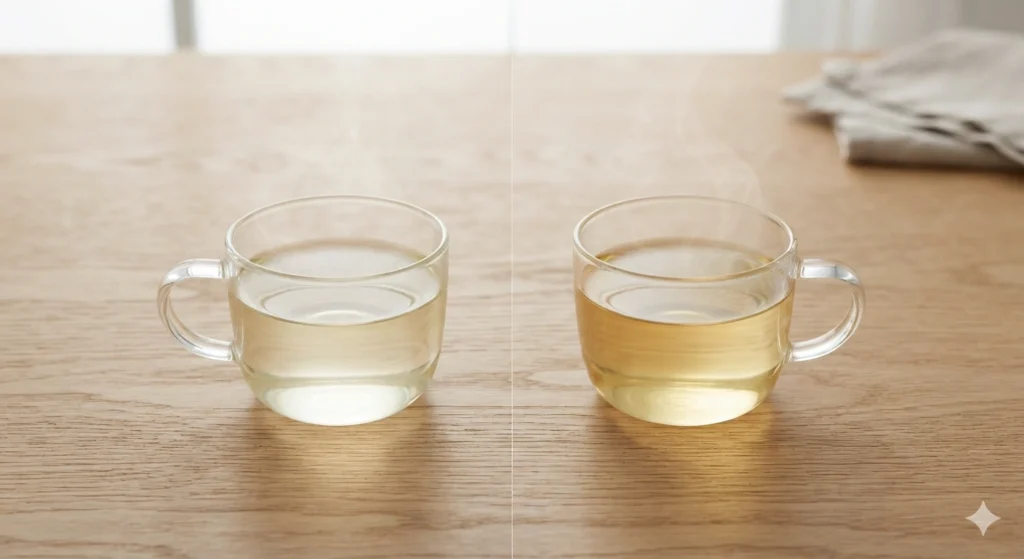
The easiest way to understand the difference between Silver Needle and White Peony is through their flavor.
| Flavor Aspect | Silver Needle | White Peony |
|---|---|---|
| Sweetness | Soft honey sweetness | Fuller honey sweetness |
| Aroma | Floral, fresh, delicate | Floral, fruity, slightly nutty |
| Body | Light and silky | Round and smooth |
| Finish | Clean and elegant | Longer and warmer |
Silver Needle Flavor
Silver Needle has a very delicate personality.
The flavor is often described as:
- Fresh flowers
- Honey
- Fresh hay
- Melon
- Clean mineral notes
The texture is light and silky. The sweetness develops slowly, appearing more clearly in the aftertaste rather than immediately.
Silver Needle is not a tea that fills the mouth with strong flavor. Instead, it reveals small details over multiple infusions.
White Peony Flavor
White Peony has a fuller and more noticeable character.
Because it contains young leaves, it offers:
- More body
- Stronger sweetness
- A clearer tea flavor
Common notes include:
- Honey
- Flowers
- Fresh fruit
- Light nuts
- Hay
Compared with Silver Needle, White Peony feels warmer and more complete.
A simple comparison:
Silver Needle feels like a quiet spring morning.
White Peony feels like a relaxed afternoon.
Both are beautiful, but they create different moods.
Silver Needle vs White Peony: Which Is More Expensive?
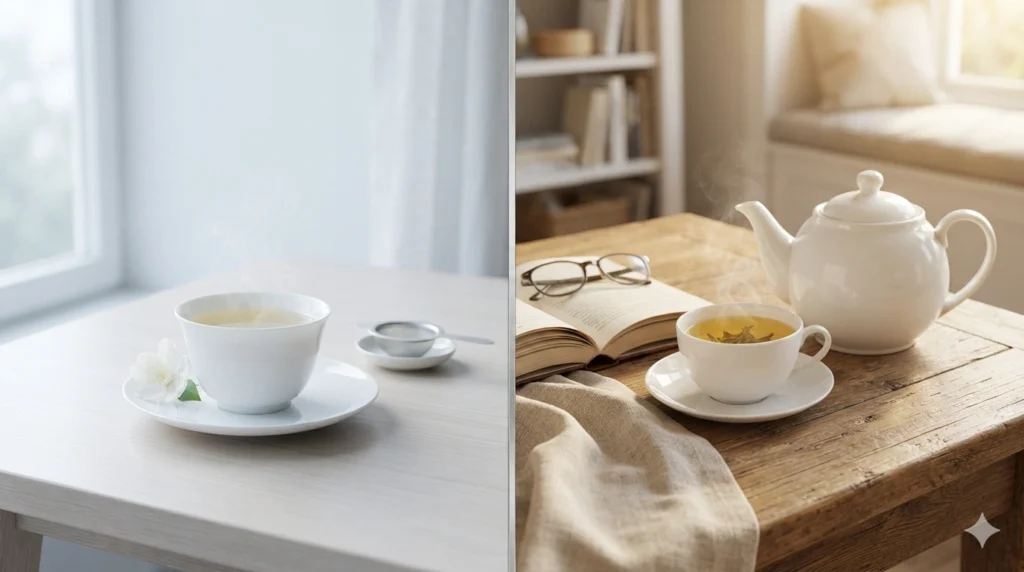
Silver Needle is usually more expensive than White Peony.
The reason is not simply because it is considered “better.”
The price difference comes from production.
Silver Needle:
- Uses only unopened buds
- Requires careful hand picking
- Has a shorter harvest window
- Produces less finished tea
White Peony:
- Uses both buds and leaves
- Has higher production yield
- Is easier to produce at scale
Silver Needle represents scarcity and refinement.
White Peony represents accessibility and balance.
A higher price does not always mean a better drinking experience. It means a different type of tea experience.
Which Has More Caffeine?
Both Silver Needle and White Peony contain caffeine.
The exact amount depends on:
- Tea quantity
- Brewing temperature
- Steeping time
- Leaf material
Because tea buds naturally contain caffeine as protection against insects, Silver Needle may contain slightly more caffeine than some leaf-based teas.
However, the difference is usually small.
For most drinkers, the experience matters more than the exact caffeine level.
Both teas provide a gentle lift compared with coffee, making them suitable for:
- Slow mornings
- Afternoon breaks
- Quiet work sessions
Which One Is Better For Beginners?
For most beginners, White Peony is the easier starting point.
The reason is simple:
White Peony has a clearer flavor profile.
New tea drinkers can immediately notice:
- Sweetness
- Floral aroma
- Smooth texture
- Fuller body
It is also forgiving when brewing. Slight changes in temperature or steeping time usually do not ruin the tea.
Silver Needle is also beginner-friendly, but its beauty is more subtle.
Some beginners expect a strong aroma or bold flavor and may mistake Silver Needle’s delicacy for weakness.
It is not weak.
It is simply a tea that reveals itself slowly.
A good path for many drinkers is:
Start with White Peony → Understand white tea → Explore Silver Needle
Which One Should You Buy?
The right choice depends on your personal preference.
Choose Silver Needle If You:
- Enjoy delicate flavors
- Prefer elegant and subtle teas
- Appreciate premium tea experiences
- Like slow, quiet tea sessions
Silver Needle is ideal for moments when you want to focus on the tea itself.
Choose White Peony If You:
- Are new to Chinese white tea
- Want an everyday tea
- Prefer fuller flavors
- Want better value
White Peony is easier to incorporate into daily life.
Many experienced tea drinkers keep both:
Silver Needle for special quiet moments.
White Peony for everyday enjoyment.
Brewing Differences
Both teas are easy to brew, but they respond differently.
Brewing Silver Needle
Recommended:
- Water temperature: 85°C–90°C
- Tea amount: 5g per 100ml gaiwan
- First infusion: 20–30 seconds
Silver Needle benefits from gentler brewing.
Hotter water can reduce its floral character.
Brewing White Peony
Recommended:
- Water temperature: 90°C–95°C
- Tea amount: 5g per 100ml gaiwan
- First infusion: 20–30 seconds
White Peony is more forgiving because the leaves provide more structure.
Both teas can be steeped multiple times.
Silver Needle usually reveals sweetness gradually.
White Peony often becomes deeper and richer through later infusions.
Aging Potential
Like other white teas, both Silver Needle and White Peony can develop beautifully with age.
Aged Silver Needle
Over time, Silver Needle may develop:
- Dried fruit sweetness
- Honey notes
- Softer texture
- Deeper aroma
Its character moves from fresh and floral toward warm and rounded.
Aged White Peony
White Peony often develops more noticeable changes:
- Woody sweetness
- Dried fruit
- Deeper body
- Richer finish
Because White Peony contains more leaves, aging can create a broader transformation.
Silver Needle ages into elegance.
White Peony ages into depth.
Our Recommendation At Tea Passage
At Tea Passage, we see Silver Needle and White Peony as two different expressions of the same white tea tradition.
For someone discovering Chinese white tea for the first time, we usually recommend White Peony.
It offers the clearest introduction:
- Balanced flavor
- Natural sweetness
- Easy brewing
- Everyday versatility
Silver Needle is the tea we recommend for those who want to explore the most refined side of white tea.
It is a tea for slower moments, when you have time to notice the details.
White Peony shows you the harmony of buds and leaves.
Silver Needle shows you the purity of the bud itself.
Neither is better.
They simply tell different stories about white tea.
Frequently Asked Questions
Is Silver Needle better than White Peony?
Not necessarily. Silver Needle is more delicate and refined, while White Peony is fuller and more balanced. The better choice depends on your personal taste.
Which is more expensive, Silver Needle or White Peony?
Silver Needle is usually more expensive because it uses only unopened buds and requires more selective harvesting.
Is White Peony easier to drink than Silver Needle?
Yes. White Peony has more body and a clearer flavor, making it easier for many beginners to appreciate.
Which white tea is best for beginners?
White Peony is often the best starting point because it is balanced, affordable, and forgiving to brew.
Does Silver Needle taste better than White Peony?
Taste is personal. Silver Needle is delicate and elegant. White Peony is fuller and sweeter. Both offer different experiences.
Final Thoughts
The choice between Silver Needle and White Peony is not about finding the “best” white tea.
It is about finding the tea that matches your taste.
Silver Needle represents purity, refinement, and subtle elegance.
White Peony represents balance, comfort, and everyday enjoyment.
At Tea Passage, we select both teas because each captures a different side of Fujian white tea tradition.
Whether you choose the delicate beauty of Silver Needle or the balanced character of White Peony, both offer a reason to slow down and enjoy the quiet moments of tea.