What Is Dancong Tea?
Dancong tea is one of the most distinctive Chinese oolong teas.
It comes from Phoenix Mountain (Fenghuang Mountain) in Guangdong Province, China, and is famous for something unusual in the tea world: its incredible natural aroma.
A good Dancong tea can smell like orchids, honey, ripe fruit, almonds, or flowers — yet no flavoring is added. Everything comes from the tea leaf itself, the environment where it grows, and the skill of the tea maker.
The name Dancong (单丛) means “single bush.”
This name reflects the traditional way of making the tea. Instead of mixing leaves from many tea plants together, tea makers historically selected individual trees and processed their leaves separately, preserving the unique character of each one.
That is what makes Dancong different.
It is not a tea that tries to taste the same every time.
It celebrates the personality of each tea tree.
Is Dancong Tea An Oolong Tea?
Yes. Dancong tea is an oolong tea.
It belongs to the same family as famous teas such as:
- Tie Guan Yin
- Da Hong Pao
- Oriental Beauty
Like other oolong teas, Dancong is partially oxidized. This gives it a character between green tea and black tea.
It has the freshness of green tea, but also the depth and complexity that come from oxidation and roasting.
However, what makes Dancong stand out is not simply its processing.
It is the aroma.
While Tie Guan Yin is known for fresh orchid notes and Da Hong Pao is known for roasted mineral flavors, Dancong is famous for producing some of the most complex natural fragrances in Chinese tea.
One cup may remind you of flowers.
Another may bring notes of honey or ripe fruit.
Another may feel warmer and nuttier.
Dancong is essentially oolong tea taken to an aromatic extreme.
Where Does Dancong Tea Come From?
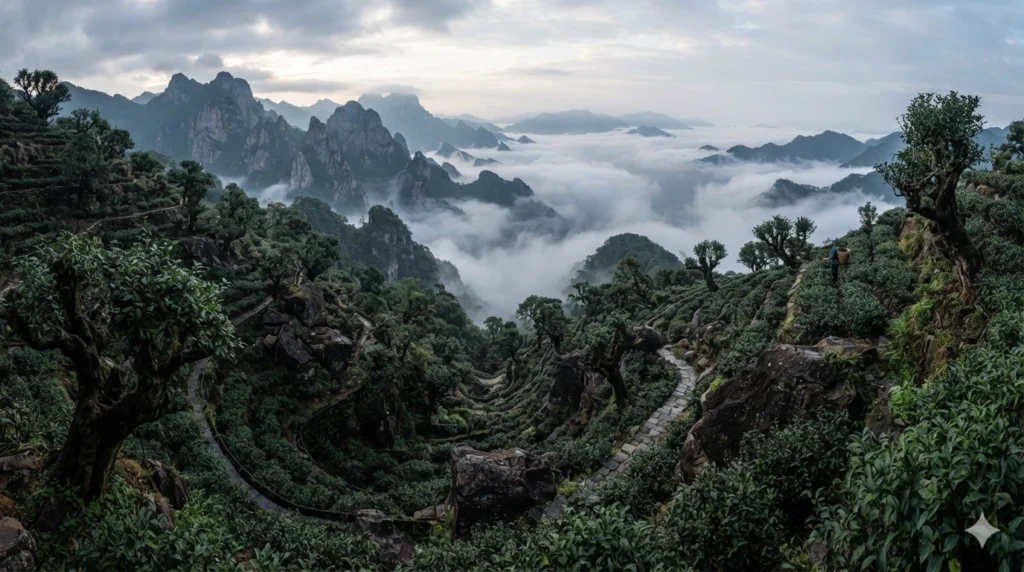
Dancong tea comes from Phoenix Mountain (Fenghuang Mountain) in Chaozhou, Guangdong Province.
This region has been producing tea for centuries and is considered the birthplace of authentic Phoenix Dancong.
The environment plays an important role in the tea’s character.
Phoenix Mountain has:
- Steep mountain slopes
- Misty weather
- Rocky soil
- Significant temperature changes between day and night
These conditions slow the growth of tea leaves and encourage the development of complex aromas.
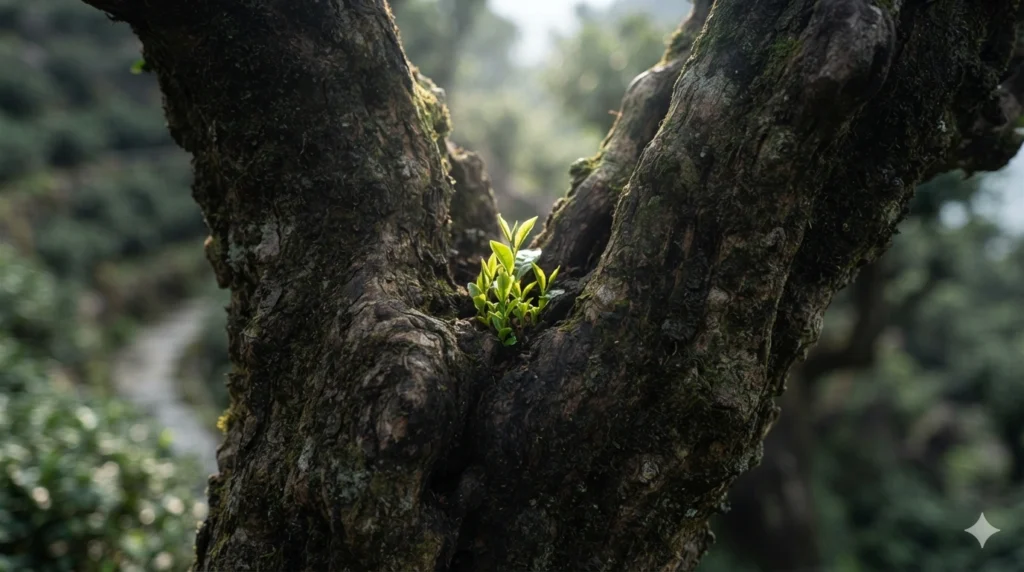
Unlike many modern tea plantations with rows of identical bushes, Phoenix Mountain still has many older tea trees with unique characteristics.
Some trees are decades old.
Some have been passed down through generations.
These old trees are part of what gives Dancong its individuality.
The tea is not just made in Phoenix Mountain.
It carries the identity of Phoenix Mountain.
Why Is Dancong Tea Famous?
Dancong became famous for three reasons:
- Its extraordinary natural aroma
- Its single-bush tradition
- Its connection with Chaozhou Gongfu tea culture
Together, these make Dancong one of the most fascinating teas in China.
The Unique Aroma Of Dancong Tea
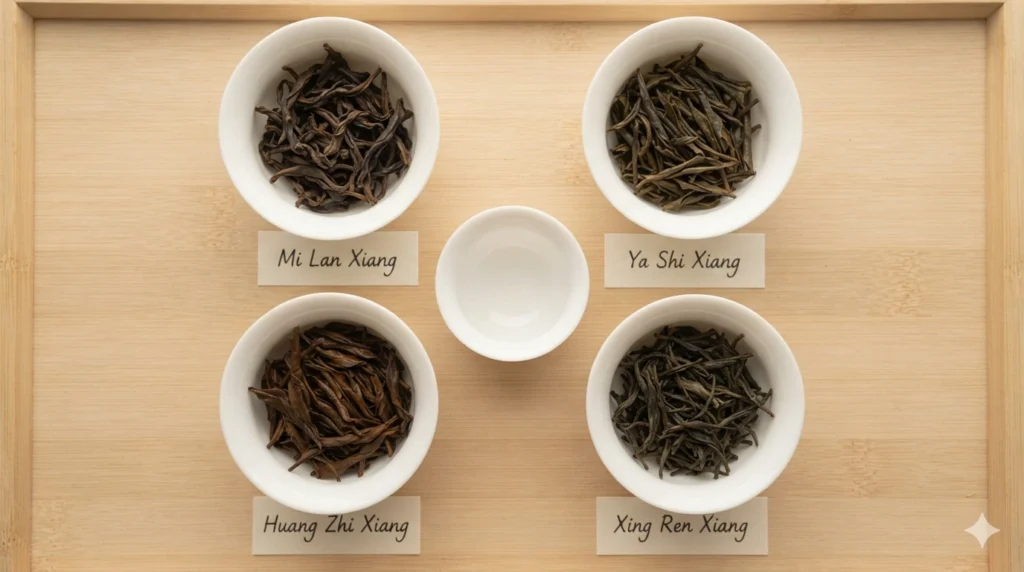
The first thing most people notice about Dancong is the fragrance.
When hot water touches the leaves, the aroma rises immediately.
Unlike scented teas, where flowers or oils are added after processing, Dancong’s aroma develops naturally from:
- Tea variety
- Growing environment
- Harvesting methods
- Processing techniques
This is why different Dancong teas can smell completely different.
Some famous examples include:
Mi Lan Xiang (Honey Orchid Aroma)
One of the most popular Dancong varieties.
It has:
- Honey sweetness
- Orchid-like floral notes
- A soft fruity character
It is often recommended as a first Dancong tea because it is aromatic but approachable.
Ya Shi Xiang (Duck Shit Aroma)
Despite its unusual name, this is one of the most famous Dancong varieties.
The name does not describe the taste.
It is known for:
- Rich floral aroma
- Fruity sweetness
- Complex layers
The strange name has become part of its story.
Huang Zhi Xiang (Gardenia Aroma)
Known for a softer floral character.
It often has:
- Creamy floral notes
- Gentle sweetness
- Elegant fragrance
Why Does Dancong Have So Many Different Flavors?
This is one of the most interesting things about Dancong.
Many teas are blended to create consistency.
Dancong works differently.
Traditionally, tea makers valued the differences between individual tea trees.
A single tree might produce leaves with a unique aroma profile, and that character would be preserved instead of mixed away.
This creates a tea category where exploring different varieties feels almost like exploring different wines.
The mountain, the tree, and the maker all leave their mark.
What Does Dancong Tea Taste Like?
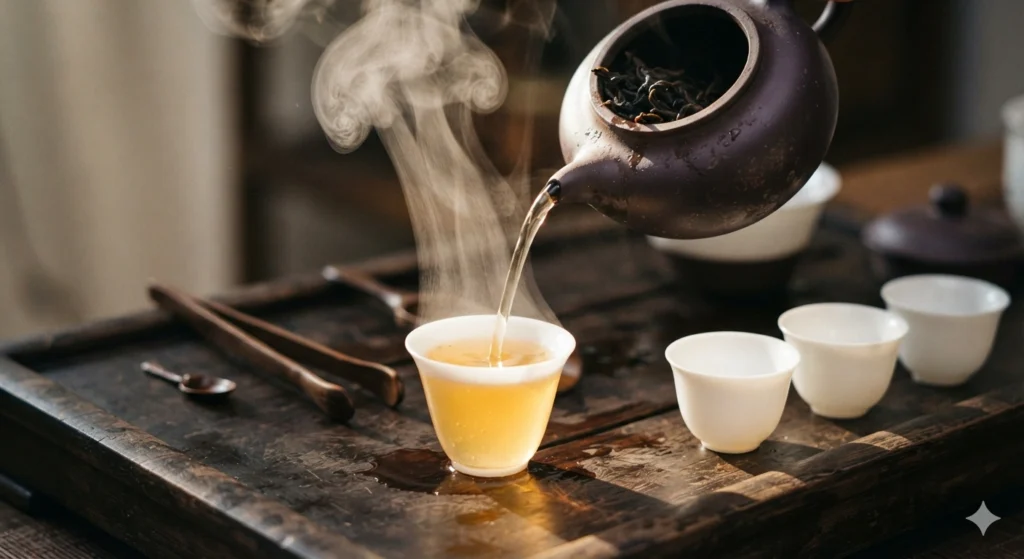
Dancong tea is an experience built around aroma.
Before you taste it, you smell it.
When hot water touches the leaves, the fragrance rises from the cup almost immediately. Depending on the variety, you may notice flowers, honey, ripe fruit, roasted nuts, or a soft mineral character.
But Dancong is not only about fragrance.
A good Dancong has layers.
The first sip is usually bright and aromatic. As the tea settles, deeper flavors appear — gentle sweetness, a smooth texture, and a lingering aftertaste that stays in the mouth.
The overall impression is:
- Floral
- Fruity
- Smooth
- Sweet
- Complex
Unlike heavily roasted teas that feel deep and powerful, Dancong feels more like a conversation. The flavors slowly reveal themselves over multiple infusions.
The Main Flavor Characteristics Of Dancong Tea
Floral Aroma
Floral notes are the signature of many Dancong teas.
Depending on the variety, the aroma may remind you of:
- Orchid
- Gardenia
- Magnolia
- Fresh flowers
The floral character is not artificial or perfume-like.
It is lighter and more natural, similar to the fragrance of flowers in a garden.
Honey And Fruit Notes
Many Dancong teas have a natural sweetness that develops after brewing.
You may notice:
- Honey-like sweetness
- Ripe peach
- Tropical fruit
- Stone fruit
This sweetness is especially noticeable in the aftertaste.
In Chinese tea culture, this lingering sweetness is called hui gan (回甘) — the returning sweetness that appears after swallowing.
Roasted And Mineral Depth
Although Dancong is famous for floral aromas, it is not a light tea.
Traditional processing gives it warmth and depth.
Some varieties have:
- Toasted grain notes
- Roasted nuts
- Mineral qualities from the mountain soil
These deeper notes balance the floral fragrance and prevent the tea from feeling too simple.
Popular Types Of Dancong Tea
Dancong has many varieties, each with its own aroma profile.
Some of the most famous include:
| Type | Flavor Profile |
|---|---|
| Mi Lan Xiang (Honey Orchid) | Honey sweetness, orchid fragrance, floral and smooth |
| Ya Shi Xiang (Duck Shit Aroma) | Rich floral aroma, fruity sweetness, complex finish |
| Huang Zhi Xiang (Gardenia Aroma) | Soft floral notes, elegant and creamy |
| Xing Ren Xiang (Almond Aroma) | Nutty, warm, slightly roasted |
| Da Wu Ye (Big Dark Leaf) | Fuller body, deeper and more roasted |
For beginners, Mi Lan Xiang is usually the easiest place to start.
It has the classic Dancong character without being too intense.
Dancong Tea vs Other Oolong Teas
Dancong belongs to the oolong family, but its personality is very different from other famous oolongs.
| Dancong | Tie Guan Yin | Da Hong Pao | |
|---|---|---|---|
| Origin | Guangdong | Fujian | Fujian |
| Style | Aromatic and complex | Fresh and floral | Roasted and mineral |
| Main Notes | Flowers, fruit, honey | Orchid, cream, freshness | Toast, rock, cocoa |
| Experience | Fragrance-focused | Light and refreshing | Deep and warming |
Dancong vs Tie Guan Yin
Tie Guan Yin is usually softer and more refreshing.
It often has:
- Fresh orchid aroma
- Creamy texture
- Light sweetness
Dancong is more intense aromatically.
It has stronger personality and more variation between different varieties.
Dancong vs Da Hong Pao
Both are famous Chinese oolong teas, but they offer completely different experiences.
Da Hong Pao is known for:
- Roasted flavors
- Mineral notes
- Deep warmth
Dancong is known for:
- Floral fragrance
- Fruity sweetness
- Aromatic complexity
If you enjoy coffee, roasted nuts, and darker flavors, Da Hong Pao may appeal more.
If you enjoy flowers, fruit, and fragrance, Dancong is likely the better choice.
Is Dancong Tea Good For Beginners?
Yes, but choosing the right variety matters.
Dancong can be surprising for someone drinking Chinese tea for the first time because the aroma is much stronger than many green teas or lighter oolongs.
It is a good choice if you enjoy:
- Jasmine tea
- Floral drinks
- Fragrant coffees
- Aromatic wines
- Complex flavors
For beginners, we usually recommend starting with:
Mi Lan Xiang (Honey Orchid Dancong)
It has the balance that represents Dancong well:
- Clear floral aroma
- Natural sweetness
- Smooth body
- Easy-to-understand flavor
However, if you prefer very mild and simple teas, Dancong may feel too expressive at first.
It is a tea that asks for attention.
The more carefully you drink it, the more you discover.
How To Brew Dancong Tea
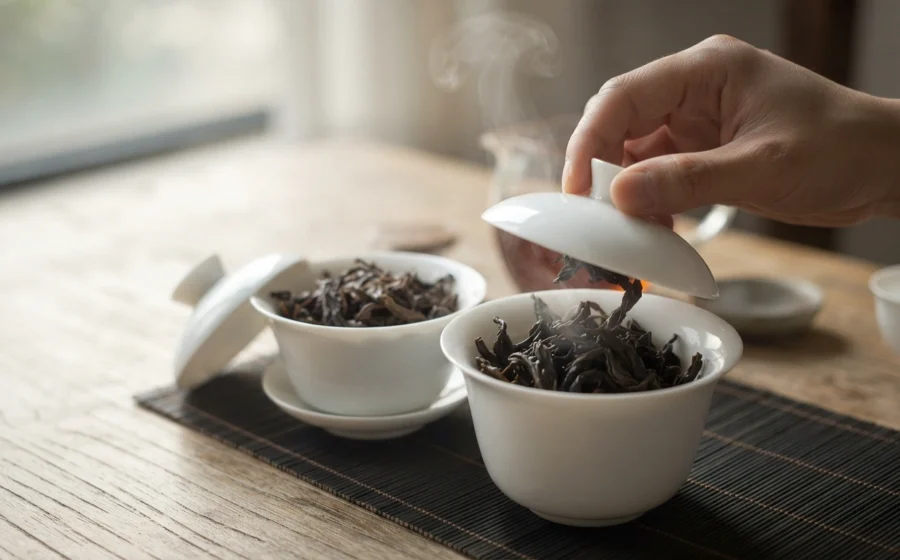
Dancong is traditionally brewed using Gongfu tea style.
This method uses:
- A small gaiwan or teapot
- More tea leaves
- Short brewing times
- Multiple infusions
A simple starting point:
Tea amount: 5–7 grams
Water temperature: 90°C–95°C
First infusion: Around 5–10 seconds
The goal is not to make one large cup.
The goal is to experience how the tea changes.
The first infusion often shows the strongest aroma.
Later infusions usually become:
- Sweeter
- Smoother
- More balanced
A good Dancong can easily provide many enjoyable infusions.
Our Experience With Dancong At Tea Passage
At Tea Passage, Dancong was one of the teas that changed how we understood aroma in Chinese tea.
The first time we brewed a good Mi Lan Xiang, the fragrance was the first thing we noticed.
Before tasting anything, the room already smelled floral and sweet.
The first sip was surprisingly smooth.
There was the obvious orchid-like aroma, but underneath it was a deeper sweetness and a gentle roasted character that gave the tea balance.
What makes Dancong special is that every variety feels slightly different.
One tea may feel bright and floral.
Another may feel warm and nutty.
Another may have a fruit-like sweetness that appears after several infusions.
That individuality is why Dancong remains fascinating.
It is not a tea you simply drink once and understand.
It is a tea you explore.
Frequently Asked Questions
What is Dancong tea?
Dancong tea is a Chinese oolong tea from Phoenix Mountain in Guangdong Province. It is famous for its natural floral and fruity aromas and traditional single-bush production style.
Is Dancong tea green tea or black tea?
Neither. Dancong is an oolong tea, meaning it is partially oxidized and sits between green tea and black tea in processing.
Why does Dancong tea smell so fragrant?
The aroma comes naturally from the tea variety, growing environment, and traditional processing. No artificial flavors are added.
What does Dancong tea taste like?
Dancong tastes floral, fruity, smooth, and complex. Different varieties can have notes of honey, orchids, fruit, almonds, or roasted flavors.
Is Dancong tea good for beginners?
Yes. Mi Lan Xiang is a good starting point because it has a balanced floral aroma and smooth sweetness.
What is the difference between Dancong and Da Hong Pao?
Dancong focuses on floral and fruity aromas, while Da Hong Pao is known for roasted, mineral, and deeper flavors.
Dancong tea is a reminder that tea can be more than a drink. It can carry the identity of a mountain, the work of a tea maker, and the personality of a single tree.
At Tea Passage, we select Dancong teas that show the character of Phoenix Mountain — from the floral sweetness of Mi Lan Xiang to the deeper complexity of other traditional varieties.