Jasmine green tea is one of the most recognizable Chinese teas in the world. Its fragrance often reaches you before the first sip. It appears in restaurants, tea shops, and households around the world, making it one of the most common introductions to Chinese tea culture.
However, authentic jasmine green tea is far more than a simple combination of green tea leaves and jasmine flowers. Behind its familiar floral aroma is a traditional scenting process that requires patience, timing, and craftsmanship. For centuries, tea makers in China have refined this technique to create a tea where the fragrance of jasmine and the character of green tea exist in harmony.
A well-made jasmine green tea should never taste artificial or overly perfumed. The best examples offer a natural floral aroma, a fresh tea character, and a soft sweetness that develops gradually with each infusion.
Understanding how jasmine green tea is made changes the way you experience it. What appears to be a simple floral tea is actually one of China’s most carefully crafted tea traditions.
What Is Jasmine Green Tea?
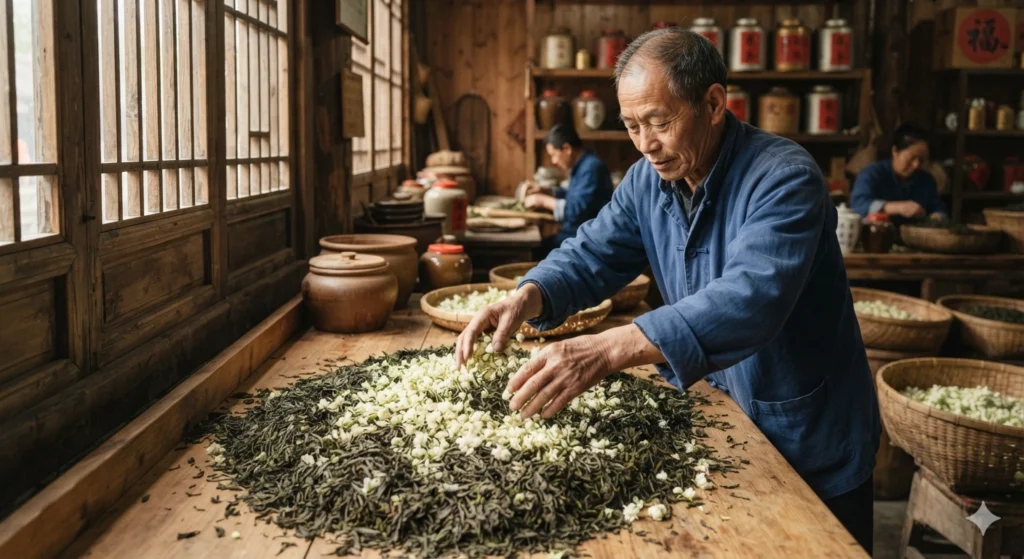
Jasmine green tea is a scented tea made by combining green tea leaves with fresh jasmine blossoms through a traditional fragrance absorption process.
The tea leaves are layered with jasmine flowers, allowing the leaves to naturally absorb the aroma released by the blossoms. This process may be repeated several times, especially for higher-quality jasmine teas, creating a deeper and more lasting fragrance.
Although the name suggests a tea made from jasmine flowers, jasmine green tea is not a herbal flower tea. The main ingredient is still tea leaves from the Camellia sinensis plant.
The jasmine flowers are used to naturally scent the tea rather than becoming the main material of the finished product.
A traditional jasmine green tea contains:
- Green tea leaves — the foundation of the tea’s flavor and texture
- Fresh jasmine blossoms — the source of the floral fragrance
- Time and craftsmanship — the elements that transform ordinary tea into jasmine tea
The result is a tea that combines the fresh, slightly vegetal character of green tea with the sweet, elegant aroma of jasmine flowers.
Is Jasmine Tea Made From Jasmine Flowers?
This is one of the most common questions about jasmine tea.
The answer is: not exactly.
Jasmine tea is made from tea leaves that have been scented with jasmine flowers. The flowers themselves are not usually the main ingredient in the final tea.
During traditional production, fresh jasmine blossoms are carefully layered with processed green tea leaves. As the flowers open, they release aromatic compounds that are absorbed by the tea leaves.
After the scenting process, the used flowers are usually removed before the tea is packaged.
You may notice some jasmine petals in certain products, but their presence does not necessarily indicate higher quality. In many cases, petals are added mainly for visual appearance.
A high-quality jasmine tea does not need a large number of visible flowers. Its fragrance comes from the tea leaves themselves, which have absorbed the natural aroma during the scenting process.
This is the key difference between traditionally made jasmine tea and artificially flavored versions.
A traditional jasmine green tea releases its aroma slowly through brewing. Artificially scented teas often produce a strong fragrance immediately but may lose their character quickly after the first infusion.
How Is Jasmine Green Tea Made?
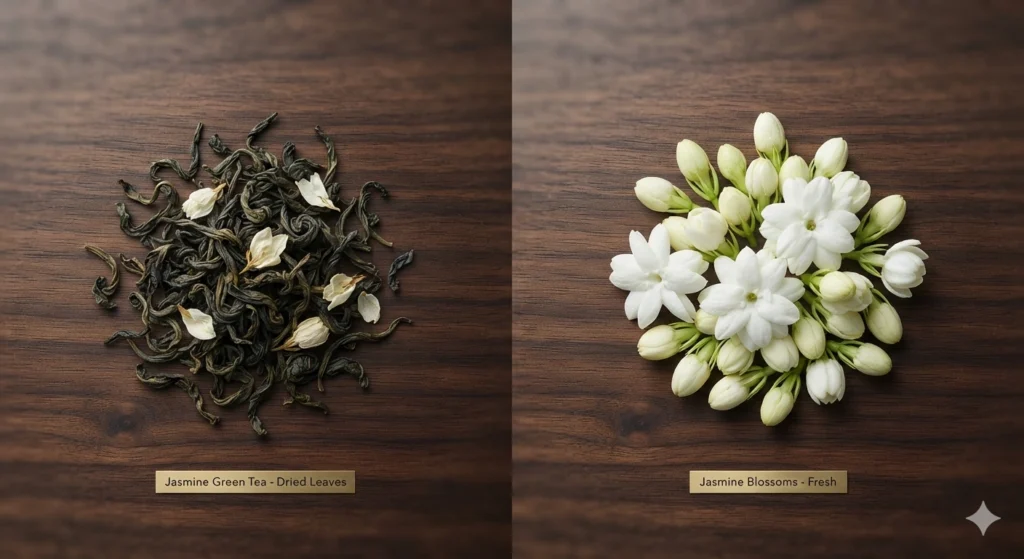
The production of jasmine green tea is a careful balance between tea processing and floral timing.
Unlike flavored teas that simply add aroma, traditional jasmine tea relies on a slow interaction between fresh jasmine blossoms and tea leaves.
Step 1: Preparing The Green Tea Base
The process begins with green tea leaves.
In many traditional jasmine teas, the green tea base is produced during the spring harvest. The leaves are processed to preserve their fresh character, then stored until the jasmine flowers bloom during summer.
The quality of the tea base is extremely important. Jasmine fragrance can enhance good tea, but it cannot completely hide poor-quality leaves.
A skilled tea maker begins with leaves that already have:
- Fresh aroma
- Clean sweetness
- Balanced texture
The jasmine should complement the tea, not cover it.
Step 2: Harvesting Jasmine Flowers
Jasmine flowers are usually picked during the daytime while the buds are still closed.
The timing is critical.
Jasmine blossoms release their strongest fragrance when they open at night. Tea makers carefully manage the flowers so they reach their peak aroma at the right moment for scenting.
The flowers must be handled gently because damaged or overheated blossoms can produce unwanted aromas.
Step 3: The Jasmine Scenting Process
At night, when the jasmine flowers begin to open, the blossoms are layered together with green tea leaves.
The tea and flowers are placed together in controlled conditions, allowing the tea leaves to absorb the natural fragrance of jasmine.
During this stage, tea makers carefully monitor:
- Temperature
- Humidity
- Flower condition
- Scent intensity
Too much heat can damage the floral aroma. Too little activity may result in a weak fragrance.
The best jasmine teas are created through patience rather than speed.
Step 4: Removing The Flowers And Drying The Tea
After the scenting process is complete, the spent jasmine flowers are removed.
The tea is then dried to stabilize the leaves and preserve the absorbed aroma.
At this point, the fragrance is no longer simply on the surface. It has become part of the tea leaf itself.
This is why traditionally scented jasmine tea continues releasing floral notes through multiple infusions.
Step 5: Repeating The Scenting Process
Premium jasmine green teas often go through several rounds of scenting.
Each additional round adds depth and complexity to the aroma.
Lower-grade teas may be scented only once, while higher-quality teas may undergo multiple scenting cycles to create a more refined fragrance.
The result is a jasmine tea that feels balanced:
- The jasmine aroma is clear but not overwhelming
- The green tea flavor remains present
- The sweetness develops naturally
This careful process is what separates traditional jasmine green tea from simple flavored tea.
Where Does Jasmine Green Tea Come From?
Jasmine green tea is most closely associated with China, especially Fujian province, where the tradition of jasmine tea production has been refined for generations.
Among Chinese jasmine teas, Fuzhou Jasmine Tea is considered one of the most classic styles.
Fuzhou has long been known for producing elegant jasmine tea because the region combines:
- Suitable tea-growing conditions
- A favorable climate for jasmine flowers
- Generations of scenting expertise
The traditional method developed in Fujian has influenced jasmine tea production throughout China and remains one of the most respected expressions of this style.
Another important jasmine tea production area is Guangxi province, particularly Hengxian (now known as Hengzhou).
Guangxi is one of China’s largest jasmine-growing regions and supplies a significant amount of jasmine flowers for tea production.
While different regions produce different styles, the quality of jasmine green tea depends on both the tea base and the scenting craftsmanship.
A good jasmine tea requires:
- A clean and flavorful green tea base
- High-quality jasmine blossoms
- Careful scenting techniques
The flower creates the aroma, but the tea leaf creates the experience.
What Does Jasmine Green Tea Taste Like?
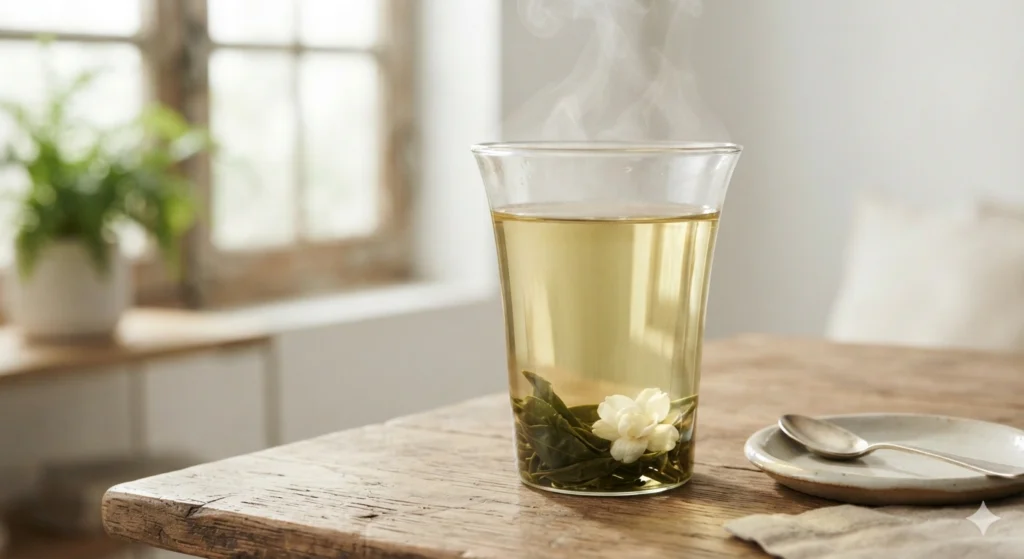
Jasmine green tea is loved because it creates a balance between the freshness of green tea and the elegance of jasmine flowers.
The first thing you notice is the aroma. A good jasmine green tea smells fresh and natural, like jasmine blossoms in a summer garden. The fragrance should feel soft and inviting, never sharp or artificial.
When you taste it, the green tea base appears underneath the floral notes. There is usually a gentle vegetal sweetness, a smooth texture, and a clean finish that stays lightly on the palate.
| Character | Description |
|---|---|
| Aroma | Fresh jasmine blossoms, natural and floral |
| Flavor | Light vegetal sweetness with gentle floral notes |
| Body | Smooth, refreshing, and balanced |
| Finish | Clean, slightly sweet, and lingering |
A well-made jasmine green tea is not simply floral. The best examples allow you to taste both elements:
- The jasmine provides fragrance and sweetness
- The green tea provides freshness and structure
The two should work together rather than compete.
If the jasmine aroma completely covers the tea itself, the balance is usually not ideal. Traditional jasmine tea is not about creating the strongest possible fragrance. It is about creating harmony between flower and leaf.
Jasmine Green Tea vs Green Tea
Because jasmine green tea usually uses green tea as its base, the two are closely related. However, the drinking experience is quite different.
| Aspect | Jasmine Green Tea | Green Tea |
|---|---|---|
| Aroma | Floral, jasmine fragrance | Fresh, vegetal, natural tea aroma |
| Flavor | Sweet floral notes with green tea character | Grass, freshness, and brighter tea notes |
| Processing | Green tea scented with jasmine flowers | Pure green tea leaves |
| Experience | Soft, aromatic, approachable | Direct, fresh, and expressive |
Plain green tea highlights the character of the tea leaf itself. You taste the region, variety, and processing style more directly.
Jasmine green tea adds another layer: the fragrance of jasmine blossoms.
For many beginners, jasmine green tea feels easier to appreciate because the floral aroma creates a softer introduction to green tea. The fragrance makes the tea feel more approachable while still preserving the freshness of the green tea base.
Neither style is better. They simply offer different experiences.
Green tea focuses on the leaf.
Jasmine green tea focuses on the relationship between leaf and flower.
Jasmine Green Tea vs Jasmine Tea
The terms jasmine green tea and jasmine tea are often used interchangeably, but they are not exactly the same.
Jasmine tea is a broader category that refers to any tea scented with jasmine flowers.
The tea base can include:
- Green tea
- White tea
- Oolong tea
- Black tea
However, jasmine green tea is by far the most common and traditional style.
When people around the world order jasmine tea, they are usually referring to jasmine green tea.
Different tea bases create different experiences:
| Tea Base | Character |
|---|---|
| Jasmine Green Tea | Fresh, floral, light, and classic |
| Jasmine White Tea | Softer, sweeter, more delicate |
| Jasmine Oolong | Fuller, more complex, with deeper aroma |
| Jasmine Black Tea | Richer, stronger, and more robust |
For most people discovering jasmine tea for the first time, jasmine green tea is the best place to begin.
Is Jasmine Green Tea Good For Beginners?
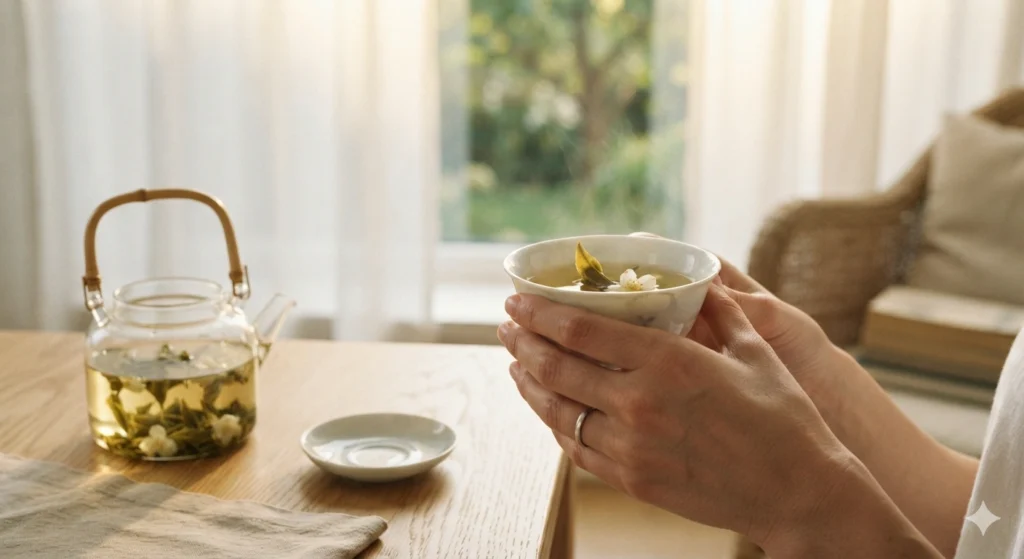
Jasmine green tea is one of the most beginner-friendly Chinese teas.
The reason is simple: it is immediately understandable.
Many traditional Chinese teas require time to appreciate. Some have subtle aromas, complex textures, or flavors that develop slowly. Jasmine green tea offers a more familiar experience. The floral aroma is clear from the first cup, making it easier for new tea drinkers to enjoy.
It is especially suitable for people who:
- Enjoy floral aromas
- Prefer lighter and refreshing flavors
- Want to explore Chinese tea
- Find stronger teas overwhelming
Jasmine green tea is also relatively forgiving when brewing. Compared with some delicate green teas, the floral scent helps soften small brewing mistakes.
For someone taking their first step into Chinese tea, jasmine green tea often becomes a bridge between familiar floral drinks and the wider world of traditional tea.
How To Brew Jasmine Green Tea
Jasmine green tea is simple to brew, but a few adjustments help preserve its fragrance and sweetness.
Water Temperature
Use water around 80°C to 85°C (176°F to 185°F).
Avoid boiling water.
Very hot water can damage the delicate jasmine aroma and extract too much bitterness from the green tea leaves.
If you do not have a temperature-controlled kettle, simply boil the water and let it cool for one to two minutes before brewing.
Western-Style Brewing
For a standard cup:
- Tea amount: 3 grams
- Water: 250 milliliters
- Temperature: 80°C–85°C
- Steeping time: 2–3 minutes
This method produces a light, fragrant cup that works well for everyday drinking.
Gongfu Brewing
For a more traditional experience:
- Tea amount: 5 grams
- Gaiwan size: 100 milliliters
- Temperature: 80°C–85°C
- First infusion: around 20 seconds
Increase the steeping time gradually with each infusion.
A good jasmine green tea can usually be brewed several times. The first infusion highlights the floral aroma, while later infusions reveal more of the green tea character underneath.
How To Choose High-Quality Jasmine Green Tea
Not all jasmine green teas are made in the same way. A few simple checks can help you choose a better tea.
1. Check The Aroma
High-quality jasmine tea should smell:
- Fresh
- Floral
- Natural
- Balanced
Avoid teas with an aroma that feels:
- Artificially sweet
- Perfume-like
- Overly strong
Traditional jasmine tea has a soft fragrance that feels integrated with the tea leaf.
2. Look At The Leaves
Good jasmine green tea usually has:
- Whole or relatively intact leaves
- A clean appearance
- Natural green color
A large amount of visible jasmine petals does not always mean better quality. In traditional production, the fragrance comes from the scenting process, not from leaving flowers in the final product.
3. Taste The Tea
A good jasmine green tea should have balance.
The jasmine aroma should be noticeable but not overpowering.
The tea should have:
- Gentle sweetness
- Freshness
- Smooth texture
- Clean finish
If the floral aroma disappears immediately after the first infusion, the tea may rely more on added flavoring rather than traditional scenting.
4. Observe Multiple Infusions
One sign of traditionally made jasmine tea is how it develops over several brews.
The fragrance may become softer, but it should remain present.
A quality jasmine green tea continues to reveal different layers:
- First infusion: floral and aromatic
- Middle infusions: sweeter and more balanced
- Later infusions: cleaner green tea character
The tea should evolve, not disappear.
Our Jasmine Green Tea Philosophy At Tea Passage
At Tea Passage, we believe jasmine tea is not about making tea smell stronger. It is about preserving the connection between tea leaves and jasmine blossoms.
A truly beautiful jasmine green tea does not need to overwhelm the senses. Its charm comes from balance: the freshness of the green tea, the sweetness of the flowers, and the craftsmanship behind every step of the scenting process.
We look for jasmine teas where the fragrance feels natural and integrated. The tea should still taste like tea. The jasmine should enhance the leaf rather than hide it.
Drinking a well-made jasmine green tea is an experience shaped by patience. It carries the memory of spring tea harvests, summer jasmine blossoms, and generations of Chinese tea craftsmanship.
Frequently Asked Questions
What is jasmine green tea made of?
Jasmine green tea is made from green tea leaves scented with fresh jasmine flowers through a traditional fragrance process. The finished tea is still a true tea made from the Camellia sinensis plant.
Is jasmine green tea real tea?
Yes. Jasmine green tea is a real tea. It uses green tea leaves as its base and is naturally scented with jasmine blossoms.
Does jasmine green tea contain caffeine?
Yes. Because jasmine green tea is made from green tea leaves, it naturally contains caffeine. The exact amount depends on the tea variety, brewing method, and steeping time.
Is jasmine tea the same as green tea?
Not exactly. Jasmine green tea uses green tea as its base but adds a traditional jasmine scenting process. Plain green tea does not contain jasmine fragrance.
How does jasmine tea get its flavor?
Traditional jasmine tea gets its flavor through repeated scenting. Fresh jasmine flowers are layered with tea leaves, allowing the leaves to absorb the natural aroma of the blossoms.
Is jasmine green tea sweet?
Jasmine green tea has a natural sweetness, but it does not contain added sugar. The sweetness comes from the tea leaves and the floral aroma of jasmine.
Jasmine green tea represents one of China’s most elegant tea traditions: the meeting of fresh tea leaves and fragrant flowers.
At Tea Passage, we select jasmine teas that respect this tradition, focusing on natural aroma, balanced flavor, and the craftsmanship behind every cup.
Whether you are discovering Chinese tea for the first time or returning to a familiar favorite, jasmine green tea remains a timeless choice — a tea that invites you to slow down and appreciate the quiet beauty of simple things.


