White tea has attracted attention for a simple reason: it is one of the least processed tea styles in the world.
Unlike many modern beverages marketed around health claims, white tea does not need exaggerated promises. Its appeal comes from the tea itself — young leaves and buds, gentle processing, and a naturally soft flavor that has been appreciated in China for centuries.
Many people discover white tea after trying green tea or oolong tea. They are drawn to its quiet sweetness, smooth texture, and calming character.
This guide explores the benefits of white tea, what makes it different from other teas, and why it has become a favorite for people looking for a gentle daily tea.
What Makes White Tea Different?
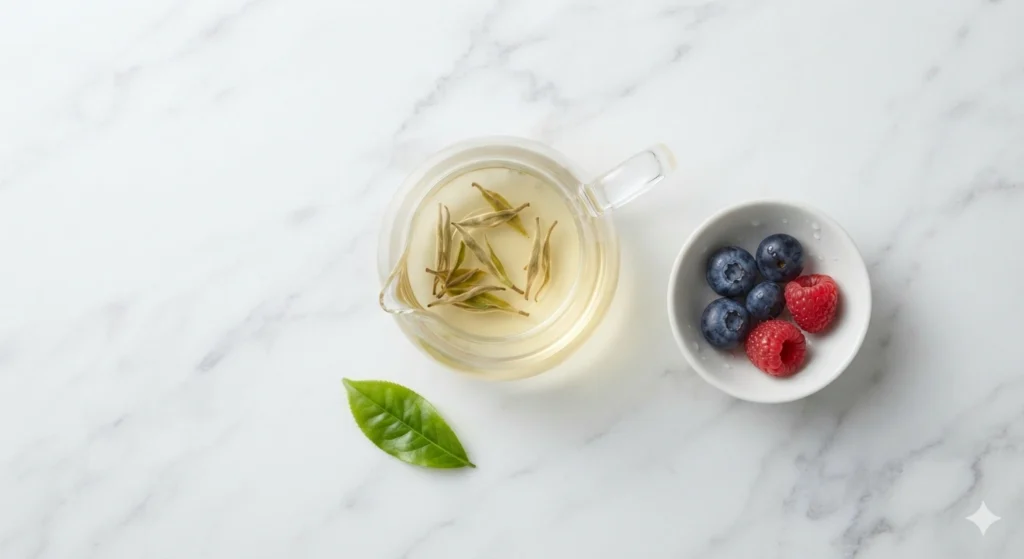
The story of white tea begins with its processing.
White tea is one of the least processed types of tea. The leaves are mainly withered and dried, without rolling, roasting, or deliberate oxidation.
Because of this minimal processing, the tea remains close to its natural state. The flavor comes primarily from the leaf itself, the growing environment, and the craftsmanship of the producer.
| Tea Type | Processing |
|---|---|
| White Tea | Withered and dried |
| Green Tea | Heat-fixed to stop oxidation |
| Oolong Tea | Partially oxidized and rolled |
| Black Tea | Fully oxidized |
This does not mean white tea is automatically better than other teas. It simply offers a different experience.
The gentle processing helps preserve many natural compounds found in tea leaves, including polyphenols and catechins. It also creates the soft, floral, and naturally sweet character that makes white tea unique.
White Tea Benefits
The benefits of white tea come from two things:
- What naturally exists inside the tea leaf
- How people incorporate tea into their daily lifestyle
Here are the main reasons people enjoy white tea.
1. Rich In Natural Antioxidants
One of the most discussed benefits of white tea is its natural antioxidant content.
White tea contains polyphenols, including catechins, which are naturally occurring compounds found in tea plants.
These compounds are part of what gives tea its characteristic taste and are studied for their relationship with oxidative stress in the body.
Because white tea is minimally processed, many of these natural compounds remain present in the finished tea.
However, white tea should be viewed as a healthy beverage choice, not as a medical treatment.
The value of white tea is simple:
It is a natural drink that allows you to include tea compounds as part of an overall balanced lifestyle.
2. A Gentle Source Of Caffeine
White tea does contain caffeine, but the experience is often described as gentler compared with coffee or stronger teas.
The exact caffeine level depends on:
- Tea variety
- Amount of buds and leaves used
- Brewing method
- Steeping time
Many drinkers enjoy white tea because it provides a calm sense of alertness rather than a sudden rush.
| Drink | Experience |
|---|---|
| Coffee | Strong, direct stimulation |
| Green Tea | Fresh, bright energy |
| White Tea | Gentle, balanced lift |
This makes white tea suitable for:
- Slow mornings
- Afternoon breaks
- Quiet working sessions
It offers energy without changing the entire mood of the moment.
3. Naturally Low In Calories
Unsweetened white tea is naturally calorie-free.
For people who want to reduce sugary drinks, white tea offers an easy alternative without sacrificing flavor.
A good Silver Needle or Bai Mudan does not need sugar. The natural sweetness comes from the tea itself, especially when brewed properly.
Replacing sweetened beverages with unsweetened tea is a simple lifestyle adjustment that can support a more balanced diet.
The benefit is not that white tea transforms your body.
The benefit is that it is a satisfying drink with almost nothing added.
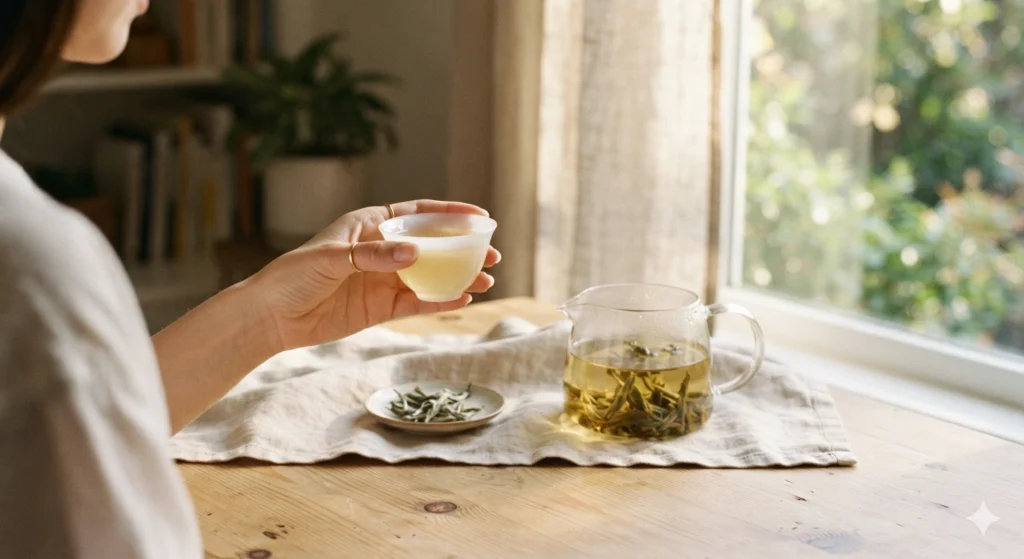
4. Encourages A Slower Daily Ritual
Not every benefit of tea comes from chemistry.
Some come from the experience of drinking it.
White tea is naturally subtle. It does not overwhelm the senses. To appreciate it, you need to slow down.
You notice:
- The aroma of the dry leaves
- The softness of the first sip
- The sweetness that appears after swallowing
- The way the flavor changes between infusions
In a fast-paced daily routine, the simple act of preparing tea can become a small moment of pause.
White tea does not demand attention.
It rewards it.
5. Gentle Flavor For Everyday Drinking
Some teas have strong personalities. White tea is different.
Its soft character makes it easy to enjoy regularly.
A well-made white tea usually has:
- Low bitterness
- Gentle sweetness
- Smooth texture
- Clean finish
This makes it suitable for many situations:
- Morning tea
- Work breaks
- Afternoon relaxation
- Evening reflection
It is a tea that does not become tiring easily.
For many drinkers, this is one of its greatest strengths.
White Tea vs Green Tea Benefits

White tea and green tea are often compared because both are lightly processed.
However, the drinking experience is quite different.
| Aspect | White Tea | Green Tea |
|---|---|---|
| Processing | Withered and dried | Heat-fixed |
| Flavor | Soft, floral, sweet | Fresh, vegetal, bright |
| Caffeine | Moderate | Moderate |
| Character | Gentle and quiet | Fresh and energetic |
Both teas contain natural compounds and can be part of a healthy lifestyle.
Green tea is more immediate and refreshing.
White tea is softer and more gradual.
Neither is objectively better.
The better choice is the tea you genuinely enjoy drinking regularly.
Is White Tea Healthier Than Green Tea?
This is one of the most common questions about white tea.
The short answer is:
Neither white tea nor green tea is universally healthier.
Both are natural teas made from the Camellia sinensis plant, and both contain beneficial compounds such as polyphenols and catechins.
The difference comes mainly from processing and drinking experience.
White tea is known for its minimal processing and delicate character.
Green tea is known for its fresh, vegetal flavor and higher association with antioxidant research.
The most important factor is not choosing the “healthiest” tea.
It is choosing a tea you enjoy drinking consistently.
A cup of tea you drink every day is more valuable than a tea you rarely enjoy.
Does Aged White Tea Have More Benefits?
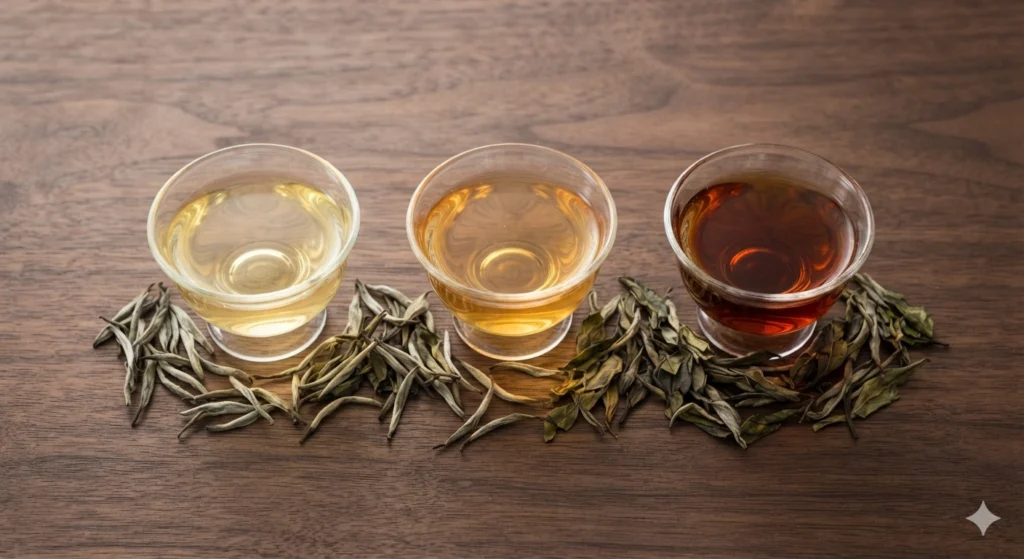
Aged white tea is a traditional specialty, especially in Fujian, China.
Unlike fresh white tea, aged white tea is stored for years under careful conditions. Over time, the tea slowly changes.
The flavor gradually develops:
- Floral notes become softer
- Sweetness becomes deeper
- Fresh aromas transform into dried fruit and woody notes
- The texture becomes rounder and smoother
Traditional tea drinkers often appreciate aged white tea for its warming and comforting character.
However, aging does not automatically mean the tea becomes healthier.
The value of aged white tea comes from its unique flavor development and drinking experience.
Fresh white tea and aged white tea simply represent different stages of the same tea tradition.
Fresh white tea feels bright, delicate, and elegant.
Aged white tea feels deeper, warmer, and more mature.
How Much White Tea Should You Drink?
There is no fixed amount that applies to everyone.
For most people, one to three cups of white tea per day is a comfortable range.
The ideal amount depends on:
- Your caffeine sensitivity
- Your brewing strength
- The time of day you drink tea
If caffeine affects your sleep, consider drinking white tea earlier in the day.
If you enjoy lighter flavors, use fewer leaves or shorter steeping times.
White tea is naturally easy to fit into daily life because it is gentle, simple, and enjoyable without additives.
The best amount is the amount that becomes part of your routine naturally.
Best White Tea For Beginners
Choosing your first white tea depends on the experience you want.
Bai Mudan (White Peony): Best Starting Point
For most beginners, Bai Mudan is the easiest introduction to white tea.
It contains both young buds and leaves, creating a balanced flavor.
You can expect:
- Soft floral notes
- Light honey sweetness
- Smooth texture
- Slightly fuller body than Silver Needle
It is approachable, forgiving, and usually more affordable than premium bud-only teas.
Silver Needle (Bai Hao Yinzhen): The Elegant Choice
Silver Needle is considered one of the highest grades of white tea.
Made almost entirely from young tea buds, it has a delicate and refined character.
The experience is:
- Silky
- Floral
- Lightly sweet
- Clean and elegant
It is ideal for drinkers who appreciate subtle flavors and want to explore the more refined side of white tea.
Shou Mei: The Everyday White Tea
Shou Mei uses more mature leaves and is often considered the most accessible style of white tea.
Compared with Silver Needle and Bai Mudan, it offers:
- Fuller flavor
- Nutty sweetness
- More body
- Better value for daily drinking
It is also a popular choice for those interested in aged white tea.
How To Brew White Tea For The Best Experience
White tea is forgiving, but proper brewing brings out much more of its character.
For Gongfu brewing:
- Tea amount: 5 grams
- Water temperature: 85°C to 95°C
- Vessel: 100–120ml gaiwan
- First infusion: 20–30 seconds
For Western-style brewing:
- Tea amount: 3–5 grams
- Water temperature: 85°C to 95°C
- Steeping time: 1–3 minutes
Different white teas respond differently.
Silver Needle prefers slightly gentler temperatures to preserve its delicate aroma.
Bai Mudan and Shou Mei can handle slightly warmer water and longer steeping.
Good white tea can usually be infused multiple times, with each infusion revealing a different layer of sweetness and aroma.
Our White Tea Philosophy At Tea Passage
At Tea Passage, we choose white teas for their natural elegance and clarity.
We do not select white tea because of exaggerated health claims.
We choose it because of the experience it creates.
A carefully made Silver Needle carries the quiet sweetness of young spring buds.
A well-crafted Bai Mudan offers balance, comfort, and everyday beauty.
White tea represents a different pace of tea drinking.
It is not about intensity.
It is about noticing small details:
The aroma rising from the cup.
The softness of the texture.
The sweetness that appears after each sip.
For us, that is the true appeal of white tea.
Frequently Asked Questions
What are the benefits of drinking white tea?
White tea contains natural antioxidants and provides a gentle source of caffeine. It is also naturally calorie-free and can be enjoyed as part of a balanced daily lifestyle.
Is white tea healthier than green tea?
Neither tea is considered universally healthier. Both contain natural tea compounds and offer different flavors and experiences.
Does white tea have antioxidants?
Yes. White tea contains natural polyphenols and catechins, compounds naturally found in tea leaves.
Can you drink white tea every day?
Yes. White tea is a gentle and approachable tea that many people enjoy daily. One to three cups per day is a common range for many tea drinkers.
Does white tea help with weight loss?
White tea itself is not a weight loss treatment. However, unsweetened white tea is naturally low in calories and can be a good replacement for sugary drinks.
Is aged white tea better than fresh white tea?
Not necessarily. Aged white tea and fresh white tea offer different experiences. Fresh white tea is lighter and more floral, while aged white tea is deeper and warmer.
Final Thoughts
The benefits of white tea are quiet rather than dramatic.
It offers natural tea compounds, gentle caffeine, a smooth drinking experience, and a reason to slow down.
At Tea Passage, we believe white tea represents one of the most elegant expressions of Chinese tea culture.
Whether you choose the delicate sweetness of Silver Needle, the balance of Bai Mudan, or the comforting depth of aged white tea, there is a style waiting to become part of your daily ritual.