Many tea drinkers discover Yancha after trying Dahongpao.
They enjoy the roasted aroma, the deep flavor, and the mineral finish, but they often do not realize that Dahongpao is only one part of a much larger tea tradition.
That tradition is called Yancha, or Wuyi Rock Tea.
Yancha is a world shaped by three things:
Stone. Fire. Time.
The stone comes from the rocky landscape of the Wuyi Mountains.
The fire comes from traditional roasting techniques.
The time comes from centuries of craftsmanship passed down through generations.
Understanding Yancha changes the way you experience these teas. The roasted notes become more meaningful when you understand the charcoal firing process. The mineral character becomes clearer when you know how closely the tea is connected to its mountain environment.
This guide explains what Yancha is, why it is famous, how it tastes, and where to begin exploring this unique category of Chinese oolong tea.
What Is Yancha?
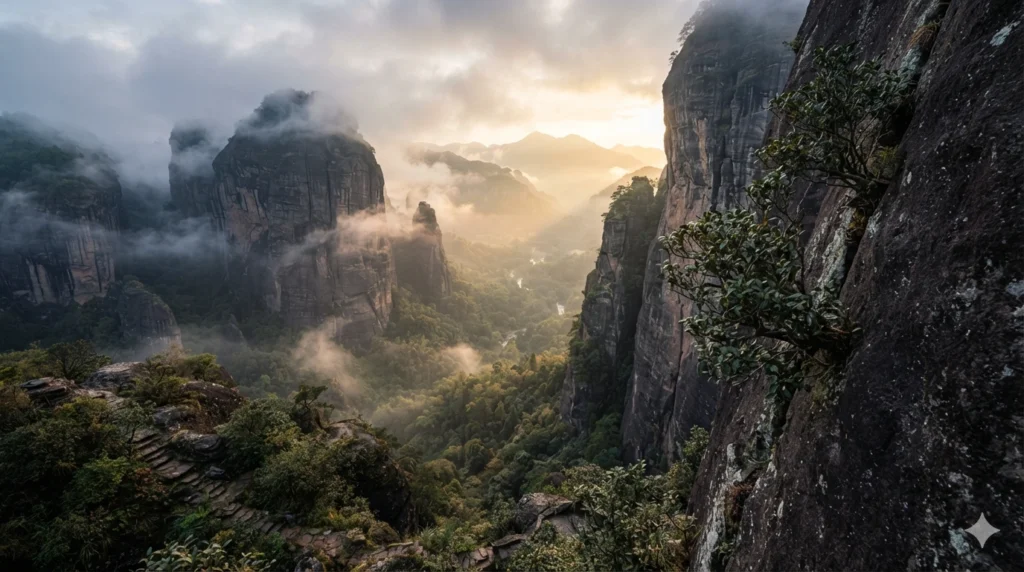
Yancha literally means “rock tea.”
The word:
- Yan (岩) means rock or cliff
- Cha (茶) means tea
The name refers to tea grown in the rocky environment of the Wuyi Mountains in Fujian, China.
Unlike some tea categories that are defined mainly by processing, Yancha is strongly connected to place.
It is a type of oolong tea, meaning the leaves are partially oxidized. This places Yancha between green tea and black tea.
However, what truly defines Yancha is not only oxidation.
It is the combination of:
- Wuyi Mountain terroir
- Traditional roasting
- Skilled craftsmanship
The Wuyi Mountains are famous for their steep cliffs, narrow valleys, and mineral-rich soil. Tea bushes grow among rocks and stone terraces, developing flavors that reflect this unique environment.
Yancha is not one single tea.
It is a family of Wuyi oolong teas that includes famous varieties such as:
- Dahongpao (Big Red Robe)
- Rou Gui (Cinnamon Oolong)
- Shui Xian
- Tie Luo Han
- Bai Ji Guan
Among these, Dahongpao is the most recognized worldwide, but it is only one expression of the broader Yancha tradition.
Why Is Yancha Called Rock Tea?
The name comes from the environment where the tea grows.
The Wuyi Mountains are not typical flat farmland. They are a landscape of cliffs, exposed rock, and deep valleys.
Tea bushes grow in:
- Rocky mountain areas
- Narrow terraces
- Natural stone environments
Their roots develop among mineral-rich soil and rock, creating the unique character that defines Wuyi tea.
This connection between tea and landscape is often described as yan yun, or rock rhyme.
Yan yun is difficult to translate directly.
It is not a single flavor.
Instead, it describes a feeling in the tea:
- A mineral depth
- A smooth texture
- A lingering finish
- A sense of place
Some tea drinkers describe it as the taste of clean stone after rain.
Others compare it to the smooth character of mineral water.
The important idea is this:
A good Yancha feels connected to where it was grown.
The mountain is not just where the tea comes from.
The mountain becomes part of the tea itself.
What Does Yancha Taste Like?
Yancha is known for a flavor profile that is very different from lighter oolong teas.
While teas like Tie Guan Yin focus on floral freshness, Yancha is about warmth, depth, and texture.
Common Yancha characteristics include:
- Roasted nuts
- Warm wood
- Cocoa-like sweetness
- Mineral notes
- Gentle sweetness
- Long aftertaste
The roasted flavor comes from traditional charcoal roasting.
This process is not simply about making the tea darker.
A skilled tea maker uses roasting to develop complexity and create balance.
A well-made Yancha should not taste burnt.
The roast should support the tea rather than cover it.
The best examples have layers:
The first sip brings roasted warmth.
The middle reveals sweetness and texture.
The finish leaves a clean mineral feeling that stays after drinking.
This slow development is one of the reasons Yancha attracts experienced tea drinkers.
It is not a tea that reveals everything immediately.
It rewards attention.
The Main Types Of Yancha
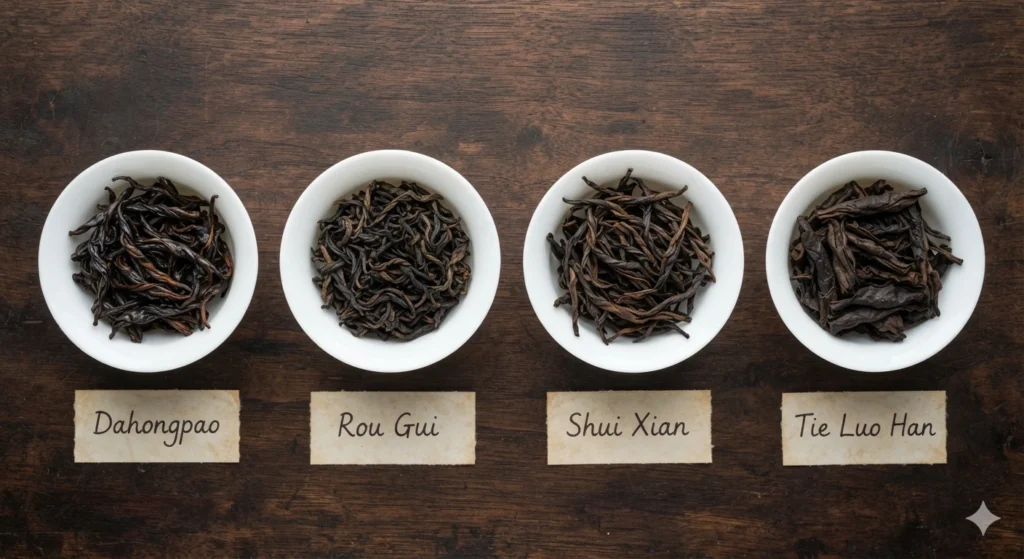
Although Yancha is one category, different varieties have very different personalities.
Dahongpao (Big Red Robe)
Dahongpao is the most famous Yancha.
It is known for:
- Deep roasted flavor
- Mineral character
- Full body
- Long sweet finish
Typical notes include:
- Roasted nuts
- Dark fruit
- Cocoa
- Warm stone
Dahongpao is often considered the classic introduction to Wuyi Rock Tea.
For many people, discovering Dahongpao is what leads them into the wider world of Yancha.
Rou Gui (Cinnamon Oolong)
Rou Gui means “cinnamon.”
The name comes from its warm, spicy aroma.
Compared with Dahongpao, Rou Gui is often more aromatic and direct.
It can have notes of:
- Cinnamon spice
- Sweet wood
- Dried fruit
- Warm herbs
Many modern Yancha drinkers love Rou Gui because it has a strong personality and a memorable fragrance.
Shui Xian
Shui Xian is one of the most approachable Yancha varieties.
It is usually softer and smoother than Dahongpao or Rou Gui.
Common characteristics:
- Woody sweetness
- Gentle roast
- Smooth body
- Calm finish
For beginners, a good Shui Xian can be an excellent way to understand Yancha without starting with a more intense style.
Yancha vs Other Oolong Teas
Yancha has a very distinct personality within the oolong family.
While all oolong teas share similar processing principles, their origins and techniques create completely different experiences.
Here is how Yancha compares with other famous oolong styles:
| Tea | Flavor Character |
|---|---|
| Yancha | Roasted, mineral, deep, grounding |
| Tie Guan Yin | Floral, creamy, fresh, elegant |
| Phoenix Dancong | Aromatic, fruity, intense |
| Taiwanese Oolong | Soft, buttery, smooth |
Tie Guan Yin represents the lighter side of oolong.
It is fresh, floral, and bright, with a clean sweetness.
Phoenix Dancong is more aromatic and expressive, often featuring strong floral or fruity notes that immediately fill the cup.
Yancha takes a different path.
Instead of chasing freshness or fragrance, it focuses on depth.
The experience is quieter:
- More roasted
- More mineral
- More warming
- More layered
For drinkers who enjoy coffee, dark chocolate, roasted nuts, or aged spirits, Yancha often feels familiar.
It offers richness without becoming heavy.
Is Yancha Good For Beginners?
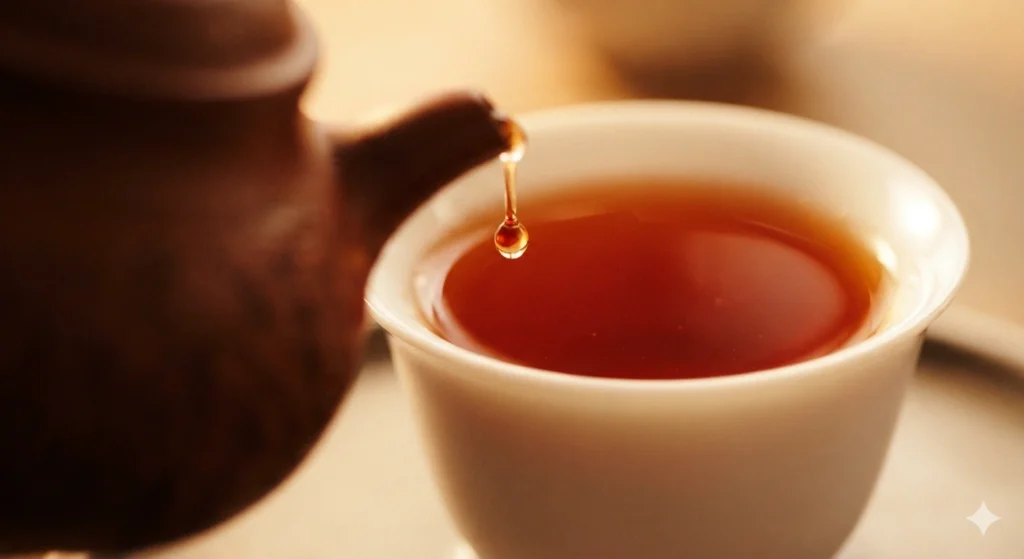
Yes, but choosing the right Yancha matters.
Yancha can be surprisingly approachable, especially for people who already enjoy deeper flavors.
It is a good match for:
- Coffee drinkers
- Dark chocolate lovers
- People who enjoy roasted flavors
- Tea drinkers looking for something more complex
The warmth of the roast makes Yancha easier to understand than many delicate teas.
However, it may feel unfamiliar if you usually drink:
- Fresh green teas
- Light floral teas
- Very subtle white teas
The roasted character can seem strong at first.
For beginners, we recommend starting with:
Shui Xian
A softer and smoother Yancha that introduces the category gently.
Banyan Dahongpao
A balanced choice that shows the classic Wuyi Rock Tea character without the intensity or price of premium examples.
Once you understand the basic style, you can explore more complex Zhengyan Yancha and traditional varieties.
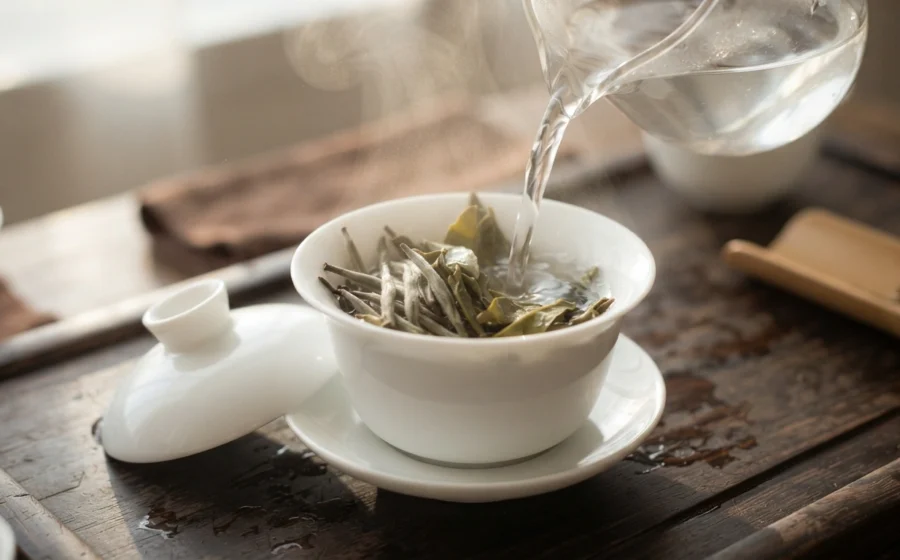
How To Brew Yancha
Yancha is traditionally brewed using the Gongfu method.
This style uses a small vessel, more tea leaves, and short repeated infusions.
The goal is not to make one large cup.
It is to experience how the tea changes over time.
A good starting point:
- Tea amount: 5–7g
- Vessel: 100–120ml gaiwan or small teapot
- Water temperature: 95–100°C
- First infusion: 10–15 seconds
Yancha leaves are sturdy and heavily processed, so they respond well to high-temperature water.
The first infusion usually reveals:
- Roasted aroma
- Warm sweetness
- Initial mineral notes
The middle infusions often become smoother and richer.
You may notice:
- More body
- Deeper sweetness
- Stronger rock character
Later infusions become softer and calmer.
A quality Yancha can usually be brewed 6–10 times or more.
The key is to keep the steeping time short and adjust gradually.
For a detailed brewing method, see our guide:
How To Brew Dahongpao Tea
Why Is Yancha Expensive?
Yancha prices vary greatly.
Some Wuyi Rock Teas are affordable daily drinks.
Others can become highly collectible.
The price difference usually comes from several factors.
Limited Growing Area
The most prestigious Yancha comes from the Zhengyan area, the core region of the Wuyi Mountains.
This growing area is extremely limited.
There is only a small amount of land with the specific environment associated with traditional rock tea.
Traditional Processing
Making Yancha requires significant skill.
The process includes:
- Hand picking
- Withering
- Oxidation
- Rolling
- Roasting
The roasting stage is especially important.
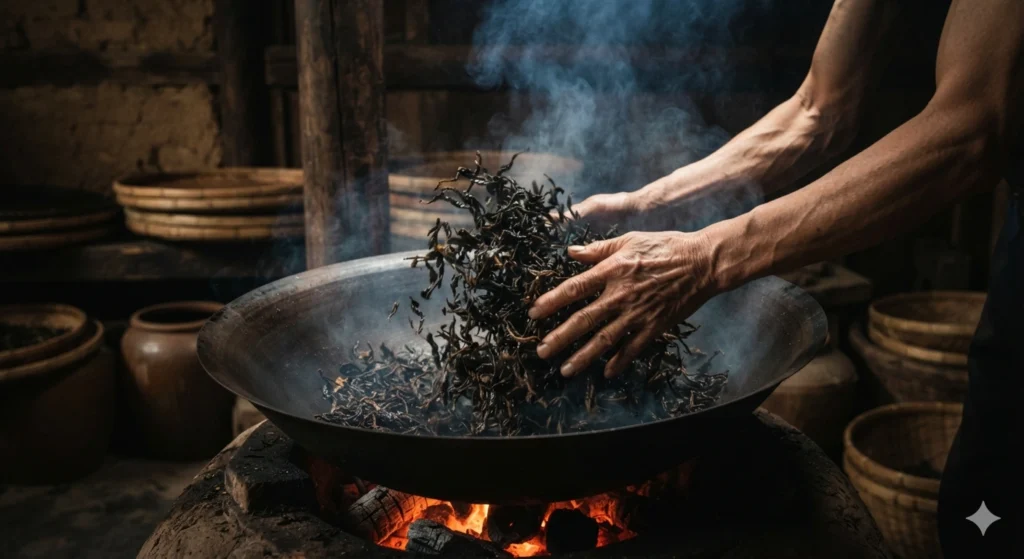
Traditional charcoal roasting requires experience and patience.
A skilled tea maker must understand:
- How much heat to use
- How long to roast
- When to repeat the process
A good roast develops the tea.
A poor roast can hide or damage it.
Aging Potential
Some Yancha improves with time.
Well-made teas may become:
- Smoother
- Rounder
- More integrated
This is especially true for traditionally processed teas with careful storage.
However, expensive does not automatically mean better.
A reasonably priced Yancha from a trustworthy source can provide a wonderful experience.
The most important thing is balance:
Good origin.
Good processing.
Good flavor.
How To Choose Your First Yancha
For your first Yancha, focus less on rarity and more on finding a tea that matches your taste.
A good beginner choice should have:
- Clear origin information
- Balanced roasting
- Smooth texture
- Natural sweetness
Avoid chasing the most expensive tea immediately.
Premium Zhengyan teas can be fascinating, but they are easier to appreciate after you understand the basic character of Yancha.
A practical starting path:
First step:
Try Shui Xian or Banyan Dahongpao.
Second step:
Explore Rou Gui for a more aromatic experience.
Third step:
Move toward Zhengyan Yancha and traditional varieties.
Learning Yancha is not about finding the “best” tea.
It is about discovering which expression speaks to you.
Our Yancha Experience At Tea Passage
At Tea Passage, Yancha is the tea we reach for when we want something grounding.
It is not a rushed morning tea.
It is an afternoon tea.
A tea for slowing down.
The process itself becomes part of the experience:
Warming the gaiwan.
Opening the twisted dark leaves.
Pouring water just below boiling.
Watching the aroma rise.
The first impression is usually warmth.
Roasted nuts.
Stone.
A quiet sweetness underneath.
With each infusion, the tea changes.
The roast becomes softer.
The sweetness becomes clearer.
The mineral character stays in the background, creating a feeling that is difficult to describe but easy to recognize.
Yancha is not a tea that tries to impress immediately.
It reveals itself slowly.
That patience is exactly what makes it special.
Frequently Asked Questions
What is Yancha tea?
Yancha, also called Wuyi Rock Tea, is a category of oolong tea from the Wuyi Mountains in Fujian, China. It is known for its roasted character, mineral depth, and traditional charcoal roasting.
Is Yancha the same as Dahongpao?
No.
Dahongpao is the most famous type of Yancha, but it is only one variety within the larger Wuyi Rock Tea family.
Other Yancha varieties include:
- Rou Gui
- Shui Xian
- Tie Luo Han
- Bai Ji Guan
Is Yancha green tea or black tea?
Neither.
Yancha is an oolong tea.
The leaves are partially oxidized, placing it between green tea and black tea in terms of processing.
Why is Yancha called rock tea?
Yancha is called rock tea because it grows in the rocky environment of the Wuyi Mountains.
The mineral-rich landscape contributes to the tea’s distinctive depth and character.
What does Yancha taste like?
Yancha typically tastes roasted, smooth, and mineral.
Common notes include:
- Roasted nuts
- Cocoa
- Warm wood
- Sweet minerals
The exact flavor depends on the variety and roasting style.
Is Yancha good for beginners?
Yes.
Beginners who enjoy roasted flavors often find Yancha approachable.
Starting with Shui Xian or Banyan Dahongpao is usually easier than beginning with more intense premium Yancha.
Yancha is a tea shaped by stone, fire, and patience.
It represents one of the deepest traditions in Chinese oolong tea.
At Tea Passage, we choose Yancha for the qualities that make Wuyi Rock Tea memorable:
A clear sense of place.
Balanced roasting.
A smooth, lingering finish.
Whether you begin with Dahongpao, explore the spice of Rou Gui, or discover the softness of Shui Xian, Yancha offers a journey into a world where tea and landscape become one.