Oolong tea is not a single category of flavor—it is a spectrum.
From light, floral Taiwanese high mountain teas to deep, roasted Wuyi rock teas from China, oolong sits between green and black tea, offering one of the most diverse flavor ranges in the tea world.
Understanding the different types of oolong tea helps you move beyond general preference and toward precision—choosing teas based on aroma, texture, oxidation level, and origin.
How Oolong Tea Is Classified
Oolong tea is traditionally defined by three core factors:
Oxidation level determines how “green” or “dark” the tea tastes. Light oolongs (10–30%) are fresh, floral, and creamy, while heavily oxidized oolongs (50–80%) are richer, deeper, and fruitier.
Roasting level adds another layer of complexity. Some oolongs are unroasted or lightly roasted to preserve floral notes, while others undergo charcoal roasting that develops warmth, minerality, and depth.
Origin plays a major role in shaping character. Taiwanese teas often emphasize clarity and creaminess, while Chinese teas from Fujian and Guangdong tend to focus on structure, aroma intensity, and roast depth.
Together, these three dimensions create the full landscape of oolong tea.
Dark & Roasted Oolong Tea (Wuyi & Aged Styles)
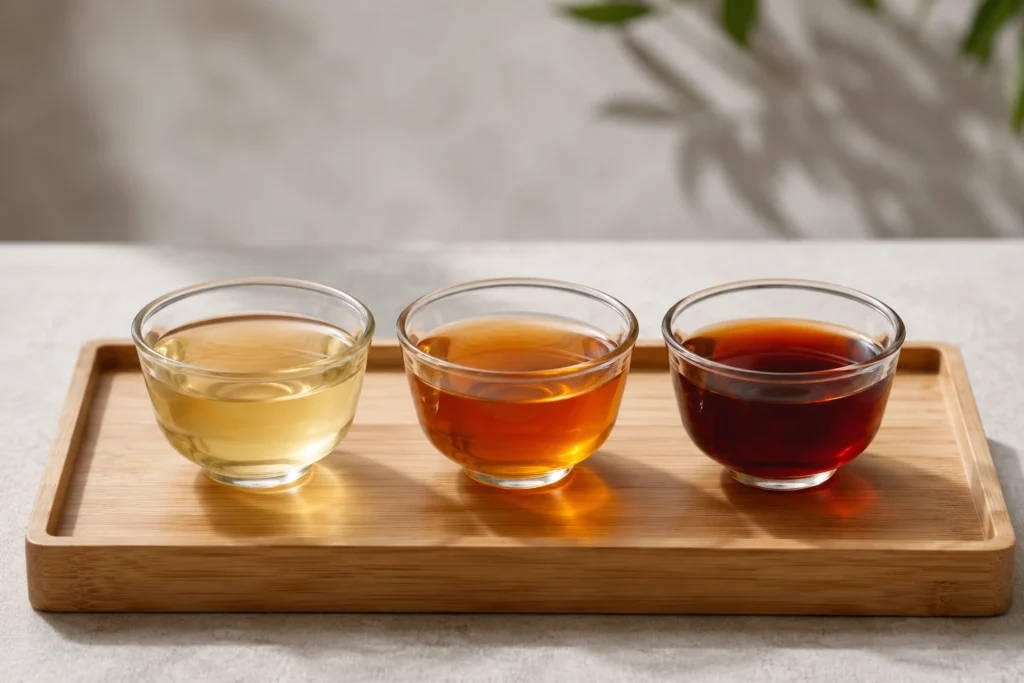
Dark oolong teas are defined by deeper oxidation and often significant roasting. These teas are bold, grounding, and highly aromatic, with notes of roasted nuts, dried fruit, cocoa, and mineral stone.
They are often the closest oolong style to black tea in intensity, while still retaining oolong’s signature smoothness and complexity.
Da Hong Pao (Big Red Robe)
Da Hong Pao Rock Oolong Tea is one of the most famous Wuyi rock oolongs from Fujian.
It is traditionally charcoal-roasted, creating a deep profile of roasted nuts, cocoa, and mineral-rich undertones known as yan yun—the “rock rhyme” of Wuyi tea cliffs.
The texture is smooth and layered, evolving across multiple infusions from bold and roasted to soft and sweet.
This is a classic choice for drinkers who enjoy structured, full-bodied teas with depth.
Yashixiang (Duck Shit Aroma) Phoenix Dan Cong
Duck Shit (Yashixiang) Oolong Tea is one of the most famous Phoenix Dan Cong teas from Guangdong.
Despite its unusual name, it is highly aromatic and refined, with notes of honey, almond, and delicate floral sweetness.
It sits between floral and roasted styles—rich, but not heavy.
This tea is ideal for those who want complexity without heaviness.
Phoenix Dan Cong (Aromatic Varietals)
Phoenix Dancong Oolong Tea represents a category of individually named aromatic oolong cultivars from the Phoenix Mountains.
Each varietal expresses a distinct natural fragrance—ranging from honey orchid to stone fruit and floral spice.
Dan Cong teas are highly expressive and evolve significantly across multiple infusions, making them one of the most aromatic tea experiences in the oolong world.
Oriental Beauty (Dong Fang Mei Ren)
Oriental Beauty Oolong Tea is a heavily oxidized Taiwanese oolong known for its natural honeyed sweetness.
Its unique character comes from leafhopper bites during growth, which trigger a natural enzymatic response in the plant.
The result is a tea with notes of ripe fruit, honey, and soft spice, with almost no bitterness.
It is elegant, complex, and naturally sweet.
Floral & Aromatic Oolong Tea
Floral oolong teas are often the most approachable introduction to this tea category. Light to medium oxidation preserves the leaves’ natural floral compounds, creating teas with elegant aromas, silky textures, and lingering sweetness.
If you enjoy fragrant teas with orchid, lilac, or fresh garden flower notes, this is the best place to begin.
Tie Guan Yin (Iron Goddess of Mercy)
Tie Guan Yin is one of China’s most iconic oolong teas, originating in Anxi County, Fujian Province.
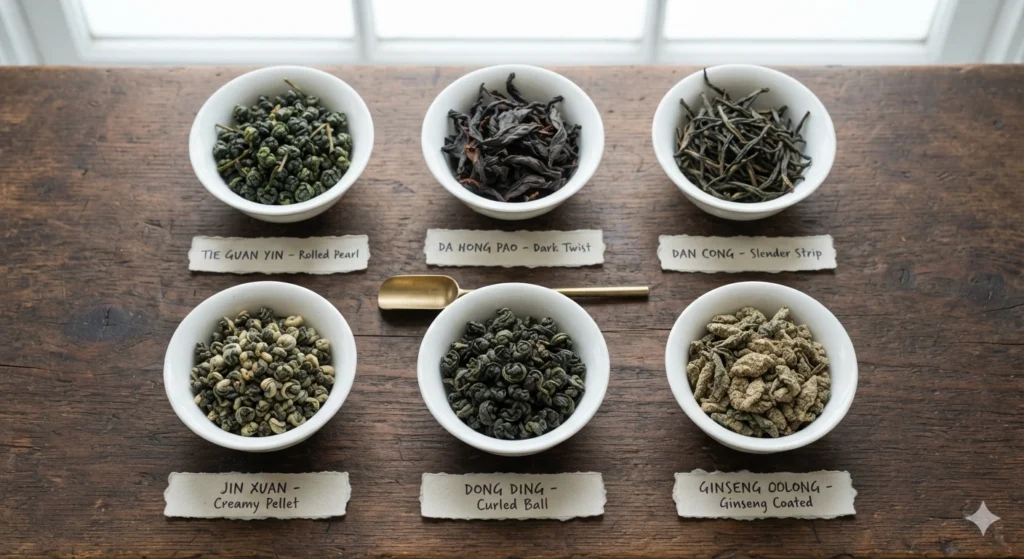
Lightly oxidized and traditionally rolled into tight jade-green pellets, it is celebrated for its unmistakable orchid aroma and exceptionally smooth mouthfeel.
A well-made Tie Guan Yin opens with fresh floral fragrance before revealing creamy texture, gentle sweetness, and a clean, refreshing finish that lasts long after each sip.
For many tea drinkers, Tie Guan Yin represents the classic expression of floral oolong and remains one of the best choices for beginners exploring loose leaf tea.
Dong Ding Oolong
Originally produced on Dong Ding Mountain in Nantou, Taiwan, Dong Ding bridges the gap between light floral teas and darker roasted styles.
Medium oxidation and light roasting create a remarkably balanced cup featuring orchid aromas, toasted nuts, honey sweetness, and a creamy body.
Its versatility makes it an excellent everyday tea. It is complex enough to satisfy experienced drinkers while remaining approachable for newcomers.
Orchid Pearl Oolong
Orchid Pearl Oolong is a handcrafted tea that highlights both traditional processing and visual beauty.
Each leaf is carefully rolled into compact pearls that gradually unfurl during brewing, releasing layer after layer of aroma throughout multiple infusions.
Expect delicate orchid fragrance, silky texture, soft sweetness, and an elegant finish that rewards slow Gongfu brewing.
It is an excellent choice for tea drinkers who appreciate refinement, craftsmanship, and subtle complexity.
Light & Green-Style Oolong Tea
Lightly oxidized oolongs retain much of the freshness found in green tea while developing a softer, creamier body unique to oolong.
These teas emphasize freshness, floral aromas, buttery texture, and natural sweetness without becoming grassy or vegetal.
They are especially popular among green tea drinkers looking to explore more complexity.
Taiwan Jin Xuan Milk Oolong
Jin Xuan, often known as Milk Oolong, is one of Taiwan’s most beloved tea cultivars.
Authentic Jin Xuan develops its creamy character naturally through the cultivar itself—not through added milk flavoring.
The liquor is smooth and velvety, offering notes of fresh cream, butter, orchids, and soft spring flowers. Its gentle sweetness and forgiving brewing nature make it one of the easiest premium oolong teas to enjoy.
If you’re new to oolong tea, Jin Xuan is one of the best places to start.
Specialty Oolong Tea
Some oolong teas stand apart because of unusual processing methods, distinctive cultivars, or centuries-old craftsmanship.
Rather than fitting neatly into a single category, these teas showcase just how diverse oolong can become.
Ginseng Oolong
Ginseng Oolong combines traditional rolled oolong tea with a fine coating of ginseng and licorice root powder.
The result is an unmistakable flavor profile that balances floral sweetness with earthy herbal notes and a refreshing cooling sensation that lingers after each sip.
It is popular among drinkers looking for something different from traditional oolong while still enjoying the tea’s smooth texture and multiple infusions.
Whether loved or debated, Ginseng Oolong remains one of the most distinctive styles within the broader oolong family.
Oolong Tea by Region
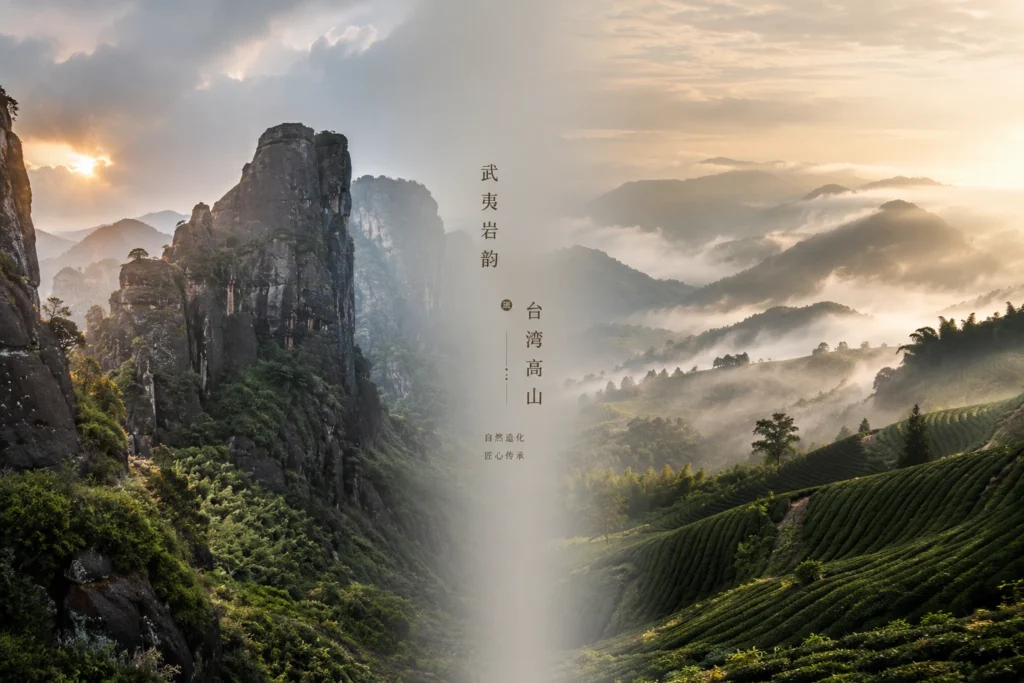
Although oolong tea is now enjoyed worldwide, nearly all traditional oolong originates from two regions: China and Taiwan.
Each area has developed its own processing techniques, cultivars, and flavor traditions over centuries.
| Region | Representative Teas | Typical Style |
|---|---|---|
| Wuyi Mountains, Fujian | Da Hong Pao, Rou Gui, Shui Xian | Roasted, mineral-rich, full-bodied |
| Anxi, Fujian | Tie Guan Yin | Floral, creamy, lightly roasted |
| Phoenix Mountains, Guangdong | Phoenix Dan Cong, Yashixiang | Highly aromatic, fruity, honeyed |
| Nantou, Taiwan | Dong Ding | Balanced, lightly roasted |
| Alishan & Lishan, Taiwan | High Mountain Oolong | Fresh, buttery, floral |
| Hsinchu, Taiwan | Oriental Beauty | Honeyed, fruity, heavily oxidized |
Generally speaking:
- Chinese oolong emphasizes roast, structure, minerality, and aromatic intensity.
- Taiwanese oolong focuses on freshness, buttery texture, floral elegance, and mountain terroir.
Neither style is objectively better. They simply offer different expressions of the same tea tradition.
How to Choose the Right Type of Oolong Tea
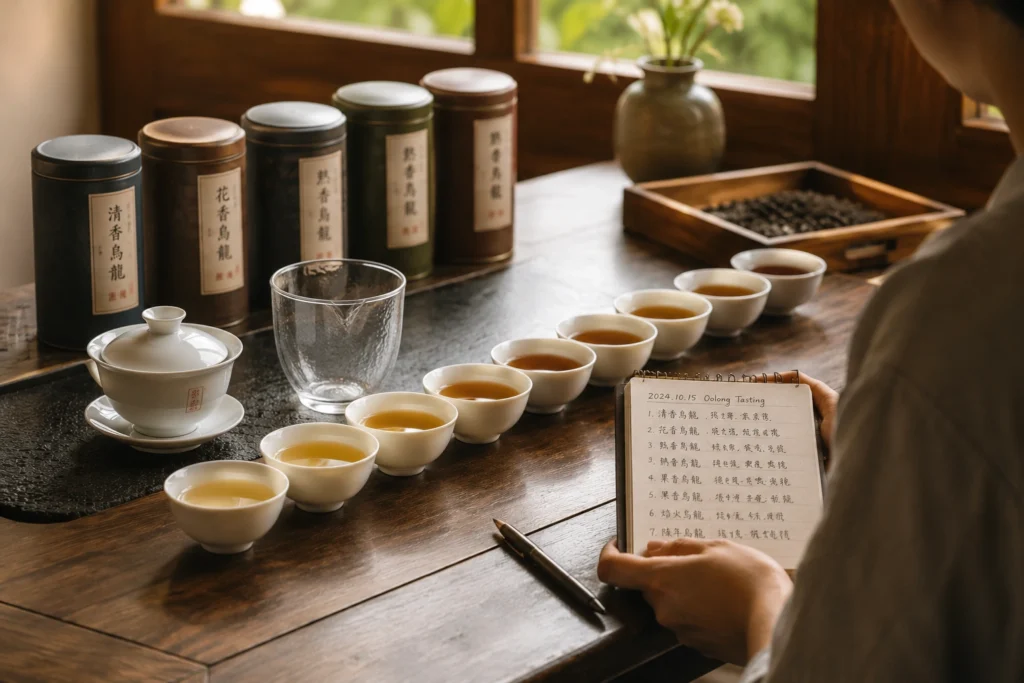
If you’re not sure where to begin, start with flavors you already enjoy.
| If You Like… | Try These Oolong Teas |
|---|---|
| Floral & elegant aromas | Tie Guan Yin, Orchid Pearl |
| Rich roasted flavors | Da Hong Pao, Wuyi Rock Tea |
| Creamy & buttery texture | Jin Xuan Milk Oolong, Dong Ding |
| Fruity & highly aromatic teas | Phoenix Dan Cong, Yashixiang |
| Rare & collectible teas | Oriental Beauty |
| Unique herbal sweetness | Ginseng Oolong |
As your palate develops, you’ll likely find yourself enjoying different styles depending on the season, your mood, or even the time of day.
Many experienced tea drinkers keep both a fresh floral oolong and a roasted rock tea at home because they offer completely different experiences.
Teapassage:Explore the World of Oolong Tea
The beauty of oolong tea lies in its diversity.
From the floral elegance of Tie Guan Yin to the roasted intensity of Da Hong Pao, from the creamy softness of Jin Xuan to the extraordinary fragrance of Phoenix Dan Cong, every style represents a different expression of craftsmanship, terroir, and tradition.
There is no single “best” oolong tea—only the one that best matches your taste.
If you’re ready to explore further, browse our curated collection of authentic loose leaf oolong teas. Each tea is carefully selected to showcase the remarkable range that makes oolong one of the world’s most fascinating tea categories.
Explore Our Oolong Tea Collection →
Frequently Asked Questions
What are the main types of oolong tea?
Oolong tea is commonly classified into light, floral, roasted, and heavily oxidized styles. Popular examples include Tie Guan Yin, Jin Xuan Milk Oolong, Dong Ding, Phoenix Dan Cong, Da Hong Pao, and Oriental Beauty.
Which oolong tea is best for beginners?
Tie Guan Yin and Jin Xuan Milk Oolong are excellent starting points thanks to their smooth texture, floral aroma, and naturally sweet finish. Dong Ding is another great option for those looking for a little more body without heavy roasting.
What’s the difference between Chinese and Taiwanese oolong?
Chinese oolongs generally emphasize mineral character, charcoal roasting, and bold aromas, while Taiwanese oolongs are often lighter, creamier, and more floral. Both traditions produce exceptional teas with distinct regional identities.
Is Da Hong Pao a type of oolong tea?
Yes. Da Hong Pao is one of the most famous Wuyi rock oolong teas from Fujian, China. It is known for its roasted character, mineral complexity, and exceptional aging potential.
What makes Phoenix Dan Cong unique?
Phoenix Dan Cong is famous for its naturally expressive aromas. Different cultivars produce notes resembling orchid, honey, almond, citrus, or tropical fruit, making it one of the most aromatic categories of oolong tea.
Which oolong tea is naturally creamy?
Authentic Taiwan Jin Xuan Milk Oolong is naturally creamy because of the tea cultivar itself. Its buttery texture develops during cultivation and processing without requiring artificial flavoring.