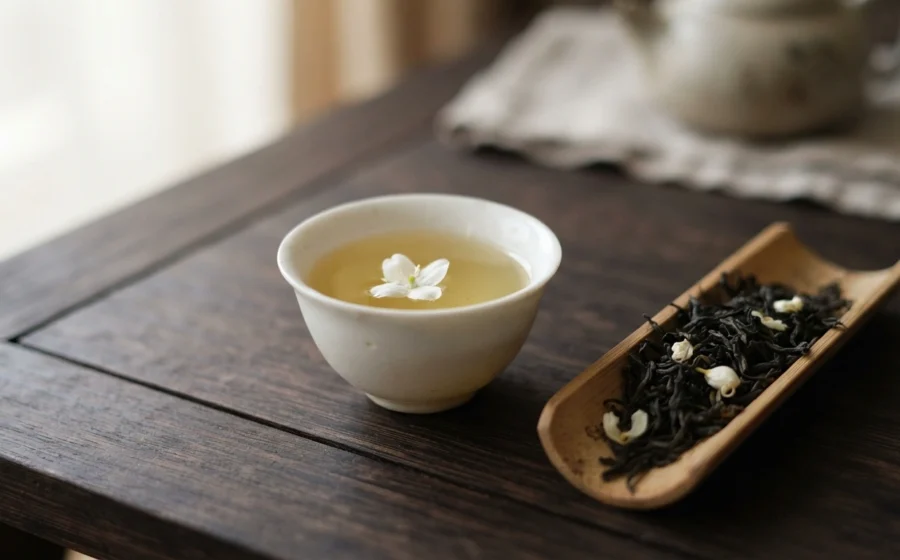
The best jasmine green tea is not the tea with the strongest fragrance. It is the tea where the jasmine flowers and the tea leaves exist in perfect balance.
A tea that smells overwhelmingly like perfume when you open the package but loses its aroma after one steep is not necessarily high quality. A truly good jasmine tea carries its fragrance naturally within the leaf, releasing a soft floral aroma across multiple infusions while allowing the character of the green tea base to remain present.
Finding the best jasmine green tea means knowing what quality actually looks like. The tea variety, the green tea base, the traditional scenting process, and the origin all influence the final cup.
This guide explains how to choose authentic Chinese jasmine tea and how to tell the difference between a carefully crafted tea and one that relies only on strong fragrance.
What Makes The Best Jasmine Green Tea?
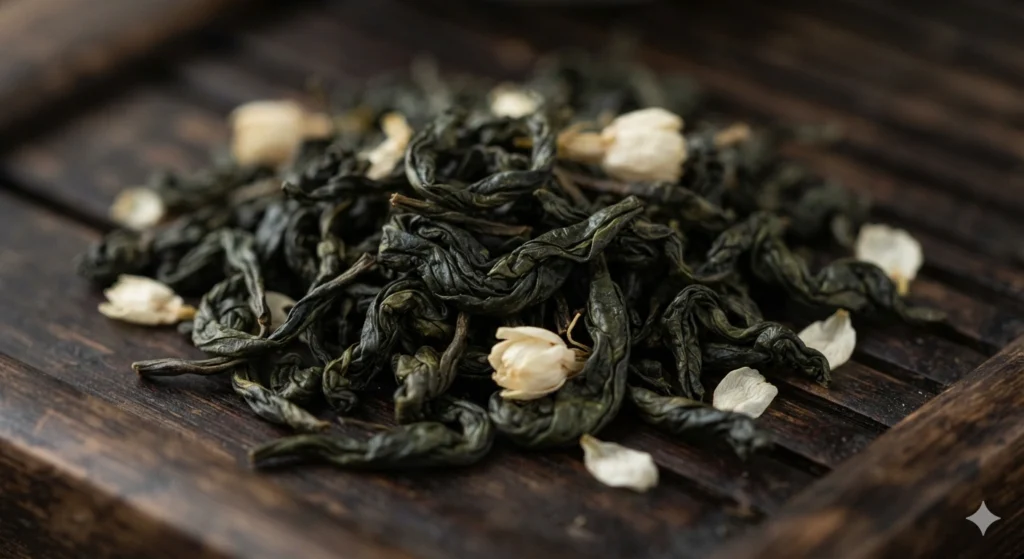
A high-quality jasmine green tea is built on several important foundations.
The fragrance should be natural.
The tea base should have its own character.
The scenting process should respect traditional methods.
When these elements come together, jasmine tea becomes more than a floral drink. It becomes a balanced expression of both leaf and flower.
A High-Quality Green Tea Base
The best jasmine tea starts with good tea leaves.
Jasmine flowers can add fragrance, but they cannot completely transform a poor-quality green tea base. If the leaves are flat, broken, or lacking character, the final tea will still taste thin and one-dimensional.
High-quality jasmine green tea usually uses whole, carefully processed leaves. The leaves should appear relatively uniform, without excessive dust, broken pieces, or unnecessary stems.
When brewed, good leaves should slowly unfurl and reveal a clean, fresh flavor. The tea itself should taste smooth, slightly sweet, and pleasant even before considering the jasmine aroma.
A lower-quality jasmine tea often reveals itself through the tea base:
- Harsh bitterness
- Dry astringency
- Weak body
- Flat aftertaste
Strong fragrance cannot hide these problems. The best jasmine teas are built on leaves that are enjoyable on their own.
Traditional Jasmine Scenting Process
The biggest difference between authentic jasmine tea and ordinary flavored tea is how the fragrance enters the leaf.
Traditional jasmine green tea is made by layering fresh jasmine blossoms with green tea leaves. The jasmine flowers are harvested during the day while the buds are still closed. They are then kept carefully until nighttime, when the flowers naturally open and release their fragrance.
During this period, the tea leaves are placed together with the jasmine blossoms. The leaves slowly absorb the floral aroma over several hours.
After the scenting process, the flowers are removed and the tea is dried to restore its condition.
For premium jasmine teas, this process is repeated multiple times. Some high-quality teas may go through five, six, or even more scenting cycles.
Each additional round deepens the connection between the tea leaf and jasmine flower. Instead of sitting on the surface, the fragrance becomes naturally integrated into the tea.
This creates a more complex aroma that continues through multiple infusions.
By comparison, artificially flavored jasmine tea usually relies on added flavoring. These teas often produce a strong first impression but quickly lose their aroma after brewing.
The difference is simple:
A traditional jasmine tea reveals itself slowly.
An artificially scented tea announces itself immediately, then disappears.
Natural Floral Aroma
The aroma is often the first thing people notice about jasmine green tea.
A high-quality jasmine tea should smell like fresh jasmine blossoms — floral, soft, and naturally sweet.
The fragrance should feel alive rather than overwhelming.
Good jasmine aroma:
- Fresh and floral
- Soft and elegant
- Naturally sweet
- Balanced with the tea leaf
Poor jasmine aroma:
- Perfume-like
- Artificially sweet
- Sharp or chemical
- Overpowering
The best jasmine teas do not try to impress you with intensity. Instead, they create a gentle fragrance that develops throughout the drinking experience.
Pay attention to how the aroma changes between infusions.
A traditionally scented jasmine tea will continue releasing floral notes through several cups. The first infusion may highlight the jasmine fragrance, while later infusions reveal more of the underlying green tea character.
Origin Matters: Where Does The Best Jasmine Tea Come From?
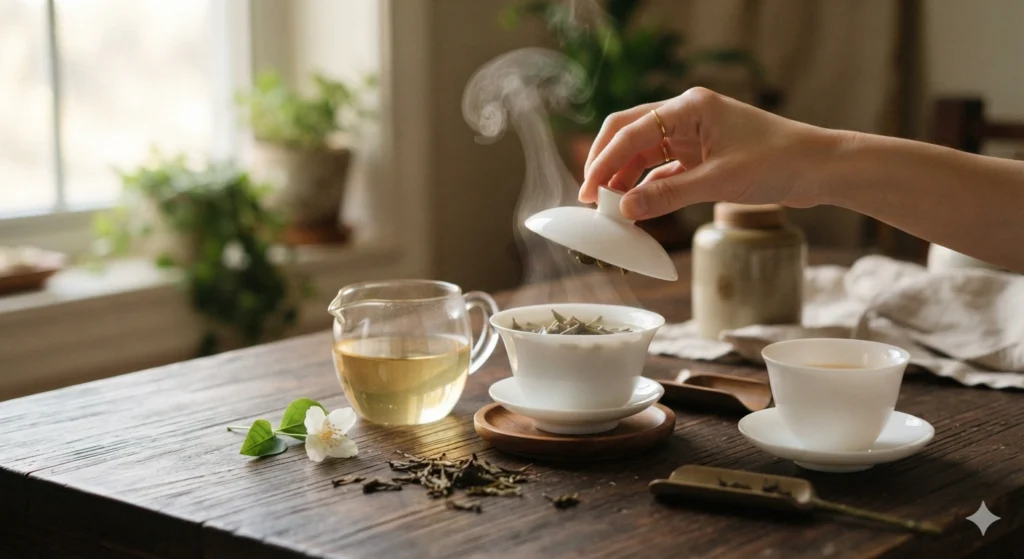
The origin of jasmine tea plays an important role in its quality.
China has produced jasmine tea for centuries, and several regions are closely associated with this tradition.
Fujian Jasmine Tea
Fujian province, especially the area around Fuzhou, is considered one of the most historic centers of jasmine tea production.
The region is known for its traditional scenting techniques and refined style. Fujian jasmine teas are often appreciated for their elegant fragrance, balanced flavor, and careful craftsmanship.
Guangxi Jasmine Tea
Guangxi province, particularly Hengxian, is one of the world’s largest jasmine flower production areas.
Jasmine teas from this region are often more widely available and affordable. Well-made examples can offer a rich floral aroma and a clean, enjoyable finish.
| Origin | Character |
|---|---|
| Fujian | Elegant, traditional, refined |
| Guangxi | Floral, accessible, widely produced |
Origin does not automatically determine quality, but knowing where a jasmine tea comes from provides useful information.
A transparent origin and careful production method are usually better signs than a tea with no clear background.
Types Of Jasmine Green Tea
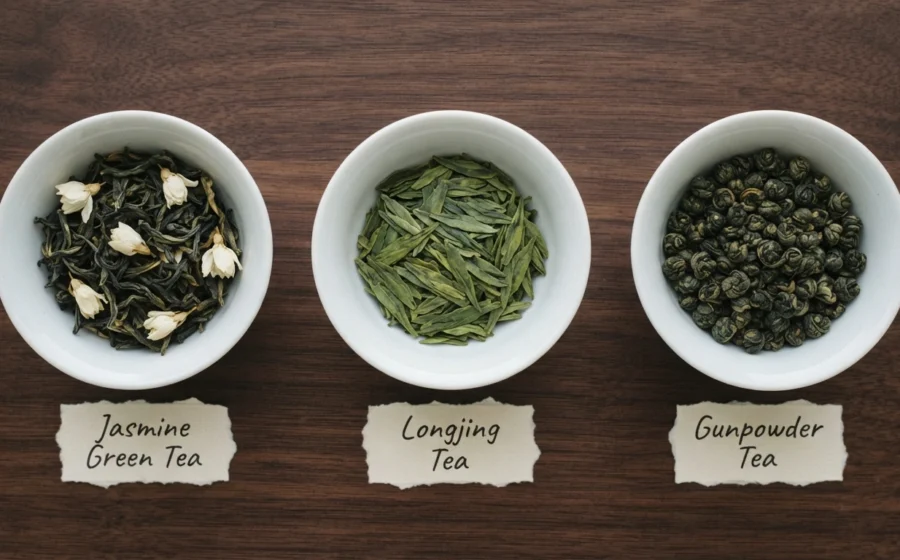
Jasmine green tea comes in several different styles. Each type has its own character, brewing style, and ideal audience.
Choosing the best jasmine tea is not only about quality. It is also about finding a style that matches how you enjoy drinking tea.
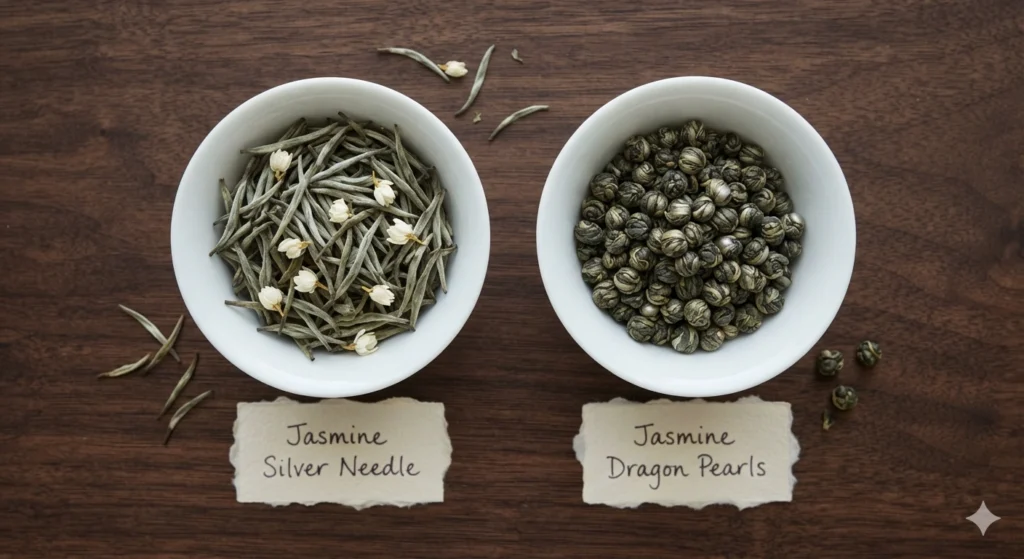
Jasmine Silver Needle
Jasmine Silver Needle is one of the most delicate and premium styles of jasmine tea.
It is typically made using young tea buds or very tender leaves, which create a softer body and a more refined flavor. The jasmine fragrance is usually elegant rather than intense, with notes of sweetness, flowers, and a clean finish.
This style is best suited for drinkers who enjoy subtle flavors and slower tea sessions.
It is a tea for quiet mornings, careful brewing, and appreciating small differences in aroma and texture.
Jasmine Dragon Pearls
Jasmine Dragon Pearls are among the most recognizable forms of Chinese jasmine tea.
The leaves are hand-rolled into small pearls before or during the scenting process. When brewed, the pearls slowly open, releasing layers of jasmine fragrance and allowing you to watch the leaves gradually unfold.
Compared with loose leaf jasmine tea, jasmine pearls often provide:
- A stronger initial aroma
- A more visually enjoyable brewing experience
- A longer-lasting fragrance across multiple infusions
They are especially popular for Gongfu brewing and make an excellent choice for tea lovers who enjoy both flavor and presentation.
Loose Leaf Jasmine Green Tea
Loose leaf jasmine green tea is the classic everyday style.
The tea leaves remain in their natural form rather than being rolled into pearls. This allows the tea to provide a balanced combination of floral aroma and green tea character.
It is usually:
- Easy to brew
- Accessible in price
- Suitable for daily drinking
- Friendly for beginners
For many people discovering Chinese jasmine tea for the first time, a high-quality loose leaf jasmine green tea is the best place to start.
| Type | Flavor | Best For |
|---|---|---|
| Jasmine Silver Needle | Delicate, sweet, refined | Premium tea lovers, slow tea moments |
| Jasmine Dragon Pearls | Floral, layered, aromatic | Gongfu brewing, gifts, tea enthusiasts |
| Loose Leaf Jasmine Green Tea | Balanced, smooth, approachable | Daily drinking, beginners |
Best Jasmine Green Tea For Different Drinkers
The best jasmine green tea depends on what you want from your tea experience.
There is no single jasmine tea that is perfect for everyone. Different styles create different moments.
Best Jasmine Tea For Beginners
For beginners, a classic loose leaf jasmine green tea is usually the best choice.
It provides the traditional jasmine tea experience without being too intense. The floral aroma is easy to appreciate, and the green tea base remains smooth and approachable.
It is a gentle introduction to Chinese tea because it offers both fragrance and balance.
Best Jasmine Tea For Gongfu Brewing
For Gongfu brewing, jasmine pearls are an excellent option.
The tightly rolled leaves slowly open during brewing, creating a changing flavor experience across multiple infusions. The fragrance develops gradually, and each steep reveals slightly different layers.
A gaiwan also allows you to observe the leaves as they expand, making the brewing process part of the enjoyment.
Best Jasmine Tea For Daily Drinking
For everyday drinking, a well-made loose leaf jasmine tea is often the most practical choice.
It is easy to prepare, versatile, and balanced enough to enjoy regularly. A good daily jasmine tea should not rely on overwhelming fragrance. Instead, it should offer a comfortable relationship between floral aroma and tea flavor.
Best Jasmine Tea For A Premium Experience
For those looking for something more refined, jasmine silver needle is worth exploring.
Its delicate sweetness, soft texture, and elegant aroma create a more subtle tea experience. It is not about strong fragrance. It is about precision and balance.
How To Identify Low-Quality Or Fake Jasmine Tea
Knowing what to avoid is just as important as knowing what to look for.
Some jasmine teas appear attractive because of strong fragrance or visual presentation, but these signs can be misleading.
1. An Overly Strong Perfume-Like Aroma
A common sign of lower-quality jasmine tea is an aroma that feels artificial.
If the dry leaves smell more like perfume, candy, or scented products than fresh jasmine flowers, the tea may rely heavily on added flavoring.
Natural jasmine fragrance should feel soft and layered. It should invite you closer rather than immediately overpower your senses.
2. Too Many Jasmine Flowers
Many people assume that more visible jasmine flowers mean better tea.
This is not always true.
In traditional jasmine tea production, the fragrance comes from the scenting process, not from large amounts of flowers left inside the finished tea.
A few petals may be included for appearance, but an excessive amount of dried flowers can sometimes distract from a weaker tea base.
The quality of jasmine tea is found in the leaf, not the number of petals.
3. Aroma That Disappears After One Infusion
A high-quality jasmine tea should continue showing character after the first cup.
The first infusion may have the strongest floral aroma, but later infusions should still reveal sweetness, freshness, and tea character.
If the fragrance disappears completely after one steep, it may indicate that the aroma was added rather than naturally absorbed through traditional scenting.
4. A Weak Or Harsh Tea Base
The jasmine should complement the green tea, not cover it.
A good jasmine tea should have:
- A smooth mouthfeel
- A clean finish
- A pleasant sweetness
If the tea tastes bitter, flat, or overly dry, the problem is usually the underlying green tea quality.
How To Brew The Best Jasmine Green Tea
Even the best jasmine tea needs proper brewing to show its full character.
For the most balanced cup:
- Use water around 80°C–85°C (176°F–185°F)
- Use about 3 grams of tea per 250 ml of water
- Steep for 2–3 minutes for Western-style brewing
For Gongfu brewing:
- Use around 5 grams of tea in a 100 ml gaiwan
- Start with a 20-second first infusion
- Increase steeping time gradually
Avoid boiling water. Excessive heat can damage the delicate jasmine aroma and bring out unwanted bitterness from the green tea base.
A well-made jasmine tea should reveal different qualities throughout the brewing process:
- First infusion: bright floral aroma
- Middle infusions: balanced tea flavor
- Later infusions: softer sweetness and lingering fragrance
For a complete guide, see our article on How To Brew Jasmine Green Tea.
Our Jasmine Green Tea Recommendation At Tea Passage
At Tea Passage, we believe the best jasmine green tea is defined by balance, not intensity.
We look for teas where the jasmine fragrance comes naturally from traditional scenting methods, while the green tea base remains fresh, smooth, and expressive.
A great jasmine tea should not taste like fragrance added to tea. It should taste like two elements working together: the freshness of the tea leaf and the elegance of the jasmine flower.
The goal is not the strongest aroma.
The goal is harmony.
Frequently Asked Questions
What is the best jasmine green tea?
The best jasmine green tea is made with a high-quality green tea base and traditionally scented with fresh jasmine flowers. It should have a natural floral aroma, smooth flavor, and a balanced finish.
What makes jasmine tea high quality?
High-quality jasmine tea usually has a good tea base, traditional scenting methods, natural fragrance, and clear production origins.
The jasmine aroma should feel integrated with the tea rather than added on top.
Is jasmine pearl tea better than loose leaf jasmine tea?
Neither is automatically better.
Jasmine pearls offer a more visual brewing experience and often provide a stronger layered aroma. Loose leaf jasmine tea is usually more practical for everyday drinking and allows the tea character to show clearly.
Where does the best jasmine tea come from?
Fujian, especially the Fuzhou region, is one of the most famous origins for traditional jasmine tea.
Guangxi is also an important jasmine-producing region and is known for producing fragrant and accessible jasmine teas.
How can you tell if jasmine tea is real?
Authentic jasmine tea should have a natural floral aroma, not a perfume-like scent. It should retain fragrance through multiple infusions and maintain a pleasant green tea flavor underneath.
Final Thoughts
The best jasmine green tea is not the loudest tea in the room.
It is the tea where the flower and the leaf exist together naturally.
A carefully made jasmine tea does not rely on overwhelming fragrance. Instead, it rewards attention with a gentle aroma, a smooth body, and a flavor that continues to evolve from one infusion to the next.
At Tea Passage, we choose jasmine teas that respect this tradition — teas made with patience, craftsmanship, and a balance between freshness and fragrance.
Whether you are discovering jasmine tea for the first time or returning to a familiar favorite, the right cup is the one that makes you want another sip.