If you’re buying your first oolong tea, the biggest challenge isn’t learning how to brew it—it’s deciding where to start.
With names like Tie Guan Yin, Da Hong Pao, Shui Xian, High Mountain Oolong, and Phoenix Dan Cong, it’s easy to feel overwhelmed. Which one is actually suitable for beginners? Which one will taste smooth instead of bitter? And which tea gives you the best introduction to Chinese oolong?
The good news is that you don’t need to begin with the rarest or most expensive tea. The best beginner oolong is simply one that’s naturally sweet, easy to brew, and enjoyable from the very first cup. Once you discover the style you enjoy most, exploring the rest of the oolong world becomes much easier.
In this guide, we’ve selected six Chinese oolong teas that we genuinely believe are the best starting points for beginners. These recommendations come not only from traditional tea knowledge, but also from our own experience introducing loose-leaf Chinese tea to friends, customers, and first-time tea drinkers at Tea Passage.
What Makes a Good Beginner Oolong Tea?
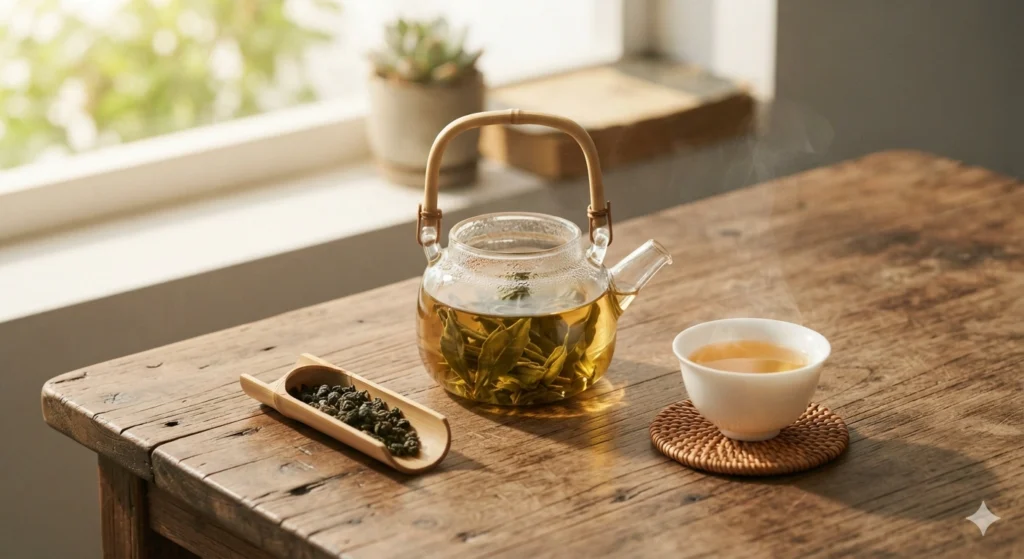
Not every oolong tea is equally beginner-friendly.
Some oolongs are highly aromatic but require careful brewing. Others have deep roasted flavors that experienced drinkers love but may feel overwhelming to someone tasting loose-leaf tea for the first time.
A good beginner oolong should have several qualities:
- A smooth texture with little or no bitterness
- Natural sweetness without adding sugar
- Clear, pleasant aromas that are easy to recognize
- Forgiving brewing characteristics, even if your temperature or steeping time isn’t perfect
- Multiple enjoyable infusions so you can experience how the tea changes over time
At Tea Passage, we’ve found that beginners almost always enjoy teas with obvious aromas and gentle sweetness. Building confidence starts with enjoying the first cup—not with mastering complicated brewing techniques. Once people realize how approachable good oolong can be, they naturally become curious to explore more styles.
Our Picks: Best Oolong Tea for Beginners
These are the six oolong teas we most often recommend to people beginning their journey into Chinese tea. Each offers a different expression of oolong while remaining approachable, rewarding, and easy to brew.
① Tie Guan Yin ⭐⭐⭐⭐⭐
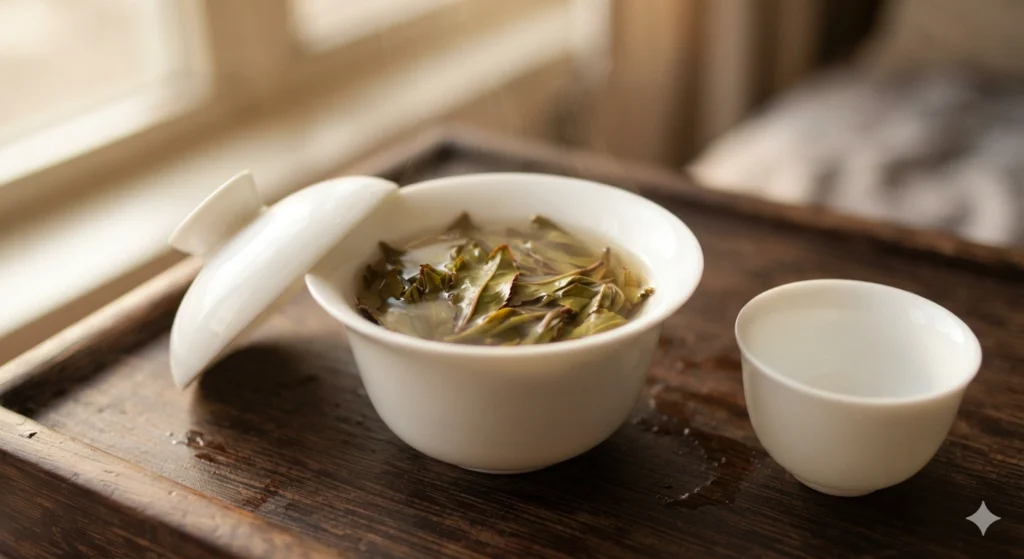
Best for: Almost everyone.
If we could recommend only one tea to someone trying loose-leaf oolong for the first time, it would almost always be Tie Guan Yin.
Originating from Anxi County in Fujian Province, Tie Guan Yin is a lightly oxidized oolong famous for its elegant orchid aroma, creamy mouthfeel, and naturally sweet finish. Before taking your first sip, you’ll often notice the floral fragrance rising from the warm cup. The liquor feels silky and soft, with very little bitterness, making it one of the easiest Chinese teas to enjoy.
Unlike many teas that require an experienced palate, Tie Guan Yin reveals its character immediately. The floral notes are obvious without becoming perfumed, while the sweetness lingers naturally after each sip.
At Tea Passage, Tie Guan Yin is usually the first tea we brew for friends who have never experienced loose-leaf Chinese tea. Almost everyone notices the orchid aroma before drinking, and many are surprised by how creamy and smooth the tea feels. It’s also the tea that most often leads to the same reaction:
“I didn’t know tea could taste like this.”
That moment is exactly why we continue recommending Tie Guan Yin as the perfect introduction to oolong tea.
② Da Hong Pao (Big Red Robe) ⭐⭐⭐⭐
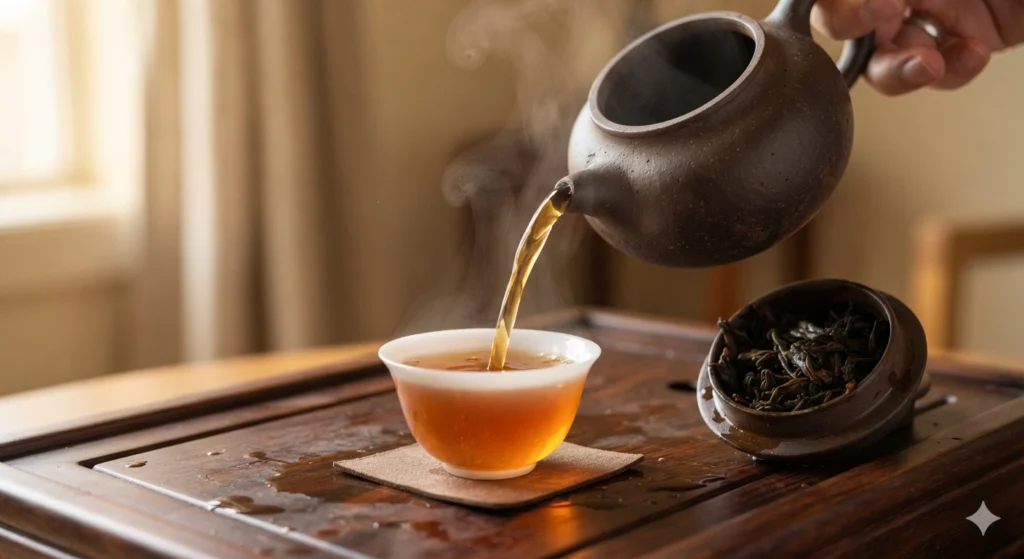
Recommended for: Coffee drinkers, black tea lovers, and anyone who enjoys rich, roasted flavors.
Da Hong Pao is one of China’s most famous oolong teas, originating from the rocky cliffs of the Wuyi Mountains in Fujian Province. As a traditional Wuyi rock tea (Yancha), it is known for its distinctive roasted aroma, mineral character, and smooth, full-bodied taste.
For beginners who prefer bold flavors, Da Hong Pao is often easier to appreciate than delicate floral oolongs. The first sip offers notes of roasted nuts, dark cocoa, toasted grain, and caramel, followed by the signature yan yun—the lingering mineral sensation that makes Wuyi rock tea so distinctive. Despite its depth, a well-made Da Hong Pao remains remarkably smooth, with very little bitterness and a naturally sweet finish.
Brewing is straightforward. Use 95–100°C (203–212°F) water and steep for 25–35 seconds using the Gongfu method, or 2–3 minutes Western style. High-quality Da Hong Pao can easily be infused six to ten times, with each infusion revealing new layers of roasted sweetness, mineral depth, and lasting aroma.
At Tea Passage, Da Hong Pao is often the first tea we recommend to people who think they “don’t like tea.” Many expect something bitter or overly smoky, but they’re usually surprised by how balanced, smooth, and comforting it is. For anyone beginning their journey into Chinese oolong tea, it’s one of the most rewarding places to start.
③ Milk Oolong ⭐⭐⭐⭐
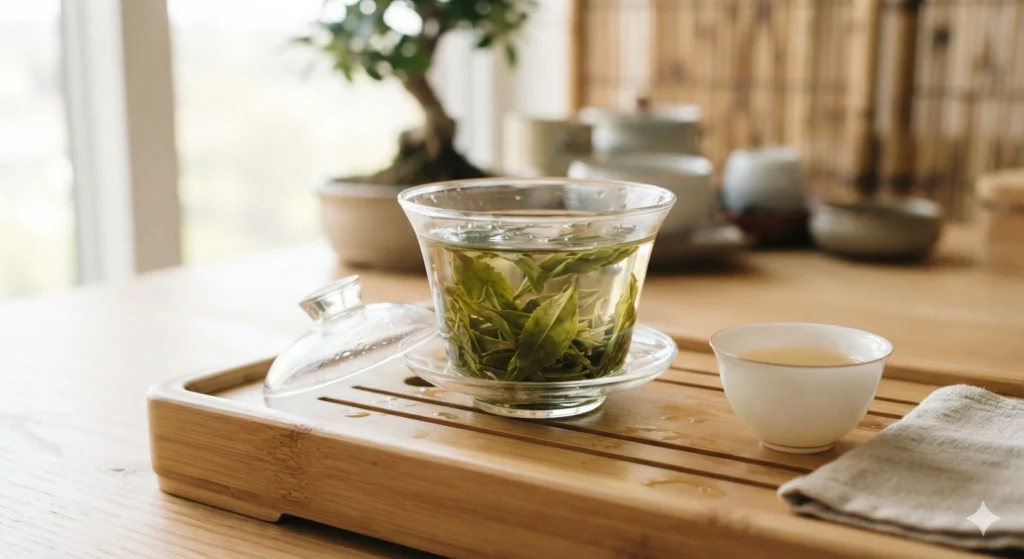
Best for: Anyone who enjoys naturally creamy, dessert-like teas.
Milk Oolong—specifically the traditional Jin Xuan cultivar from Taiwan—is famous for its naturally creamy aroma and buttery texture. Despite its name, authentic Milk Oolong contains no milk or added flavoring. Its gentle sweetness develops naturally from the cultivar and careful processing.
The tea is soft, smooth, and comforting, with subtle floral notes and a rich mouthfeel that makes it feel almost indulgent without becoming heavy. Because it contains virtually no bitterness, it has become one of the easiest loose-leaf teas for beginners to enjoy.
One important point is to distinguish authentic Jin Xuan from artificially flavored “milk oolong” sold by some retailers. Real Milk Oolong has a delicate creamy character rather than an intense vanilla or milk flavor. If the aroma seems overly sweet or artificial, it’s usually flavored rather than naturally produced.
For people transitioning from sweetened drinks or milk tea into traditional Chinese tea, authentic Milk Oolong often provides a gentle and welcoming bridge.
④ Phoenix Dan Cong ⭐⭐⭐
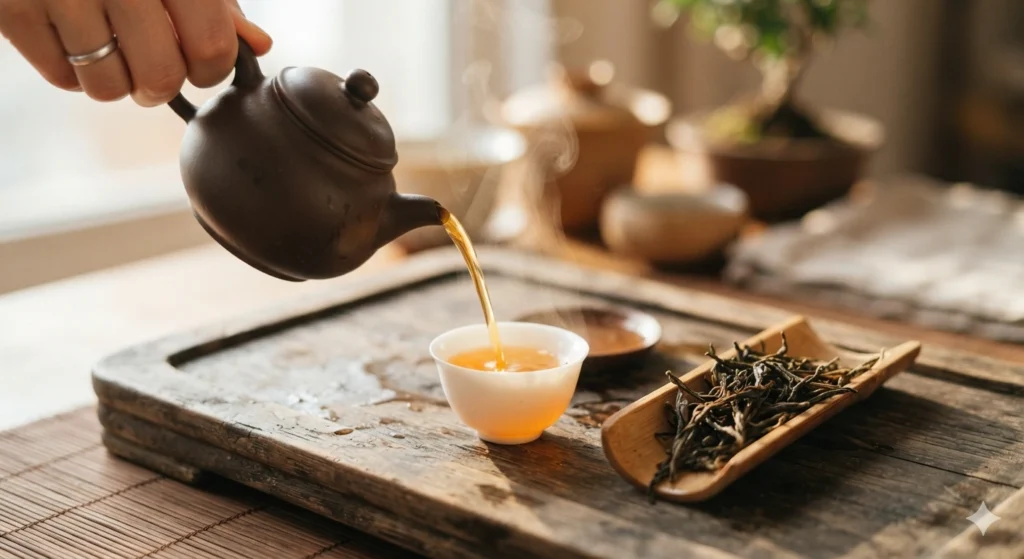
Recommended for: Tea drinkers who love bold floral and fruity aromas.
Phoenix Dan Cong is one of the most aromatic oolong teas you’ll ever taste. Grown in the Phoenix Mountains of Guangdong Province, each cultivar develops its own distinctive fragrance, which is why Dan Cong teas are often named after the aromas they resemble, such as Honey Orchid (Mi Lan Xiang), Almond, or Gardenia.
For beginners, Honey Orchid (Mi Lan Xiang) is usually the easiest introduction. It offers an expressive bouquet of honey, ripe stone fruit, orchids, and tropical flowers, balanced by a smooth body and a naturally sweet finish.
Compared with Tie Guan Yin, Phoenix Dan Cong is more intense and aromatic. Every infusion reveals new layers of fragrance, making it an exciting tea for people who enjoy exploring flavor.
Use 95°C (203°F) water and brew Gongfu style with short infusions of 20–30 seconds. High-quality Dan Cong can easily produce eight or more infusions, with the aroma evolving throughout the session.
At Tea Passage, Phoenix Dan Cong is the tea we recommend when someone has already fallen in love with oolong and wants to discover just how expressive Chinese tea can become.
⑤ Shui Xian ⭐⭐⭐
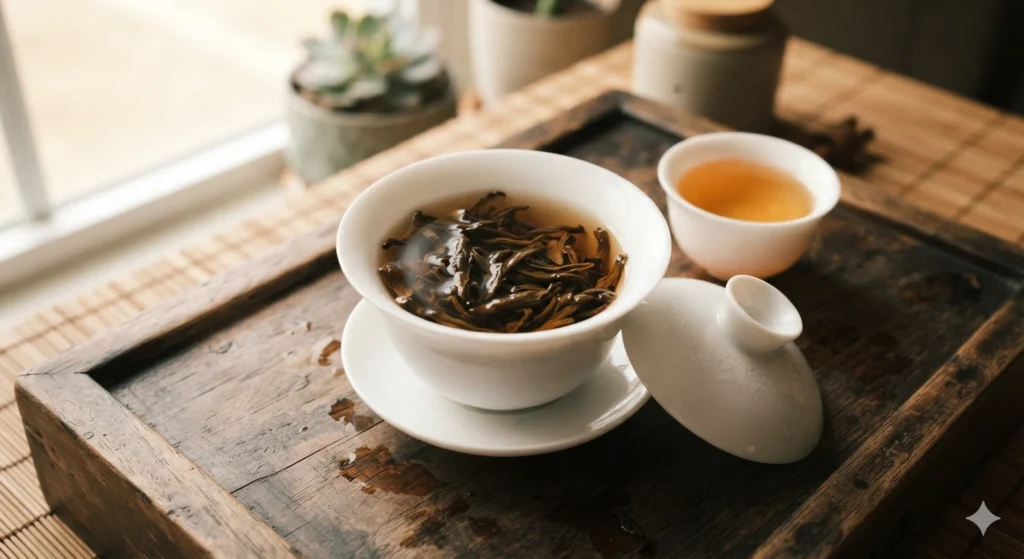
Recommended for: Drinkers who enjoy smooth roasted teas with a mellow character.
Shui Xian is one of the oldest and most respected Wuyi rock teas. Compared with Da Hong Pao, it has a softer personality, making it an excellent choice for beginners who want to explore Yancha without diving straight into its boldest expressions.
A well-made Shui Xian offers aromas of roasted nuts, dried fruit, warm wood, and subtle floral notes. The liquor is smooth and rounded, with a gentle mineral character that lingers pleasantly after each sip.
Unlike some heavily roasted teas, Shui Xian rarely feels aggressive. Its balanced body and natural sweetness make it comfortable to drink throughout the day, even for those who are new to roasted oolong.
For brewing, use 95–100°C (203–212°F) water with 25–35 second Gongfu infusions, gradually extending each steep. The leaves continue to evolve beautifully over multiple brews, revealing more sweetness as the roast softens.
If you enjoy Da Hong Pao but are looking for something a little gentler and more relaxed, Shui Xian is a natural next step.
⑥ Rou Gui ⭐⭐
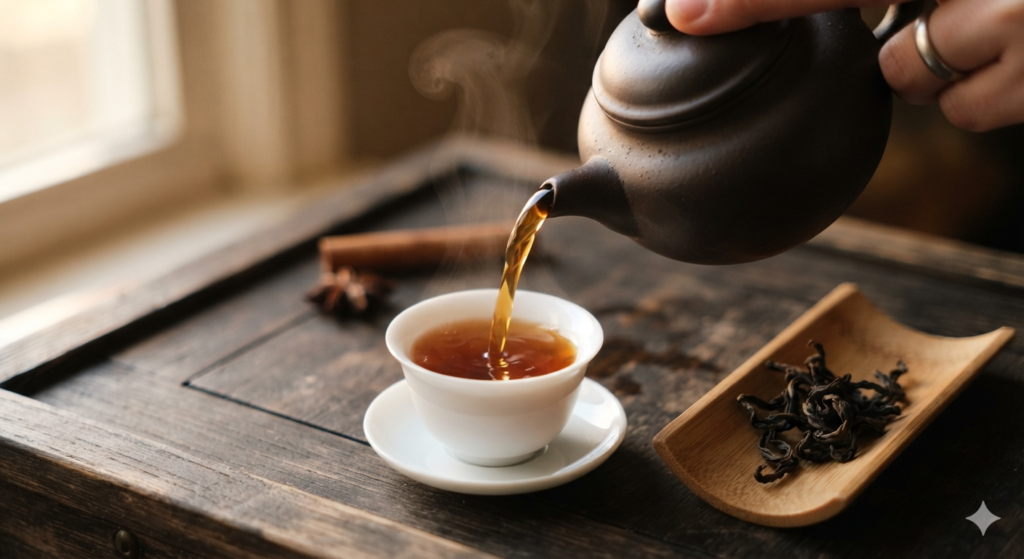
Recommended for: Tea lovers looking for a richer, more complex roasted oolong.
Rou Gui is another famous Wuyi rock tea, celebrated for its distinctive spicy aroma. Despite its name, which translates to “Cassia” or “Cinnamon,” Rou Gui doesn’t taste like cinnamon tea. Instead, it offers elegant notes of warm baking spices, roasted fruit, cocoa, and the signature mineral depth that defines Wuyi Yancha.
Compared with Da Hong Pao, Rou Gui is generally more aromatic and slightly more powerful. It delivers a fuller body with a lingering sweetness that develops across multiple infusions, making it especially rewarding for those who enjoy exploring complex flavors.
Brew Rou Gui with 95–100°C (203–212°F) water using the Gongfu method. Start with a 25–30 second first infusion and increase the steeping time gradually. A quality Rou Gui can easily provide eight to ten infusions, each revealing new layers of spice, roast, and sweetness.
At Tea Passage, we often recommend Rou Gui to customers who have already enjoyed Da Hong Pao and want to continue exploring the remarkable diversity of Wuyi rock teas. It shows how two teas from the same mountains can express completely different personalities.
Which Oolong Tea Should You Choose?
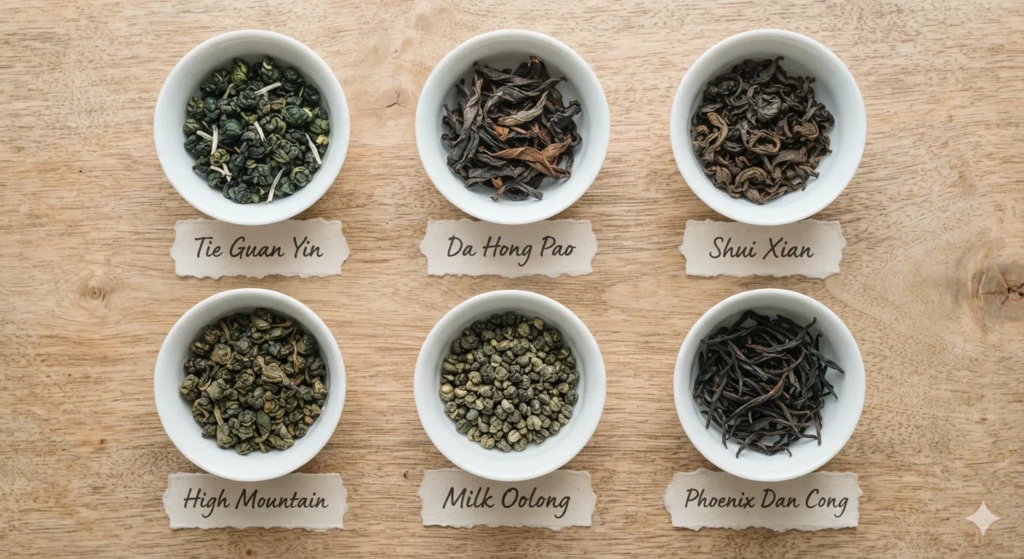
If you are still unsure, this simple decision table can point you in the right direction.
| If You Like… | Choose… |
|---|---|
| Floral teas, light flavors | Tie Guan Yin |
| Green tea, fresh buttery notes | High Mountain Oolong |
| Sweet, creamy, dessert-like tea | Milk Oolong |
| Coffee, dark chocolate, bold drinks | Da Hong Pao |
| Smooth, mellow everyday sipping | Shui Xian |
| Fragrant, complex, aromatic tea | Phoenix Dan Cong |
You do not need to choose perfectly. The best way to learn what you like is to taste a few different styles side by side. A floral Tie Guan Yin and a roasted Da Hong Pao, brewed one after the other, will teach you more about oolong tea than any guide ever could.
What Makes a Good Beginner Oolong Tea?
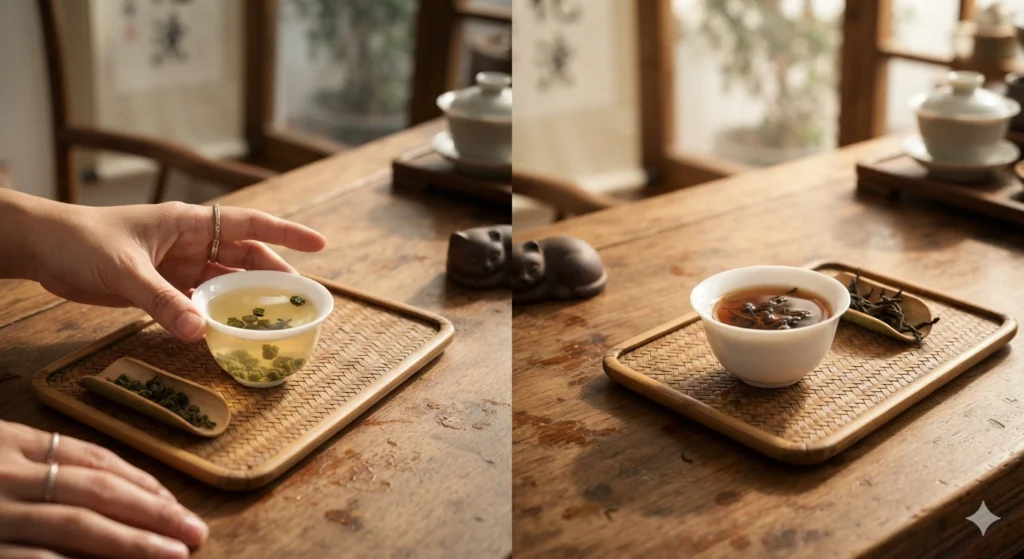
When recommending an oolong to someone just starting out, we always look for the same qualities:
- Naturally sweet, without bitterness
- Easy to brew, even if you don’t have perfect technique
- Aromatic, so you notice the fragrance immediately
- Comfortable to drink, whether you’re coming from coffee, green tea, or black tea
A tea that requires years of experience to appreciate isn’t the best first tea. The goal is to find something that welcomes you into the world of oolong, not something that overwhelms you.
That’s why we usually recommend starting with floral or lightly roasted teas before exploring stronger mineral-heavy styles.
Common Beginner Mistakes
Starting with oolong tea is easier than many people think, but there are a few mistakes that can make a great tea taste disappointing.
Using too little tea
Many beginners treat loose leaf tea like a tea bag.
Oolong leaves are tightly rolled and expand dramatically when brewed. If you only use a tiny amount, the tea often tastes thin and watery.
Brewing too long
Long steeps don’t make better tea.
Especially with light oolongs, steeping for several minutes can mute the floral aromas and introduce unnecessary bitterness.
Instead, use shorter infusions and enjoy multiple steeps.
Using boiling water for every tea
Dark roasted oolongs love boiling water.
Light floral oolongs usually don’t.
Learning this one difference alone dramatically improves your first experience.
Buying low-quality tea
Many people think they dislike oolong when they’ve simply never tasted good loose leaf tea.
Old leaves, excessive flavoring, broken leaf grades, or poor storage hide everything that makes oolong special.
Fresh, carefully sourced tea makes an enormous difference.
Tea Passage Experience: The Tea We Always Recommend First
Whenever someone tells us,
“I’ve never tried oolong before.”
we almost never hand them our strongest tea.
Instead, we usually brew a fresh Tie Guan Yin.
Why?
Because we’ve watched the same reaction happen over and over.
The first thing people notice isn’t the taste.
It’s the aroma.
As soon as the lid of the gaiwan opens, the orchid fragrance rises with the steam, and almost everyone leans in instinctively.
Then comes the first sip.
Instead of bitterness, they find softness.
Instead of heaviness, they discover a smooth, creamy texture with a gentle natural sweetness that lingers long after swallowing.
That moment often changes what people think tea can be.
Once someone experiences that floral elegance, they’re usually excited to explore further.
Only then do we introduce teas like Da Hong Pao or Phoenix Dan Cong, where the flavors become deeper, roasted, fruitier, and more complex.
We’ve found that starting with an approachable tea makes the entire journey much more enjoyable.
Good oolong doesn’t try to impress you immediately.
It simply invites you back for another cup.
Where To Go After Your First Oolong
Once you’ve found an oolong you enjoy, the fun really begins.
Rather than drinking the same tea forever, try exploring different styles.
A simple path looks like this:
- Start with Tie Guan Yin for floral elegance.
- Move to High Mountain Oolong for buttery sweetness.
- Explore Da Hong Pao for roasted richness.
- Finish with Phoenix Dan Cong when you’re ready for intense fruit and floral aromatics.
Each tea teaches you something new about what oolong can be.
That’s one of the reasons people spend years exploring this category.
Frequently Asked Questions
What is the best oolong tea for beginners?
Tie Guan Yin is the best place to start for most people. It offers floral aroma, creamy texture, natural sweetness, and is very forgiving to brew.
Is Da Hong Pao good for beginners?
Yes, especially if you already enjoy coffee, black tea, or roasted flavors. Its rich body and roasted character feel familiar while introducing the distinctive mineral complexity of Wuyi oolong.
Which oolong tea is the sweetest?
Many lightly oxidized oolongs, especially Tie Guan Yin and High Mountain Oolong, have a naturally sweet finish without any added sugar.
Which oolong tea should I buy first?
Choose a high-quality loose leaf Tie Guan Yin if you’re completely new to oolong. If you already enjoy bold drinks like espresso or black tea, Da Hong Pao is another excellent first choice.
Begin Your Oolong Journey
Every experienced tea drinker started with a single cup.
The best beginner oolong isn’t necessarily the rarest or the most expensive—it’s the one that makes you want to brew another infusion.
At Tea Passage, we carefully select authentic Chinese oolong teas that are approachable for newcomers while staying true to their traditional origins. Whether you begin with the floral elegance of Tie Guan Yin or the roasted depth of Da Hong Pao, you’ll discover why oolong has fascinated tea lovers for centuries.
→ Explore Our Oolong Tea Collection and find your first favorite cup.