No, oolong tea is not green tea. Although both come from the same plant—Camellia sinensis—they are processed differently and belong to separate tea categories.
If you’ve ever opened a bag of Tie Guan Yin and noticed its tightly rolled jade-green leaves, you’ve probably wondered whether it was actually a green tea. It certainly looks fresh and vibrant. It even smells similar to some green teas. But once you understand how oolong is made, you’ll discover why it deserves its own place in the world of tea.
Is Oolong Tea Green Tea?
The short answer is no.
In traditional Chinese tea classification, green tea and oolong tea are two completely different categories. The difference is not the plant they come from, but how the leaves are processed after harvesting.
Green tea is heated almost immediately after picking to stop oxidation. This preserves its fresh, grassy character and bright green appearance.
Oolong tea is partially oxidized, typically ranging from 10% to 80% oxidation, depending on the style. During production, the leaves are carefully bruised, rested, shaped, and sometimes roasted, creating a remarkably wide spectrum of aromas and flavors.
Although both teas begin with the same leaf, the finished result is entirely different.
Why Do People Think Oolong Tea Is Green Tea?
The confusion is understandable.
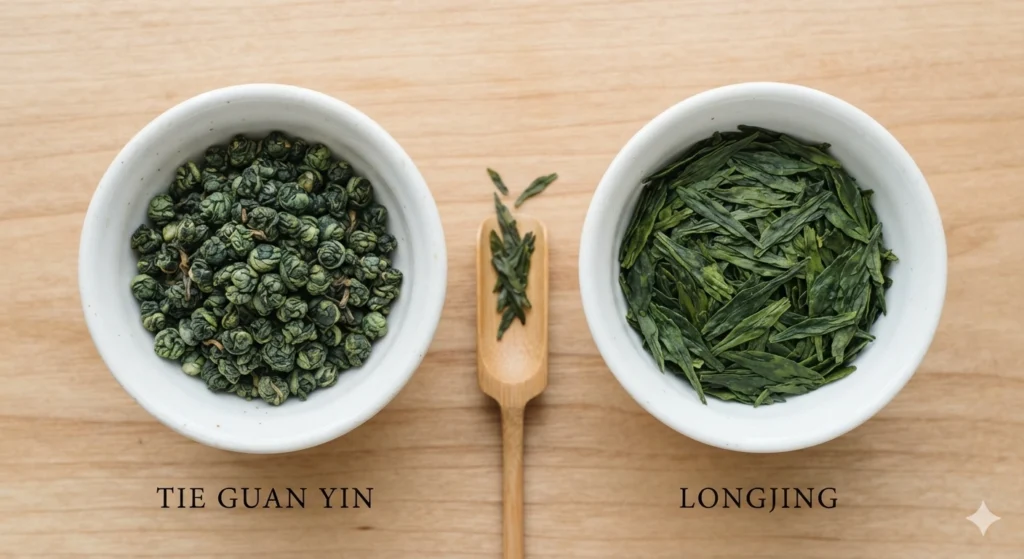
Many modern oolong teas—especially Tie Guan Yin and Taiwanese High Mountain Oolong—look surprisingly similar to green tea.
They often have:
- Bright green rolled leaves
- Pale golden-green liquor
- Fresh floral aromas
- A clean and refreshing appearance
For someone new to Chinese tea, it is perfectly reasonable to assume they are simply another type of green tea.
But appearance tells only part of the story.
The real identity of a tea comes from its processing, not its color.
Oolong Tea vs Green Tea
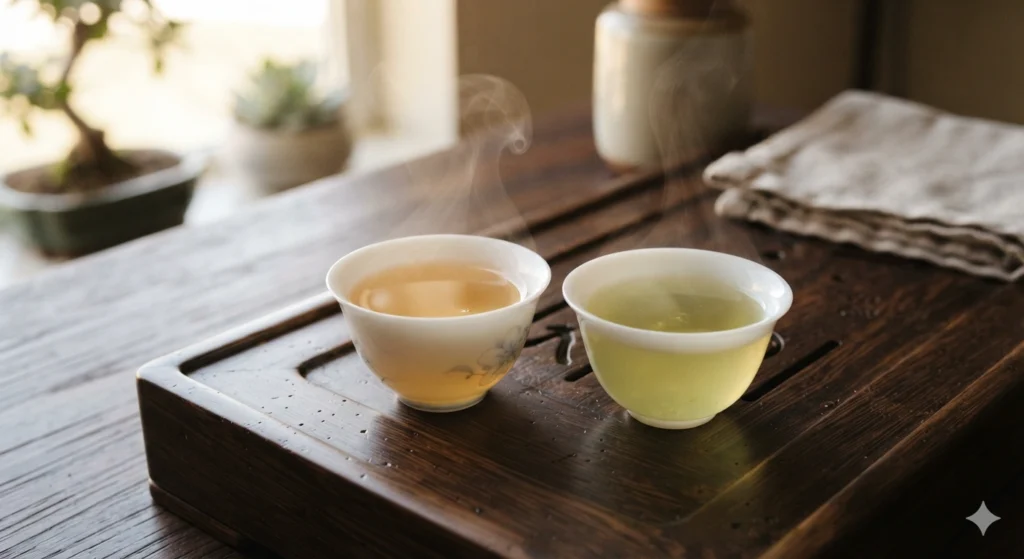
Looking at them side by side makes the differences much easier to understand.
| Feature | Oolong Tea | Green Tea |
|---|---|---|
| Tea Category | Oolong | Green |
| Oxidation | Partial (10–80%) | Minimal (near 0%) |
| Flavor | Floral, creamy, fruity, roasted, mineral | Fresh, grassy, vegetal |
| Aroma | Orchid, honey, fruit, roasted nuts | Vegetal, chestnut, seaweed |
| Liquor Color | Golden to amber | Pale green to light yellow |
| Caffeine | About 30–50 mg per cup | About 20–35 mg per cup |
| Typical Infusions | 5–10 | 2–4 |
Green tea is designed to preserve freshness.
Oolong tea is crafted to develop complexity.
That is why a single category of oolong can include everything from delicate floral teas to rich roasted rock teas.
Does Oolong Tea Taste Like Green Tea?
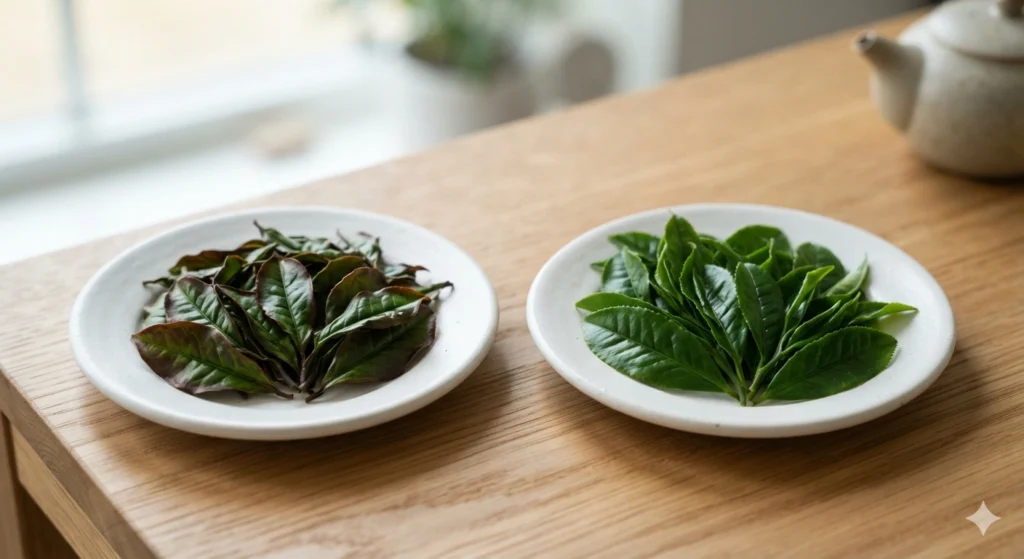
Some lightly oxidized oolongs can remind people of green tea—but they are rarely identical.
A fresh Tie Guan Yin or a Taiwanese High Mountain Oolong often shares the bright, clean feeling found in quality green tea. Yet once you begin drinking, the differences become obvious.
Green tea usually tastes:
- Fresh
- Grassy
- Vegetal
- Crisp
Oolong tea is often:
- Creamier
- Softer
- More floral
- Naturally sweeter
- More layered from one infusion to the next
Rather than delivering one clear flavor, oolong gradually unfolds as the leaves continue to open.
That evolution is one of the reasons so many tea drinkers become fascinated with oolong.
Is Oolong Healthier Than Green Tea?
This question comes up frequently, but there is no simple winner.
Both teas naturally contain antioxidants and can be enjoyed as part of a healthy lifestyle.
Green tea is particularly rich in catechins, which remain largely intact because the leaves undergo very little oxidation.
Oolong tea contains a different balance of natural compounds, including both catechins and oxidized polyphenols that develop during processing.
Rather than asking which tea is healthier, it is more helpful to think about which tea fits your taste and daily routine.
Some days call for the crisp freshness of green tea.
Other days, the layered complexity of oolong simply feels more satisfying.
Our Experience at Tea Passage
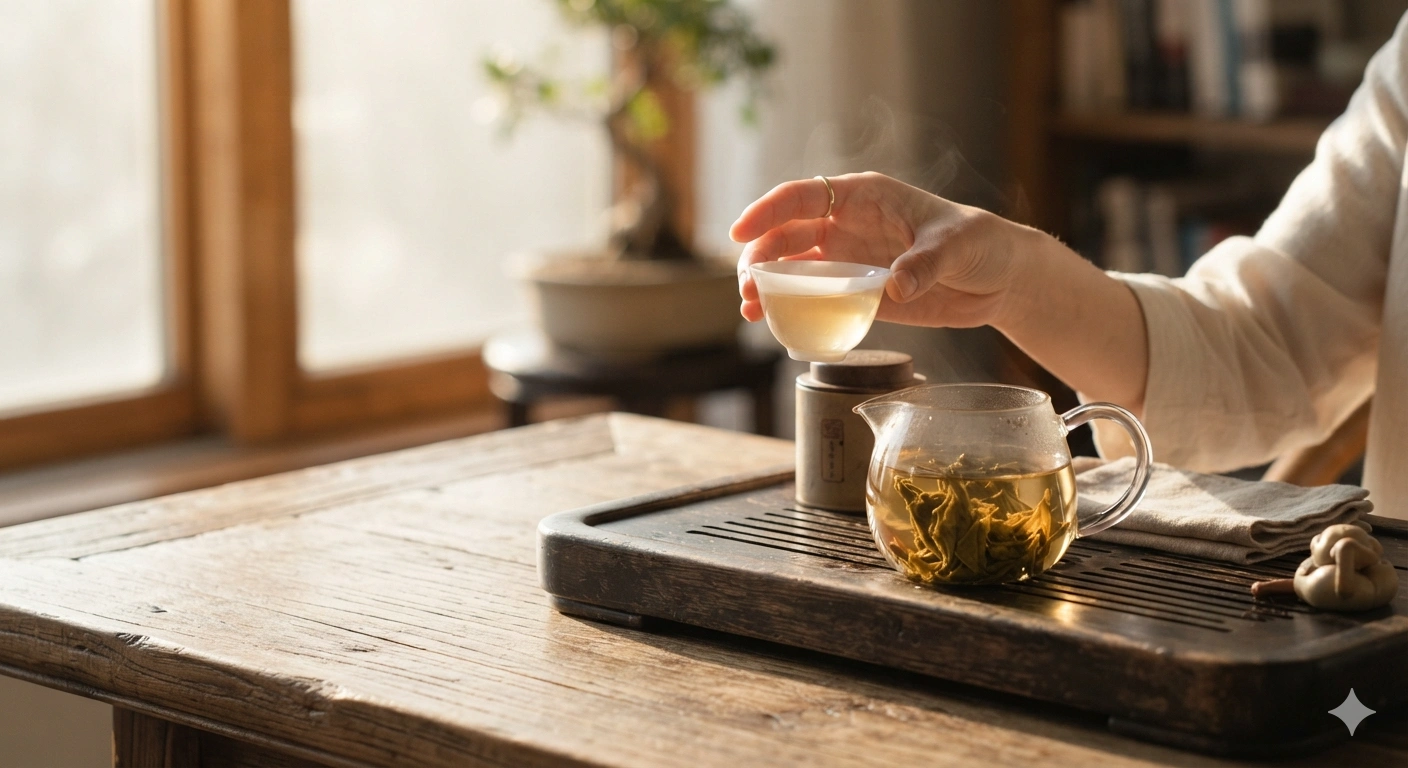
When we first brewed a lightly oxidized Tie Guan Yin at Tea Passage, we immediately understood why so many beginners mistake it for green tea.
The dry leaves were tightly rolled into small jade-green pearls. The liquor glowed a soft golden color. Even before the first sip, the aroma filled the room with fresh orchid notes.
Visually, it could easily have been mistaken for green tea.
Then we tasted it.
Instead of the grassy freshness we expected, the tea felt noticeably creamier and rounder. The floral aroma lingered long after swallowing, followed by a gentle sweetness that became even more noticeable in the second and third infusions.
Each steep revealed something different.
By the fifth infusion, the tea was still evolving—something we rarely experience with green tea.
That session reminded us that oolong isn’t simply “between green and black tea.” It has its own personality, its own rhythm, and its own way of rewarding patience.
That’s exactly why, at Tea Passage, we encourage people to explore oolong as a category in its own right rather than comparing it to other teas.
Frequently Asked Questions
Is oolong tea green tea?
No. Oolong tea is its own tea category. It is partially oxidized, while green tea undergoes minimal oxidation.
Is oolong healthier than green tea?
Both teas naturally contain antioxidants and can be enjoyed as part of a balanced lifestyle. Neither is universally healthier—their antioxidant profiles are simply different.
Does oolong taste like green tea?
Some lightly oxidized oolongs share fresh floral characteristics with green tea, but oolong is generally creamier, smoother, and more layered, without the pronounced grassy or vegetal notes.
Which has more caffeine, green tea or oolong?
In most cases, oolong tea contains slightly more caffeine. A typical cup provides around 30–50 mg, while green tea usually contains about 20–35 mg, though the exact amount depends on the tea variety and brewing method.
Final Thoughts
If you’re curious about the difference between green tea and oolong, the easiest way to understand it is to taste them side by side.
At Tea Passage, we carefully select traditional Chinese oolong teas—from the floral elegance of Tie Guan Yin to the rich roasted character of Da Hong Pao—so you can experience just how diverse oolong can be.
Whether you prefer delicate floral notes or deeper roasted flavors, every cup offers a chance to discover why oolong stands as one of China’s most remarkable tea traditions.