Longjing tea (Dragon Well) is one of the most famous green teas in China. But the first time many people taste it, the reaction is often the same:
“This doesn’t taste like the green tea I know.”
It is smoother, softer, and more rounded. Less sharp. More calm. Almost like green tea that has been carefully polished by hand.
So what exactly is Longjing tea?
What Is Longjing Tea(Dragon Well)?
Longjing tea is a premium Chinese green tea from Hangzhou, Zhejiang province, mainly produced around the West Lake area.
It belongs to the green tea category, but what makes it special is the craftsmanship, not the category itself.
After harvesting, the leaves are pan-fired in a hot wok by hand, a traditional method that:
- stops oxidation immediately
- preserves a fresh green character
- creates a signature nutty aroma
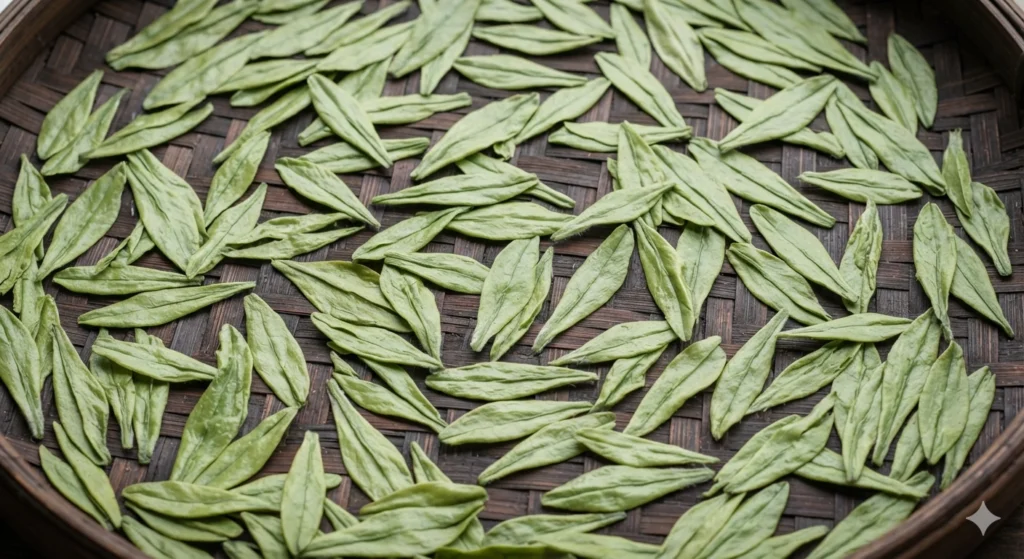
- flattens the leaves into smooth “sword shapes”
The name “Dragon Well” comes from a local spring legend in Hangzhou, but today it represents one of the most refined styles of Chinese green tea.
What Does Longjing Tea Taste Like?
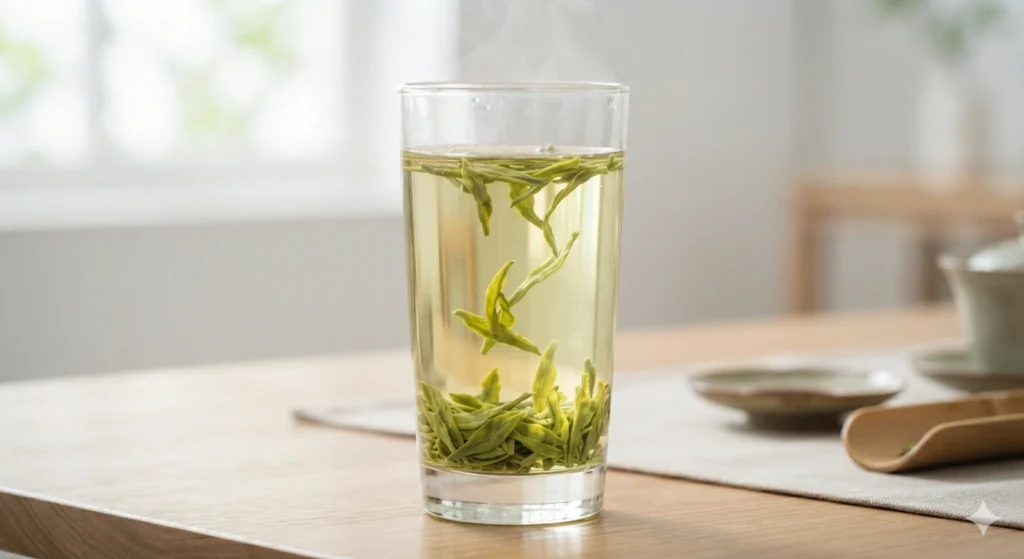
A well-made Longjing is very different from standard green tea.
It is:
- smooth and silky
- lightly nutty (roasted chestnut-like)
- softly sweet in the finish
- clean and refreshing, without harshness
There is a quiet warmth in the flavor. Nothing sharp. Nothing aggressive.
Instead of hitting you immediately, it unfolds gently and disappears cleanly, leaving a soft sweetness in the mouth.
This is why many people who “don’t like green tea” often change their mind after trying Longjing.
Why Longjing Feels Different From Other Green Teas
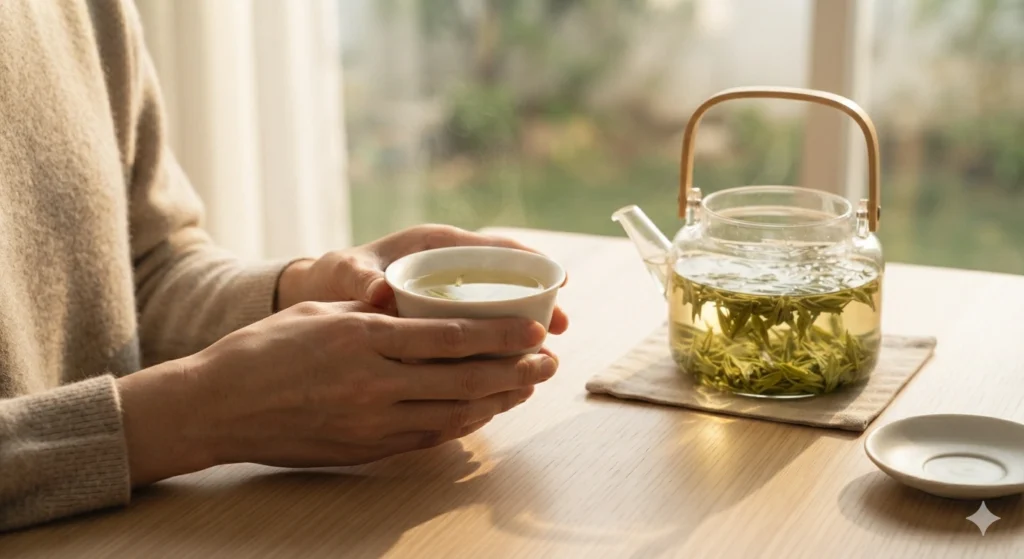
Green tea is not one single taste. It depends heavily on processing.
Longjing belongs to Chinese pan-fired green tea, while many other famous green teas (like Japanese Sencha) are steamed.
This difference changes everything:
- Pan-firing → warm, nutty, slightly roasted notes
- Steaming → grassy, vegetal, marine-like notes
So even though both are green teas, they feel like two different worlds.
Longjing sits in the middle of freshness and warmth.
Longjing Tea vs Other Chinese Green Teas
How does Longjing compare to other famous Chinese green teas? It helps to look at the family.
| Tea | Shape | Processing | Flavor | Aroma |
|---|---|---|---|---|
| Longjing (Dragon Well) | Flat, sword-like leaves | Pan-fired | Nutty, chestnut, sweet, smooth | Roasted chestnut, vegetal |
| Biluochun | Tightly curled spirals | Pan-fired | Fruity, floral, delicate | Fresh flowers, apricot |
| Huangshan Maofeng | Wiry, slightly twisted | Pan-fired | Clean, sweet, light | Orchid, fresh meadow |
All three are pan-fired Chinese green teas, but they express that category differently. Biluochun is more floral and fruity. Huangshan Maofeng is light and airy. Longjing is nuttier and more grounded. If you prefer a tea with substance and a warm, toasty character, Longjing usually wins.
Longjing Tea vs Japanese Green Tea
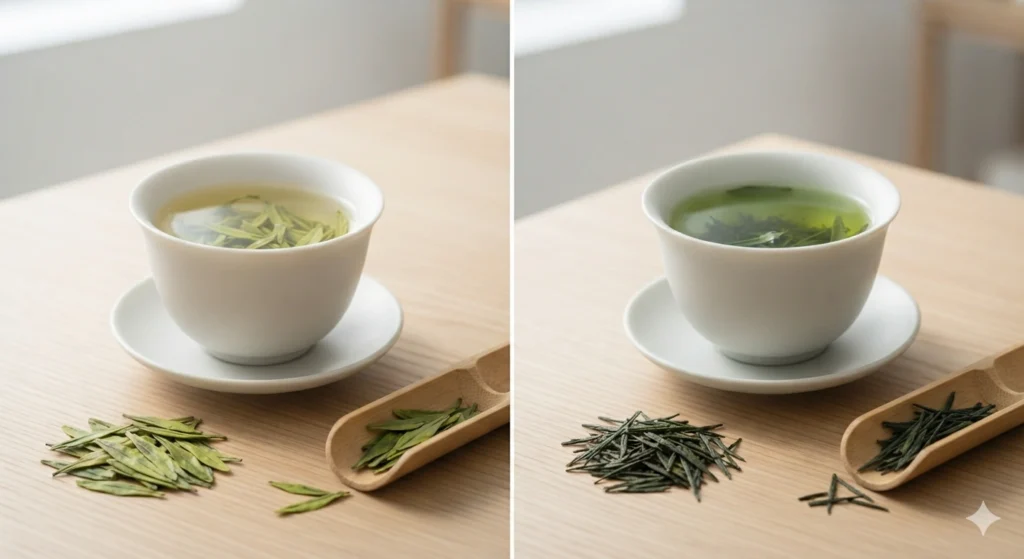
A useful comparison is between Chinese pan-fired green tea and Japanese steamed green tea. This difference defines two entire tea cultures.
Longjing tea is pan-fired. The leaves are heated in a hot wok shortly after picking, which halts oxidation quickly and gives the tea its roasted chestnut, nutty flavor. The leaf stays flat and glossy.
Japanese green teas like Sencha are steamed. The brief steaming process preserves a vivid green color and produces a flavor profile that is more vegetal, grassy, and often marine-like, with notes of seaweed or spinach.
| Aspect | Longjing (Pan-fired) | Sencha (Steamed) |
|---|---|---|
| Processing | Wok-fried | Steamed |
| Flavor | Nutty, chestnut, sweet | Grassy, umami, fresh green |
| Mouthfeel | Smooth, soft | Clean, sometimes astringent |
| Caffeine | Moderate | Moderate |
Neither is better. Many tea drinkers keep both on hand and reach for Longjing when they want something warm and toasty, and Sencha when they want something crisp and refreshing.
Longjing vs Coffee (Why People Drink It Daily)
Longjing contains caffeine, but in a moderate range:
- Longjing: ~20–30 mg per cup
- Coffee: ~80–100 mg per cup
But the experience is not just about caffeine.
Longjing also contains L-theanine, which smooths stimulation and creates a calmer kind of focus.
So the effect feels like:
steady energy + mental clarity + no sharp crash
This is why many people use it as a daily morning or afternoon drink instead of coffee.
Not stronger. Not weaker. Just cleaner.
Our Experience with Longjing at Tea Passage
The first time we brewed a high-quality Longjing, it did not feel loud or dramatic.
It felt quiet.
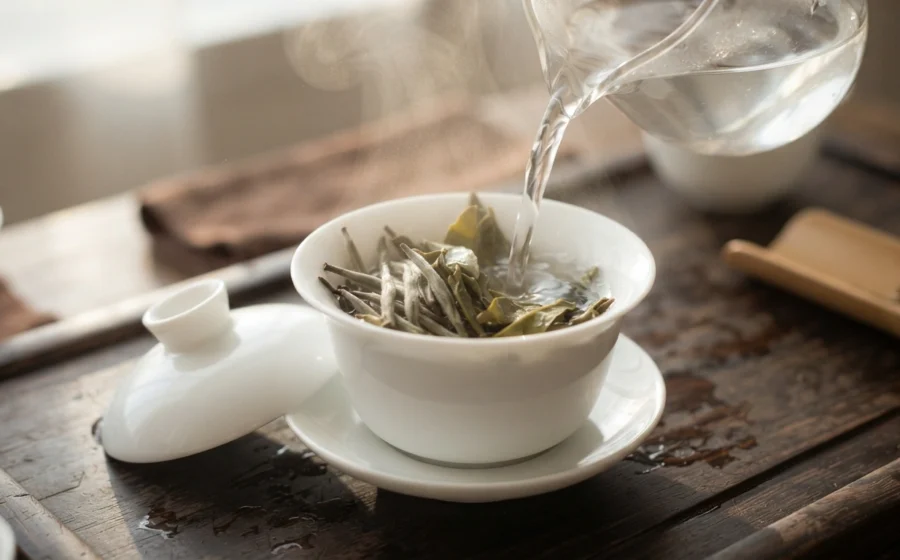
The dry leaves were flat and elegant, like small jade blades. When hot water hit them, a soft aroma rose immediately—fresh roasted chestnuts mixed with spring air.
The first sip was gentle. Almost understated.
No bitterness. No sharpness. Just a smooth, soft structure that spread evenly across the mouth.
What stood out was not intensity, but balance.
By the second infusion, a light sweetness began to appear. By the third, the tea felt even rounder and smoother. It kept changing in small, subtle ways.
Longjing is not a tea that tries to impress you.
It is a tea that slowly earns your attention.
How to Brew Longjing Tea (Simple Guide)
- Water temperature: 80–85°C
- Tea amount: 2–3g per cup
- Steep time: 1–2 minutes
- Re-steeps: 2–3 times
Key rule:
Do not overheat. Do not over-steep.
The goal is a clean, soft, sweet cup.
Final Thought
Longjing is not about complexity on the surface.
It is about quiet depth underneath simplicity.
It does not overwhelm you. It stays with you.
That is why it has remained one of China’s most loved green teas for centuries.
Frequently Asked Questions
Why is Longjing tea called Dragon Well?
The name comes from a legend about a local spring whose waters were said to resemble a dragon’s energy. The tea grown near that spring became known as Dragon Well tea.
How is Longjing tea different from other green teas?
Longjing is pan-fired, which gives it a distinctive nutty, toasty character. Many other green teas, such as Japanese Sencha, are steamed and taste more grassy and vegetal. Among Chinese green teas, Longjing is known for its smoothness and chestnut aroma.
Does Longjing tea have caffeine?
Yes. As a green tea, Longjing contains a moderate amount of caffeine, typically 20 to 30 milligrams per cup, which is less than coffee and often gentler in effect.
How should I brew Longjing tea?
Use water around 80°C (175°F) and steep for 1 to 2 minutes. Avoid boiling water to prevent bitterness. The leaves can be re-steeped two or three times.
Try Longjing Tea from Tea Passage
If you are exploring Chinese green tea for the first time—or moving from oolong or black tea—Longjing is one of the easiest and most rewarding starting points.
It is familiar enough to feel comfortable, but refined enough to feel new.