From floral Tie Guan Yin to roasted Da Hong Pao, discover what makes Chinese oolong tea one of the world’s most diverse and rewarding tea categories.
Chinese oolong tea is not just one tea.
It is an entire world of flavors, traditions, and craftsmanship that has been refined over centuries. Some Chinese oolongs are fresh and floral, others are deeply roasted and mineral-rich. Some are delicate enough for a quiet morning, while others are bold enough to replace your afternoon coffee.
If you’re just beginning your journey into loose leaf tea, the variety can feel overwhelming. Tie Guan Yin, Da Hong Pao, Rou Gui, Shui Xian, Phoenix Dan Cong… where do you even start?
This guide is designed to answer that question.
By the end, you’ll understand what Chinese oolong tea is, how it differs from other teas, where it comes from, and which style is most likely to suit your own taste.
What Is Chinese Oolong Tea?

Chinese oolong tea is a traditional partially oxidized tea made from the leaves of the Camellia sinensis plant.
It belongs to one of the six major categories of Chinese tea, alongside green tea, white tea, yellow tea, black tea, and dark tea.
Unlike green tea, which is heated immediately after picking to stop oxidation, oolong leaves are intentionally allowed to oxidize before being fixed. Tea makers carefully monitor the leaves throughout the process, adjusting oxidation, shaking, rolling, and roasting to create different flavor profiles.
This single processing difference creates one of the widest flavor spectrums in the tea world.
A lightly oxidized oolong may taste like orchids, fresh cream, and spring flowers.
A heavily roasted oolong may remind you of roasted nuts, cocoa, warm wood, and mountain stone.
Both are oolong.
That’s what makes this category so fascinating.
Oolong tea offers one of the widest flavor ranges in the tea world. If you’re completely new to this category, our What Is Oolong Tea guide explains the basics before diving into the different styles.
Why Is Chinese Oolong Tea So Special?
Many people describe oolong as sitting between green tea and black tea.
Technically, that’s true because of its oxidation level.
But in reality, oolong deserves to be understood as its own category.
Rather than having one characteristic flavor, Chinese oolong offers an enormous range of experiences depending on:
- oxidation level
- roasting style
- tea cultivar
- mountain elevation
- soil composition
- local climate
- craftsmanship
Two teas grown only a few hundred kilometers apart can taste completely different.
This diversity is one reason many tea drinkers eventually settle on oolong as their favorite category—it never becomes boring.
The History of Chinese Oolong Tea
Chinese oolong tea originated in Fujian Province, where tea makers gradually developed the partial oxidation techniques that define oolong today.
Although historians still debate the exact origin, most agree that modern oolong production emerged during the late Ming and early Qing dynasties.
Unlike fully oxidized black tea or minimally processed green tea, oolong requires continuous observation.
Tea makers judge the leaves by:
- aroma
- texture
- color
- flexibility
- humidity
- weather conditions
Even today, experienced tea masters often rely more on instinct than timers or machines.
That human element is one reason authentic Chinese oolong continues to be highly respected.
Every harvest is slightly different.
Every batch requires small adjustments.
No two seasons are exactly alike.
Where Is Chinese Oolong Tea Grown?
Although tea grows throughout China, authentic Chinese oolong is primarily produced in two provinces:
- Fujian
- Guangdong
Each region has developed its own traditions over hundreds of years.
Fujian Province
Fujian is considered the birthplace of Chinese oolong tea.
It produces two very different styles.
Northern Fujian (Wuyi Mountains)
The famous Wuyi Mountains produce Yancha, or “rock tea.”
These teas grow among dramatic cliffs and mineral-rich soil, creating the distinctive character known as Yan Yun, often translated as rock rhyme.
Famous teas include:
- Da Hong Pao
- Rou Gui
- Shui Xian
Typical flavor notes include:
- roasted nuts
- dark chocolate
- mineral sweetness
- toasted grains
- warm wood
These teas are rich, layered, and incredibly satisfying during cooler weather.
Southern Fujian (Anxi)
Anxi is best known for producing Tie Guan Yin, one of China’s most famous teas.
Modern Tie Guan Yin is lightly oxidized and lightly roasted, producing:
- orchid aroma
- creamy mouthfeel
- fresh floral sweetness
- lingering finish
For many beginners, Tie Guan Yin is the easiest introduction to Chinese oolong because it is approachable without being simple.
Guangdong Province
Guangdong’s Phoenix Mountains are home to Phoenix Dan Cong.
Unlike most teas, Dan Cong is famous for naturally expressing aromas that resemble fruits and flowers.
Individual cultivars may remind drinkers of:
- honey orchid
- almond blossom
- orange blossom
- ginger flower
- magnolia
- gardenia
The aroma can be astonishingly vivid.
Many experienced tea drinkers consider Phoenix Dan Cong one of the most aromatic tea categories in the world.
The Most Famous Chinese Oolong Teas
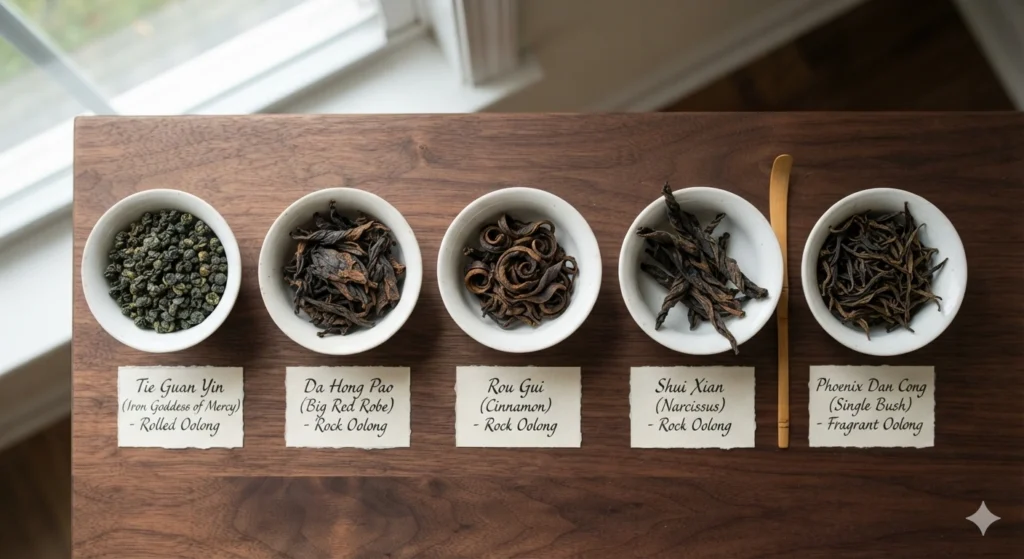
If you’re new to Chinese oolong, these are the teas you’ll encounter most often.
| Tea | Region | Typical Flavor | Best For |
|---|---|---|---|
| Tie Guan Yin | Anxi, Fujian | Floral, creamy, orchid | Beginners |
| Da Hong Pao | Wuyi Mountains | Roasted, mineral, cocoa | Coffee drinkers |
| Rou Gui | Wuyi Mountains | Cinnamon spice, roasted fruit | Rich flavors |
| Shui Xian | Wuyi Mountains | Honey, smooth, mellow | Daily drinking |
| Phoenix Dan Cong | Guangdong | Fruity, floral, honey | Aroma lovers |
Each tea represents a completely different side of Chinese oolong.
Trying only one is a little like judging all wine after tasting a single bottle.
Chinese Oolong Tea vs Taiwanese Oolong Tea
People often ask whether Chinese or Taiwanese oolong is better.
The honest answer is neither.
They simply emphasize different qualities.
Chinese Oolong
Generally offers:
- greater roasting tradition
- deeper mineral character
- stronger regional identity
- broader flavor spectrum
Chinese oolongs often feel layered, warming, and contemplative.
Taiwanese Oolong
Taiwanese producers typically focus on:
- high mountain cultivation
- lighter oxidation
- buttery texture
- clean floral sweetness
These teas feel fresh, elegant, and exceptionally smooth.
Both traditions are outstanding.
Many tea lovers eventually enjoy both depending on season, mood, and occasion.
What Does Chinese Oolong Tea Taste Like?
This is perhaps the hardest question to answer because Chinese oolong does not have a single flavor.
Instead, imagine a spectrum.
On one end:
- orchids
- lilies
- butter
- cream
- fresh flowers
- sweet peas
In the middle:
- honey
- ripe fruit
- baked apples
- peaches
- toasted almonds
On the darker end:
- roasted chestnuts
- cocoa
- caramel
- charcoal
- warm stone
- minerals
Unlike many teas, oolong changes throughout the session.
The first infusion may be floral.
The third becomes creamy.
The sixth develops deeper sweetness.
Good loose leaf oolong is designed to evolve with each infusion.
That evolution is one reason experienced tea drinkers rarely judge an oolong after only one cup.
Why Loose Leaf Matters
One of the biggest differences you’ll notice is that authentic Chinese oolong is almost always sold as whole loose leaves rather than tea bags.
Whole leaves unfurl slowly during brewing, releasing different layers of aroma over multiple infusions.
A quality oolong can easily produce:
- 6 infusions
- 8 infusions
- sometimes even 10 or more
Each infusion tells a slightly different story.
Tea bags simply cannot recreate that experience because the leaves have already been broken into tiny particles.
For Chinese oolong, loose leaf isn’t a luxury.
It’s how the tea was intended to be enjoyed.
How To Brew Chinese Oolong Tea
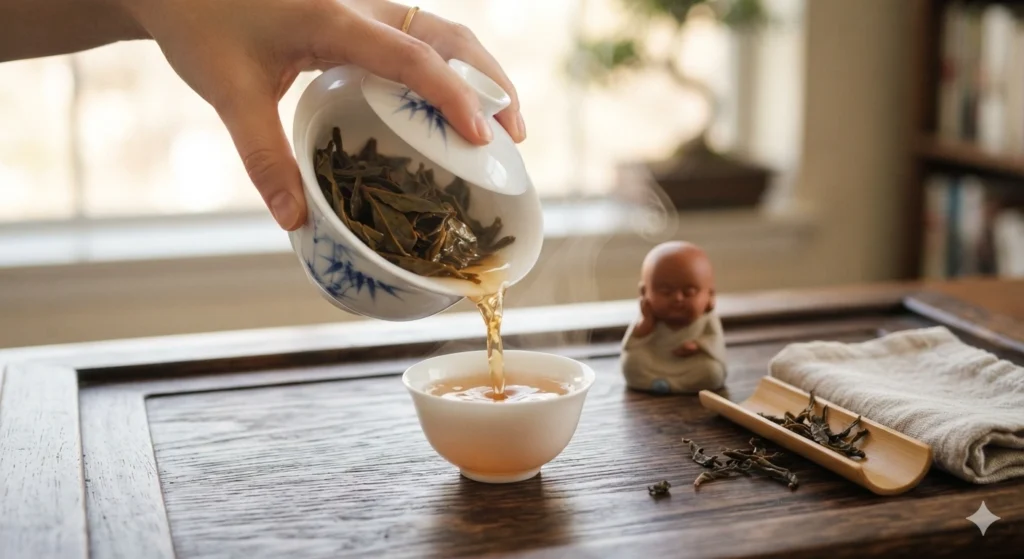
One of the biggest misconceptions about Chinese oolong tea is that it is difficult to brew.
In reality, great tea is surprisingly forgiving.
There are two popular brewing methods, and both produce excellent results.
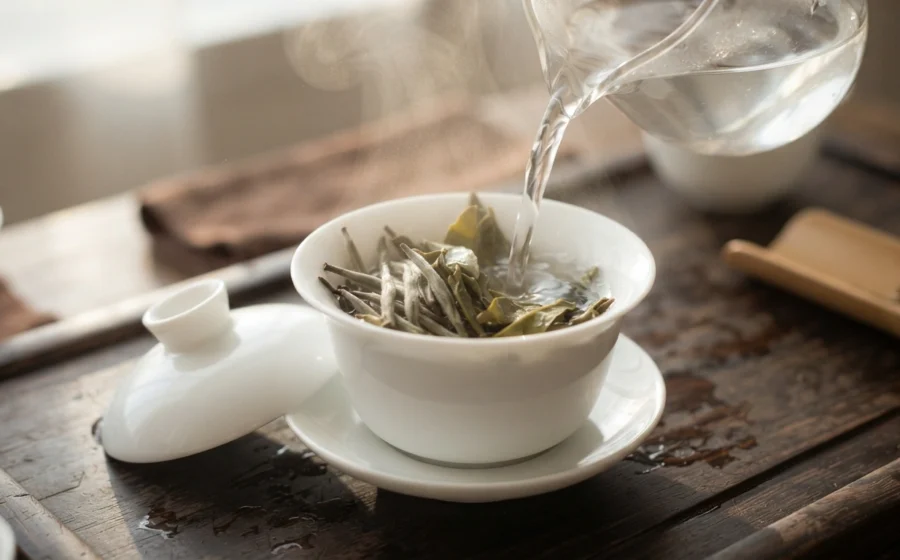
Gongfu Brewing
Gongfu brewing is the traditional Chinese approach.
It uses:
- 5–7g of tea leaves
- 100–120ml of water
- short infusions
- multiple steeps
The first infusion usually lasts 20–30 seconds, with each following infusion increasing slightly in time.
Because whole oolong leaves open gradually, every infusion reveals a different layer of aroma and flavor.
Many high-quality Chinese oolong teas can easily produce 6–10 infusions, making each session an experience rather than a single cup.
Learn more in our complete How to Brew Oolong Tea guide.
Western Brewing
If you simply want an enjoyable cup without special equipment, Western brewing works beautifully.
Use:
- 2–3g tea
- 200–250ml water
- 2–3 minute steep
You’ll produce a full mug with minimal effort while still enjoying the complexity that makes loose leaf oolong special.
Water Temperature Matters
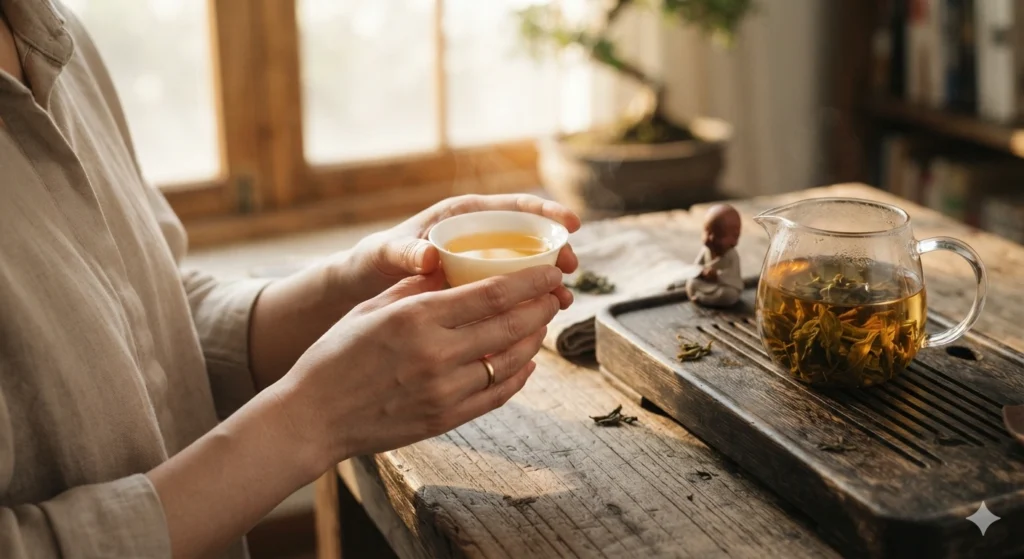
Different styles of Chinese oolong respond to different temperatures.
| Tea Style | Recommended Temperature |
|---|---|
| Tie Guan Yin | 85–90°C (185–194°F) |
| High Mountain Oolong | 90–95°C (194–203°F) |
| Da Hong Pao | 95–100°C (203–212°F) |
| Rou Gui | 95–100°C (203–212°F) |
| Shui Xian | 95–100°C (203–212°F) |
As a general rule:
The lighter the tea, the cooler the water.
The darker the roast, the hotter the water.
If you’d like a detailed walkthrough, including steeping times, common mistakes, and Gongfu techniques, read our complete How to Brew Oolong Tea Guide.
Why Loose Leaf Chinese Oolong Tea Is Worth It
Many people first discover oolong through tea bags.
There’s nothing wrong with that.
But authentic Chinese oolong was never designed for tea bags.
Whole leaves behave differently.
When hot water touches tightly rolled leaves, they slowly unfurl over several infusions, releasing different aromatic compounds at different stages.
The result isn’t simply “stronger tea.”
It’s more complete tea.
You’ll notice:
- changing aromas
- evolving sweetness
- smoother texture
- longer aftertaste
- multiple enjoyable infusions
Tea bags usually contain broken leaf particles, which extract everything very quickly.
Loose leaves reveal themselves gradually.
That’s why experienced tea drinkers almost always choose whole leaf oolong.
How To Choose Your First Chinese Oolong Tea
One of the best things about Chinese oolong is that there isn’t a single “correct” starting point.
The best tea is simply the one that matches your existing preferences.
If you enjoy floral teas…
Start with Tie Guan Yin.
Its orchid aroma, creamy body, and natural sweetness make it one of the most approachable Chinese teas.
If you’re a coffee drinker…
Try Da Hong Pao.
Its roasted character, mineral depth, and rich body often appeal to people transitioning from coffee.
If you love fragrant teas…
Choose Phoenix Dan Cong.
Its naturally expressive floral and fruit aromas are unlike almost any other tea.
If you want an everyday tea…
Shui Xian is wonderfully forgiving.
Smooth, mellow, and balanced, it’s a tea many people happily drink every day.
If you enjoy warming spices…
Try Rou Gui.
Its cinnamon-like aroma, roasted sweetness, and mineral finish make it especially comforting during colder months.
There is no wrong choice.
One of the joys of Chinese oolong is discovering which style speaks to you personally.
Our Journey With Chinese Oolong Tea
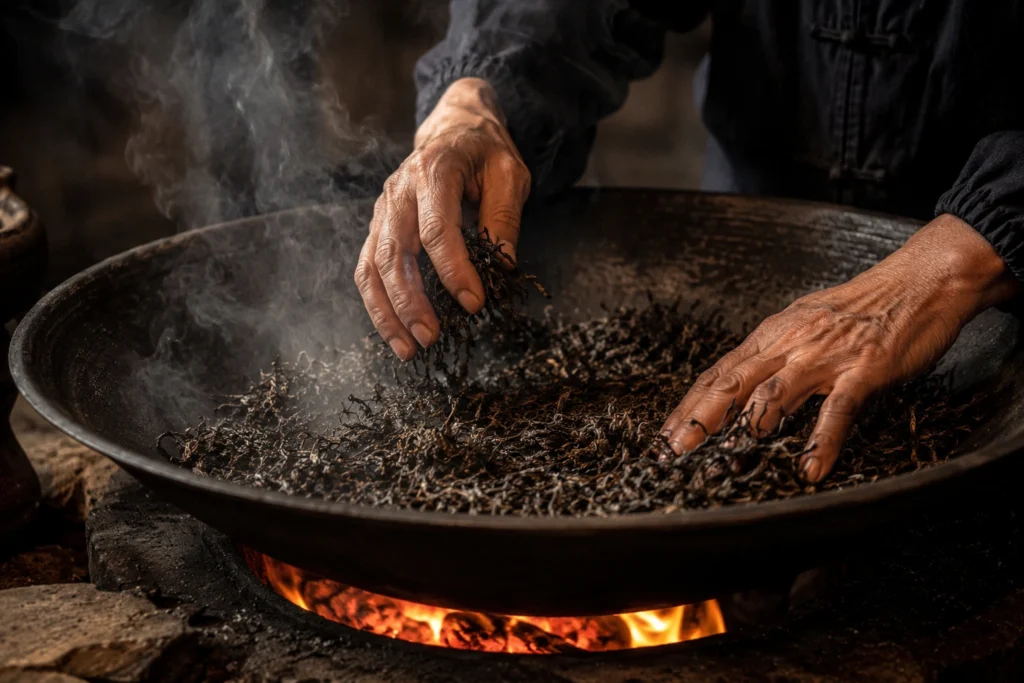
At Tea Passage, we didn’t fall in love with oolong because someone told us it was famous.
We fell in love with it because of how it made us feel.
One of the first teas we truly connected with was Da Hong Pao.
We still remember warming the gaiwan before adding the dry leaves.
Even before water touched the tea, there was already a comforting aroma of roasted grain, honey, and warm wood.
As soon as the boiling water hit the leaves, the room filled with a deep roasted fragrance that reminded us of fresh bread coming out of a stone oven.
The first sip surprised us.
We expected something heavy.
Instead, it was calm.
Roasted nuts, dark cocoa, a gentle mineral character, and then an incredibly long sweetness that lingered long after swallowing.
It didn’t demand attention.
It rewarded attention.
Later, when we brewed Tie Guan Yin, the experience couldn’t have been more different.
Fresh orchid aroma.
Creamy texture.
Bright floral sweetness.
It felt almost like drinking spring itself.
Those two teas taught us something important.
Chinese oolong isn’t one flavor.
It’s an entire landscape.
Some days call for the comforting warmth of Da Hong Pao.
Other days deserve the light elegance of Tie Guan Yin.
The more we explored, the more we realized that every mountain, every tea maker, and every harvest had its own story to tell.
That’s why Tea Passage exists.
We don’t simply collect teas.
We carefully select loose leaf oolong that reflects the character of its origin—teas with balance, clarity, and a flavor that keeps us reaching for another cup.
If a tea doesn’t make us want to brew it again tomorrow, it doesn’t become part of our collection.
Explore Authentic Chinese Oolong Tea
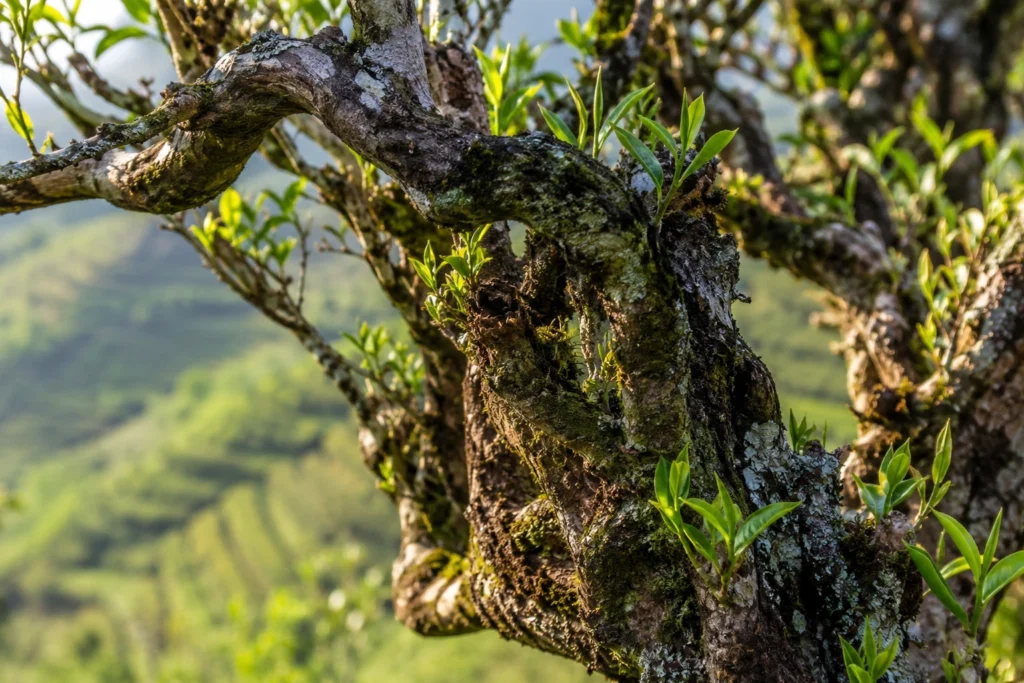
Reading about Chinese oolong tea is a wonderful place to begin.
Brewing it is where everything changes.
The aroma rising from the leaves.
The way the flavor evolves from one infusion to the next.
The quiet ritual of slowing down for just a few minutes.
These are experiences that words can only partially describe.
At Tea Passage, we source authentic Chinese loose leaf oolong from some of China’s most respected tea-growing regions, including Fujian and Guangdong.
Whether you’re looking for the floral elegance of Tie Guan Yin, the roasted depth of Da Hong Pao, or the remarkable aromatics of Phoenix Dan Cong, our goal is simple:
Help you discover an oolong you’ll genuinely enjoy drinking again and again.
→ Explore Our Chinese Oolong Tea Collection
Continue Exploring Oolong Tea
If you’d like to learn more, these guides are a great next step:
- What Is Oolong Tea?
- Types of Oolong Tea
- Best Oolong Tea for Beginners
- What Does Oolong Tea Taste Like?
- How to Brew Oolong Tea
- Oolong Tea Temperature Guide
- How Long to Steep Oolong Tea
- Oolong Tea Caffeine Guide
- Oolong Tea Benefits
- Is Oolong Tea Green Tea?
- Is Oolong Tea Black Tea?
Together, these articles cover everything you need to confidently explore the world of Chinese oolong tea.
Frequently Asked Questions
What is Chinese oolong tea?
Chinese oolong tea is a traditional partially oxidized tea made from the Camellia sinensis plant. It is one of the six major categories of Chinese tea and is known for its exceptionally wide flavor range.
Where does Chinese oolong tea come from?
Most authentic Chinese oolong tea comes from Fujian Province and Guangdong Province, where centuries of tea-making traditions continue today.
Is Chinese oolong tea caffeinated?
Yes. Most Chinese oolong teas contain approximately 30–50 mg of caffeine per cup, although the exact amount varies depending on the tea and brewing method.
What is the best Chinese oolong tea for beginners?
Tie Guan Yin is often recommended because of its floral aroma, creamy texture, and naturally sweet finish. If you prefer richer flavors, Da Hong Pao is another excellent starting point.
Is Chinese oolong tea healthier than green tea?
Both teas contain natural antioxidants and can be enjoyed as part of a healthy lifestyle. Rather than asking which is healthier, it’s more useful to choose the one whose flavor and character you enjoy most.
Can Chinese oolong tea be steeped multiple times?
Absolutely. One of the defining characteristics of high-quality loose leaf oolong is that it can usually be brewed 6–10 times, with each infusion revealing new aromas and flavors.